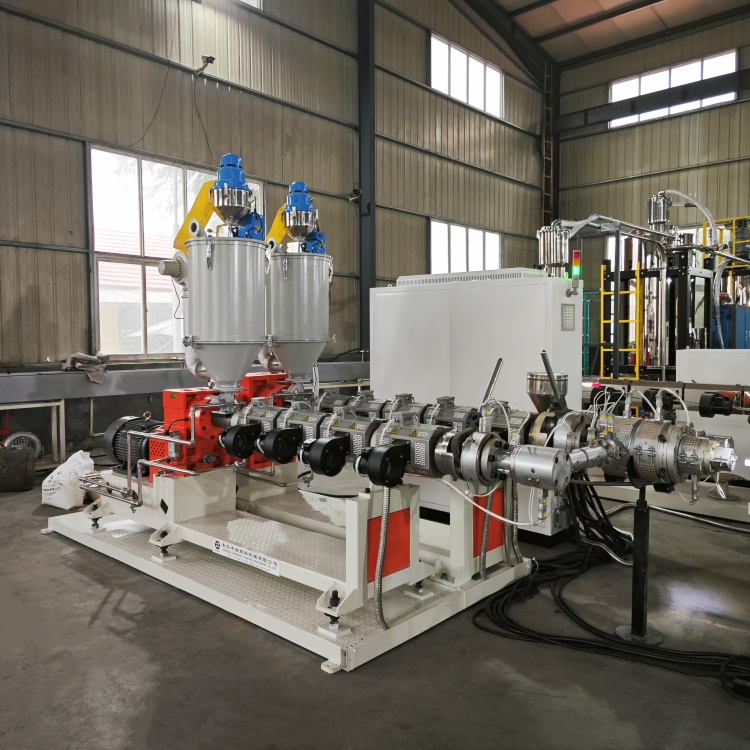
Purchasing a plastic pipe production line represents a strategic balancing act between Capital Expenditure (CAPEX) and Operational Expenditure (OPEX). While the upfront machinery cost is the most visible number on an invoice, it is often the daily operational realities—energy consumption, material waste, and output speed—that determine profitability. Investors and manufacturers face a confusing market where options range aggressively from $15,000 to over $150,000. Without a clear technical framework, buyers risk acquiring under-powered equipment that creates immediate production bottlenecks.
The danger lies in "false economy"—saving money on the initial purchase only to bleed cash through high energy bills, frequent downtime, and slow throughput. This guide dissects the real drivers of price, evaluates the Return on Investment (ROI) of high-speed versus standard lines, and provides a technical checklist for vetting suppliers. By understanding the correlation between technical specifications and financial outcomes, you can make an investment decision that secures long-term competitive advantage.
Key Takeaways
Price Range: Entry-level semi-auto lines start at ~$15k; high-speed, fully automated European-standard lines reach $150k+.
Speed Matters: Moving from standard 18m/min to high-speed 70m/min (dual-cavity) drastically reduces unit cost.
Hidden ROI: Energy-saving servo motors and barrier screws can reduce power consumption by ~30%, covering the premium cost within 12–18 months.
Resale Value: Top-tier components (Siemens, JWELL, etc.) retain higher residual value in the secondary market.
2025 PE/PPR Pipe Production Line Price Tiers
To establish realistic budget expectations, we must categorize equipment based on automation levels, component origins, and output capabilities. The market is generally segmented into three distinct tiers. Understanding where your specific needs fit within these tiers prevents overspending on unnecessary features or under-investing in critical capacity.
Tier 1: Entry-Level / Economy ($15,000 – $40,000)
This tier typically appeals to new startups with limited capital or manufacturers running low-volume, specialized orders where speed is not the primary driver. These lines often feature manual controls rather than advanced PLCs, requiring more operator intervention.
Configuration: Expect standard gearboxes and AC motors without vector control. The L/D (Length-to-Diameter) ratio of the screw is usually lower (around 28:1 or 30:1), which limits mixing capability.
Output: Production speeds are modest, typically remaining under 15 meters per minute for small diameter pipes.
Ideal For: Market entrants testing local demand or facilities with very low labor costs where automation is less critical.
Tier 2: Performance Standard ($40,000 – $80,000)
This is the "workhorse" category for established regional manufacturers. A standard PPR Pipe Production Line in this range balances cost with reliability, offering stable continuous operation for 24-hour shifts.
Configuration: These lines integrate PLC controls (often brands like Delta or Omron), allowing for better temperature synchronization. You will find ceramic heaters for faster response times and stable vacuum calibration tanks that ensure roundness.
Output: Speeds align with industry standards, generally reaching 18–25 meters per minute.
Ideal For: Scaling production capacity and manufacturers who require consistent quality certification (ISO/CE) compliance.
Tier 3: High-Efficiency / High-Speed ($80,000 – $150,000+)
This tier is designed for high-volume suppliers competing directly on unit cost and Overall Equipment Effectiveness (OEE). The machinery here is built to European standards, often utilizing licensed technology to maximize throughput.
Configuration: Full integration of Siemens or B&R control systems is standard. These lines feature gravimetric dosing systems to control weight per meter precisely and "Basket Die Head" technology for lower melt temperatures.
Output: This is where you see Dual-Cavity production capable of speeds reaching up to 70 meters per minute (35m/min x 2).
Ideal For: Major infrastructure suppliers and exporters who cannot afford downtime.
| Feature | Tier 1 (Economy) | Tier 2 (Standard) | Tier 3 (High-Speed) |
| Price Range | $15k – $40k | $40k – $80k | $80k – $150k+ |
| Output Speed (20mm) | < 15 m/min | 18 – 25 m/min | Up to 70 m/min (Dual) |
| Automation | Manual / Buttons | PLC (Delta/Omron) | Advanced PLC (Siemens/B&R) |
| Target User | Startups / Low Vol. | Regional Factory | High-Vol. Exporters |
Calculating ROI: Speed, Energy, and Material Efficiency
Smart investors look beyond the initial price tag to calculate the Total Cost of Ownership (TCO). A cheaper machine that consumes more power and raw material will eventually cost more than a premium line. Here is how to quantify that ROI when evaluating a Plastic Pipe Production Line.
The Speed Multiplier Effect
The economics of pipe production are driven by throughput. Fixed costs—such as factory rent, operator salaries, and lighting—remain constant regardless of how many meters of pipe you produce. Therefore, a High-Speed Two-Cavity line fundamentally changes your cost structure.
If a standard line produces 20 meters per minute and a high-speed line produces 70 meters per minute, the high-speed line dilutes your labor and overhead costs by a factor of 3.5. Over a single year of operation, this reduction in "cost per meter" can exceed the price difference between the two machines.
Energy Consumption & Motor Efficiency
Energy is often the second largest expense after raw materials. Modern lines equipped with servo motors and high-efficiency inverters offer a distinct payback advantage. Traditional DC motors run constantly, whereas servo systems adjust power consumption dynamically based on load.
Industry data suggests that switching to high-efficiency servo drives can reduce total line power consumption by approximately 30%. For a line running 6,000 hours a year, this 30% saving translates directly to the bottom line, often covering the premium cost of the servo upgrade within 12 to 18 months.
Material Savings & Scrap Reduction
Raw material constitutes 70-80% of the final pipe cost. "Giveaway" material—where the pipe wall is thicker than necessary just to be safe—is a silent profit killer. Tier 3 lines utilize Gravimetric Dosing units (loss-in-weight systems) that communicate directly with the extruder speed.
This ensures the pipe weight per meter remains exact, significantly tightening tolerances. Furthermore, advanced PLCs reduce startup waste. On a manual line, operators might generate 50 meters of scrap while stabilizing the line. An automated system can stabilize within meters, saving expensive compound material every time you start or stop the line.
Long-Term Asset Value
Finally, consider the exit strategy. Machinery built with branded components (Siemens extruders, Flender gearboxes) maintains high liquidity in the secondary market. Generic "white label" machinery often has near-zero resale value after five years because parts are proprietary or obsolete. Investing in recognized brands acts as a hedge, protecting the residual value of your asset.
![PE/PPR Pipe Production Line Price List and ROI]()
Critical Technical Evaluation Criteria
When you move past the sales brochure, you must inspect the "under the hood" specifications. These technical criteria determine whether the machinery can handle the realities of daily production.
Extruder & Screw Design
The heart of any extrusion line is the screw. For PE and PPR processing, the Length-to-Diameter (L/D) ratio is critical. A ratio of 33:1 to 38:1 is highly recommended for modern processing. A longer screw allows for a more gradual melting process, ensuring better melt homogeneity (mixing) without overheating the polymer.
Additionally, look for Barrier Units. At high speeds, standard screws cannot melt the plastic fast enough, leading to "unmelt" particles in the pipe. Barrier screws separate the solid bed from the melt pool, forcing all material to pass through a high-shear gap. This guarantees that every gram of plastic exiting the die is fully plasticized.
Die Head Technology
The die head determines the pipe's internal structure and surface finish. Buyers should evaluate Basket Die Heads versus traditional Spiral distributors. Basket dies allow the melt to flow through a lattice structure, which provides superior mixing and lower cavity pressure.
Lower pressure is crucial for thick-walled pipes because it reduces stress on the polymer chains, resulting in better long-term pressure resistance and a smoother internal surface. This directly impacts the pipe's hydraulic performance and marketability.
Cooling & Calibration Systems
The cooling section defines the maximum production speed. If the cooling path is too short, the pipe will exit the line while still soft, leading to ovality issues during coiling. Ensure the cooling length matches the machine's rated maximum speed.
Inspect the Vacuum Tank Coating. Water in these tanks is often recycled and can become acidic or carry abrasive particles. Look for tanks treated with electrostatic spraying or specialized epoxy coatings. Manufacturers offering 5-10 year durability promises on tank coatings are signaling confidence in their build quality.
Automation & Control (PLC)
Modern high-speed extrusion requires split-second synchronization between the extruder screw, the haul-off unit, and the cutter. This is only possible with closed-loop control systems from providers like Siemens or B&R. These systems monitor line tension and adjust motor speeds in milliseconds to maintain constant wall thickness.
Another critical feature is remote diagnostics. Ensure the PLC has an ethernet module that allows the manufacturer’s engineers to log in remotely. This capability can resolve software glitches or parameter errors in minutes, saving you the cost and delay of flying in a technician.
Scalability and Versatility (One Line, Multiple Products)
Business needs change. You might start producing standard water pipes today but need to expand into heating pipes next year. A versatile PE Pipe Production Line can accommodate this growth without requiring a completely new footprint.
Material Flexibility
A well-designed extrusion platform allows you to run multiple materials—PPR, PE-RT, PEX, and PB—on the same basic frame. This is achieved by swapping the screw and die elements while keeping the heavy infrastructure (motors, gearboxes, haul-offs) in place. When negotiating with suppliers, ask explicitly about the screw design's compatibility with these related polyolefins.
Multi-Layer & Composite Upgrades
Future-proofing involves modular design. You should verify that the die head and control system can accept an additional co-extrusion engine later. This upgrade path enables the production of Fiberglass Reinforced (FR-PPR) pipes or pipes with anti-bacterial inner layers. Starting with a mono-layer line that is "co-extrusion ready" allows you to enter the market with lower CAPEX and upgrade to high-margin 3-layer composite pipes as your revenue grows.
Implementation Risks and Buyer Protections
Importing industrial machinery carries inherent risks, from shipping damage to performance discrepancies. Protecting your investment requires strict validation protocols.
Pre-Shipment Verification (FAT)
Never approve a shipment based on a 15-minute video clip. Insist on a full Factory Acceptance Test (FAT). This involves running the machine continuously for at least 8 hours using your specific raw material formulation. Real production issues—such as overheating gearboxes or vacuum fluctuations—only appear after the machine reaches thermal equilibrium. If the supplier resists a full-day test, consider it a red flag regarding the machine's stability.
Compliance & Certification
Electrical and safety standards vary globally. Ensure the equipment meets CE or UL standards suitable for your region. This is not just a paperwork exercise; non-compliant electrical cabinets can fail local safety inspections, preventing you from legally operating the machine. Verify that individual components (breakers, relays) carry the necessary certification marks.
After-Sales Service Structure
Distinguish between "online support" and actual engineering availability. If a drive fails, can you get a replacement locally? This is why we emphasize using global standard parts from Schneider, Siemens, or ABB. If a proprietary circuit board fails, you are at the mercy of the supplier's shipping speed. If a standard Siemens drive fails, you can likely source a replacement from a local distributor within 24 hours, minimizing costly downtime.
Conclusion
The decision to invest in pipe extrusion machinery should never be based solely on the lowest FOB price. A "cheap" $20,000 line that suffers from frequent downtime, high scrap rates, and excessive energy consumption can easily cost you an extra $50,000 per year in lost efficiency. The true value lies in Total Cost of Ownership.
We recommend prioritizing lines with high L/D ratios, gravimetric control systems, and reputable component brands. These features ensure that your production remains stable, your energy bills stay low, and your product quality remains high enough to command premium pricing.
Ready to secure your production future? Start by requesting a custom ROI calculation that factors in your local energy costs and specific production targets. This data-driven approach is the only way to ensure your capital investment delivers profitable returns for years to come.
FAQ
Q: What is the average lead time for a custom PE/PPR pipe production line?
A: Standard lines typically require 30 to 45 days for manufacturing. However, highly customized lines featuring European components or dual-cavity configurations may require 60 to 90 days. Always factor in an additional 30 days for ocean freight and customs clearance when planning your project timeline.
Q: Can a single production line produce both PE and PPR pipes efficiently?
A: Yes, but it requires specific change parts. While the main extruder can often handle both materials, you will need different die heads, sizing sleeves, and screw designs to optimize processing for each material. A "universal" screw is possible but may compromise maximum output speed for both materials.
Q: What is the difference between single-screw and high-speed efficiency extruders?
A: High-speed extruders utilize specialized screw geometries (barrier flights) and grooved feed bushes to melt plastic faster and at lower temperatures. This allows them to run at 2-3 times the speed of a standard single-screw extruder without degrading the material properties.
Q: How much factory floor space is required for a 63mm dual-cavity line?
A: A standard high-speed line is long. You typically need a length of 30 to 40 meters to accommodate the extruder, vacuum tanks, cooling tanks, haul-off, and stacker. The width is generally 2-3 meters. Ensure your facility has sufficient length to avoid cutting the cooling path short.
Q: Do high-speed lines require special raw material formulations?
A: Generally, yes. To achieve speeds like 70m/min, the raw material (granules) must have excellent flow properties. While standard pipe-grade resins work, using high-quality compounds ensures the wall thickness remains uniform at high speeds. Low-quality recycled material may cause breaks or instability at high throughput rates.



 +86-18561886575 (Mr.Wu)
 +8618561886575
 238 Yangzhou West Road, Jiaozhou City, Qingdao City, Shandong Province