Zhongrui's High-capacity PP Packaging Belt Production Line is engineered for efficiency and high output. This innovative machine produces durable, flexible, and cost-effective PP straps, replacing traditional steel straps across various industries. Ideal for manufacturers seeking quality and sustainability.
According to many years of plastic machinery development and design experience, in the introduction of foreign advanced technology and digestion and absorption, on the basis of self-developed PE pipe production line. Has the unique structure, the design is novel, the equipment entire line layout is reasonable, the control performance is strong and so on.
The PE/PPR Pipe Production Line delivers reliable and efficient manufacturing of various pipes for water supply and drainage in agriculture and construction. Experience advanced technology and precision for high-quality production.
Discover the Highly Cost Effective PVC Pipe Production Line from Zhongrui. Engineered for durability and efficiency, this advanced production line ensures high-quality PVC pipes suitable for a variety of applications. Experience seamless operation, reduced maintenance, and significant cost savings.
The Composite Infiltration Irrigation Pipe Production Line is a high-efficiency system designed to produce drip irrigation tape for agricultural applications. With precision control, energy-saving technology, and advanced automation, it ensures superior performance in greenhouse, field crop, and water conservation irrigation systems.
Discover the PVC Hose Production Line designed for efficient, high-speed manufacturing of PVC hoses. Our advanced system ensures precision, versatility, and durability, making it an ideal choice for various industrial applications.
The PVC Imitation Marble Sheet Slab Extruder Machine Production Line is designed for producing high-quality, durable, and visually appealing marble-like PVC sheets. Offering fire resistance, water resistance, and high-temperature durability, it’s ideal for a variety of interior decoration applications. This advanced extrusion line guarantees high efficiency and stable output, making it a top choice for businesses looking to scale up production.
Zhongrui's PMMA Board Production Line is designed for precision, high-output plastic sheet manufacturing. With advanced technology including a vertical three-roll calender, Siemens motor, and ABB inverter, it ensures high plasticizing ability and energy-efficient performance. Ideal for producing PMMA, PC, and ABS sheets for construction, packaging, and automotive industries.
0
0
How Does a PVC Profile Production Line Operate?
Views: 0 Author: Site Editor Publish Time: 2026-10-21 Origin: Site
How does a PVC Profile Production Line turn raw materials into precise, durable profiles? From material preparation to extrusion, cooling, and cutting, every stage affects product quality and production stability. This guide explains the complete extrusion process, key equipment, common production problems, and practical tips for selecting and maintaining the right production line.
What Is a PVC Profile Production Line and What Does It Produce?
The Production Line Converts PVC Compounds into Continuous Profiles
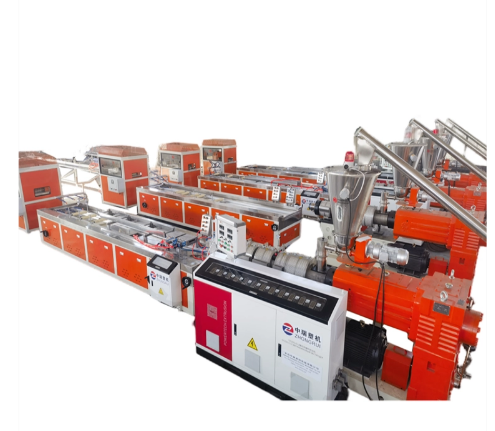
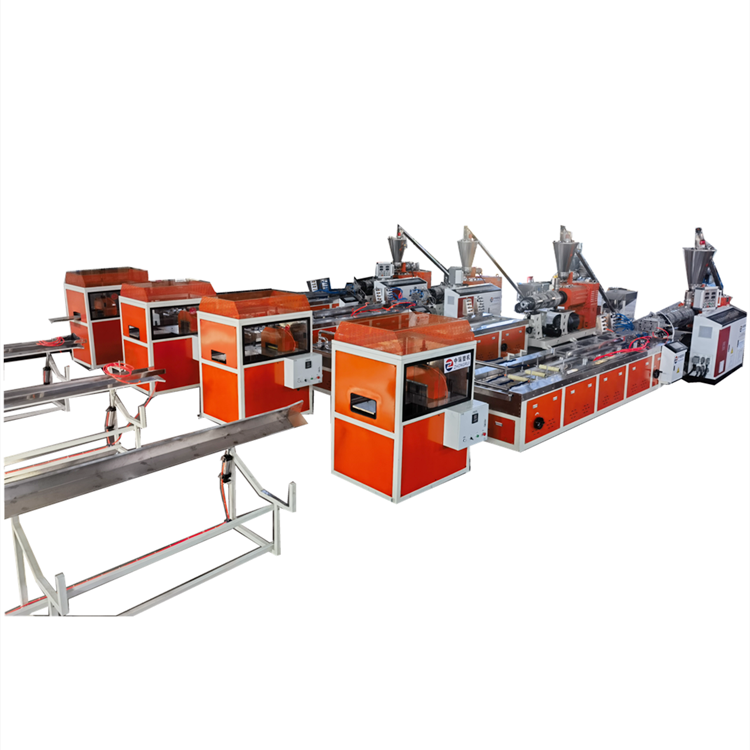
A PVC profile production line uses extrusion technology to form plastic material into a continuous product with a defined cross-section. The process begins with a suitable PVC compound, which enters an extruder and becomes sufficiently plasticized for forming. The material then passes through a profile die, followed by calibration, cooling, pulling, and cutting. Unlike injection molding, which forms separate parts inside a mold, extrusion produces a continuous shape that can be cut into specified lengths.
The finished profile depends on the material formulation, die design, and downstream equipment. For example, a profile with several internal cavities requires different tooling from a simple flat strip. Wall thickness, corner geometry, surface finish, and dimensional tolerances also affect production requirements. Manufacturers should define these requirements before selecting a line because they influence both the equipment configuration and the production process.
Common Applications Include Window Frames and Decorative Profiles
PVC profiles serve many building and interior applications. Window and door frames require suitable structural geometry and dimensional consistency. Ceiling strips and wall panels often emphasize surface appearance, fitting dimensions, and convenient installation. Other profiles may support trim, edging, cable management, or specialized construction applications.
Each product requires an appropriate combination of material, tooling, and processing conditions. A decorative strip may have a relatively simple cross-section, while a window profile may include multiple chambers and connecting features. These differences influence the extrusion die, calibration system, cooling arrangement, and cutting requirements.
Manufacturers should therefore select equipment based on the actual profile rather than relying on a general machine description. Qingdao Zhongrui Plastic Machinery Co., Ltd. supplies plastic profile extrusion equipment for different production applications. Buyers can review its PVC Profile Production Line range to explore relevant equipment options and discuss product-specific requirements.
Profile Drawings Determine the Required Production Configuration
A product drawing provides the foundation for equipment planning. It identifies the profile's external dimensions, wall thickness, internal cavities, and important tolerances. These details help determine the die structure, calibration method, cooling arrangement, and downstream handling requirements.
Manufacturers should also consider the intended material formulation and finished surface. Different compounds may behave differently during plasticization and cooling. A profile with complex geometry may require more careful calibration than a simple strip. If the product includes a decorative surface or multiple functional sections, tooling design becomes especially important.
Before requesting a quotation, buyers should prepare drawings or representative samples whenever possible. They should also define target output, required cutting lengths, acceptable dimensional variation, and expected operating schedules. This information allows suppliers to evaluate the proposed configuration more accurately. It also reduces the risk of selecting a machine that can extrude PVC but cannot reliably produce the required profile.
How Does a PVC Profile Production Line Operate Step by Step?
Raw Material Preparation Establishes the Production Foundation
Production starts with the selection of a suitable PVC resin or ready-prepared PVC compound. Depending on the formulation, the material may contain stabilizers, lubricants, pigments, fillers, and other additives. Each ingredient serves a specific purpose, such as supporting processing stability, adjusting color, or influencing the finished product's properties. The formulation must suit the intended application and the extrusion equipment.
Where manufacturers prepare their own compounds, ingredients are weighed and batched according to an approved recipe. Accurate weighing helps maintain consistency between production batches. Material condition also matters, so suppliers' storage and handling recommendations should be followed. If ready-mixed compounds are used, incoming material checks can help confirm that the correct grade and specification have been delivered.
Mixing and Feeding Deliver a Consistent Material Supply
Mixing equipment distributes the ingredients throughout the PVC formulation. Suitable mixing procedures help reduce uneven additive distribution, which may otherwise contribute to inconsistent color or processing behavior. Mixing conditions should follow the material supplier's recommendations and the production requirements.
After preparation, the compound enters the extrusion system through a suitable feeding arrangement. Consistent feeding helps the extruder maintain stable material flow. Irregular feeding may cause output fluctuations and make downstream adjustments more difficult. Manufacturers should monitor material supply and keep feeding equipment clean and correctly maintained. The exact arrangement depends on whether the line processes ready-made compounds, blended materials, or another approved formulation.
The Extruder Plasticizes and Conveys the PVC Compound
The extruder is central to the PVC profile extrusion process. Its screw conveys the material through the barrel while heat and mechanical energy help plasticize and mix it. Temperature zones, screw speed, feed rate, and screw configuration influence the material's behavior and output. These settings must match the PVC formulation and the equipment design.
PVC processing requires careful temperature control because excessive heat or unsuitable residence conditions can damage the material. Insufficient plasticization may also affect flow and surface quality. Operators should follow the equipment manual and material supplier's processing guidance rather than applying universal settings to every formulation.
Different production requirements may call for different extruder configurations. Conical and parallel twin-screw extruders are used in suitable PVC applications, but their suitability depends on the formulation, profile design, and production goals. Buyers should review the complete technical configuration before deciding which machine is appropriate.
The Profile Die Forms the Required Cross-Section
After plasticization, the material flows through a die that shapes it into the intended cross-section. The die design must distribute material appropriately across the profile. Uneven flow may create differences in wall thickness or cause certain sections to emerge faster than others. Complex profiles require careful tooling design because internal cavities, narrow sections, and connecting features affect material flow.
The die must match the approved product drawing and intended formulation. Its geometry, flow channels, and operating conditions all influence the initial shape. Tooling setup should therefore be checked before production begins. Any adjustment should follow a controlled procedure so operators can identify which changes improve the result.
A well-designed die is only one part of dimensional control. The profile remains hot and may still change shape after leaving the die. Calibration and cooling must stabilize it before pulling and cutting. Manufacturers should evaluate these stages as a connected process rather than treating the die as the only factor that determines final accuracy.
Calibration and Cooling Stabilize Profile Dimensions
Calibration equipment helps establish the profile's required dimensions immediately after it leaves the die. Depending on the design, the system may use vacuum calibration, sizing fixtures, or other suitable methods. The exact configuration depends on the product geometry and production requirements. Calibration supports shape control while the material begins to cool.
Cooling then helps the profile solidify and retain its shape. Water circulation, cooling distribution, and line speed influence the cooling process. Uneven cooling can contribute to warping, shrinkage differences, or dimensional variation. Operators should monitor the process and follow equipment-specific recommendations when adjusting water flow or other cooling conditions.
Haul-Off and Cutting Produce Profiles at Required Lengths
Once the profile has sufficient stability, the haul-off unit pulls it through the downstream equipment at a controlled speed. The pulling force and speed must suit the material and profile geometry. Excessive pulling may stretch or deform the profile, while unstable movement can affect dimensions and surface quality.
The cutting machine then separates the continuous profile into specified lengths. Depending on the line configuration, cutting may be synchronized with the moving profile. Accurate length settings, suitable blade condition, and stable feeding help produce consistent finished pieces. After cutting, profiles may be collected, stacked, and inspected before packaging.
The complete process can be summarized as follows:
Production stage
Main equipment
Primary purpose
Material preparation
Batching equipment
Prepare the required formulation
Mixing and feeding
Mixer and feeder
Supply consistent material
Extrusion
PVC extruder
Plasticize and convey the compound
Forming
Profile die
Create the required cross-section
Calibration and cooling
Calibration and cooling systems
Stabilize dimensions and shape
Haul-off
Pulling unit
Control profile movement
Cutting and inspection
Cutting and measuring equipment
Produce and check finished lengths
Tip: Establish inspection points after calibration and cutting. Early checks help operators identify dimensional problems before they affect a larger production batch.
Which Machines Form the Main Parts of a PVC Profile Extrusion Line?
PVC Extruders Control Material Plasticization and Output
The extruder determines how the PVC compound is conveyed, plasticized, and delivered to the die. Screw geometry, barrel design, heating zones, and drive controls influence processing behavior. The selected machine must match the material formulation and the required profile characteristics.
Buyers should compare screw configuration, rated output, operating controls, and maintenance requirements. They should also ask how the stated capacity relates to the intended material and product. A published output figure should not be treated as a guaranteed production rate for every profile. Actual output depends on the complete line and operating conditions.
Profile Dies and Calibration Tables Control Product Geometry
The die forms the initial profile, while calibration equipment helps stabilize its dimensions. Both must match the product design. Incorrect tooling may lead to uneven wall thickness, poor fitting dimensions, or unnecessary material waste. Buyers should confirm whether the required die and calibration equipment are included in the proposed configuration.
Tooling changeovers also deserve attention. Manufacturers producing several profiles may need multiple dies and corresponding calibration fixtures. They should consider storage, setup time, cleaning, and adjustment requirements when evaluating the complete system.
Cooling, Haul-Off, and Cutting Equipment Maintain Process Continuity
Downstream equipment must work at compatible speeds. Cooling stabilizes the material, haul-off controls movement, and cutting establishes finished lengths. If one unit operates inconsistently, the whole line may become unstable. Proper alignment and synchronized operation help maintain product quality throughout production.
Manufacturers should review the usable working range of each downstream unit. They should also consider the profile's width, geometry, cooling needs, and required cutting lengths. These factors help determine whether the proposed line can handle the intended product range.
Auxiliary Equipment Supports Material Handling and Production
Auxiliary machinery can include mixers, feeders, crushers, and other equipment selected for the manufacturing process. Mixers prepare compounds, feeders deliver material, and suitable crushers may process compatible production scrap for approved reuse. Their functions and configurations depend on the factory's material-handling plan.
Integrating auxiliary equipment can improve workflow, but every component must suit the process. Buyers should assess available floor space, material transport, cleaning access, electrical requirements, and operator responsibilities. Qingdao Zhongrui Plastic Machinery offers a broader range of plastic processing equipment, including PVC/PE/PP Wood Plastic Board Production Line for relevant board and profile-related manufacturing applications. Its suitability should be assessed against the specific material and finished product.
What Operating Factors Influence PVC Profile Quality?
Temperature and Screw Speed Affect Material Processing
Temperature and screw speed influence plasticization, material flow, and production stability. If processing temperatures are unsuitable, the material may not flow properly or may experience thermal degradation. Screw speed also affects material movement and the energy applied during processing. These variables should be adjusted together according to the material formulation and equipment specifications.
Operators should establish an approved baseline for each product. They can then record temperature settings, screw speed, feed rate, and observed product quality. When a defect appears, reviewing these records helps identify possible causes. Changing several settings at once can make troubleshooting difficult because the effect of each adjustment becomes unclear.
Die Design and Calibration Influence Dimensional Accuracy
The die determines the initial profile geometry, while calibration helps establish the required final dimensions. If material flow is uneven, different profile sections may have inconsistent thicknesses. Poor calibration setup can also affect the shape and dimensions of the finished product. Regular inspection helps identify buildup, wear, and alignment problems.
Manufacturers should compare actual measurements with the approved drawing. Important checks may include overall width, height, wall thickness, and internal dimensions. Measurement frequency should reflect production requirements and the risk associated with dimensional variation. If results move outside the accepted limits, operators should investigate the tooling and process before continuing production.
Cooling and Haul-Off Speed Affect Profile Stability
Cooling and pulling speed must work together. A profile that has not cooled sufficiently may deform under pulling forces or during handling. Excessive pulling speed can stretch some sections, while unstable haul-off movement may create inconsistent dimensions. Uneven cooling can also contribute to warping and differences in shrinkage.
Operators should inspect the profile along its length and compare measurements from different sections. They should check cooling distribution, line alignment, and haul-off operation before changing settings. Adjustments should follow the equipment manual and be recorded for later review. A controlled approach makes it easier to identify the source of a recurring problem.
Material Formulation and Feeding Consistency Affect Production Results
Material formulation influences processing behavior and finished product properties. Changes in resin grade, additive proportions, pigment distribution, or compound condition may affect flow and surface appearance. Feeding variations can introduce further instability by changing the amount of material entering the extruder.
Manufacturers should keep approved formulations and material identification records. Incoming materials should be checked against purchasing specifications, and batches should remain traceable where required. If product quality changes unexpectedly, operators should compare material records with machine settings and inspection results. This helps distinguish material-related issues from equipment or operating problems.
Note: Temperature, screw speed, cooling, and pulling settings are material- and machine-dependent. Use verified operating instructions instead of copying settings from unrelated production lines.
How Can Manufacturers Identify and Correct Common Production Problems?
Uneven Dimensions May Indicate Die or Calibration Problems
Profiles with inconsistent width, height, or wall thickness may indicate uneven material flow, incorrect tooling setup, or unstable calibration. Material feeding and pulling conditions may also contribute. Manufacturers should first measure the affected sections and compare them with the product drawing. This establishes whether the problem is local, continuous, or limited to certain profile features.
Next, operators should inspect the die, calibration fixtures, and line alignment. They should review recent process changes and confirm that the correct tooling is installed. Adjustments should be made systematically, with measurements recorded after each meaningful change. This process reduces guesswork and helps identify the actual cause.
Surface Defects Can Result from Processing or Material Issues
Surface defects may include roughness, discoloration, streaks, or visible lines. Possible causes include unsuitable processing temperatures, contaminated material, inconsistent formulation, or deposits on tooling. The same defect may have different causes under different production conditions, so operators should avoid assuming a single explanation.
Start by inspecting the material and finished surface. Check cleaning records, material batches, and recent changes to processing settings. If tooling contamination is suspected, follow the manufacturer's approved cleaning procedure. Avoid making multiple unrelated adjustments at once. Documenting the result of each corrective action helps teams build a more reliable troubleshooting process.
Warping May Result from Cooling or Haul-Off Imbalance
Warping occurs when a profile bends or changes shape after forming. Uneven cooling, unstable pulling, poor line alignment, and differences in material shrinkage may contribute. Complex profiles can be particularly sensitive because their sections may cool at different rates.
Manufacturers should compare the profile at several points along its length. They should inspect cooling distribution and confirm that the haul-off grips and pulls the product evenly. The calibration system and support arrangements should also be checked. Corrective actions should follow equipment guidance, with subsequent measurements used to confirm whether the changes have improved stability.
Cutting Errors Require Checks on Length Settings and Synchronization
Inconsistent finished lengths may result from incorrect cutting settings, measurement errors, or poor synchronization between the cutter and haul-off. Blade condition and the stability of the profile can also affect the cut. These problems may increase material waste and create difficulties during packaging or installation.
Operators should verify the target length using suitable measuring equipment. They should inspect the cutting system and confirm that the synchronization settings match the production speed. Regular checks of cut ends and finished lengths can help detect problems early. For repeated production runs, recorded measurements provide a useful reference when the same product is manufactured again.
How Should Buyers Select a PVC Profile Production Line?
Match the Equipment to the Intended PVC Profile
Equipment selection should begin with the finished product. Buyers should provide profile drawings, material details, dimensional tolerances, and surface requirements. These specifications help suppliers determine the appropriate extruder, die, calibration system, cooling arrangement, and downstream equipment.
Manufacturers should also identify the range of products they intend to produce. A line designed for simple ceiling strips may not meet the needs of complex window profiles without different tooling or configuration changes. Buyers should confirm which products the proposed line can handle and what changes are needed for each product type.
Evaluate Output Requirements and Production Flexibility
Buyers should estimate required output based on customer demand, operating schedules, and expected product mix. They should distinguish nominal equipment capacity from the output achievable with their specific material and profile. A complex cross-section may require different operating conditions from a simple profile, even when both use similar equipment.
Production flexibility matters when a factory expects frequent product changes. Buyers should ask about tooling changeovers, setup procedures, and the time needed to establish stable production. They should also consider future products, available floor space, and staffing. A practical line configuration should meet current needs without creating unnecessary complexity.
Check Automation, Auxiliary Equipment, and Factory Requirements
A complete production line may include feeding, mixing, extrusion, calibration, cooling, haul-off, cutting, and stacking systems. Buyers should confirm which components are included in the quotation and which require separate purchases. They should also check electrical supply, cooling water requirements, ventilation, installation space, and maintenance access.
Automation can reduce certain manual tasks, but its value depends on the production process and available skills. Buyers should review operator training needs, control functions, and maintenance procedures. A line should be evaluated as an integrated system, not simply by comparing the price of the main extruder.
Review Technical Support and Supplier Capabilities
Supplier evaluation should cover technical documentation, installation guidance, spare parts, communication, and after-sales support. Buyers should ask how the supplier handles commissioning, operator training, and troubleshooting. They should also confirm delivery arrangements and the documentation provided with the equipment.
Qingdao Zhongrui Plastic Machinery Co., Ltd. supplies plastic pipe, profile, and sheet production lines, as well as extruders and auxiliary machinery. Its technical development team and export experience are relevant factors for buyers evaluating a supplier. The company'senergy-efficient customizable PVC profile production line is one product option to review. Buyers should request verified technical specifications and confirm the configuration required for their intended profile.
Tip: Request a written equipment proposal based on your product drawing, material formulation, target output, and required tolerances. This makes supplier comparisons more meaningful.
How Can Proper Maintenance Support Stable Production?
Inspect Extruders, Dies, and Calibration Equipment Regularly
Regular inspection helps manufacturers identify wear and buildup before they affect product quality. The extruder, die, and calibration equipment should be checked according to the manufacturer's maintenance schedule. Relevant inspection points may include screw and barrel condition, die surfaces, calibration openings, seals, and mechanical alignment.
Maintenance should be performed by trained personnel using approved procedures. Before inspection or cleaning, equipment must be shut down and isolated according to applicable safety requirements. Operators should record abnormal wear, recurring defects, and completed maintenance work. These records help maintenance teams identify patterns and plan service before problems disrupt production.
Maintain Cooling and Material Handling Systems
Cooling systems need reliable water circulation and suitable operating conditions. Operators should check pumps, hoses, filters, connections, and other installed components for leaks, blockages, or abnormal operation. Feeding and mixing equipment also require regular cleaning and inspection to maintain consistent material handling.
Maintenance requirements vary by line configuration. Manufacturers should follow the equipment manual rather than applying one schedule to every machine. They should also keep essential spare parts available when unexpected component failure could interrupt production. A planned maintenance routine helps reduce avoidable downtime and supports more predictable manufacturing schedules.
Monitor Finished Profiles and Record Production Conditions
Finished-product inspection provides feedback on the entire extrusion process. Manufacturers should check relevant dimensions, surface appearance, straightness, and cut lengths according to the product specification. Results should be recorded alongside material batches and operating conditions. This information helps operators connect quality changes with possible process causes.
Production records become especially useful when defects recur. Teams can compare stable production runs with periods of poor quality and identify differences in settings, materials, or equipment condition. A consistent monitoring process also supports communication between production, quality control, and maintenance teams. The inspection plan should reflect customer requirements and the complexity of the profile.
Train Operators to Follow Standard Procedures
Operator training supports safe and consistent production. Staff should understand material handling, machine startup, process adjustment, product inspection, and shutdown procedures. They should also know when to stop the line and report abnormal conditions rather than attempting unapproved repairs.
Written procedures help standardize work across shifts. Training should cover the correct use of controls, inspection tools, and protective equipment. Manufacturers should update procedures when equipment or product specifications change. Regular training reviews can reinforce good practices and help new operators learn the process more effectively.
Note: Maintenance intervals, operating limits, and safety procedures should follow the machine manufacturer's documentation and applicable workplace requirements.
Conclusion
A PVC Profile Production Line combines extrusion, calibration, cooling, and cutting to produce consistent profiles.
Qingdao Zhongrui Plastic Machinery Co., Ltd.supplies plastic extrusion lines and auxiliary equipment, helping manufacturers select suitable solutions for their production needs.
FAQ
Q: How does a PVC Profile Production Line work?
A: It extrudes PVC, then calibrates, cools, pulls, and cuts profiles.
Q: What products can a PVC Profile Production Line make?
A: It produces window frames, door frames, ceiling strips, and wall panels.
Q: What affects PVC profile quality?
A: Material consistency, temperature, die design, and cooling affect dimensions and surface finish.
Q: How do buyers choose suitable equipment?
A: Match the PVC profile extrusion line to product drawings, output needs, and factory conditions.
Q: How can manufacturers reduce production problems?
A: Inspect tooling, maintain cooling systems, and monitor dimensions regularly.
Qingdao Zhongrui Plastic Machinery Co., Ltd. is located in Jiaozhou City, Qingdao City, Shandong Province. It is 30 kilometers away from Qingdao Port and only 20 kilometers away from the airport.




 +86-18561886575 (Mr.Wu)

 +8618561886575
 238 Yangzhou West Road, Jiaozhou City, Qingdao City, Shandong Province