The global demand for PVC piping in agricultural irrigation, electrical conduit, and municipal drainage systems creates a lucrative market for manufacturers. However, entering this sector requires more than just capital; it demands technical precision. While the PVC business is profitable, the material itself is technically unforgiving. Unlike Polyethylene (PE) or Polypropylene (PP), PVC is highly heat-sensitive and requires precise shear control to process effectively without degradation.
For investors and factory managers, success hinges on selecting the right equipment and understanding the variables that drive profitability. This guide moves beyond basic definitions to help you evaluate configurations and calculate Total Cost of Ownership (TCO). We explore how to select a PVC Pipe Production Line that balances initial CAPEX with long-term operational efficiency. By mastering these technical nuances, you can ensure a smooth setup and a faster return on investment.
Key Takeaways
Configuration Matters: Choice between Single vs. Dual-strand lines depends on diameter range (e.g., <63mm vs. >160mm) and factory floor space.
The "Heart" is Conical: Why Conical Twin-Screw extruders are the non-negotiable standard for PVC powder processing due to low-temperature plasticization requirements.
Hidden ROI Drivers: Profitability isn't just output speed; it’s defined by scrap reduction, wall thickness control (precision), and energy consumption per kilogram.
Infrastructure First: Successful rollout requires pre-planning water cooling capacity and power loads (85kw–200kw+) before the machine arrives.
Defining Your Output: Machine Configurations by Pipe Application
Selecting the correct machine configuration is the first critical decision in your manufacturing strategy. Manufacturers often fall into the trap of looking for a "universal" machine, but efficient production requires matching the equipment design to specific pipe diameters and applications.
Matching Machine to Application
Different pipe categories dictate different extrusion line setups. For high-volume, small-diameter products like electrical conduits and small plumbing pipes (16mm–63mm), dual-strand lines are the preferred choice. These machines extrude two pipes simultaneously, effectively doubling output within the same factory footprint. This configuration maximizes the utility of your upstream mixing equipment and labor.
Conversely, infrastructure projects requiring water supply and drainage pipes (75mm–630mm+) demand single-strand lines. These applications require massive torque to push large volumes of material through heavy dies. A single-strand setup ensures the extruder can maintain the pressure stability needed for thick-walled, large-diameter pipes.
Capacity Planning and The Flexibility Trade-off
New investors often ask if one machine can produce everything from 16mm to 250mm. This is a myth. While technically possible with extensive modifications, it is operationally inefficient. The "do-it-all" approach leads to excessive downtime during mold changes and high scrap rates as the machine stabilizes.
We recommend splitting production lines by diameter groups. A focused PVC Pipe Making Machine optimized for a specific range reduces changeover waste and improves consistency. Consider the following capacity planning guide:
| Production Scale | Typical Diameter Range | Target Output (kg/hr) | Recommended Configuration |
|---|
| Entry Level / Startup | 16mm – 63mm | 150 – 250 | Dual-Strand or Single Line |
| Mid-Range Production | 75mm – 160mm | 300 – 450 | Single-Strand High Speed |
| High-Volume Industrial | 160mm – 630mm+ | 450 – 1000+ | Heavy Duty Single-Strand |
The Extrusion Core: Why the Conical Twin-Screw is Critical
The extruder is the heart of your operation. Processing PVC resin presents a unique material challenge compared to other polymers. PVC is extremely heat-sensitive; excessive friction burns the material, releasing hydrochloric acid gas, while too little heat results in unmelted "cold slugs" that ruin the pipe structure.
Conical vs. Parallel Screws
For PVC powder dry blends, the Conical Twin-Screw extruder is the non-negotiable industry standard. Its design features a large diameter at the intake (feed zone) and a smaller diameter at the discharge (metering zone). This geometry allows for natural compression and high torque generation at low RPMs.
The result is a uniform melt achieved at lower shear temperatures, which prevents material degradation. While Single Screw extruders are standard for pelletized plastics like HDPE or PP, they are generally a mistake for PVC powder. They lack the mixing capability and positive displacement required to process dry blends effectively.
Formulation Compatibility
Your market strategy also dictates your screw selection. If you plan to compete on price by producing pipes with high filler content (high Calcium Carbonate percentage), standard screws will fail prematurely. Calcium Carbonate is abrasive and acts like sandpaper inside the barrel.
For these applications, you must specify armored or bimetallic coatings on the screws and barrels to resist abrasion. When evaluating vendors, ask for the specific L/D (Length-to-Diameter) ratio and screw geometry tailored to your formula, whether you are running rigid PVC (uPVC) or soft PVC formulations.
Downstream Precision: Vacuum, Cooling, and Cutting
While the extruder melts the plastic, the downstream equipment defines the quality, dimensions, and sellability of the final product. A high-quality melt is useless if the vacuum tank warps the pipe or the haul-off stretches the wall thickness unevenly.
Vacuum Calibration Tank (The Quality Gate)
The vacuum calibration tank functions as the primary sizing tool. It forces the hot, pliable pipe against a sizing sleeve using vacuum pressure while water cools the skin. When selecting this unit, prioritize multi-chamber designs that combine vacuum sizing with spray cooling. Longer tanks provide more cooling time, which allows for faster overall line speeds without the risk of the pipe warping after it leaves the machine.
Haul-Off Units (Wall Thickness Control)
The haul-off unit (or puller) must operate in perfect synchronization with the extruder. Even a 1% variance between the extrusion speed and the pulling speed creates wall thickness issues. If the puller is too fast, the walls become too thin; if too slow, they become too thick, wasting expensive material.
Claw configuration is also vital for preventing deformation. For small pipes, a 2-claw caterpillar is sufficient. However, for large diameters (630mm+), you need haul-offs with 8 to 10 claws to distribute the clamping force evenly around the pipe circumference.
Cutting Technologies
Modern PVC production demands clean cuts to facilitate easy installation and socketing. Two main technologies dominate:
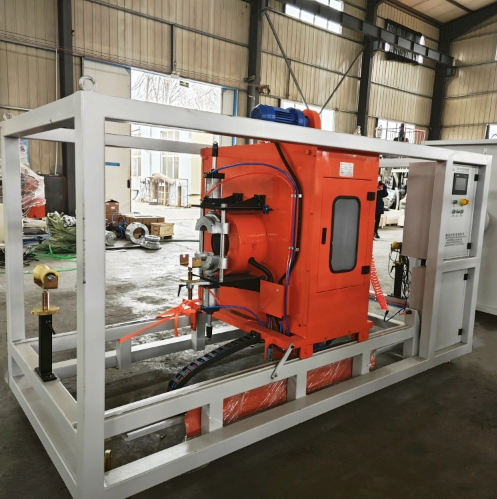
Planetary Cutters: These are essential for large-diameter PVC pipes. The blade rotates around the pipe, often including a chamfering tool. This results in a "swarfless" cut and a beveled edge, which is crucial for the subsequent bell-end socketing process.
Guillotine/Saw: While cheaper, these are largely outdated for high-quality PVC production. They create excessive dust and rough edges that require manual deburring, adding labor costs and factory contamination.
Investment Analysis: Cost Factors and ROI Drivers
Evaluating the Return on Investment (ROI) for a PVC production line involves looking beyond the sticker price. The Total Cost of Ownership (TCO) includes energy usage, scrap rates, and maintenance longevity.
Capital Expenditure (CAPEX) Realities
Investors often encounter a massive price spread in the market. A generic line might cost $25,000, while a high-end automated line exceeds $90,000. This difference usually stems from the components used. Brand-name electronics (like Siemens PLCs or ABB inverters) and high-grade gearbox alloys increase upfront costs but drastically reduce downtime.
The "Price Trap" occurs when buyers select the cheapest machine available. These units often lack energy-saving inverters and use soft screw coatings that wear out in months, leading to expensive replacements and production halts.
Operational Expenditure (OPEX) & TCO
Extruders typically run 24/7, making energy consumption a primary cost driver. A machine equipped with advanced ceramic heaters and efficient motors can use 15% less power than a standard unit. In many regions, this energy saving alone pays for the price difference of the premium machine within 18 months.
Scrap rate is another hidden profit killer. Raw material accounts for 70-80% of the cost of a PVC pipe. High-quality machines stabilize quickly during startup, minimizing the pile of wasted "startup scrap." Reducing startup waste directly protects your margins.
Formulation Economy
A robust machine offers "Formulation Economy." Powerful gearboxes and optimized screw designs allow you to use higher percentages of recycled material or mineral fillers without clogging the system. This capability allows you to lower raw material costs significantly while maintaining acceptable product quality for specific applications.
Facility Readiness & Implementation Risks
Before the machinery arrives, your facility must be infrastructure-ready. Neglecting the layout and utility requirements is a common cause of delayed project launches.
Space & Layout
A standard PVC extrusion line is deceptively long. Depending on the cooling requirements, a line can stretch between 20 to 30 meters. You must ensure your factory floor has adequate linear space. Additionally, PVC mixing is a dusty process. The mixing room, housing the Hot and Cold mixer unit, should be physically partitioned from the main extrusion hall. This prevents fine PVC dust from contaminating the electrical cabinets of your production line, which can cause short circuits and fires.
Utilities Checklist
Review the following utility requirements carefully:
Water: A closed-loop cooling tower system is mandatory. Consistent water temperature is vital for sizing; fluctuations cause the pipe diameter to drift out of tolerance.
Power: Calculate the total connected load, including the Extruder, Heater bands, Vacuum pumps, and Downstream cutters. Do not underestimate the startup surge current, which can spike significantly higher than running amperage.
Installation Timeline
Set realistic expectations for your project timeline. Typically, machine fabrication takes 30 to 60 days. Shipping adds variable time depending on your location. Once on-site, allocate 7 to 14 days for installation and commissioning. This period includes leveling the machine, connecting utilities, and running initial material tests to dial in the processing parameters.
Conclusion
Success in PVC manufacturing is not achieved simply by purchasing a machine; it requires a strategic approach to configuration and support. The winning strategy involves matching the screw geometry to your specific material formula and ensuring the downstream equipment can handle your target production speeds without compromising quality.
We advise prioritizing vendors who offer formulation support and advanced features like "chipless" cutting technology. The initial savings gained from buying a low-end machine are quickly erased by daily material waste, frequent downtime, and high electricity bills. To ensure a profitable venture, encourage your team to request a detailed TCO analysis or a material-test video before finalizing any equipment purchase. This diligence ensures your production line becomes an asset, not a liability.
FAQ
Q: What is the difference between PVC and HDPE pipe making machines?
A: The primary difference lies in the extruder type and cooling method. PVC requires a Conical Twin Screw extruder to handle powder blends gently without overheating. HDPE typically uses a Single Screw extruder designed for melting pellets. Additionally, PVC cooling relies on vacuum spray tanks, while HDPE often uses immersion baths due to different thermal properties.
Q: How much space is needed for a standard PVC pipe production line?
A: You should plan for a linear space of approximately 25m x 4m for the extrusion line itself. However, you must allocate additional space for the raw material mixer, resin storage, and the stacking area for finished pipes. A cramped layout hinders workflow and maintenance access.
Q: Can one machine produce all sizes of PVC pipes?
A: No, one machine cannot efficiently cover the full spectrum of pipe sizes. Machines are limited by their die head and vacuum tank capacities. Typically, a machine covers a specific range, such as 16-63mm or 75-250mm. Attempting to run very small pipes on a large machine is inefficient, and large pipes physically won't fit on a small line.
Q: What is the power consumption of a PVC pipe extrusion line?
A: Power consumption varies significantly by output capacity. Small lines may draw around 85kw, while large industrial lines can exceed 200kw. It is crucial to check the specific motor ratings and heater loads. Always plan for a sufficient power margin to handle startup surges.
Q: Why is a "Hot and Cold" mixer unit necessary for PVC?
A: PVC processing starts with mixing resin and additives. The "Hot" stage uses friction to heat the mixture, allowing additives to bond with the PVC resin. The "Cold" stage is essential to cool the mixture down to 40-50°C. This prevents the powder from caking or degrading in the storage silos before it even enters the extruder.


 +86-18561886575 (Mr.Wu)
 +8618561886575
 238 Yangzhou West Road, Jiaozhou City, Qingdao City, Shandong Province