PVC vs CPVC Pipes are among the most common choices in modern plumbing, industrial piping, and construction projects. Both belong to the same plastic family, yet they behave very differently when exposed to temperature, pressure, and chemicals. Choosing the wrong material can lead to leaks, failures, or costly replacements, while choosing the right one can deliver long service life at a competitive cost.
This guide explains what PVC and CPVC pipes are, compares their properties side by side, and shows how they are manufactured on a PVC Pipe Production Line. Whether you are a homeowner, contractor, engineer, or manufacturer, you will find practical criteria to decide which material fits your application.
Quick Overview of PVC vs CPVC Pipes
PVC (polyvinyl chloride) is a rigid thermoplastic commonly used for cold water lines, drainage, and electrical conduits. CPVC (chlorinated polyvinyl chloride) is a modified form of PVC with additional chlorination that increases its temperature resistance and extends its use into hot water and certain industrial applications.
In short, PVC pipes are usually preferred for cold water and non‑pressurized systems, while CPVC pipes are often chosen for hot and cold potable water or higher temperature environments. Understanding this basic difference is the foundation for any decision about PVC vs CPVC Pipes.
What Is PVC Pipe?
PVC, or polyvinyl chloride, is a widely used plastic that becomes rigid when polymerized and shaped into piping. It is lightweight, easy to transport, and resists many common causes of pipe damage, including corrosion, scaling, and biological growth. In its standard form, PVC is most suitable for cold and ambient‑temperature fluids.
Typical Applications of PVC Pipes
PVC pipes are used in many residential, commercial, and industrial systems, including:
Cold water distribution lines in homes and small buildings
Drainage, waste, and vent (DWV) systems that are not pressurized
Irrigation networks for gardens, fields, and greenhouses
Conduits for routing electrical cables and low‑voltage wiring
Certain industrial and agricultural flows where temperatures remain low
Advantages of PVC Pipes
PVC offers a combination of properties that make it highly attractive for many projects:
Corrosion resistance: It does not rust or corrode like metal pipes, even when exposed to many salts and mild chemicals.
Lightweight and easy to handle: Installers can cut and assemble PVC with basic tools and adhesives.
Cost‑effective: PVC is generally less expensive than CPVC and many metal pipe options.
Smooth interior: Low friction losses promote good flow and help reduce pumping energy in suitable systems.
Limitations of PVC Pipes
Despite its advantages, PVC is not a universal solution:
Limited temperature range: PVC softens or loses strength as temperature rises, which restricts its use in hot water or high‑temperature industrial lines.
Impact sensitivity in cold climates: At very low temperatures, PVC can become more brittle and may crack under heavy impact.
Regulatory limits: Some regions restrict the use of certain PVC formulations in potable water systems.
What Is CPVC Pipe?
CPVC, or chlorinated polyvinyl chloride, is produced by subjecting PVC resin to a chlorination process. This added chlorination modifies the polymer structure, improving its ability to withstand higher temperatures and altering its chemical behavior. As a result, CPVC pipes can safely carry hot water and are often approved for both hot and cold potable water systems.
Typical Applications of CPVC Pipes
CPVC extends the reach of plastic piping into applications where PVC cannot perform reliably:
Residential hot and cold water distribution, including showers and sinks
Commercial and institutional plumbing with demanding temperature profiles
Some industrial process lines carrying hot fluids within defined chemical limits
Certain fire protection and sprinkler systems when permitted by codes and standards
Advantages of CPVC Pipes
CPVC is favored when temperature and safety requirements go beyond PVC capabilities:
Higher temperature resistance: CPVC retains its strength and pressure rating better at elevated temperatures.
Suitable for many hot water systems: It is commonly installed in domestic hot water lines and recirculation loops.
Good pressure performance: At equal operating conditions, CPVC often supports higher working pressures than PVC.
Potable water approvals: Many CPVC formulations are tested and certified for drinking‑water use, subject to local standards.
Limitations of CPVC Pipes
CPVC offers better performance in some areas, but it is not without trade‑offs:
Higher material cost: CPVC pipes and fittings are usually more expensive than equivalent PVC parts.
Installation sensitivity: Proper solvent cement, support spacing, and handling are important to avoid stress and cracking.
Chemical compatibility limits: While CPVC resists many chemicals, not all industrial media are suitable; always verify compatibility.
PVC vs CPVC Pipes: Direct Comparison
Choosing between PVC vs CPVC Pipes requires more than just looking at price. The right decision depends on temperature, pressure, fluid type, and regulatory requirements. Below is a focused comparison of the most important criteria.
Temperature and Pressure Performance
PVC is generally used for cold and ambient‑temperature water, while CPVC is engineered to handle significantly higher temperatures. As temperature rises, all plastic pipes lose some pressure capacity, but CPVC maintains usable strength where PVC quickly reaches its limits. For domestic hot water, CPVC is usually the safer and code‑compliant choice.
Strength, Durability, and Service Life
Both materials provide good resistance to corrosion and many forms of chemical attack, which helps extend service life compared to some metals. In typical cold‑water conditions, PVC can last for decades with minimal issues. In hot‑water applications, CPVC offers better long‑term stability and reduces the risk of softening, deformation, or premature failure.
Chemical and Corrosion Resistance
Both PVC and CPVC are corrosion‑resistant, but their chemical resistance profiles are not identical. PVC is effective against many salts, bases, and weak acids at moderate temperatures. CPVC, thanks to its modified structure, can tolerate certain chemicals at higher temperatures than PVC can. For industrial projects, it is essential to check compatibility data for the exact fluid and temperature conditions.
Safety, Codes, and Certifications
Plumbing and building codes often specify which materials may be used for different parts of a system. Many codes accept CPVC for hot and cold potable water, while PVC may be limited to cold water or non‑potable uses. Fire performance, smoke generation, and toxicity standards can also affect whether PVC or CPVC is allowed in specific building types. Always verify local regulations when planning a system.
Cost and Overall Value
From a purely material standpoint, PVC usually costs less than CPVC. However, when the system will regularly carry hot water, the apparent cost savings of PVC can be misleading if failures occur or code compliance becomes an issue. CPVC can offer a lower total cost of ownership in hot‑water or higher‑temperature environments by reducing repair, downtime, and replacement expenses.
Typical Use‑Case Summary
In practice, many plumbing systems use both materials where appropriate: PVC for cold water mains or drainage, and CPVC for hot water distribution. Industrial plants may rely on CPVC in hot process zones and PVC where temperatures and chemical demands are lower. The result is a balanced approach that optimizes safety, performance, and budget.
How PVC and CPVC Pipes Are Manufactured
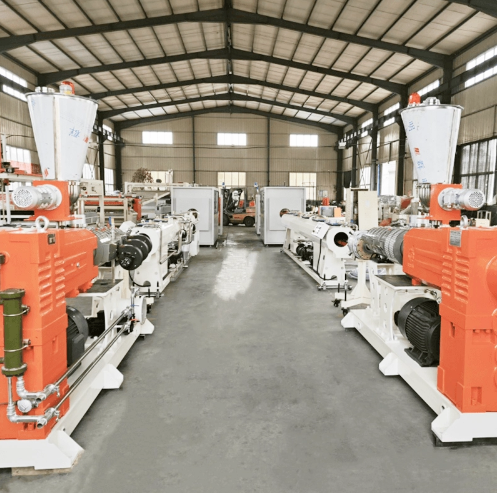
Both PVC and CPVC pipes are commonly produced through extrusion on a dedicated PVC Pipe Production Line. The way the line is designed and operated has a direct impact on pipe quality, mechanical strength, and consistency across batches.
Core Stages of a PVC Pipe Production Line
A modern PVC Pipe Production Line usually includes the following stages:
Raw material preparation: PVC resin is blended with stabilizers, lubricants, fillers, pigments, and other additives to achieve the required performance.
Extrusion: The blended material is fed into an extruder, where it is heated, melted, and pushed through a die that shapes it into a hollow cylinder.
Calibration and cooling: The hot pipe passes through calibration sleeves and cooling tanks that set the final diameter and wall thickness while preventing deformation.
Haul‑off and cutting: A haul‑off unit pulls the pipe at a controlled speed, and a cutting system divides it into standard lengths.
Socketing and marking: Ends may be formed into sockets for easier joining, and the pipe is marked with size, pressure rating, and production data.
Adjusting the Line for CPVC
CPVC can also be extruded on a similar line, but processing parameters are more demanding. Melt temperatures, screw design, and die geometry must be carefully tuned to avoid degrading the material. Cooling conditions and line speed are also critical, as CPVC typically has different heat transfer and viscosity characteristics compared with PVC.
Key Components That Affect Pipe Quality
Several parts of a PVC Pipe Production Line strongly influence the final product:
Extruder and screw: Designed to provide stable melting and mixing without excessive shear or overheating.
Die head and calibration system: Ensure accurate dimensions, uniform wall thickness, and smooth surfaces.
Cooling section: Controls shrinkage and roundness, which are important for sealing and pressure performance.
Automation and controls: Maintain consistent temperature, pressure, and speed to deliver repeatable pipe quality.
Standards and Quality Control
To ensure that PVC vs CPVC Pipes perform as expected, manufacturers conduct routine tests:
Dimensional checks for diameter, wall thickness, and ovality
Hydrostatic pressure tests at different temperatures
Impact resistance and drop tests
Thermal cycling to simulate real‑world hot‑cold operation
Consistent process control on the PVC Pipe Production Line helps ensure that pipes meet the required standards for pressure, temperature, and durability.
Installation Differences Between PVC and CPVC Pipes
Installation practices for PVC vs CPVC Pipes share many similarities, but some details differ and can affect long‑term performance. Paying attention to cutting, joining, and supporting the pipe is critical for both materials.
Planning the System Layout
Start by defining the operating pressure, maximum temperature, and type of fluid. For hot water or high‑temperature industrial lines, CPVC is usually recommended. Route the piping to minimize unnecessary bends, and include allowances for thermal expansion, especially in long runs of hot CPVC pipe.
Cutting and Preparing the Pipe
Both PVC and CPVC can be cut using pipe cutters, fine‑tooth saws, or similar tools designed for plastics. After cutting, the ends should be deburred and slightly chamfered. This helps ensure full insertion into the fitting and prevents sharp edges from scraping away too much solvent cement.
Solvent Cementing and Fittings
Joining PVC vs CPVC Pipes requires the correct primer and solvent cement for each material. PVC cement is formulated for PVC, and CPVC cement is formulated for CPVC. The two are not always interchangeable, and using the wrong product can weaken the joint. Apply primer where required, then spread solvent cement evenly before assembling the joint with a slight twist and holding it in place for the recommended time.
Supports, Transitions, and Common Errors
Both PVC and CPVC must be properly supported with hangers and brackets at intervals specified by standards or manufacturer guidelines. When connecting to metal systems, use suitable transition fittings that prevent stress on the plastic pipe. Common mistakes include misalignment, over‑tightening threaded connections, insufficient curing time, and using the wrong cement for the pipe material.
How to Choose Between PVC vs CPVC Pipes
When you compare PVC vs CPVC Pipes, you are really comparing different performance envelopes. A simple decision framework can help you select the right material for each part of your system.
Key Questions to Ask
What is the highest and lowest operating temperature?
Is the fluid potable water, process water, or a chemical mixture?
Is the pipe installed indoors, outdoors, or buried?
What codes and standards apply in your region?
What are your expectations for service life and maintenance?
Residential Plumbing Decisions
In homes, PVC is often selected for cold water and drainage. For hot water supply, CPVC is frequently the recommended option because it handles temperature and pressure more effectively. In many cases, a home may use PVC for the main cold‑water line and CPVC for hot branches and recirculating loops.
Commercial and Industrial Systems
Commercial buildings and industrial facilities usually have more demanding operating conditions. Engineers must evaluate fluid temperature, possible pressure spikes, cleaning processes, and chemical exposure. CPVC may be favored in boiler rooms, process areas, and hot washdown systems, while PVC may still be used for cold water feeds, drains, and non‑critical utilities.
Long‑Term Maintenance and Operating Costs
The apparent savings of PVC can disappear if a system frequently operates above its safe temperature range. CPVC may cost more at installation, but it can reduce failures and service interruptions in hot‑water and high‑temperature applications. For many projects, a mixed approach provides the best balance of durability and cost.
Buyer’s Guide: Selecting a PVC Pipe Production Line
For manufacturers, the choice of PVC Pipe Production Line is just as important as choosing between PVC vs CPVC Pipes in a project. The equipment determines product consistency, output capacity, and the ability to adapt to different market needs.
Who Needs a PVC Pipe Production Line
A PVC Pipe Production Line is suitable for:
Existing pipe manufacturers looking to expand their product range
New entrants planning to produce PVC and CPVC pipes for local or export markets
OEMs and investors aiming to integrate pipe production into larger building‑materials operations
Key Specifications to Evaluate
When evaluating equipment, consider:
Target pipe sizes, pressure classes, and material types (PVC, CPVC, or both)
Desired output rate and line speed
Energy efficiency and automation level
Flexibility to adjust recipes and parameters for different products
Quality and Consistency Features
A well‑designed line will include precision temperature control, stable extrusion pressure, and accurate calibration and cooling systems. Advanced monitoring and feedback can detect deviations early, helping ensure that every batch of PVC vs CPVC Pipes meets the same performance standards.
Service, Support, and Lifecycle Value
Beyond the initial purchase, after‑sales service, spare parts availability, and technical support can determine the long‑term success of a PVC Pipe Production Line. Assistance with start‑up, operator training, and process optimization helps reduce waste and shorten the time needed to reach full‑scale, stable production.
Industry and Reference Perspectives on PVC vs CPVC Pipes
Different reference and knowledge platforms describe PVC vs CPVC Pipes from their own angles, focusing on language, technical details, or practical use. Their viewpoints help clarify how the two materials are understood across industries and user groups.
Wikipedia
Wikipedia presents PVC as a versatile thermoplastic widely used in building and construction, especially for piping and profiles. It identifies CPVC as a chlorinated derivative that offers increased temperature resistance, making it suitable for hot and cold water distribution and certain industrial uses. The platform emphasizes how both materials have become standard in global piping systems.
Merriam‑Webster and Similar Dictionary Platforms
Merriam‑Webster and other dictionary‑style resources define PVC and CPVC in the broader context of synthetic polymers used for rigid pipes, fittings, and construction materials. They highlight that CPVC incorporates additional chlorine compared with PVC, which changes its properties and widens its temperature application range.
wikiHow Platform
The wikiHow platform focuses on practical, step‑by‑step instructions for working with plastic pipes. In the context of PVC vs CPVC Pipes, it typically stresses the importance of choosing compatible primers and solvent cements, cutting and deburring correctly, and confirming that the selected pipe is rated for the planned temperature and pressure conditions.
Cambridge Dictionary and Language Resources
Cambridge Dictionary and similar language resources describe PVC and CPVC as common plastics used in construction, plumbing, and insulation. Their example sentences often place these materials in real‑world contexts such as water supply, drainage, or home renovation, helping learners distinguish between different types of plastic pipes in technical documentation.
Free Dictionary and General Reference Sites
General reference sites like Free Dictionary categorize PVC and CPVC as engineered plastics widely applied in piping, profiles, and building components. They explain that CPVC extends the capabilities of PVC into hotter service conditions and that both materials are frequently compared with traditional metals because of their corrosion resistance and ease of installation.
Oxford Learner’s Dictionaries and Learning‑Focused Platforms
Oxford Learner’s Dictionaries and other learning‑focused platforms feature PVC and CPVC in vocabulary lists and usage notes related to construction and home improvement. They often point out that CPVC is particularly associated with hot water lines, while PVC is mentioned in contexts such as window frames, drainage pipes, and electrical conduits.
General Q&A and Help Platforms
On general Q&A and help platforms, users frequently ask which is better for household projects: PVC vs CPVC Pipes. Answers commonly recommend PVC for cold water and drainage and CPVC for hot water systems, while stressing the need to check local plumbing codes, system temperature, and long‑term durability before committing to one material.
Conclusion
PVC vs CPVC Pipes each occupy an important place in plumbing and industrial piping. PVC delivers a cost‑effective solution for cold water, drainage, and conduit systems, while CPVC extends plastic piping into hot‑water and higher‑temperature applications with strong safety and durability benefits. Understanding their differences, along with how they are produced on a PVC Pipe Production Line, helps buyers, designers, and installers build systems that are efficient, compliant, and long‑lasting.


 +86-18561886575 (Mr.Wu)
 +8618561886575
 238 Yangzhou West Road, Jiaozhou City, Qingdao City, Shandong Province