Industrial, commercial, and agricultural applications demand colored PVC for UV protection, utility identification, and aesthetic integration. This raises a practical manufacturing question: how do you achieve durable coloration on plastic substrates? Polyvinyl chloride features inherently low surface energy and exceptional chemical resistance. These physical traits make post-production painting notoriously difficult. Paint applications routinely result in premature peeling, severe flaking, and rapid color degradation in the field. Secondary processing costs escalate quickly, eroding margins. This guide evaluates the rigorous technical requirements of manually painting PVC pipes and highlights the severe scalability limitations involved in secondary coating operations. We contrast these post-production methods with modern manufacturing solutions. Integrating inline coloring technology delivers massive scalability and superior durability directly from the extruder, eliminating the need for paint entirely.
- Post-production painting of PVC requires rigorous mechanical abrasion or chemical etching, paired with specialized elastomeric or polyurethane paints, to mitigate inevitable adhesion failures.
- Manual or automated secondary painting introduces severe scalability bottlenecks, high recurring labor costs, and VOC environmental compliance risks for high-volume manufacturers.
- Integrating masterbatch dosing or co-extrusion technology into a PVC pipe production line eliminates secondary painting, offering permanent colorfastness and significantly lower per-unit costs.
- Evaluating an upgrade to your plastic pipe production line requires analyzing gravimetric dosing accuracy, die head compatibility, and specific production volume thresholds to ensure ROI.
The Technical Challenges of Painting Plastic Pipes
Polyvinyl chloride possesses a dense, non-polar molecular structure. It completely lacks the porous receptor sites found in wood, masonry, or bare metal. Standard industrial coatings fail to wet the surface properly. They cannot form a strong mechanical or chemical bond. Residual extrusion lubricants often remain on the pipe exterior after manufacturing. Mold release agents create an invisible, slick barrier. These chemical residues actively block paint adhesion at the microscopic level. You must strip them away completely before applying any coating. Failure to remove these lubricants guarantees immediate paint delamination.
Thermal expansion presents another major physical hurdle. Plastic pipes exhibit a high coefficient of linear thermal expansion. They grow and shrink significantly as ambient temperatures fluctuate. Direct sunlight causes rapid dimensional changes across the pipe surface. A 100-foot run of PVC pipe can expand over three inches during a 50-degree temperature swing. Rigid paints crack instantly under this continuous mechanical stress. You face a strict requirement for highly flexible elastomeric coatings. These specialized paints expand and contract alongside the polymer substrate. They prevent catastrophic cracking, checking, and peeling. Standard house paints or rigid epoxies will fail within weeks of outdoor exposure.
Outdoor applications introduce severe environmental stressors. Exposed field irrigation pipes endure relentless sunlight and extreme weather. Exterior architectural trim faces similar daily abuse. Ultraviolet exposure accelerates polymer degradation rapidly. The plastic turns brittle, chalks, and loses structural integrity. You must apply heavy-duty UV-blocking paint to protect the underlying substrate. Alternatively, modern manufacturers use inherent UV-stabilized colorants. These chemical additives protect the pipe from the inside out. They provide permanent resistance to solar degradation without relying on a fragile surface coating.
Field failures typically manifest in several distinct ways when painted PVC faces harsh conditions:
- Adhesion loss at joints due to solvent cement interference during installation.
- Micro-cracking along the pipe belly where ground frost heaves the line.
- Chalking on the top radius exposed to direct midday sun.
- Flaking caused by impact damage during trench backfilling.
- Blistering from trapped moisture beneath the paint film.
Post-Production: Preparation and Paint Selection for PVC
Surface preparation dictates the ultimate success of any coating application. Mechanical abrasion uses 220-grit fine sanding. It creates a physical profile on the slick plastic. This gives the primer microscopic grooves to grip. Chemical etching offers an alternative approach. Operators use acetone or methyl ethyl ketone (MEK) to soften the polymer surface. The solvent temporarily melts the top layer, allowing the paint to bite into the plastic. Both preparation methods demand intense, repetitive manual labor. They slow down production speeds drastically.
You must remove all existing surface contaminants before sanding or etching. Factory inkjet printing ruins the final paint finish. Manufacturer information, date codes, and batch numbers must disappear completely. Industrial aqueous cleaning removes ambient dirt and machining oils. Heavy-duty soapy water baths work effectively for bulk cleaning. Solvent wiping provides a faster but more hazardous option. Establish strict standard operating procedures for your painting crew. Degrease the pipe thoroughly. Neutralize static charge prior to coating. Static electricity attracts airborne dust, ruining the wet paint film instantly.
Primer and paint selection require careful technical evaluation. Adhesion-promoting primers are absolutely necessary. Chemists formulate them specifically for low-energy plastics. Evaluate spray-applied coatings based on their chemical makeup and flexibility. Consumer-grade spray paints fail quickly in harsh industrial settings. Industrial-grade acrylic latex offers decent flexibility for moderate climates. Two-part polyurethanes provide superior chemical resistance and mechanical toughness. Specialized epoxy coatings handle harsh outdoor environments best, provided they include UV inhibitors. Compare their performance, UV resistance, and curing times. Polyurethanes cure slowly but resist fading exceptionally well over long periods.
Secondary painting introduces severe implementation risks on the factory floor. Inconsistent film thickness plagues manual spray applications. Thin spots degrade quickly under UV light, exposing the bare PVC. Thick spots run, sag, and ruin the aesthetic finish. Curing time creates massive production bottlenecks. Pipes require extensive drying racks and climate-controlled environments. They occupy valuable factory floor space for days. Painted pipes remain highly susceptible to scratching during handling. Transport, bundling, and field installation frequently damage the fragile coating, requiring expensive on-site touch-ups.
| Paint Chemistry | Flexibility | UV Resistance | Curing Time | Best Application |
| Acrylic Latex | High | Moderate | Fast (1-2 hours) | Mild climate exterior trim |
| Two-Part Polyurethane | Moderate | Excellent | Slow (24-48 hours) | Heavy-duty industrial piping |
| Specialized Epoxy | Low | Poor (unless top-coated) | Medium (12-24 hours) | Indoor chemical processing lines |
| Elastomeric Coating | Extreme | Good | Medium (4-8 hours) | High-temperature fluctuation zones |
![PVC pipe extrusion process and inline coloring machinery]()
Scalability Limits: When Painting Becomes a Manufacturing Bottleneck
Labor and material costs scale terribly in secondary processing operations. You need a rigid framework to calculate these hidden costs accurately. Measure the total expense per linear foot of finished pipe. Factor in the labor hours required for surface preparation and handling. Add the raw cost of primers, paints, solvents, and cleaning rags. Account for the massive curing space required to dry the product safely. Factor in quality assurance rejection rates from dust contamination or paint runs. Secondary processing destroys manufacturing profit margins rapidly. It transforms a high-speed extrusion process into a slow, labor-intensive craft.
Consider the physical logistics of painting a standard run of 20-foot pipe sections. Operators must manually load each pipe onto a prep station. They wipe down the entire surface with harsh solvents. They transfer the pipe to a spray booth. The painter applies the primer and waits for it to flash off. They apply the topcoat. Finally, workers move the wet pipe to a drying rack. This sequence requires massive floor space. A single extrusion line running at moderate speeds will outpace a manual painting crew within hours. The backlog of unpainted pipe grows exponentially, forcing manufacturers to lease additional warehouse space just for staging and curing.
Environmental and safety compliance adds heavy regulatory burdens to painting operations. Managing volatile organic compound (VOC) emissions requires strict oversight and reporting. You must install and maintain expensive explosion-proof ventilation systems. Handling hazardous waste demands specialized disposal protocols and certified contractors. Solvents, empty paint cans, and toxic paint sludge require expensive waste management contracts. Industrial painting operations attract constant regulatory scrutiny from environmental agencies. Fines for non-compliance erase profits instantly. Moving away from liquid paints eliminates these compliance headaches entirely.
To maintain a compliant industrial spray booth, facility managers must execute several costly maintenance tasks:
- Replace exhaust filters weekly to prevent airflow restriction.
- Inspect and clean explosion-proof lighting fixtures to maintain visibility.
- Calibrate VOC monitoring sensors monthly to ensure accurate emissions reporting.
- Dispose of solvent-soaked rags daily in fire-rated, sealed containers.
- Schedule quarterly inspections of fire suppression systems.
The Manufacturing Solution: Inline Coloring on a PVC Pipe Production Line
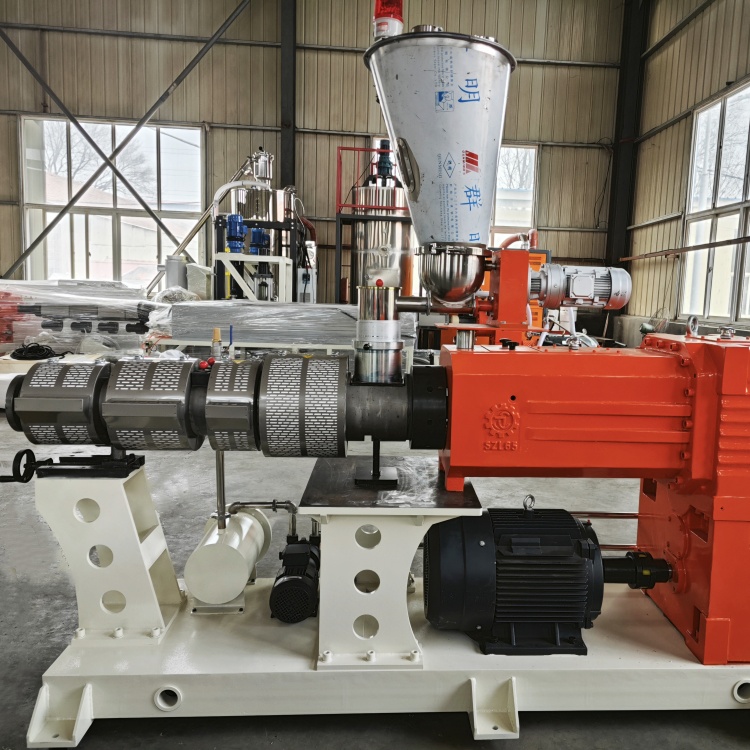
Masterbatch dosing eliminates post-production painting entirely. Modern PVC Pipe Production Line systems integrate colorants directly into the raw material. This integration happens during the high-temperature polymer melt phase. The extruder screws blend the solid pigment pellets into the molten plastic matrix. This delivers uniform, through-wall color distribution. The color becomes an inherent, permanent part of the pipe structure. It provides absolute scratch resistance. You face zero risk of peeling, flaking, or delamination. The pipe exits the cooling tank fully colored and ready for immediate shipment.
The mechanics of inline coloring rely on advanced screw design. The extrusion screw features specific mixing zones designed to shear and fold the polymer melt. This mechanical action disperses the pigment evenly throughout the PVC matrix. Without proper mixing, the final pipe will exhibit color streaks and weak spots. High-performance extruders utilize barrier screws or specialized mixing pins to ensure perfect homogenization. This guarantees that every inch of the extruded pipe meets strict color specifications and structural requirements.
Co-extrusion (ABA layers) drives massive cost efficiency for high-volume producers. Advanced PVC pipe extrusion machinery applies a very thin outer layer over a thicker core. This outer skin layer is highly pigmented and packed with UV-resistant additives. It covers a standard, unpigmented, or recycled PVC core. This method saves significant raw material costs. You only pigment the visible exterior fraction of the pipe wall. It outperforms solid-wall coloring economically. It beats post-extrusion painting in durability, production speed, and overall finish quality.
| Manufacturing Feature | Post-Production Painting | Inline Extrusion Coloring |
| Surface Durability | Prone to peeling, scratching, and flaking | Permanent, scratch-resistant, through-wall color |
| Direct Labor Cost | Extremely high (prep, painting, curing, QA) | Near zero (automated during the extrusion process) |
| Environmental Impact | High VOC emissions, hazardous solvent waste | Low emissions, zero toxic solvent waste |
| Production Scalability | Bottlenecked by curing time and floor space | Highly scalable, continuous high-speed production |
| Long-term UV Resistance | Depends heavily on external paint quality | Inherent UV stabilizers locked in polymer matrix |
Evaluating Equipment: Upgrading Your Plastic Pipe Production Line
Precision in colorant feeding determines final product quality and cost control. Assess the critical differences between gravimetric and volumetric dosing systems. Gravimetric dosing measures masterbatch continuously by weight. It maintains perfect color consistency across long, multi-day production runs. It adjusts automatically to changes in bulk density. This reduces expensive masterbatch waste significantly. Volumetric systems measure only by volume using a rotating screw. They lack this dynamic precision and often overfeed pigment to compensate for inaccuracies. Upgrading a Plastic Pipe Production Line requires accurate gravimetric feeders to maximize profitability.
Die head design controls internal polymer flow dynamics. Identify the specific features required in modern extrusion die heads. They must maintain uniform wall thickness regardless of output speed. They ensure even color distribution around the entire pipe circumference. Poor die designs cause visible flow lines and color streaking. They trigger localized polymer degradation due to dead spots in the melt flow. Advanced spiral mandrel dies mix the melt thoroughly before shaping. They eliminate weld lines and guarantee a flawless, uniform colored surface.
Specialized applications require strict regulatory compliance and exact color matching. Consider the integration of a PVC conduit production line. Inline coloring meets strict national color-coding standards effortlessly. Grey indicates standard electrical conduits. Orange marks telecommunications and fiber optic lines. Green signifies sewer and drainage pipes. You achieve these exact color matches directly at the extrusion phase. Conduit manufacturers rely completely on inline dosing for regulatory compliance. Painting conduit is universally rejected by inspectors due to the risk of color scratching during underground installation.
Implementing an equipment upgrade involves several critical engineering steps:
- Evaluate the existing extruder feed throat for doser mounting compatibility.
- Calculate the maximum output rate to size the gravimetric feeder correctly.
- Upgrade the PLC control system to integrate the new dosing data.
- Test multiple masterbatch formulations to verify color dispersion at high speeds.
- Calibrate the downstream haul-off speed to match the new melt flow characteristics.
Strategic Trade-Offs: Painting vs. Inline Extrusion
Volume and ROI thresholds dictate your long-term manufacturing strategy. Use a strict decision framework to determine your exact break-even point. Upgrading extrusion machinery requires initial capital expenditure. However, it eliminates all recurring operational costs of secondary painting. Calculate your daily paint consumption, labor hours, curing space overhead, and rejection costs. High production volumes justify the equipment upgrade within months. The savings in labor and reduced scrap rates pay for the dosing equipment rapidly.
Consider a facility producing 10,000 feet of colored pipe daily. The manual painting process requires three full-time operators, gallons of expensive polyurethane, and massive ventilation energy costs. The rejection rate for scratched paint during bundling averages five percent. By switching to inline gravimetric dosing, the facility reassigns those three operators to higher-value tasks. The material cost drops to a fraction of the paint expense. The rejection rate falls to near zero. The production line runs continuously without waiting for paint to cure.
Quality and lifespan guarantees differ wildly between the two methods. Compare the long-term field performance expected by your clients. Painted PVC requires frequent maintenance, touch-ups, and eventual recoating. Natively extruded colored PVC withstands harsh environmental conditions for decades without fading. Warranty implications strongly favor inline coloring. You can guarantee permanent colorfastness to your clients. Maintenance requirements drop to zero. This builds strong brand reputation, reduces warranty claims, and fosters deep customer trust.
Conclusion
- Audit your current production volumes to identify the exact linear footage of colored pipe processed monthly.
- Calculate the true cost per foot of your secondary processing operations, including labor, paint, solvents, and scrap rates.
- Consult with extrusion equipment specialists to assess the compatibility of your current machinery with modern dosing units.
- Evaluate the financial feasibility of integrating gravimetric dosing units or ABA co-extrusion die heads into your existing lines.
FAQ
Q: What is the best type of paint to use on PVC pipe for outdoor applications?
A: Two-part polyurethanes and specialized elastomeric acrylic latex paints perform best outdoors. They offer high flexibility to handle extreme thermal expansion. They also provide excellent UV resistance to prevent fading, chalking, and cracking under direct sunlight.
Q: Is it absolutely necessary to sand PVC and remove manufacturer printing before painting?
A: Yes. Mechanical abrasion removes the glossy finish and creates a physical profile for paint adhesion. Factory inkjet printing and extrusion lubricants act as barrier contaminants. Failing to remove them guarantees premature paint peeling and flaking.
Q: Can an existing PVC pipe production line be upgraded for inline coloring?
A: Most modern extrusion lines can easily integrate gravimetric or volumetric masterbatch dosers. You mount these compact units directly above the main extruder feed throat. For co-extrusion coloring, you must upgrade the die head and add a secondary smaller extruder.
Q: How does co-extrusion reduce the manufacturing cost of colored PVC pipes?
A: Co-extrusion applies a very thin, highly pigmented layer over a standard or recycled core. You only use expensive colorants and UV stabilizers on the visible exterior fraction of the pipe. This slashes raw material costs significantly compared to solid-wall coloring.
Q: What causes paint to peel or flake off plastic pipes in field irrigation environments?
A: Peeling occurs due to poor surface preparation, residual mold release agents, and thermal expansion. Irrigation pipes expand and contract wildly in field temperatures. Rigid paints cannot stretch with the plastic, causing the mechanical bond to shear and flake away.
Q: Is inline coloring via masterbatch more environmentally friendly than industrial painting?
A: Yes. Inline coloring produces zero VOC emissions and generates no hazardous solvent waste. It eliminates the need for toxic primers, spray booth ventilation, and paint sludge disposal, making it a far cleaner and safer manufacturing process.
Q: What are the specific color-coding requirements for a PVC conduit production line?
A: Industry standards dictate specific colors for utility identification. Grey is standard for electrical wiring. Orange designates telecommunications and fiber optics. Green indicates sewer lines. Inline coloring ensures these exact shades are permanently embedded into the conduit wall.



 +86-18561886575 (Mr.Wu)

 +8618561886575
 238 Yangzhou West Road, Jiaozhou City, Qingdao City, Shandong Province