Operational downtime and recurring maintenance costs associated with clogged PVC and plastic piping systems drain facility budgets and damage manufacturer reputations. Facility managers and plumbers often rely on immediate mechanical and chemical clearing methods to restore flow. However, these tactics only address the symptom. Recurring blockages frequently indicate compromised interior pipe walls, thermal degradation, or substandard manufacturing practices. Moving beyond temporary fixes requires a comprehensive dual approach. First, you must deploy safe, non-destructive cleaning protocols in the field. Second, you need to address the root cause by evaluating the quality of the extrusion technology. Upgrading a PVC Pipe Production Line eliminates the micro-defects that cause clogs in the first place.
- Safe Maintenance Limits: Caustic chemicals, near-boiling water, and aggressive mechanical snaking can score, warp, or melt plastic pipes; enzymatic cleaners, plungers, and controlled hydro-jetting are the industry standards for preserving pipe integrity.
- The Root Cause of Clogs: Frictional resistance and scaling are directly tied to interior wall roughness, a defect stemming from outdated manufacturing processes.
- Manufacturing as the Ultimate Fix: Investing in modern plastic pipe production line technology ensures ultra-smooth interior walls, drastically reducing the lifetime maintenance burden of the piping system.
- Strategic Upgrades: Transitioning to advanced PVC pipe extrusion systems offers measurable ROI by reducing material waste, improving pipe durability, and commanding premium market positioning for manufacturers.
Standard Protocols: How Do You Clean or Unclog PVC and Plastic Pipe Safely?
The primary goal during maintenance is restoring optimal flow rates without compromising structural integrity. Pressure ratings and chemical compositions must remain completely intact. Aggressive clearing tactics often cause permanent damage to the infrastructure. Field technicians frequently encounter shattered P-traps and warped lateral lines simply because someone used the wrong clearing method. You must approach plastic piping with specific constraints in mind.
First-Line Defenses and Natural Solvents
Plungers remain the safest, non-invasive first step for blockage removal. They effectively dislodge obstructions in kitchen plastic pipes and bathroom drains. Creating a proper vacuum seal forces trapped air against the clog. You need to block the overflow valve with a wet rag to ensure the pressure directs downward into the pipe rather than escaping out the top. This mechanical pressure often clears minor debris without introducing foreign objects into the system. Use a cup plunger for flat sink basins and a flange plunger for toilets to guarantee the correct seal.
Baking soda and vinegar offer a highly reliable natural solvent. This mixture breaks down organic buildup efficiently without generating dangerous heat. Pour one cup of dry baking soda directly into the drain. Follow this immediately with one cup of white vinegar. The resulting carbonic acid reaction creates an aggressive fizzing action. This expands inside the pipe, loosening fats and debris from the walls. Let the mixture sit for fifteen to twenty minutes. Follow this treatment with a warm water flush to clear the line. Never use boiling water for this flush.
Temperature limits require strict attention during any cleaning process. Near-boiling water should never touch PVC traps. Standard polyvinyl chloride has a maximum operating temperature around 140 degrees Fahrenheit (60 degrees Celsius). Pouring boiling water, which hits 212 degrees Fahrenheit, down the drain exceeds the material's thermal limits. This causes immediate warping. The extreme heat softens the plastic, leading to catastrophic joint failure where the solvent cement breaks down under thermal expansion.
Chemical vs. Mechanical Clearing Methods
Commercial chemical drain cleaners pose severe risks to plastic infrastructure. Products containing sodium hydroxide (lye) or sulfuric acid create intense exothermic reactions. This rapid heat generation can melt PVC traps instantly, turning a simple clog into a major plumbing replacement job. Even if the pipe survives the initial heat spike, the chemical degrades overall pipe integrity over time. It leaves the interior brittle, highly porous, and prone to cracking under normal water pressure.
Mechanical tools require careful handling and proper selection. Drain snakes and augers clear stubborn clogs effectively when used by trained hands. Professional tools feature smooth, rounded drop-head tips designed to navigate tight bends without gouging the plastic. Dangerous DIY methods cause severe damage. Never use a wire coat hanger to clear a drain. Sharp wires easily score the interior plastic walls. These deep scratches create permanent catch-points for future debris, guaranteeing the pipe will clog again in the exact same spot.
Hydro-jetting serves as the safest mechanical alternative for severe blockages in commercial settings. Low-PSI hydro-jetting (kept strictly between 1500 and 2000 PSI) clears commercial plastic pipes effectively. It removes hardened scale, grease, and sludge without scratching the surface. High-pressure jetting meant for cast iron will cut right through Schedule 40 PVC, so pressure regulation is mandatory. The controlled water pressure scours the interior walls clean, restoring the pipe to its original inner diameter.
Access and Minor Repairs
Navigating sealed systems presents unique maintenance challenges. You must access the interior without cleanout screws. Dismantling accessible slip joints under sinks provides immediate entry. Place a bucket underneath to catch residual water and sludge. Loosen the slip nuts by hand or with adjustable pliers, being careful not to crack the plastic threads. If joints are permanently solvent-welded, feed a flexible drain snake through the nearest fixture opening, such as the roof vent or the sink basin itself.
Component replacement prevents secondary issues after clearing a clog. Always replace worn P-trap washers during routine maintenance. Rubber and nylon slip-joint washers compress, dry out, and degrade over time. Reusing an old washer almost always results in a slow drip. Installing fresh washers prevents secondary leaks after reassembly, ensuring a watertight seal without over-tightening the plastic nuts.
The "cut and sleeve" repair handles severe damage effectively. Sometimes a clog proves completely impenetrable, or the pipe itself sustains physical damage from improper snaking. Cutting out the damaged section works best. Use proper PVC ratcheting shears for a clean, square cut. Avoid hacksaws if possible, as they leave heavy burrs. Deburr the inside and outside edges thoroughly. Apply purple primer, then heavy-duty solvent cement. Slide a new pipe segment into place using standard couplings, holding the joint together for 30 seconds to prevent push-out. This creates a seamless, professional-grade fix.
| Clearing Method | Safety on Plastic Pipes | Effectiveness | Risk Level |
| Cup/Flange Plunger | Excellent | High for minor clogs | Low |
| Baking Soda & Vinegar | Excellent | Medium for organic buildup | Low |
| Boiling Water | Poor (Causes Warping) | High for grease | Extreme |
| Chemical Cleaners (Lye) | Poor (Exothermic Melting) | High for hair/grease | Extreme |
| Low-PSI Hydro-Jetting | Good (Requires Training) | Very High for scale | Medium |
| Wire Coat Hanger | Poor (Scores Interior) | Low | High |
The Hidden Culprit: Why Substandard Plastic Pipes Clog Repeatedly
Recurring blockages rarely happen by accident. They usually stem from physical imperfections inside the pipe. Understanding fluid dynamics reveals why certain pipes fail constantly while others remain clear for decades. When maintenance teams find themselves clearing the same lateral line every three months, the problem is no longer what the users are putting down the drain. The problem is the pipe itself.
Interior Surface Roughness and Flow Dynamics
Micro-abrasions and pitting severely disrupt fluid dynamics. Uneven wall thickness creates turbulence inside the pipe, slowing down the velocity of the wastewater. These microscopic imperfections act like sandpaper, trapping fats, oils, and greases (FOG). Kitchen lines suffer heavily from this specific type of buildup. Grease solidifies rapidly when it catches on a rough patch, building layer upon layer until the pipe chokes completely.
Particulates accumulate similarly in water supply pipes. Minerals like calcium and magnesium anchor themselves to textured surfaces much faster than smooth ones. Rough walls guarantee recurring clogs regardless of maintenance frequency. The friction coefficient determines how easily waste materials exit the system. If the interior wall lacks a mirror-like finish, suspended solids will eventually drop out of the flow and settle on the bottom of the pipe.
Thermal and Chemical Degradation
Poor material compounding leaves pipes vulnerable from day one. Substandard manufacturing fails to stabilize the polymer chains correctly during the melting phase. Un-melted resin particles create weak spots along the pipe wall. These localized defects degrade faster than the surrounding plastic when exposed to hot wastewater or household chemicals. This leads to rapid scaling over time.
Mineral buildup adheres easily to these degraded surfaces. Chemical resistance drops significantly when the polymer matrix is compromised. Regular household cleaners, bleach, and detergents can further degrade these weak points. The pipe interior becomes increasingly porous, accelerating the clogging cycle. Once the surface integrity is gone, no amount of hydro-jetting will keep the pipe clear for long.
The Extrusion Connection
Recurring field failures trace directly back to the factory floor. Inconsistencies in the extrusion process cause these physical defects. Outdated machinery cannot maintain precise dimensional tolerances. Fluctuating extruder temperatures cause uneven melting, resulting in a pipe with varying density and surface texture. When the haul-off speed doesn't match the extruder output perfectly, the pipe walls ripple.
Upgrading the manufacturing process eliminates these physical flaws entirely. A controlled extrusion environment produces a perfectly smooth interior. This shifts the responsibility from the plumber back to the manufacturer. High-quality production methods eradicate the root cause of frictional resistance, ensuring the pipe performs exactly as engineered.
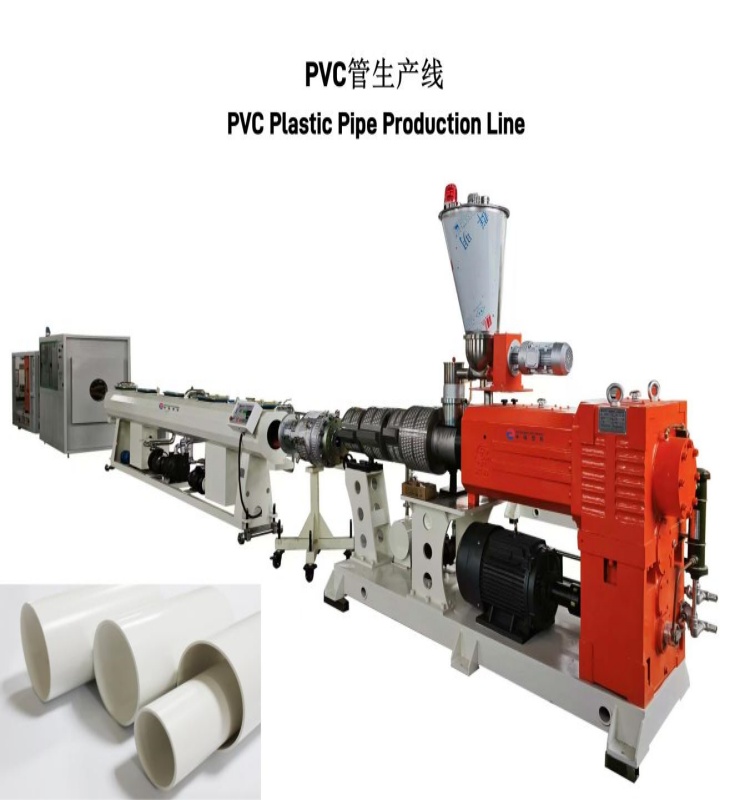
![PVC Pipe Production Line]()
Solving Clogs at the Source: The Role of a High-Quality PVC Pipe Production Line
We must shift focus from reactive plumbing maintenance to proactive manufacturing excellence. Proactive manufacturing prevents issues before installation occurs. A high-quality production setup changes the entire maintenance equation for facility managers. When the pipe interior is flawless, the need for aggressive chemical or mechanical clearing drops to near zero.
Precision Extrusion for Flawless Interior Walls
Modern machinery utilizes advanced vacuum sizing technology. The extruded plastic enters a calibration sleeve under negative pressure. This vacuum forces the hot, pliable polymer outward against the perfectly smooth metal calibrator. High-efficiency cooling tanks lock in these dimensions instantly. Spray cooling provides uniform temperature reduction across the entire pipe circumference, preventing ovality and internal stress.
This combination ensures zero-friction interior surfaces. Smooth walls prevent debris from anchoring to the plastic. Flow rates remain optimal for decades. The lack of surface tension allows water to carry heavy waste effortlessly through horizontal runs. This precision engineering eliminates the micro-pits that trap grease, effectively neutralizing the primary cause of residential and commercial clogs.
Material Compounding and Thermal Stability
Precise temperature control prevents polymer degradation during manufacturing. Advanced extruders maintain exact heat profiles across multiple barrel zones. This ensures the PVC resin melts uniformly without burning or degrading the additives. It results in a highly stable, homogenous pipe structure where the stabilizers, lubricants, and impact modifiers are perfectly distributed.
The finished product resists chemical adherence perfectly. Scaling becomes a non-issue when the polymer matrix is fully integrated. Investing in a modern Plastic Pipe Production Line guarantees this level of quality. It provides the thermal stability required for long-term underground performance, ensuring the pipe can handle decades of chemical exposure without the interior walls breaking down.
Evaluating Modern Plastic Pipe Production Line Technologies
Manufacturers must evaluate specific equipment features carefully. Upgrading facilities requires focusing on features-to-outcomes. You want machinery that produces clog-resistant pipes consistently, shift after shift. The technology must guarantee dimensional stability across high-volume production runs, minimizing scrap and maximizing the output of premium-grade piping.
Core Features of Advanced Extrusion Systems
Automated wall thickness control is absolutely non-negotiable for modern facilities. Ultrasonic measuring systems provide real-time dimensional adjustments. They scan the pipe circumference continuously as it exits the cooling tank, detecting variations down to the fraction of a millimeter. The system automatically adjusts haul-off speeds or extruder RPM to maintain perfect thickness, preventing the internal rippling that causes clogs.
High-torque, twin-screw extruders ensure optimal melt homogeneity. Counter-rotating screws provide excellent shearing and mixing capabilities, essential for processing dry PVC blends. These features eliminate the weak points that cause scaling. Utilizing advanced PVC pipe extrusion systems ensures consistent, high-quality output that meets strict international plumbing codes.
Specialized Applications
A dedicated PVC downpipe production line optimizes vertical drainage. These systems focus heavily on weather resistance and UV stability. They ensure rapid debris clearance in roofing systems. Residential and commercial buildings rely on this efficiency to prevent water damage during heavy storms. The interior must remain incredibly slick to shed wet leaves, pine needles, and abrasive roofing granules without jamming.
Flexibility and scalability matter greatly for underground applications. A corrugated pipe extrusion line balances structural crush-resistance with flow efficiency. These machines produce a double-wall construction. The outer corrugated layer handles heavy soil loads and traffic weight. The smooth inner layer ensures rapid fluid transport. It maintains high flow efficiency in gravity sewer applications. Clogs in these deep underground environments cost thousands of dollars to excavate and remediate, making the smooth inner wall critical.
- Standard PVC Extrusion: Utilizes vacuum sizing for ultra-smooth interior walls, ideal for water supply and indoor plumbing.
- PVC Downpipe Extrusion: Focuses on high weather resistance and rapid debris clearance for vertical roof drainage.
- Corrugated Pipe Extrusion: Features a double-wall design with a zero-friction inner layer for underground sewers and drainage.
Business Impact: Maintenance Costs vs. Manufacturing Upgrades
Evaluating the financial impact requires looking at the entire product lifecycle. Short-term savings on manufacturing equipment often lead to massive long-term liabilities. Upgrading production capabilities protects both profit margins and brand reputation in a highly competitive construction materials market.
Overall Value Influencing Factors
Compare the lifetime cost of ongoing field maintenance. Factor in labor costs for plumbing dispatches, which easily exceed hundreds of dollars per hour. Add the expenses of cut-and-sleeve repairs, property damage from backups, and warranty claims. These expenses drain profitability over time. They also damage customer trust, leading contractors to switch to competing pipe brands.
Contrast this with the capital expenditure of upgrading equipment. Modern manufacturing equipment pays for itself through reliability and material efficiency. It reduces scrap rates significantly by maintaining tight tolerances. It also allows manufacturers to command premium pricing for guaranteed clog-resistant piping, shifting the product from a commodity to a value-added building material.
Implementation Risks and Mitigation
High initial investment poses a significant risk for manufacturers. Facility downtime during installation also causes production anxiety. Phased implementation mitigates these issues effectively. Modular line upgrades allow facilities to maintain partial production while new cooling tanks or extruders are integrated into the floor plan.
Partner with OEMs offering comprehensive operator training. Proper training ensures the equipment runs at optimal efficiency immediately after commissioning. Leverage increased production speeds to offset the initial downtime. Modern lines run significantly faster than legacy equipment, allowing you to catch up on backorders rapidly.
Supply chain disruptions for raw materials present another challenge. Selecting highly adaptable extrusion lines solves this problem. The equipment must process varying grades of PVC resin. It should handle regrind materials without compromising interior smoothness. Advanced screw designs accommodate different material formulations effortlessly, keeping production moving even when specific resin grades are unavailable.
Conclusion
Safe cleaning methods remain necessary for immediate blockage removal. Plungers, enzymatic treatments, and careful hydro-jetting work well for routine maintenance without destroying the infrastructure. However, the long-term solution to recurring clogs lies in superior pipe manufacturing. Fixing the root cause at the factory level eliminates the symptom entirely in the field.
Facility managers should source pipes manufactured on modern equipment to reduce their annual plumbing budgets. Pipe manufacturers must evaluate their current production lines rigorously. They need to meet modern standards of interior smoothness and dimensional stability. This prevents recurring field failures and protects brand reputation.
- Audit current pipe failure rates to identify recurring clog locations and assess if the pipe material is at fault.
- Standardize safe cleaning protocols across all facility maintenance teams, strictly banning boiling water and exothermic chemicals.
- Stock replacement P-trap washers and slip-joint nuts to prevent secondary leaks during routine clog repairs.
- Request a technical consultation from leading extrusion system providers to evaluate your current factory output.
- Conduct an ROI analysis comparing your current scrap rates and warranty claims against the efficiency of a modern extrusion upgrade.
FAQ
Q: What is the safest way to unclog a PVC pipe without damaging it?
A: Focus on non-exothermic solutions. Use baking soda and vinegar for organic blockages. Plungers provide safe mechanical force. For commercial settings, controlled low-PSI hydro-jetting clears debris without scoring the plastic walls.
Q: Can boiling water melt or damage PVC pipes?
A: Yes, near-boiling water easily exceeds the temperature limits of standard PVC. Pouring boiling water down the drain causes the plastic to warp. It frequently leads to catastrophic P-trap joint failure and subsequent leaks.
Q: How do I clean the inside of a plastic pipe if there are no cleanout screws?
A: You must safely dismantle accessible slip joints under the sink. If joints are glued, feed a flexible, professional drain snake through the nearest fixture opening. For larger commercial pipes, professional hydro-jetting navigates bends without needing cleanout access.
Q: Is it safe to use a wire coat hanger to unclog a plastic drain?
A: No, using a wire coat hanger is highly destructive. The sharp metal wire easily scores and scratches the interior plastic walls. These permanent scratches create catch-points that trap hair, grease, and debris, guaranteeing future clogs.
Q: How does the quality of a PVC pipe production line affect pipe clogging?
A: Extrusion precision dictates interior wall smoothness. Outdated machinery causes micro-abrasions and uneven thickness. High-quality production lines use vacuum sizing and rapid cooling to create zero-friction surfaces. Smooth walls prevent debris from anchoring and accumulating.
Q: What are the signs that a plastic pipe needs to be replaced rather than cleaned?
A: Recurring clogs in the exact same location indicate structural issues. Visible warping, persistent joint leaks, and severe interior scoring require replacement. When a clog is completely impenetrable, a professional cut and sleeve repair becomes necessary.
Q: What is the difference between a standard extrusion line and a corrugated pipe extrusion line?
A: Standard lines produce smooth-wall pressure pipes for indoor plumbing. Corrugated lines produce double-wall pipes with a ribbed outer layer for crush resistance and a smooth inner layer for gravity drainage in underground sewer applications.
Q: How do modern PVC pipe extrusion systems ensure uniform wall thickness?
A: Modern systems utilize automated gravimetric dosing for precise material feeding. They also feature ultrasonic thickness monitoring. This technology measures the pipe wall in real-time, automatically adjusting extruder speed to maintain perfect dimensional stability.



 +86-18561886575 (Mr.Wu)

 +8618561886575
 238 Yangzhou West Road, Jiaozhou City, Qingdao City, Shandong Province