Manual end-prep acts as a silent killer in high-volume manufacturing. Throughput suffers when factory floors rely on hand-finishing. Quality drops across different shifts, and plant managers struggle to keep pace with extrusion speeds. Transitioning to automated in-line processing solves this operational bottleneck. It guarantees downstream joint integrity and eliminates human error. Field installers frequently skip manual deburring due to strict time constraints on job sites. Supplying pre-chamfered, ready-to-install pipe directly from the factory creates a massive competitive advantage. Contractors prefer materials requiring zero prep work. This guide targets professional manufacturing environments. We focus strictly on plant-level optimization. We exclude field-level plumbing repairs and manual hand-tool usage. You will learn how to synchronize end-finishing with extrusion speeds, select the right industrial tooling, and eliminate packaging bottlenecks.
- Structural Integrity: Why proper chamfer angles (typically 15°–20°) are non-negotiable for solvent weld and push-fit joint performance.
- Throughput vs. Quality: The trade-off between offline manual processing and integrated, automated in-line units.
- Lifecycle Costs: Assessing the ROI of integrated deburring units based on tool wear, energy consumption, and reduction in end-product rejects.
- Material Specifics: How extrusion temperature and PVC formulation impact the ease of material deformation during flaring and chamfering.
The Role of End-Prep in Modern PVC Pipe Manufacturing
Consistent inner and outer diameter tolerances dictate seamless installation. Variations cause catastrophic leaks. Mechanical requirements demand absolute precision at the pipe ends. Extruding a perfect cylinder means nothing if the cut leaves jagged edges. Automated end-prep ensures every single piece meets strict dimensional criteria before leaving the facility. Factory operators must treat the cutting and chamfering station with the same level of technical scrutiny as the main extruder.
Preventing Field Failure in Specific Joints
Field failures ruin manufacturer reputations. Contractors blame the pipe, not their installation methods. Proper factory-level end-prep prevents two major categories of joint failure.
Solvent welds fail when jagged burrs wipe cement away during insertion. The solvent needs a clean, smooth surface to create a chemical bond. Rough edges scrape the cement off the fitting walls. This leaves dry spots. Dry spots turn into high-pressure leaks. A smooth chamfer allows the solvent to distribute evenly across the entire bonding area, ensuring a permanent chemical weld.
Push-fit systems rely entirely on internal rubber O-rings. Sharp, unchamfered outer edges act like razor blades. They slice these rubber rings during insertion. Damaged seals fail immediately under pressure. A factory-machined chamfer guides the pipe past the seal without causing friction damage. This mechanical clearance is non-negotiable for municipal water and sewer applications.
The Manufacturing Line Ecosystem
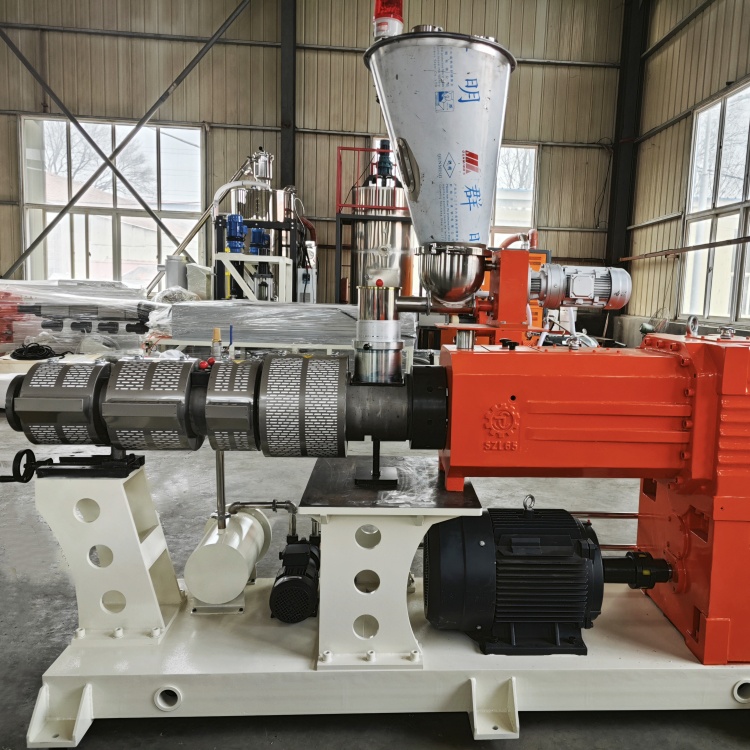
End-prep sits at a critical juncture in the sequence. It operates post-haul-off and post-cutting. It must synchronize perfectly with the upstream machinery. The PVC Pipe Production Line dictates the overall pace. The chamfering unit cannot lag. If the cutter processes thirty pieces per minute, the deburring station must match or exceed that rate. Integration requires precise programmable logic controller (PLC) synchronization to prevent pipe collisions on the run-out table. Sensors track the pipe position, triggering the clamping and cutting sequence in milliseconds.
![Automated PVC pipe chamfering and deburring equipment]()
Evaluating In-Line vs. Offline Deburring and Chamfering
Choosing between in-line integration and offline processing defines your factory's efficiency. High-speed operations demand automation. Manual handling destroys profit margins through labor bloat and inconsistent output. Plant managers must evaluate their current throughput to determine when offline processing becomes a liability.
In-Line Automation Benefits
Integrating high-speed rotary chamfering units directly into the PVC pipe manufacturing line yields immediate results. You reduce labor hours significantly. You eliminate manual handling bottlenecks at the end of the extrusion run. Machines achieve 360-degree uniformity. Human operators fail to replicate this consistency at scale. Fatigue sets in during a shift. An automated cutting head applies the exact same pressure and angle to piece number one and piece number ten thousand.
Overcoming Large-Diameter Challenges
Processing large pipes requires serious mechanical power. Automated planetary cutters handle 8-inch (200mm+) outer diameters effortlessly. They rotate around the stationary pipe, cutting and chamfering simultaneously. This eliminates dangerous field practices. Contractors often use chop saws, reciprocating saws, or utility blades on large pipes. These methods produce terrible finishes and risk severe injury. Factory-machined large-diameter pipes save contractors hours of dangerous labor and protect them from job site accidents.
Offline Bench Processing
Offline processing makes sense only in highly specific scenarios. Low-volume niche piping or custom specialty profiles might require manual bench work. It fails completely in high-speed, high-pressure plant environments. Moving pipes from the run-out table to a separate processing station requires forklifts, carts, and extra personnel. Every touchpoint increases the risk of surface scratches and material damage. Forklift traffic also introduces severe safety hazards to the factory floor.
Operational Risk and Bottlenecks
Manual bottlenecks slow down downstream packaging. Stacking stations sit idle while workers struggle to deburr pipe ends. This operational risk forces line operators to reduce extrusion speeds. Slowing down the extruder to accommodate manual labor destroys factory efficiency. Automated in-line systems ensure the packaging station receives a continuous, uninterrupted flow of finished product. This allows the extrusion team to push the line to its maximum rated capacity.
Technical Deep Dive: Achieving Perfect Flaring and Chamfering
Understanding the physics of material removal and deformation separates average manufacturers from industry leaders. Perfect end-finishing requires precise control over angles, temperatures, and tooling materials. Operators must master these variables to produce commercial-grade piping.
Chamfering Mechanics
The optimal angle reduces insertion force. It ensures the pipe slides into the fitting smoothly. Standard industry practice dictates a 15° to 20° chamfer angle. This specific geometry compresses the push-fit O-ring gradually. Steeper angles pinch the rubber. Shallower angles fail to provide enough clearance. The cutting head must maintain this exact angle regardless of minor wall thickness variations. Floating cutting heads compensate for slight ovality, ensuring the chamfer depth remains consistent around the entire circumference.
Flaring Processes and Temperature Control
Flaring expands the pipe end to create an integrated socket. Temperature control determines the success of this process. Heat-set flaring proves superior to cold-forming. Heating the PVC to its glass transition temperature allows the polymer chains to realign. This reduces long-term residual stress. Cold-forming forces the material into shape, creating micro-cracks. These invisible defects cause the socket to split under internal water pressure months after installation. Infrared heating ovens provide the most consistent, penetrating heat for thick-walled PVC.
Industrial Tooling vs. Field Tools
Factories require heavy-duty equipment. Industrial multi-station cutting heads dominate professional environments. They utilize rigid frames and high-torque motors. Consumer-grade manual tools belong in a plumber's toolbox, not a factory. Drill-powered attachments lack the stability required for perfect concentricity. They chatter against the pipe, leaving a wavy, unacceptable finish. Industrial units use heavy cast-iron bases to absorb vibration, resulting in a mirror-smooth cut.
Tooling Selection: Carbide vs. Friction
Tooling material dictates maintenance schedules. Carbide-tipped cutting heads last significantly longer. They slice through rigid PVC cleanly. Friction-based deburring brushes wear out quickly. They melt the plastic rather than cutting it, leaving a smeared finish. Continuous operation demands premium carbide inserts. Operators can rotate these inserts to expose fresh cutting edges, maximizing tool life before requiring a complete replacement.
Impact of Extruder Settings
Upstream variables directly affect downstream cutting. Cooling water temperature alters pipe hardness. Puller speed changes wall thickness. These variables impact end-finish quality. A well-calibrated PVC pipe extruder ensures consistent material density. If the pipe exits the cooling tank too warm, the chamfering tool will gouge the soft plastic. If it exits too cold and brittle, the cutter may cause micro-chipping along the edge.
To maintain optimal cutting conditions, operators should monitor these specific parameters:
- Check the final cooling tank water temperature hourly to ensure it remains within the specified range for your PVC formulation.
- Verify the haul-off caterpillar tracks apply even pressure to prevent ovality before the pipe reaches the cutting station.
- Inspect the vacuum sizing tank calibration to guarantee the outer diameter remains perfectly round.
- Monitor the extruder melt temperature to prevent material degradation that causes brittle pipe ends.
Troubleshooting Common End-Prep Defects
Operators frequently encounter specific defects when calibrating chamfering units. Chatter marks indicate loose tooling or worn bearings in the cutting head. Smeared plastic points to dull carbide inserts or excessive friction heat. Asymmetrical chamfers occur when the pipe is not perfectly centered in the clamping mechanism. Addressing these issues requires a systematic approach. First, verify the clamping pressure holds the pipe rigid without distorting the outer diameter. Second, check the spindle runout with a dial indicator to ensure the cutting head rotates perfectly true. Finally, confirm the feed rate of the cutting tool matches the material hardness. Pushing the blade into the PVC too aggressively causes deflection and poor surface finish.
Quality Control and Compliance Standards
Producing pipe that looks good is not enough. The output must meet rigorous international standards. Commercial contractors demand verifiable compliance before signing purchase orders. Your facility must implement strict auditing procedures to guarantee every batch meets these requirements.
Benchmarking Against ISO/ASTM Standards
Your output must meet specific fit-for-service criteria. ISO and ASTM standards define exact dimensional tolerances for pipe ends. These documents specify the maximum allowable burr size and the required chamfer depth. Meeting these benchmarks proves your product belongs in commercial applications. A properly configured PVC downpipe production line consistently hits these targets without manual intervention. Compliance documentation allows your sales team to bid on lucrative municipal and federal contracts.
Visual and Mechanical Audit Points
Establish a repeatable testing regimen. Quality control personnel must inspect deburred inner and outer surfaces hourly. Implement go/no-go gauges to check socket depths and chamfer angles instantly. Visual audits catch smeared plastic or chatter marks. Mechanical audits verify the exact dimensions. Documenting these checks protects the manufacturer during liability disputes. Keep physical samples of perfect cuts at the quality control station to serve as a visual baseline for operators.
Implementing Automated Vision Systems
Modern facilities increasingly rely on automated vision systems to augment mechanical audits. High-speed cameras inspect every chamfered end as it passes down the run-out table. These systems use advanced algorithms to detect micro-cracks, incomplete chamfers, or surface irregularities. If the camera identifies a defect, it triggers a pneumatic reject arm to kick the faulty pipe off the line. This guarantees absolute quality assurance without slowing down production. Integrating vision systems requires adequate lighting and clean lenses, but the payoff in defect prevention is massive.
The Cost of Poor Quality
Quantify the impact of field warranty claims. Improperly prepared pipe ends fail under pressure. When a commercial building floods due to a sliced O-ring, the manufacturer often absorbs the cost. This includes replacement materials, labor back-charges, and lost reputation. Investing in automated end-prep eliminates this massive financial risk. The equipment pays for itself by preventing a single major warranty claim.
Scaling Your Production: When to Upgrade Your Plastic Pipe Production Line
Growth requires infrastructure upgrades. Pushing old equipment past its limits results in catastrophic downtime. Recognizing the exact moment to upgrade prevents production bottlenecks and protects your market share.
Capacity Threshold Analysis
Identify the break-even production speed. Manual deburring fails past a certain line speed. If your operators cannot keep up with the haul-off unit, you have crossed the threshold. Stacking unfinished pipe on the floor indicates a critical failure in process flow. Calculate the labor hours wasted on manual prep. Compare that figure against the monthly lease of an automated unit. When the labor cost exceeds the equipment lease, upgrading becomes a financial necessity.
Integration Strategies
Decide between retrofitting existing machinery or purchasing entirely new systems. Retrofitting requires careful PLC integration. You must ensure compatibility with existing extruders, haul-offs, and cutters. The communication between these machines must be flawless. Purchasing a complete, modern Plastic Pipe Production Line guarantees seamless communication. The manufacturer designs all components to work together from day one, eliminating the headaches of matching different software protocols.
Maintenance Considerations
High-throughput 24/7 manufacturing environments require predictable maintenance. Predict tool wear cycles accurately. Schedule downtime for blade replacements before the cut quality degrades. Unexpected downtime destroys production schedules. Implement vibration sensors on cutting motors to detect bearing wear early. Keep a comprehensive inventory of replacement carbide inserts and drive belts on site. Relying on overnight shipping for critical wear parts is a recipe for missed delivery deadlines.
Calculating the Return on Investment
Upgrading your facility requires a clear financial justification. Calculate your return on investment by tracking three specific metrics. First, measure the reduction in scrap rates caused by poor manual cuts. Second, quantify the labor savings from reassigning manual deburring personnel to higher-value tasks. Third, factor in the energy efficiency of modern servo-driven cutting units compared to older pneumatic systems. Most facilities achieve a full return on investment within twelve to eighteen months. The long-term savings continue to compound as production volumes increase and warranty claims drop to zero.
Implementation Checklist: Evaluating Equipment Providers
Selecting the right machinery partner determines the success of your automation project. Look beyond the initial purchase price. Evaluate long-term reliability, safety features, and technical support.
Reliability Metrics
Assess the Mean Time Between Failure (MTBF) for cutting and chamfering heads. Ask the vendor for historical data from similar installations. High MTBF numbers indicate robust engineering. Weak motors and cheap bearings will fail within months under continuous factory loads. Request references from other plant managers who run the same equipment in a 24/7 environment.
Flexibility and Range
Evaluate the machine's operational range. Can the unit handle the full spectrum of pipe diameters produced by your facility? A machine that processes 20mm to 315mm+ pipes offers maximum utility. Check the changeover time. Swapping cutting heads for different diameters should take minutes, not hours. Excessive changeover time eats into production schedules and reduces overall equipment effectiveness.
Comparison of In-Line Automated vs. Offline Manual Processing | Feature | In-Line Automated Processing | Offline Manual Processing |
| Throughput Speed | Matches extrusion speed exactly | Creates severe bottlenecks |
| Chamfer Consistency | 100% uniform 360-degree finish | Highly variable based on operator fatigue |
| Labor Requirement | Zero dedicated manual handlers | Requires multiple shifts of dedicated workers |
| Safety Risk | Fully enclosed cutting zones | High risk of repetitive strain and lacerations |
| Floor Space | Integrated into existing footprint | Requires separate staging and workbenches |
Safety Integration
Ensure automated units meet strict international safety standards. High-speed cutting machinery generates flying debris. The unit must feature fully enclosed cutting zones. Interlocking safety doors must shut down the motors instantly if opened during operation. Protect your operators from dust inhalation by integrating industrial vacuum extraction systems directly into the cutting hood. Proper dust extraction also keeps the sensors and linear guides clean, extending the machine's lifespan.
Vendor Support
Proximity to technical support matters. When a machine goes down, you need answers immediately. Verify the availability of replacement wear-parts. A vendor with a local parts depot prevents weeks of downtime waiting for international shipping. Ask about remote diagnostic capabilities. Modern machines allow technicians to troubleshoot PLC errors via secure internet connections, often resolving issues without requiring a site visit.
Conclusion: Future-Proofing Your Pipe End-Finishing
Upgrading your end-finishing process directly impacts your bottom line and market reputation. Stop relying on manual labor to fix extrusion outputs. Transitioning to automated chamfering and deburring eliminates bottlenecks and guarantees joint integrity for the end-user. To begin optimizing your facility, execute these next steps:
- Audit your current packaging station to identify exact manual handling bottlenecks.
- Measure the surface temperature of your pipe exiting the cooling tank to ensure optimal cutting hardness.
- Calculate the annual labor hours currently wasted on offline deburring.
- Request MTBF data and changeover timeframes from automated equipment vendors.
- Schedule a pilot integration of a rotary chamfering unit on your highest-volume extrusion line.
FAQ
Q: Why should manufacturers pre-chamfer pipes instead of leaving it to field installers?
A: Factory pre-chamfering guarantees perfect angles and smooth finishes. Field installers often face severe time constraints and use improper tools like utility knives or chop saws. This leads to jagged edges that ruin solvent welds or slice push-fit O-rings. Factory prep ensures consistent joint integrity and reduces warranty claims.
Q: What is the ideal chamfer angle for standardized PVC push-fit piping?
A: The industry standard for push-fit PVC piping is a 15° to 20° chamfer angle. This specific geometry allows the pipe to slide past the internal rubber O-ring smoothly. It compresses the seal gradually without pinching or slicing the rubber material during insertion.
Q: How does the PVC extruder cooling process affect the efficiency of downstream chamfering tools?
A: Cooling water temperature determines the pipe's surface hardness. If the pipe exits too warm, cutting tools will gouge and smear the soft plastic. If it exits too cold, the material becomes brittle, leading to micro-chipping. Consistent cooling ensures the carbide blades cut cleanly and maintain their edge longer.
Q: Can an automated deburring unit be retrofitted to an older PVC pipe manufacturing line?
A: Yes, automated units can be retrofitted. However, it requires careful PLC integration to synchronize the new cutting equipment with the existing haul-off and extrusion speeds. The physical footprint must also accommodate the new machinery without disrupting the run-out table flow.
Q: Why is mechanical in-line chamfering preferred over manual filing or drill-powered tools in high-speed production?
A: In-line mechanical chamfering provides absolute consistency and matches the continuous speed of the extruder. Manual filing causes severe bottlenecks and operator fatigue. Drill-powered tools lack stability, causing chatter marks and uneven angles. Only heavy-duty industrial cutting heads can handle 24/7 continuous operation.
Q: What are the primary indicators that your automated deburring tools need replacement?
A: Visual defects are the first indicator. Look for smeared plastic, chatter marks, or rough, fuzzy edges instead of clean cuts. Increased vibration in the cutting head or a noticeable rise in motor load also signals that the carbide inserts are dull and require immediate rotation or replacement.
Q: How does in-line flaring affect the overall structural integrity of thin-wall PVC downpipes?
A: When done correctly using heat-set flaring, it maintains structural integrity by allowing polymer chains to realign, relieving residual stress. If cold-formed or improperly heated, the flaring process introduces micro-cracks and thins the wall excessively, leading to eventual splitting under environmental stress.



 +86-18561886575 (Mr.Wu)

 +8618561886575
 238 Yangzhou West Road, Jiaozhou City, Qingdao City, Shandong Province