Securing high-volume, high-value loads requires precise material engineering. Deploying the wrong strapping material leads to tension loss, load shifting, and catastrophic product damage during transit. Operations managers and packaging manufacturers face a strict infrastructure decision. They must select the correct extrusion systems for Polypropylene (PP) or Polyester (PET) strapping. This requires balancing immediate material properties against long-term tension retention, environmental resilience, load characteristics, and sealing method compatibility.
Selecting the optimal system requires a technical evaluation of material properties. Engineers must analyze elongation, tensile strength, and creep resistance. Understanding how these end-product requirements dictate machinery selection is non-negotiable. The physical demands of the strapped load directly determine the specifications required for a dedicated packaging straps manufacturing setup.
- Tension Retention is the Primary Differentiator: PET maintains tension over long periods and through environmental shifts, whereas PP is susceptible to rapid tension decay, making it suitable only for short-term or settling loads.
- Environmental Realities Dictate Material: PET offers superior resistance to UV exposure, moisture, and temperature fluctuations compared to PP, making it the safer pick for outdoor storage and damp warehouses.
- Production Infrastructure Must Match Output Goals: The choice between a PP strapping production line and a PET strapping production line involves different extrusion temperatures, cooling requirements, and raw material handling capabilities (such as processing recycled PET flakes).
Framing the Decision: Success Criteria for Packaging Straps
Establishing baseline requirements begins with defining the load profile. Engineers must evaluate load weight, rigidity, and the tendency of the product to settle or expand during transit. A rigid load, such as steel pipes or concrete blocks, behaves entirely differently under tension than a compressible load like corrugated cardboard or textiles. The strapping material must match these physical dynamics to maintain structural integrity. If you apply a rigid strap to a settling load, the strap will hang loose once the material compresses. Conversely, applying a highly elastic strap to a rigid load allows dangerous shifting during transport.
Evaluating static versus dynamic stresses is the next operational step. Strapped loads do not remain stationary. They endure transit shocks, continuous vibrations, and sudden handling impacts during forklift operations or rail transport. The chosen polymer must absorb these dynamic forces without snapping or permanently deforming. If a strap stretches under a sudden impact and fails to recover its original length, the load becomes dangerously loose. You must map out the exact physical journey of the pallet from the end-of-line packaging station to the final receiver.
To properly audit a facility's strapping requirements, follow these sequential steps:
- Measure the maximum gross weight of the heaviest pallet configuration.
- Identify the compressibility factor of the load under maximum machine tension.
- Map the transit vibration frequencies and expected drop-impact forces.
- Document the storage climate, specifically tracking ambient humidity and peak summer temperatures.
- Record the maximum duration the load will remain strapped before final deployment.
Storage and lifecycle mapping dictate environmental requirements. Document the expected duration of storage before final unbanding. Assess exposure to outdoor elements, including ultraviolet radiation, ambient humidity, and extreme temperature variations. Polymers degrade at different rates when exposed to harsh environmental factors. A strap that performs perfectly in a climate-controlled warehouse may fail completely after three weeks in an outdoor lumber yard. Ultraviolet light breaks down polymer chains, while high temperatures accelerate tension decay.
Matching the strap choice to the operational scale ensures workflow efficiency. Consider the automation level of the facility. Manual tensioning tools, semi-automatic dispensers, and fully automated high-speed strapping arches exert different forces on the material. Automated arches require straps with precise camber (straightness) and consistent thickness to prevent misfeeds and machine jams. A slight curve in the strap will cause it to catch inside the accumulator box or the feed chute, resulting in costly line downtime.
Polypropylene (PP) Packaging Straps: Capabilities and Limitations
Polypropylene is a lightweight, flexible thermoplastic polymer. Its primary material characteristic is high elongation combined with low elongation recovery. When tension is applied, PP stretches significantly. However, it suffers from a phenomenon known as creep. Creep is the gradual, permanent deformation of a material under constant stress. PP can lose up to 50% of its applied tension within hours of application. This rapid tension decay makes it unsuitable for rigid loads that require constant, high-pressure containment.
Despite its tension decay, PP excels in specific application scenarios. It is the optimal choice for light-to-medium duty bundling and short-distance transit. PP is particularly effective for loads that naturally settle or shrink over time. When strapping corrugated boxes, newspapers, or baled clothing, the load itself compresses. The high initial stretch of PP accommodates this compression without damaging the edges of the product. The strap acts almost like a heavy-duty rubber band, maintaining just enough surface pressure to keep the bundle intact during short logistical hops.
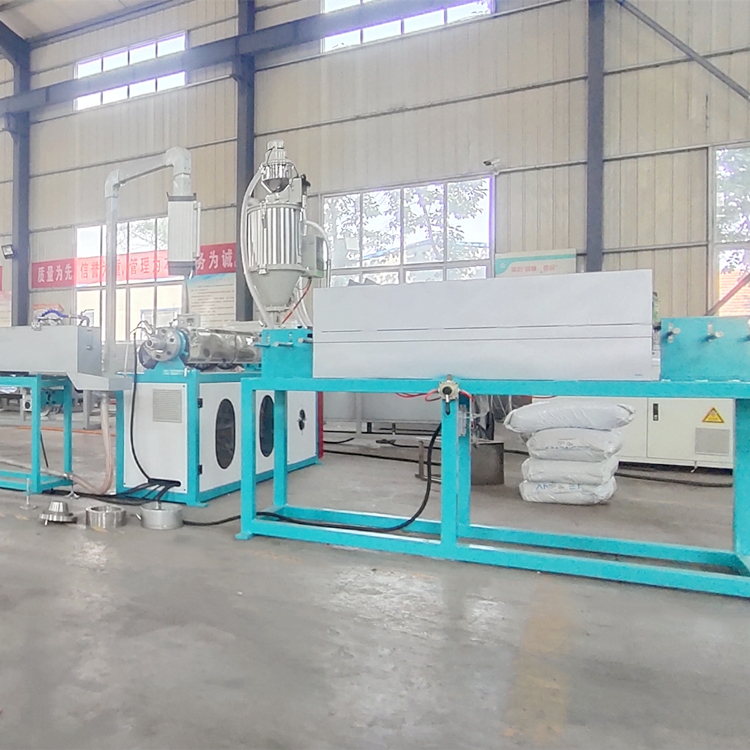
Manufacturing this material requires a specialized PP strapping production line. The extrusion process for polypropylene operates at lower melting points, typically around 200°C to 230°C. This lower thermal requirement translates to specific extruder screw designs and cooling tank configurations. The raw PP granules are melted, extruded through a die head, and immediately quenched in a water bath to solidify the polymer chains. The water bath temperature must be strictly controlled, usually between 20°C and 30°C, to ensure the polymer does not crystallize too rapidly, which would cause brittleness.
Throughput efficiency dictates the engineering of the production line. High-volume applications demand continuous, uninterrupted extrusion. The machinery must feature precise godet rollers to stretch the material at ratios typically between 1:5 and 1:7. This molecular orientation gives the strap its longitudinal strength. The stretching process aligns the random polymer chains into a highly ordered structure, exponentially increasing the tensile strength along the length of the strap. Tooling requirements also include embossing rollers. Embossing increases the surface friction of the strap, improving joint strength during heat sealing and providing better grip for the feed wheels of automated strapping machines.
Operating a PP line requires constant monitoring of the melt pressure and screen changers. Even minor fluctuations in melt pressure will cause variations in strap thickness. A strap that is too thick will jam the strapping machine, while a strap that is too thin will snap under tension. High-quality extrusion lines utilize gear pumps to ensure a perfectly consistent volume of polymer reaches the die head, regardless of minor variations in the extruder screw's output.
![Packaging Strap Production Line Equipment]()
Polyester (PET) Packaging Straps: Capabilities and Limitations
Polyethylene terephthalate (PET) offers radically different mechanical properties. PET boasts exceptionally high breaking strength, minimal elongation, and superior retained tension. It behaves similarly to steel banding but without the sharp edges or rust potential. When tensioned, PET stretches slightly to absorb impact but recovers almost completely. It maintains its holding force over extended periods, making it a direct replacement for steel strapping in many heavy industrial applications. A standard 16mm PET strap can easily hold a dynamic load that would snap a similarly sized PP strap instantly.
PET maps perfectly to heavy-duty, rigid loads. Lumber, bricks, metal ingots, and heavy machinery require strapping that will not yield. If a load of steel pipes shifts, the strap must hold the rigid mass together. PET’s high tensile strength and creep resistance ensure the load remains secure even after months of storage. It is also the standard choice for long-term, outdoor storage environments due to its physical stability. The polymer does not degrade rapidly under UV light, and it ignores ambient humidity entirely.
Operating a PET strapping production line demands advanced technical infrastructure. Unlike PP, PET is highly hygroscopic. It absorbs moisture from the air. If extruded with moisture present, PET undergoes hydrolytic degradation. The water molecules sever the polymer chains during melting, drastically reducing the intrinsic viscosity (IV) and destroying the strap's tensile strength. Therefore, advanced crystallization and dehumidification systems are mandatory before the material enters the extruder. The raw material must be dried to a dew point of at least -40°C, reducing moisture content to below 50 parts per million.
Modern PET lines often process 100% recycled PET (rPET) bottle flakes. Handling rPET requires robust screen changers to filter out impurities like paper labels, aluminum caps, or PVC remnants. The extrusion temperature is higher, typically between 260°C and 285°C. Precision stretching and annealing processes are critical. After the PET is stretched to align its molecules, it must pass through a heated annealing oven. Annealing relieves internal stresses and locks in the tensile properties, preventing the strap from splitting longitudinally during friction welding. If the annealing temperature is too low, the strap will fibrillate and tear down the middle when the strapping tool applies tension.
The cooling process for PET is also more complex than PP. PET requires a graduated cooling process to control the crystallinity of the final product. If cooled too quickly, the strap becomes amorphous and weak. If cooled too slowly, it becomes overly crystalline and brittle. Extrusion engineers must balance the water bath temperatures and the speed of the godet rollers to achieve the exact mechanical properties required for heavy-duty load containment.
Alternative and Specialized Packaging Belt Technologies
Beyond standard solid plastic extrusion, specialized applications require alternative material structures. Heavy-duty logistics, maritime shipping, and securing irregular loads often demand flexible, high-strength solutions that traditional PP or PET cannot fulfill. Woven and composite cord strapping fills this operational gap. These straps utilize high-tenacity polyester yarns encased in a polymer coating. They offer the highest system strength available outside of heavy steel chains, making them ideal for securing cargo inside shipping containers or on flatbed trailers.
Manufacturing these specialized cords requires a fiber packaging belt production line. This equipment integrates yarn tensioning creels with crosshead extrusion dies. The high-tenacity yarns are pulled through a die where they are coated with a protective polymer jacket. The resulting composite strap offers immense system strength and is primarily designed for manual tensioning with wire buckles. It provides critical safety advantages, completely eliminating the snap-back injuries associated with cutting tensioned steel bands. The soft nature of the strap also prevents damage to painted surfaces or fragile load edges.
Another advancement in extrusion technology involves multi-layer structures. A sandwich packaging belt production line utilizes co-extrusion technology. This machinery combines different polymer grades into a single strap, typically in an A-B-A layer configuration. The core layer (B) might consist of high-strength recycled material to maximize tensile strength, while the outer layers (A) utilize virgin polymer optimized for surface friction and superior welding properties. This approach maximizes structural integrity while optimizing raw material utilization. Co-extrusion allows manufacturers to engineer straps with specific surface characteristics for high-speed automated machines while maintaining a rugged, high-tensile core.
Technical Evaluation Dimensions: PP vs. PET
A comparative analysis of tension decay reveals the starkest contrast between the two polymers. Evaluate how each material behaves 24, 48, and 72 hours post-tensioning. PP experiences rapid molecular relaxation. Within 24 hours, a PP strap may lose half its applied tension. PET, conversely, exhibits exceptional dimensional stability. After 72 hours, PET typically retains over 90% of its initial tension. This metric alone dictates the choice for rigid loads requiring long-term containment.
Impact resistance and shock absorption mechanisms differ fundamentally. PP absorbs sudden impacts through plastic deformation. It stretches to absorb the kinetic energy of a dropped pallet, but it will not shrink back. The load survives the impact but remains loose. PET absorbs shock elastically. It stretches slightly under dynamic stress and then snaps back to its original length, keeping the rigid load tight and secure. This elastic recovery is why PET has largely replaced steel in the lumber and brick industries.
| Performance Metric | Polypropylene (PP) | Polyester (PET) |
| Tensile Strength | Low to Medium | High (Comparable to Steel) |
| Elongation Recovery | Poor (Plastic Deformation) | Excellent (Elastic Recovery) |
| Creep Resistance | Low (Rapid Tension Decay) | High (Maintains Tension) |
| Moisture Resistance | Good | Excellent (Impervious once extruded) |
| UV Stability | Poor (Requires heavy additives) | Excellent (Natural resistance) |
| Ideal Sealing Method | Heat Seal (Hot Knife) | Friction Weld |
Determining the correct sizing, gauge, and sealing method requires matching the polymer to the hardware. PP responds well to traditional heat-sealing blades found in standard arch machines. The lower melting point allows for rapid cycle times. PET requires high-tension friction-welding tools. Friction welding oscillates the strap ends at high frequencies, generating localized heat to fuse the high-melt-point polymer. Using the wrong sealing method results in brittle joints and catastrophic load failure. A hot knife will degrade PET, creating a weak joint that snaps under minimal load.
Environmental resilience heavily favors PET. In terms of moisture and humidity, PET remains virtually impervious once extruded. It performs flawlessly in damp warehouses and maritime environments. PP is slightly more vulnerable over extended multi-year periods. Regarding UV stability, PET possesses natural resistance to ultraviolet degradation. It can withstand months of direct sunlight in outdoor storage yards. Standard PP degrades rapidly under UV exposure, becoming brittle and snapping under minimal tension unless heavily dosed with UV-inhibiting additives.
Production Scalability and Material Yield
Evaluating production scalability requires analyzing material yield and extrusion efficiency. The physical strength of the polymer directly impacts the required dimensions of the final product. Because PET possesses a significantly higher tensile strength than PP, manufacturers can often utilize thinner straps to achieve the same holding force. This process, known as downgauging, maximizes the linear meters produced per kilogram of raw material. A facility currently using a 0.8mm thick PP strap can often switch to a 0.6mm PET strap without sacrificing load security. This increases the length of strap per coil, reducing the frequency of coil changeovers on the packaging line and increasing overall machine uptime.
Automation compatibility dictates the required precision of the manufacturing process. A modern packaging belt production line must output straps with near-zero camber. If a strap curves even slightly, it will jam inside the chutes of high-speed automated strapping arches. PP and PET both require precise cooling and winding tension to ensure straightness. However, PET's rigidity makes it inherently easier to feed through automated tracks over long distances without buckling. When a strapping machine pushes the strap through the arch, a flexible PP strap is more likely to fold over on itself if it encounters any resistance, whereas a rigid PET strap will push through minor obstructions.
Investing in dedicated manufacturing infrastructure requires analyzing throughput capacity. High-capacity lines utilize multi-strap die heads, extruding four, six, or eight straps simultaneously. The ability to process 100% post-consumer recycled bottle flakes on a specialized PET line provides immense operational scalability and aligns with global sustainability mandates. The extrusion equipment must be robust enough to handle the varying intrinsic viscosity of recycled flakes, utilizing advanced melt pumps and continuous screen changers to maintain a stable extrusion profile.
Implementation Risks and Mitigation Strategies
Equipment mismatch is the most common operational failure. Running PET straps through machines calibrated for PP causes immediate mechanical issues. PET is much harder and more abrasive than PP. It causes premature wear on feed wheels, tensioning gears, and cutting blades. Furthermore, PP heat-seal blades cannot reach the temperatures required to properly fuse PET. Audit all existing machinery before switching polymer types. You must replace the feed wheels with hardened steel variants and upgrade the sealing heads to friction-weld modules to handle PET.
Quality control during extrusion requires strict parameter monitoring. The primary risk in PET production is inconsistent strap camber or longitudinal splitting. Splitting occurs when the polymer chains are highly oriented but not properly relaxed. Mitigate this by strictly controlling the temperature in the annealing oven. Additionally, moisture control in the raw materials must be continuously monitored. Even a slight spike in moisture during extrusion will cause microscopic bubbles in the strap, destroying its tensile strength. Operators must check the dew point of the dehumidifier hourly.
Operator safety protocols must adapt to the material. Transitioning from steel banding to heavy-duty PET strapping significantly reduces laceration risks. However, PET still holds immense tension. Operators must receive training on proper tensioning limits to prevent crushing the corners of the load. Safe cutting protocols remain necessary; operators should stand to the side and wear eye protection when cutting highly tensioned PET, as the strap will snap back upon release. Never stand directly in line with a tensioned strap during the cutting process.
Conclusion
The choice between PP and PET requires strict alignment of material physics with load requirements, storage environments, and sealing methods. Deploying the correct polymer ensures load security, optimizes material yield, and prevents machinery breakdown. Opt for PP if operations involve light-to-medium, compressible loads. Opt for PET if operations require steel-strap replacement, heavy rigid loads, and long-term tension retention.
Execute the following steps to finalize your strapping strategy:
- Conduct a 72-hour tension-decay test on sample loads to observe material relaxation under actual warehouse conditions.
- Audit current strapping machinery feed wheels and sealing mechanisms to verify polymer compatibility.
- Measure the ambient humidity and UV exposure levels in your primary storage yards to determine environmental degradation risks.
- Consult with an extrusion equipment manufacturer to specify the appropriate die heads, cooling tanks, and dehumidification systems for your required throughput.
FAQ
Q: What is the main difference between PP and PET packaging straps?
A: The primary difference is tension retention and tensile strength. PET maintains high tension over long periods and resists environmental degradation, making it suitable for heavy, rigid loads. PP stretches easily and loses tension quickly due to creep, making it ideal only for light, compressible loads and short transit times.
Q: Can I use PET strapping in a machine designed for PP strapping?
A: Generally, no. PET is harder and requires higher temperatures to weld. Running PET through a machine calibrated for PP will cause premature wear on the feed wheels and cutting blades. The heat-seal mechanisms for PP will not reach the necessary temperature to create a secure joint on PET.
Q: Why does PP strapping lose tension over time?
A: PP loses tension due to a material characteristic called creep. When subjected to constant stress, the molecular structure of polypropylene slowly deforms and relaxes. This plastic deformation causes the strap to elongate permanently, resulting in a loss of up to 50% of its initial holding force within hours.
Q: How do I choose the correct width and thickness for my packaging straps?
A: Selection depends entirely on the load weight and dynamic transit stresses. Calculate the total required break strength for the load, then divide that by the number of straps applied. Always factor in a safety margin for shock absorption. Thicker, wider straps provide higher break strengths but require compatible tensioning tools.
Q: Which packaging strap is better for outdoor storage and damp warehouses?
A: PET is vastly superior for outdoor and damp environments. It is highly resistant to moisture absorption after extrusion and possesses natural UV resistance. PP degrades rapidly under direct sunlight, becoming brittle and prone to snapping unless specifically manufactured with heavy UV-inhibiting additives.
Q: How does a fiber packaging belt compare to traditional PET straps?
A: Fiber packaging belts offer higher system strength and flexibility compared to solid extruded PET. They are designed for manual tensioning with wire buckles rather than friction welding. Fiber belts are ideal for securing irregular loads, heavy machinery, and maritime cargo where extreme shock absorption is required.
Q: Can PET packaging straps completely replace steel banding?
A: In most applications, yes. Heavy-duty PET matches the break strength of standard steel banding while offering superior shock absorption and elastic recovery. PET eliminates rust damage to products, reduces operator laceration risks, and is significantly lighter, making it the preferred choice for lumber, brick, and metal transport.



 +86-18561886575 (Mr.Wu)
 +8618561886575
 238 Yangzhou West Road, Jiaozhou City, Qingdao City, Shandong Province