A common field error is treating PVC cement like standard glue. It is not an adhesive. It is an aggressive chemical solvent that melts the plastic surface to create a permanent, molecularly fused joint. Field technicians, plumbers, and facility managers frequently run into improperly routed, damaged, or leaking PVC joints that need immediate separation. Because the joint is chemically welded, breaking it apart without destroying the surrounding piping system presents a major technical hurdle. You cannot simply pull it apart once the solvent flashes off. This guide evaluates mechanical, thermal, and chemical separation methods for PVC pipes. We will examine how initial manufacturing quality—specifically the dimensional standards maintained on a PVC Pipe Production Line—impacts weld strength, failure rates, and scrap reprocessing in the field.
- Chemical Reality: Fully cured PVC joints cannot be "unglued" chemically; the plastic has fused into a single continuous piece.
- Optimal Field Solutions: Mechanical removal (using a PVC fitting saver/reamer) or complete section replacement are the only structurally sound methods for high-pressure applications.
- Thermal Risks: Heat separation is viable for low-pressure or drainage systems but risks warping the polymer structure, leading to future micro-fractures.
- Preparation is Critical: System depressurization and complete fluid evacuation are mandatory prerequisites before attempting any separation technique.
- Manufacturing Impact: The dimensional tolerance and material density achieved during the extrusion process directly dictate the success and strength of the solvent weld.
The Science of the Solvent Weld: Why PVC is Hard to Separate
Understanding why a PVC joint resists separation requires looking at the underlying chemistry. Solvent cement typically contains a mixture of Tetrahydrofuran (THF), Methyl Ethyl Ketone (MEK), and Cyclohexanone. When applied to the pipe and fitting, these aggressive solvents attack the rigid polyvinyl chloride, dissolving the top layer of the resin. As you push the pipe into the fitting, the softened layers of plastic physically mix together. The solvents rapidly evaporate into the surrounding air, causing the entangled polymer chains to harden back into a solid state. You no longer have a pipe and a fitting; you have one continuous piece of plastic.
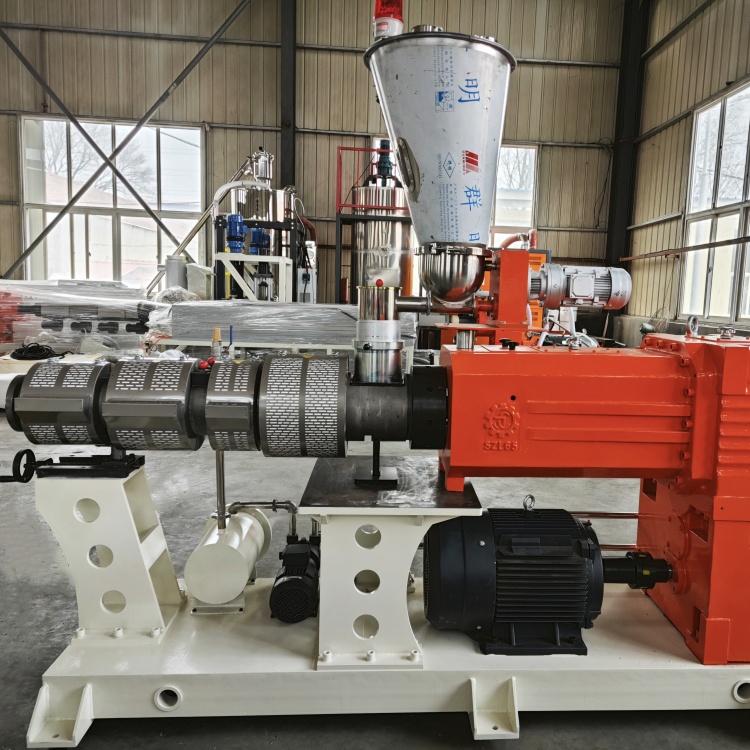
The physical design of the fitting also plays a massive role. PVC fittings are manufactured with a slight internal taper. This creates an interference fit. As the pipe bottoms out inside the fitting hub, the taper forces the melted plastic to compress and fill any microscopic voids. This relies entirely on the pipe maintaining a perfect outside diameter. A high-quality PVC pipe extruder utilizes precise vacuum calibration sleeves and controlled cooling tanks to ensure the pipe dimensions never deviate. If the extrusion process fluctuates, the pipe diameter shrinks or warps, destroying the interference fit and resulting in a weak weld that will eventually blow apart under pressure.
Your separation strategy depends entirely on the curing stage of the solvent. Set time and cure time are completely different metrics. Set time is the point where the joint can be carefully handled without shifting. Cure time is when the joint reaches its maximum hydrostatic pressure rating.
| Pipe Diameter | Temperature Range | Initial Set Time | Full Cure Time (Up to 160 PSI) |
| 1/2" to 1-1/4" | 60°F - 100°F | 2 minutes | 2 hours |
| 1-1/2" to 2" | 60°F - 100°F | 5 minutes | 4 hours |
| 2-1/2" to 8" | 60°F - 100°F | 30 minutes | 24 hours |
| All Sizes | Below 40°F | 15+ minutes | 48+ hours |
Pre-Removal Preparation: System Isolation and Safety
Attempting to cut or heat a PVC pipe without proper isolation guarantees a massive mess and potential injury. System depressurization is the absolute first step. You must lock out and tag out the main supply pumps or valves. Do not rely on a single isolation valve if it has a history of bleeding through. Open the downstream fixtures or drain valves to relieve all trapped static pressure in the line.
Complete fluid evacuation is mandatory. You cannot use thermal separation methods if there is standing water inside the pipe. The water acts as a massive heat sink, absorbing the thermal energy from your heat gun and preventing the plastic from softening. For mechanical removal, residual water turns the PVC shavings from your drill into a thick, sticky paste that binds the cutting tool and ruins the fitting socket. Use a heavy-duty wet vacuum to pull all standing water out of the line before you begin working.
Verify the pipe specifications printed on the side of the tube. You need to know if you are dealing with Schedule 40 (standard wall) or Schedule 80 (thick wall) PVC. Schedule 80 pipe is dark gray and requires significantly more mechanical force and heat to manipulate. The pipe schedule dictates the exact size of the reaming tool you will need to purchase or pull from your truck.
Safety gear is non-negotiable. If you plan to use a heat gun, you must wear a half-face respirator equipped with organic vapor cartridges. Heating PVC past its safe working temperature releases hydrogen chloride gas, which is highly toxic and corrosive to your respiratory tract. Wear heavy leather work gloves to protect your hands from hot plastic and sharp hacksaw blades, and always wear wrap-around safety glasses to block flying PVC chips during the drilling process.
![PVC Pipe Production and Separation Techniques]()
Evaluation Framework: Choosing the Right Removal Method
Before you start cutting, you need a clear plan based on the system's operational requirements. High-pressure water mains demand perfect structural integrity, meaning you cannot reuse a fitting that has been compromised by heat or deep gouges. Drain, Waste, and Vent (DWV) systems operate on gravity and can tolerate minor surface imperfections inside the fitting hub.
- Assess the System Pressure: Is this a 100 PSI supply line or a gravity-fed drain? Pressurized lines require mechanical removal.
- Evaluate Fitting Accessibility: Is the fitting buried in a concrete slab or easily accessible on a wall? Embedded fittings justify the time spent using a fitting saver tool.
- Calculate Replacement Costs: A standard 3/4-inch elbow costs pennies. Cut it out and replace it. A 4-inch multi-port manifold can cost hundreds of dollars, making salvage operations highly profitable.
- Check the Cure State: Did you just glue it five seconds ago? You might be able to pull it apart. Has it been sitting for an hour? You have to cut it.
| Removal Method | Best Application | Required Tooling | System Type |
| Mechanical (Reaming) | Embedded or expensive fittings | Power drill, fitting saver bit | High-Pressure / DWV |
| Mechanical (Cut & Replace) | Standard accessible piping | Hacksaw, PVC cutters, primer, cement | All Systems |
| Thermal (Heat Gun) | Low-risk, non-critical repairs | Variable temp heat gun, pliers | Gravity / DWV Only |
| Chemical (Immediate) | Mistakes caught within seconds | Rags, brute force | All Systems |
Method 1: Mechanical Removal (Cutting and Drilling)
Mechanical removal is the only code-compliant approach for dealing with fully cured joints in critical infrastructure. By physically cutting away the fused plastic, you eliminate the risk of warped fittings and compromised pressure ratings. This is the standard procedure for professional pipefitters.
Using a PVC Fitting Saver (Reaming)
A PVC fitting saver, also known as a socket saver or reamer, is a specialized drill bit designed to bore out the old pipe from the inside of the fitting hub while leaving the fitting's internal walls intact. This tool pays for itself the first time you use it to salvage a fitting buried behind drywall or set in concrete.
- Cut the existing pipe flush with the face of the fitting using a hacksaw or reciprocating saw. Ensure the cut is perfectly square.
- Select the exact fitting saver size that matches your pipe schedule. A Schedule 40 bit used on a Schedule 80 fitting will destroy the hub.
- Chuck the bit into a heavy-duty 1/2-inch power drill. Do not use an impact driver, as the hammering action will crack the brittle PVC.
- Insert the guide disk of the bit into the pipe opening. This disk keeps the cutting teeth perfectly centered.
- Run the drill at a low, steady RPM. Pushing too fast or running the drill at high speed will melt the PVC, gumming up the cutting teeth and causing the bit to bind violently.
- Apply steady forward pressure until the bit bottoms out against the internal stop of the fitting hub.
- Withdraw the bit while the drill is still spinning to clear the plastic shavings. Wipe the inside of the hub with a clean rag.
The Hacksaw and Chisel Technique
If you do not have a fitting saver on hand, you can manually remove the pipe using the radial relief cut method. This requires patience and a steady hand. One wrong strike with the hammer will crack the fitting, forcing you to replace the entire assembly anyway.
- Cut the pipe flush with the fitting hub.
- Take a bare hacksaw blade (remove it from the frame) and carefully make vertical cuts inside the remaining ring of pipe. Stop cutting the moment you feel the blade touch the inside wall of the fitting.
- Make these vertical cuts about half an inch apart around the entire inner circumference.
- Take a narrow, sharp cold chisel and place the tip between the pipe ring and the fitting wall.
- Tap the chisel gently with a ball-peen hammer. The goal is to wedge the chisel under the cut section and peel it inward, breaking the solvent weld.
- Work your way around the hub, peeling out the plastic in small segments.
- Once all segments are removed, use medium-grit sandpaper to smooth out any minor gouges inside the hub before applying new primer and cement.
Method 2: Thermal Separation (Applying Heat)
Thermal separation uses controlled heat to soften the PVC polymer just enough to break the mechanical friction of the fused joint. You are not trying to melt the plastic into a puddle; you are trying to make it pliable enough to stretch the molecular bond. This method permanently alters the dimensional tolerances of the fitting.
Heat Gun Application
Using a heat gun requires constant movement and temperature monitoring. If the white PVC begins to turn yellow or brown, you have scorched the resin and ruined the fitting.
- Set your variable temperature heat gun to a medium setting.
- Hold the nozzle about two inches away from the exterior of the fitting hub.
- Move the heat gun continuously in a circular motion around the joint. Never hold the heat in one spot for more than a second.
- Periodically test the pipe with a pair of heavy-duty channel-lock pliers. Squeeze the pipe gently to see if it yields.
- Once the plastic feels soft and pliable, grip the pipe firmly with the pliers and twist. The twisting motion breaks the bond.
- While twisting, pull the pipe straight out of the fitting.
The structural risks here are massive. When you heat a PVC fitting to the point of pliability, it loses its factory-extruded shape. The internal taper that creates the interference fit is gone. If you try to glue a new piece of pipe into a heated fitting, the gap will be too wide for the solvent cement to bridge, resulting in a blowout under pressure. Reserve this method strictly for non-pressurized drainage lines or temporary emergency patches.
Boiling Water Method
For smaller, unattached assemblies that you can bring to a workbench, boiling water offers a safer thermal alternative. Water boils at 212°F, which is hot enough to soften standard PVC without reaching the scorching point that releases toxic gases.
Submerge the fused joint into a pot of boiling water and let it sit for three to five minutes. Remove it with tongs, grip the pieces with two pairs of pliers, and twist them apart. This method is entirely ineffective for thick-walled Schedule 80 pipes or large-diameter mains, as the thick plastic dissipates the heat too quickly. It is a niche solution for small-scale bench work.
Method 3: Chemical Separation (Uncured Joints Only)
We must address the persistent myth of chemical ungluing. You cannot pour a chemical over a fully cured PVC joint and expect it to fall apart. The plastic has already formed a single matrix. Chemical intervention only works during a very narrow window before the solvents evaporate.
The "Immediate Action" Window
If you push a pipe into a fitting and immediately realize the orientation is wrong, you have about five to ten seconds to fix it. You must act with lightning speed. Grab the pipe and forcefully twist and pull it apart. The solvent is still actively melting the plastic surface, and the polymer chains have not locked together yet. Once you pull it apart, immediately wipe the softened plastic off both pieces with a clean rag. If you let the melted plastic harden in lumps, you will never get the pipe back into a fitting.
The Purple Primer Trick
Plumbers often talk about using purple primer to separate joints. This only works if the cement is still wet. Purple primer is essentially a mix of THF and MEK with a purple dye. If you apply it to a joint that is just starting to set, the aggressive solvents in the primer can temporarily re-liquefy the partially set cement. This acts as a temporary lubricant, allowing you to stealthily turn and stretch the pipe out of the fitting.
Applying acetone, paint thinner, or extra primer to a fully cured joint is a waste of time. While acetone will melt raw PVC, it cannot penetrate the microscopic gap of a cured solvent weld. The liquid will simply sit on the surface, damaging the exterior pipe wall and weakening the surrounding structure without breaking the actual weld.
Industrial Implications: Defect Management and Production Standards
Commercial manufacturers handle fused PVC differently than field technicians. Industrial facilities manage scrap, quality control, and defect reprocessing under strict regulatory standards. The quality of the pipe leaving the factory dictates how well it will perform when a plumber applies solvent cement in the field.
Testing protocols ensure structural integrity at the factory level. Manufacturers pull random samples from the line and subject them to rigorous burst testing (ASTM D1599). They solvent-weld end caps onto the pipe samples, let them cure, and pump them full of water until they explode. The pipe itself should rupture before the solvent-welded joint fails. If the joint fails first, it indicates a severe issue with the extrusion process.
Dimensional tolerances are the most critical factor. If the outside diameter of the pipe is too small, the interference fit inside the fitting is too loose. The solvent cement cannot bridge a wide physical gap. Poor manufacturing necessitates expensive removal and rework in the field because the joints will constantly leak. Precision vacuum calibration during extrusion prevents these costly field failures.
Scrap management is a major industrial focus. In a factory setting, defective welded assemblies or test pieces are not manually separated. It is far too labor-intensive. Instead, the fused joints and scrap pipe are sent through massive industrial granulators. These machines feature heavy-duty rotary blades that shred the solid plastic into tiny, uniform pellets known as regrind.
Recycling these pellets requires strict material control. The regrind is carefully reintroduced into the hoppers of the extrusion line. Material purity is paramount. If the regrind contains degraded plastic or foreign contaminants, it weakens the final extruded pipe. Manufacturers precisely balance virgin PVC resin with recycled regrind to maintain the required burst strength, flexibility, and impact resistance.
Application differences dictate manufacturing standards. Plumbing pipe production is vastly different from a conduit manufacturing process. Conduit joints are designed to protect electrical wiring from moisture, impact, and soil conditions. They do not hold pressurized water. Because of this, conduit installations often use different cement formulations that have slightly longer set times to allow electricians to align long runs of pipe.
Separation methods for conduit prioritize protecting the internal wires. You cannot use a heat gun near live electrical lines, as the heat will melt the wire insulation and cause a dead short. Mechanical cutting with specialized shears or fine-toothed saws remains the standard for conduit modifications in the field.
Conclusion
- Invest in a complete set of schedule-specific PVC fitting savers to salvage expensive embedded fittings during field repairs.
- Audit your pipe procurement channels to ensure all materials originate from highly regulated production lines with strict dimensional tolerances.
- Implement mandatory lockout/tagout and complete fluid evacuation protocols before attempting any mechanical pipe separation.
- Equip all field technicians with organic vapor respirators when thermal separation methods are authorized for low-pressure drainage repairs.
FAQ
Q: Can you use a hair dryer or heat gun to unglue PVC?
A: You can use a heat gun to soften the plastic, but it does not "unglue" it. The heat breaks the mechanical friction, allowing you to pull the pieces apart. A hair dryer rarely gets hot enough. This method warps the fitting, making it unsafe for pressurized reuse.
Q: How long does PVC cement take to cure permanently?
A: PVC cement typically reaches handling strength within a few minutes. However, it requires a full 24 hours to cure permanently for high-pressure applications. Temperature and humidity affect this timeline. Once fully cured, the joint achieves its maximum pressure rating and cannot be chemically separated.
Q: Does acetone or paint thinner dissolve PVC pipe glue?
A: Acetone melts raw PVC, but it cannot dissolve a fully cured solvent weld. The microscopic gap between the fused pipe and fitting prevents the acetone from penetrating. Applying solvents to a cured joint only damages the exterior pipe wall without separating the pieces.
Q: What is a PVC fitting saver and how does it work?
A: A PVC fitting saver is a specialized drill bit that attaches to a standard power drill. A guide disk keeps it centered inside the pipe. It physically bores out the old pipe material from the inside of the fitting hub, leaving the fitting intact for reuse.
Q: Do I need to drain the pipe before trying to separate a PVC joint?
A: Yes, complete fluid evacuation is mandatory. Residual water absorbs heat, neutralizing thermal separation methods instantly. Water also creates a messy, hazardous environment during mechanical cutting. Always depressurize and drain the system completely before starting any removal procedure.
Q: How does the extrusion process affect the strength of a PVC solvent weld?
A: The extrusion process dictates the pipe's dimensional tolerance. A precise extrusion creates a tight interference fit with the fitting. This tight fit allows the solvent cement to penetrate evenly, creating a strong, uniform molecular bond across the entire joint surface.
Q: Is it safe to reuse a PVC fitting after heating and separating it?
A: No, it is generally unsafe for pressurized systems. Heating PVC warps the polymer structure and destroys its dimensional tolerances. A warped fitting will not create a tight interference fit with new pipe, leading to weak welds and inevitable leaks under pressure.



 +86-18561886575 (Mr.Wu)

 +8618561886575
 238 Yangzhou West Road, Jiaozhou City, Qingdao City, Shandong Province