Secure, leak-proof connections dictate the operational lifespan of any fluid handling or electrical conduit network. Solvent cement dominates standard installations. Threaded PVC connections, however, remain non-negotiable for systems requiring future disassembly, routine maintenance, or direct integration with metal fixtures. Threading plastic pipe inherently introduces mechanical stress. Field-threading operations are notoriously slow, inconsistent, and highly prone to cross-threading. Industrial operators demand high-volume, standardized threaded pipes that retain absolute structural integrity under pressure.
Bridging the gap between low-volume field applications and high-yield manufacturing requires a deep understanding of threading mechanics. You must master manual techniques while recognizing the automated capabilities of modern extrusion equipment. This guide evaluates field techniques, strict material constraints, and the technical criteria necessary for scaling production using commercial machinery.
Key Takeaways
- Material Constraints: Never thread Schedule 40 PVC. Safe, compliant threading requires the thicker walls of Schedule 80 or Schedule 120 pipe to maintain pressure ratings.
- Field vs. Factory: Manual threading with dies, drill-adapted tools, or makeshift jigs is suitable for low-volume, on-site repairs but introduces high risks of micro-fracturing and inconsistent thread pitch.
- Industrial Automation: Integrating inline threading or belling stations into a plastic pipe production line reduces labor costs, eliminates human error, and ensures strict adherence to NPT or BSPT standards.
- Machinery ROI: Upgrading PVC pipe extrusion machinery to include automated threading/cutting units yields a measurable reduction in cycle times and material waste for commercial manufacturers.
The Technical Fundamentals of Threading Plastic Pipe
Wall Thickness and Pressure Ratings
Cutting threads into any material removes mass. When you thread plastic pipe, you create a spiral notch along the exterior wall. In materials science, this notch acts as a severe stress concentrator. Threading Schedule 40 PVC removes too much of the already thin wall, leaving insufficient material to handle internal fluid pressure or external mechanical loads. The remaining wall thickness falls below safety standards, leading to catastrophic pressure failures and longitudinal cracking.
Schedule 80 PVC serves as the absolute minimum standard for threading. The thicker walls of Schedule 80 and Schedule 120 provide the necessary dimensional mass to support the thread depth while maintaining a safe pressure rating. When you cut a standard National Pipe Thread (NPT), the taper wedges the fitting outward. This wedging action creates immense hoop stress on the female fitting. If the wall lacks sufficient thickness, the pipe simply splits down the middle the moment you apply torque.
| Nominal Pipe Size (Inches) | Schedule 40 Wall Thickness (Min) | Schedule 80 Wall Thickness (Min) | Suitability for Threading |
| 1/2" | 0.109" | 0.147" | Schedule 80 Only |
| 1" | 0.133" | 0.179" | Schedule 80 Only |
| 2" | 0.154" | 0.218" | Schedule 80 Only |
| 4" | 0.237" | 0.337" | Schedule 80 Only |
Internal vs. External Threading (Taps vs. Dies)
Creating mechanical joints requires matching male and female threads. Cutting external (male) threads requires a pipe die. The die shaves plastic from the outside diameter to form the thread profile. Cutting internal (female) threads requires a tap. Tapping involves driving a hardened steel tool into a pre-drilled or extruded socket to carve threads into the inner wall.
Hand taps and dies work for small-scale jobs, but they require significant physical clearance and manual alignment. Industrial manufacturing relies on automated belling machines. These machines heat the pipe end, form the socket, and often mold the internal threads in a single synchronized operation using collapsible mandrels. This eliminates the need to physically cut the interior wall, preserving the structural integrity of the plastic.
Thread Standards (NPT vs. BSPT)
Thread geometry dictates how the connection seals. National Pipe Thread (NPT) features a tapered profile with a 60-degree thread angle. As you tighten an NPT joint, the threads wedge together. This creates a mechanical seal that you must enhance with thread tape or sealant. British Standard Pipe Thread (BSPT) also uses a taper but features a 55-degree thread angle and a different pitch.
You cannot mix NPT and BSPT fittings. Forcing a mismatch causes spiral leaks, thread galling, and eventual joint failure. The threads will bind up before they fully seat, leaving a gap for fluid to escape. Manufacturers must specify the correct standard when tooling their extrusion lines to match regional plumbing codes.
Temperature and Material Behavior
PVC is a thermoplastic. It responds directly to temperature changes. The friction generated by cutting threads produces significant localized heat. If the cutting speed is too high, or the die is dull, the PVC will melt rather than cut. Melted plastic smears across the thread profile, ruining the geometry and preventing a proper seal.
Successful threading requires sharp cutting tools, controlled speeds, and appropriate cooling methods. You must keep the material well below its glass transition temperature during the machining process. In field applications, this means turning the die slowly. In factory settings, it requires high-volume air cooling or specialized synthetic misting systems.
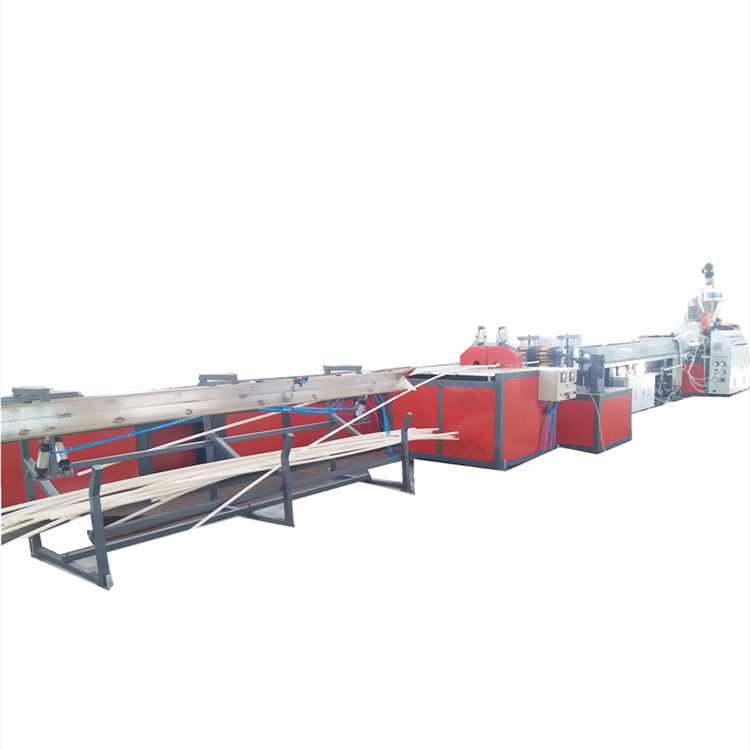
![PVC Conduit Production Line Machinery]()
Manual and Field-Applied PVC Threading Methods
Traditional Hand-Threading with Dies
Manual threading remains a standard skill for field technicians performing isolated repairs or custom installations. The process requires specific tooling designed for plastic, not metal. Using standard plumbing tools meant for black iron pipe will destroy the PVC.
- Measure and mark the pipe accurately.
- Cut the pipe perfectly square using a ratcheting cutter or a miter saw. An angled cut prevents the die from engaging evenly and leads to crooked threads.
- Deburr the inside edge with a reamer to ensure smooth fluid flow.
- Chamfer the outside edge heavily. A good bevel helps the die catch the material without chipping the end of the pipe.
- Secure the pipe in a vise. Never use a standard steel pipe vise with aggressive teeth; it will crush or deeply scratch the PVC. Use a specialized strap wrench or a wooden vise block.
- Slide the pipe guide over the end. Engage a die specifically ground for PVC. Plastic-cutting dies have a negative rake angle to shear the plastic cleanly.
- Turn the handle slowly. Apply steady, even pressure. Back the die off a quarter-turn every full rotation to break the plastic chips and clear the cutting path.
Power Threading and Drill Adaptations
Field crews often attempt to speed up the process by attaching threading dies to heavy-duty cordless drills or power drives. This method introduces severe quality control issues. Power tools operate at high RPMs. The rapid rotation generates excessive friction.
Instead of shearing the plastic cleanly, the high-speed die melts the PVC. The resulting threads look ragged, smeared, and dimensionally inaccurate. These deformed threads will not seal properly, even with copious amounts of thread sealant. Furthermore, the sudden torque of a power drive can easily tear the pipe out of the vise, causing injury or cracking the pipe wall. Power threading plastic requires specialized low-RPM gear reduction drives specifically calibrated for thermoplastic materials.
DIY Jigs and Field Hacks
Desperation in the field sometimes leads to makeshift threading methods. A common hack involves taking a metal threaded fitting, grinding vertical slots into the threads with an angle grinder, and using it as a makeshift tap to cut internal threads into a PVC coupler. Another method involves building homemade jigs to force a metal pipe into a plastic fitting.
These hacks are universally destructive. The crude cutting edges tear the plastic, causing severe thread galling and microscopic stress fractures. These micro-cracks propagate under pressure, guaranteeing a future leak. The threads produced are shallow and uneven. These methods are entirely unsuited for any pressure-rated, chemical, or commercial application.
Limitations of Field Threading
Manual methods serve a distinct purpose: low-volume, emergency, or highly customized on-site work. They fail completely when evaluated on scalability, dimensional consistency, and labor efficiency. A skilled technician might take five to ten minutes to prep, thread, and clean a single pipe end. In a commercial context, this labor cost destroys profit margins.
Furthermore, manual threading relies on human consistency. Variations in cutting pressure, slight misalignments, and tool wear lead to a high rejection rate. If a technician forgets to chamfer the edge, the die chips the pipe, ruining the piece. Commercial viability demands a transition away from hand tools toward automated manufacturing solutions.
Scaling Up: Integrating Threading into a PVC Pipe Production Line
The Shift to Pre-Threaded Manufacturing
Contractors and industrial buyers actively seek ways to reduce on-site labor. This demand drives the market for factory-threaded pipe nipples, pre-threaded conduit segments, and ready-to-install riser pipes. Purchasing pre-threaded materials shifts the quality control burden from the field technician to the manufacturing plant.
For the manufacturer, this represents a high-margin value addition. Producing these components at scale requires moving beyond manual tools and integrating automated threading solutions directly into the manufacturing workflow. You must evaluate how to position the threading equipment to maximize throughput without creating bottlenecks.
Inline vs. Offline Threading Stations
Manufacturers must choose how to integrate threading into their operations. The choice dictates the overall production flow, floor space requirements, and labor allocation.
| Integration Method | Workflow Dynamics | Precision Level | Best Application |
| Offline CNC Threading | Pipes are extruded, cut, stacked, and moved to a separate machining center. | Extremely High. Allows for complex thread geometries and custom lengths. | Custom lengths, specialized fittings, and low-to-medium volume specialty runs. |
| Inline Rotary Threading | Threading unit sits directly on the extrusion line, synchronized with the haul-off. | High. Consistent standard pitches (NPT/BSPT). | High-volume continuous production of standard threaded nipples and conduit. |
Offline CNC threading offers maximum flexibility but introduces a secondary handling step. Workers must physically move the pipe, increasing labor and transit time. Inline rotary threading eliminates secondary handling. The threading unit synchronizes with the haul-off speed. As the pipe moves continuously, the rotary head engages, cuts the thread, and retracts without stopping the extrusion line. This requires sophisticated PLC controls to match the cutting cycle to the linear speed of the pipe.
Cooling and Swarf Management
Automated threading generates a massive volume of plastic shavings, known as swarf. Static electricity causes these chips to cling to everything. If left unmanaged, swarf clogs the cutting heads, mars the exterior finish of the pipe, and creates a severe safety hazard on the factory floor.
Industrial inline systems utilize high-velocity vacuum extraction hoods mounted directly over the cutting tools. These vacuums pull the swarf away instantly, routing it to a collection bin for recycling. Simultaneously, the system must manage heat. High-speed continuous threading requires specialized air-cooling jets or misting systems using plastic-safe coolants to keep the tooling and the PVC well below melting temperatures.
Evaluating PVC Pipe Extrusion Machinery for Threaded Products
Core Extrusion Components
The quality of a threaded pipe depends entirely on the dimensional stability of the raw extrusion. If the pipe wall thickness varies, the thread depth will fluctuate, resulting in weak spots or unsealable joints. Achieving this stability requires high-performance PVC Pipe Production Line equipment.
The twin-screw extruder must provide a perfectly homogenous melt. The vacuum calibration tank plays the most critical role. It freezes the molten plastic into its final dimensions using precise vacuum pressure and chilled water. The haul-off unit must pull the pipe at a perfectly constant velocity. Any surging or slipping in the haul-off creates wall thickness variations that will ruin subsequent threading operations. Investing in reliable PVC pipe extrusion machinery ensures the raw pipe meets the strict tolerances required for machining.
PVC Conduit Production Line Specifics
Electrical conduit serves a different function than pressure pipe. It protects wiring from impact and moisture. While some heavy-duty conduit utilizes cut threads, many systems rely on molded sockets. A modern PVC conduit production line frequently integrates an automated belling machine at the end of the line.
Instead of cutting threads, the belling machine heats the cut end of the pipe and forces it over a mandrel. This expands the plastic to form a socket. Advanced mandrels feature collapsible segments that mold internal threads directly into the socket while the plastic is soft. Once the plastic cools, the segments collapse inward, and the mandrel retracts. This entirely eliminates the need for mechanical cutting and the associated swarf generation.
Corrugated Conduit Production Line Considerations
Flexible corrugated pipes present a unique challenge. You cannot cut threads into a corrugated profile. The thin, wavy walls possess zero structural mass for threading. A corrugated conduit production line relies on specialized downstream equipment.
Instead of threading, these lines produce pipes designed for snap-lock couplings or specialized compression fittings. The corrugator machine itself molds the continuous ribbed profile. Joining these pipes in the field involves pushing the corrugated end into a ratcheting female fitting that locks onto the exterior ridges. This provides a secure, pull-resistant connection without any rotational threading.
Decision Framework: Upgrading Your Plastic Pipe Production Line
Features-to-Outcomes Analysis
Investing in a new Plastic Pipe Production Line requires mapping specific machinery features to tangible production outcomes. You must look beyond basic extrusion capabilities to ensure the line can handle the demands of automated threading.
- Servo-Driven Threading Heads: Standard induction motors fluctuate under load. Servo motors provide absolute rotational precision. This translates directly to zero-defect thread pitches and eliminates rejected batches caused by thread tearing.
- Automated Pipe Indexing: Manual loading of offline threaders causes bottlenecks. Automated indexing magazines feed pipes continuously into the machining center, drastically reducing idle time and maximizing throughput.
- Gravimetric Dosing Systems: Precise control over the raw material mix ensures consistent polymer density. Consistent density prevents hard spots in the pipe wall that can chip cutting dies.
Scalability and Changeover
A profitable manufacturing operation must adapt to changing orders quickly. Evaluate the machinery based on its diameter range and changeover speed. A line that handles 1/2-inch to 4-inch pipe offers excellent market coverage. However, if changing the calibration sleeves, haul-off pads, and threading dies takes eight hours, your downtime will destroy your margins.
Look for quick-change tooling systems, toolless calibration sleeve mounting, and automated diameter adjustments in the haul-off unit. The goal is to keep changeover times under two hours. The faster you can switch from producing 1-inch threaded nipples to 2-inch conduit, the higher your overall equipment effectiveness (OEE).
Implementation Risks & Mitigation
Integrating inline threading introduces specific operational risks. The primary risk involves speed misalignment. If the extrusion line runs faster than the threading cycle time, pipes will back up, causing a catastrophic line stoppage.
Mitigating this risk requires strict PLC synchronization. The central control system must monitor the haul-off speed and adjust the threading cycle dynamically. Additionally, installing accumulator tables between the cutter and the threading station provides a physical buffer. If the threader pauses for a tool change or maintenance, the accumulator absorbs the extruded pipe, allowing the main line to continue running without interruption.
Alternatives to Threading: When to Choose Solvent Welding, Flanging, or Fastening
Solvent Cementing
Threading provides a mechanical, reversible connection. Solvent cementing creates a permanent, chemical weld. When you apply primer and solvent cement, the chemicals melt the surface layer of the PVC. Pushing the pipe into the fitting forces the melted layers to fuse into a single, continuous piece of plastic.
Solvent welding is the superior choice for permanent fluid transport where disassembly is never required. It handles higher pressures than threaded joints and eliminates the risk of micro-fractures associated with cutting threads. Proper execution requires meticulous dry fitting, correct primer application, and strict adherence to curing times based on ambient temperature.
Mechanical Fastening (Threaded Screws)
Not all PVC applications involve fluid transport or electrical wiring. PVC pipe frequently serves as a structural material for framing, temporary enclosures, or custom racking. In these non-fluid applications, cutting standard pipe threads is unnecessary and overly complex.
Instead, builders use mechanical fastening. Driving self-tapping threaded screws directly through a PVC fitting and into the pipe creates a robust, temporary structural hold. This method allows for rapid assembly and disassembly of structural frames without the need for specialized threading dies or chemical solvents.
Flanged Connections
As pipe diameter increases, threading becomes mechanically impractical. Threading a 6-inch or 8-inch PVC pipe requires massive industrial equipment. More importantly, tightening a threaded joint of that size requires immense torque. Applying that level of torque in the field frequently cracks the plastic fittings.
For large-diameter pipes, flanging is the mandatory alternative. A flange is solvent-welded to the pipe end. Two opposing flanges are then bolted together with a rubber gasket compressed between them. You tighten the bolts in a star pattern to ensure even compression. Flanged connections handle high pressures, accommodate slight misalignments, and allow for easy disassembly of large-scale industrial piping networks.
Conclusion
Securing reliable connections in plastic piping systems requires matching the joining method to the application's structural and operational demands. While manual threading and field hacks serve a purpose for emergency repairs or custom one-off jobs, they lack the consistency required for serious infrastructure. Commercial viability relies entirely on the precision, safety, and high-volume capabilities of automated manufacturing systems.
Manufacturers looking to capture the market for pre-threaded components must evaluate extrusion machinery based on dimensional stability, inline synchronization, and swarf management. The ability to seamlessly integrate automated belling and rotary threading units dictates your production efficiency.
Take the following steps to optimize your production:
- Audit your current production workflow to identify bottlenecks caused by offline manual threading or secondary handling.
- Calculate the true labor cost and scrap rate associated with your current threading methods to establish a baseline for ROI.
- Consult with an extrusion machinery specialist to specify a custom production line featuring servo-driven inline threading and automated swarf extraction.
- Standardize your tooling to ensure rapid changeovers between different pipe diameters and thread standards.
FAQ
Q: Can you thread Schedule 40 PVC pipe?
A: No. Threading cuts into the pipe wall, removing essential material. Schedule 40 PVC lacks the necessary wall thickness to support threads while maintaining safe internal pressure. Threading it leads to catastrophic pressure failures and cracking. Always use Schedule 80 or Schedule 120 PVC for threaded applications.
Q: What kind of die do you use to thread PVC?
A: You must use a threading die specifically designed for plastic pipe. Plastic-cutting dies feature a different cutting angle (negative rake angle) than standard dies used for galvanized steel. Using a metal-cutting die on PVC will chip, tear, and melt the plastic rather than cutting a clean thread.
Q: Can I use a modified metal fitting to cut internal threads into PVC?
A: Avoid this common field hack. Grinding slots into a metal fitting to create a makeshift tap tears the plastic and causes severe thread galling. This creates microscopic stress fractures that will inevitably leak under pressure. Always use proper hand taps or automated belling machines for internal threads.
Q: Do you use cutting oil when threading PVC?
A: Never use standard petroleum-based cutting oil on PVC. Petroleum degrades the plastic, causing it to become brittle and fail over time. Instead, use a simple mixture of soapy water or specialized synthetic coolants designed specifically for thermoplastics to lubricate the die and dissipate heat.
Q: How does a PVC conduit production line create threaded ends?
A: Modern conduit lines utilize automated inline systems. They either use rotary threading stations that cut threads into the pipe as it moves, or they use automated belling machines. Belling machines heat the pipe end and force it over a collapsible mandrel that molds internal threads directly into the socket.
Q: Is threaded PVC pipe prone to leaking?
A: Threaded plastic joints do not self-seal like some metal connections. The threads provide mechanical strength, but they require a sealing agent to become watertight. You must apply PTFE thread seal tape or a non-hardening, plastic-safe thread sealant paste to the male threads before assembly to prevent spiral leaks.



 +86-18561886575 (Mr.Wu)

 +8618561886575
 238 Yangzhou West Road, Jiaozhou City, Qingdao City, Shandong Province