Contractors, distributors, and infrastructure developers face shrinking margins due to unpredictable procurement expenses. Relying solely on spot-market pricing limits forecasting accuracy and competitive bidding. The global PVC pipe market experiences constant volatility. Fluctuating raw material costs, supply chain disruptions, and shifting infrastructure demands strain available inventory. To accurately project expenses and identify opportunities for margin improvement, organizations must look upstream. Understanding the true cost of PVC pipe requires analyzing the manufacturing variables. Specifically, you need to know how the efficiency, technology, and scale of a modern facility dictate the final per-foot rate. We will break down the exact manufacturing factors that drive these numbers. By examining the production floor, you gain a clear picture of where your procurement budget actually goes.
- Raw Material Dominance: PVC resin and chemical additives account for 70-80% of total pipe costs, making procurement timing and formulation efficiency critical to pricing.
- Manufacturing Efficiency Dictates Margins: The technological sophistication of the PVC pipe extrusion line directly impacts energy consumption, scrap rates, and labor costs, which are passed down to the buyer.
- The Vertical Integration Threshold: For high-volume distributors and large contractors, investing in in-house PVC pipe manufacturing equipment often yields a positive ROI within 24 to 36 months by eliminating supplier markups.
- Compliance is Non-Negotiable: Lower upfront pipe costs often indicate compromised wall thickness or subpar stabilizers, leading to costly failures in meeting ASTM or ISO pressure ratings.
The Baseline: Current Market Costs and Pricing Structures
Establishing a baseline for what constitutes a fair market rate helps buyers analyze underlying cost drivers. PVC offers distinct lifecycle advantages over traditional materials. Copper, cast iron, and PEX carry higher initial acquisition burdens. PVC remains highly resistant to chemical corrosion. This reduces long-term maintenance requirements significantly. The lightweight nature of PVC reduces transportation weight. It lowers heavy machinery handling requirements on the job site. A twenty-foot stick of eight-inch PVC can be moved by two workers. The equivalent cast iron pipe requires an excavator and a dedicated rigging crew. This labor reduction directly offsets the initial material invoice. On-site installation labor decreases because crews move materials faster. Solvent welding joins pipes quicker than soldering copper or threading steel.
Schedule 40 and Schedule 80 pipes serve entirely different purposes. Schedule 40 handles standard residential plumbing and agricultural irrigation. Schedule 80 manages industrial fluid transfer and high-pressure chemical applications. The thicker walls of Schedule 80 require substantially more raw resin. This directly increases the manufacturing expense per foot. Diameter also plays a massive role in the final invoice. Half-inch residential pipes consume a fraction of the material. Twelve-inch municipal water mains require massive amounts of compound. The physical volume of plastic dictates the baseline material expense.
Application-specific variables alter the final procurement rate. Specialized color-coding adds distinct manufacturing expenses. Purple pipes indicate reclaimed water systems. Green pipes signify underground sewer lines. Colorants require precise dosing during the extrusion process. Pipes engineered for extreme environmental factors need specialized chemical additives. Extra UV stabilizers protect pipes stored outdoors. However, PVC possesses inherent temperature limitations. It remains unsuitable for high-temperature fluid applications. Engineers must specify CPVC for hot water, which carries a different material baseline.
Regional logistics and supply chain markups inflate the factory-gate rate. Transporting bulky, air-filled pipes across long distances adds significant freight charges. Regional resin availability dictates local factory output capabilities. Distributor margins further increase the final acquisition expense for contractors. Value-added taxes and import tariffs impact bulk international orders heavily. Warehousing massive inventories requires extensive square footage. Distributors pass these real estate overhead expenses directly to the buyer.
- Evaluate local resin availability to gauge regional factory output limits.
- Calculate freight charges based on the air-to-weight ratio of large-diameter pipes.
- Assess distributor warehousing overhead applied to your bulk orders.
- Determine the exact schedule and wall thickness required to avoid over-specifying.
- Audit the transportation routes to minimize handling damage during transit.
Core Variables That Influence PVC Pipe Pricing
Macro-economic and physical inputs force manufacturers to balance strict trade-offs. The projected growth of the global market strains supply chains. High demand for municipal infrastructure upgrades pulls heavily on available resin. Agricultural expansion requires thousands of miles of irrigation piping. This aggregate demand drives up baseline expenses for all buyers. When global construction booms, raw material availability tightens immediately. Factories must compete for limited chemical supplies, driving up the baseline operational requirements.
Raw material volatility remains a constant operational threat. Crude oil and natural gas markets directly influence PVC resin rates. Ethylene, derived from hydrocarbons, forms the chemical basis of PVC. Essential additives also impact the final formulation expense. UV stabilizers prevent structural degradation from sunlight exposure. Plasticizers improve flexibility where specific applications demand it. Impact modifiers prevent shattering during cold-weather installation. Colorants add visual utility identification. Each chemical additive carries its own distinct market volatility. The hopper feeds raw compound into the heated barrel. The rotating screws shear and melt the plastic. If the barrel heaters fail to maintain exact temperatures, the PVC degrades and burns. This ruins the entire batch and forces a complete machine shutdown for cleaning.
Modern facilities offset raw material burdens through strategic sustainability. Incorporating regrind and recycled PVC reduces virgin resin dependency. Factories capture scrap material and reintroduce it into the hopper. This balances environmental sustainability with aggressive production efficiency. Quality control must remain incredibly strict when using recycled content. Too much regrind compromises the structural integrity of the final product. Manufacturers carefully calculate the optimal ratio to maintain certification standards. They utilize specialized shredders and pulverizers to break down defective pipes into usable powder.
Energy consumption heavily influences operational expenses. Heating and cooling plastics require massive amounts of electricity. Extruder barrel heaters draw continuous power to melt the resin. Vacuum calibration tanks require heavy-duty water chillers. Regional energy grids dictate the utility bills of manufacturing facilities. Factories located in areas with high electricity rates face higher overhead. High energy rates inevitably pass down to the end consumer. Efficient machinery becomes critical for maintaining competitive market positioning.
Labor and overhead structures are evolving rapidly across the industry. Legacy plants rely heavily on manual labor for material handling. Modern facilities utilize extensive robotic automation. Automated silos feed resin directly into the extrusion machinery. This shift reduces the human workforce requirement on the factory floor. Automated plants achieve lower unit pricing through consistent, uninterrupted output. Reducing human intervention also minimizes costly production errors and material waste.
| Material Component | Function in Extrusion | Impact on Final Expense |
| Virgin PVC Resin | Forms the structural base of the pipe. | Drives 70-80% of the baseline rate. Highly volatile. |
| Calcium Carbonate | Acts as a filler to reduce resin volume. | Lowers overall expense but reduces impact strength if overused. |
| Titanium Dioxide | Provides UV resistance and white pigmentation. | High-cost additive necessary for outdoor storage and use. |
| Impact Modifiers | Prevents cracking during cold weather handling. | Increases formulation expense but reduces job site breakage. |
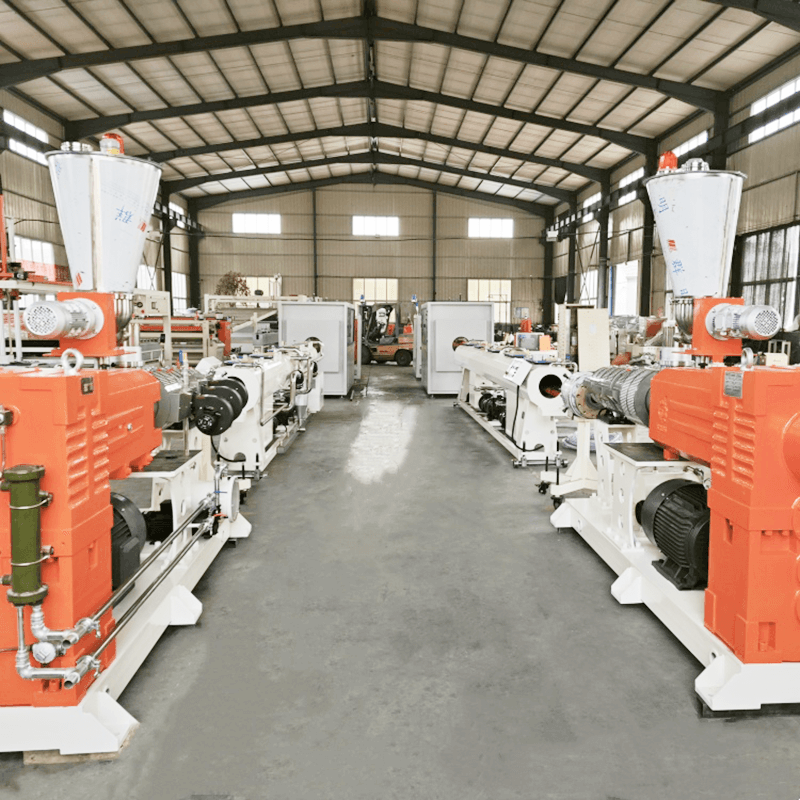
![Modern PVC pipe manufacturing facility and extrusion machinery]()
How a PVC Pipe Production Line Dictates Final Costs
Manufacturing technology determines the baseline product rate. The core machinery dictates output speed and material efficiency. Investing in a modern PVC Pipe Production Line transforms operational economics. Outdated machinery consumes excessive power and produces inconsistent wall thicknesses. Modern lines utilize advanced sensors to monitor every production metric. This technological superiority allows manufacturers to optimize their profit margins. Buyers ultimately benefit from the efficiency of the factory producing their inventory.
The extruder serves as the heart of the entire operation. Extruder design affects plasticization quality and overall output speed. Conical twin-screw designs offer excellent pressure generation for standard profiles. Parallel twin-screw designs provide superior output capacity for larger municipal diameters. A highly efficient PVC pipe extruder reduces energy consumption drastically. Advanced screw geometries ensure the resin melts uniformly without degrading. Energy efficiency ratings directly correlate to lower per-foot production expenses. The motor driving the screws must deliver massive torque without overheating during continuous operation.
Automation drives aggressive scrap reduction across the facility. Automated gravimetric dosing systems ensure exact material usage. They eliminate the wasteful over-feeding of expensive chemical additives. Integrating these precise systems into a Plastic Pipe Production Line maximizes yield. In-line ultrasonic wall thickness monitoring prevents material giveaway. If the pipe wall becomes too thick, the system adjusts automatically. Automated planetary cutting saws reduce scrap and eliminate manual rework. Every ounce of saved resin improves the final financial calculation.
Throughput capacity balances against daily operating expenses. High-speed lines lower the fixed-cost burden per unit produced. Running machinery continuously yields the lowest possible unit rate. Heating up and cooling down extruders wastes massive amounts of energy. Continuous operation requires rigorous and scheduled maintenance protocols. Batch production reduces maintenance frequency but increases the per-unit fixed overhead. Manufacturers must optimize their production schedules to match procurement demands.
Cooling efficiency also dictates line speed. Vacuum calibration tanks must chill the molten plastic rapidly to hold its shape. If the water chillers lack capacity, operators must slow down the entire line. Slower line speeds mean fewer feet produced per shift. This inefficiency drives up the labor and overhead burden on every single pipe. Upgrading the cooling infrastructure allows the extruder to run at maximum capacity. High output directly translates to a more competitive market position.
Strategic Evaluation: Purchasing Pipe vs. Vertical Integration
High-volume buyers often consider manufacturing their own supply. This combats market volatility and secures dedicated inventory. Organizations must calculate the annual procurement spend that justifies this transition. Reaching a specific volume threshold makes in-house production financially viable. Distributors buying millions of feet annually face massive supplier markups. Transitioning from a buyer to a manufacturer changes the entire business model. It requires a shift in operational focus and capital allocation.
Capital expenditure requires careful and detailed financial planning. A complete PVC pipe extrusion line involves multiple heavy components. Buyers must procure the primary extruder and complex die heads. Vacuum calibration tanks and haul-off caterpillars pull the hot plastic. Cutters and belling machines complete the downstream equipment requirements. Facility requirements also demand significant capital investment. Adequate floor space, robust power supply, and cooling water infrastructure are mandatory. Raw material storage silos require reinforced concrete foundations. Building a new facility requires heavy concrete work. Extruders vibrate intensely during operation. You must pour isolated concrete pads to prevent this vibration from damaging the surrounding building structure.
Return on investment modeling justifies the initial capital outlay. Organizations compare the amortized equipment expense against distributor margin savings. Eliminating the middleman drastically reduces per-foot acquisition rates. Facilities can also sell surplus production to secondary regional markets. This creates a new revenue stream and accelerates the payback period. Financial models must account for raw material procurement logistics. Buying bulk resin directly from petrochemical plants requires strong vendor relationships. The financial benefits compound as production efficiency increases over time.
Operating a manufacturing plant requires specialized personnel. You need experienced extrusion operators who understand polymer behavior. Maintenance technicians must know how to troubleshoot complex electrical panels and hydraulic systems. Plant managers must coordinate raw material deliveries with production schedules. Building this team requires upfront investment in recruiting and training. However, controlling your own supply chain eliminates dependency on external vendors. You dictate your own production priorities based on immediate project needs. Water cooling systems require massive holding tanks and industrial pumps. You cannot simply plug these machines into a standard commercial electrical panel. They draw hundreds of amps at startup.
- Calculate current annual expenditures on wholesale pipe procurement.
- Determine the exact factory floor space available for heavy machinery.
- Assess local utility capacities, specifically industrial electrical service and water chilling.
- Evaluate the local labor market for skilled machine operators and maintenance technicians.
- Analyze secondary markets for selling excess manufactured inventory.
Implementation Risks and Mitigation in Pipe Manufacturing
Operating heavy manufacturing equipment carries inherent daily realities. Theoretical financial returns must match actual factory floor outcomes. Quality control and certification compliance remain absolutely paramount. Producing defective materials destroys brand reputation and invites legal liabilities. Facilities must implement rigorous testing protocols to ensure structural integrity. Every batch must meet strict industry standards before leaving the loading dock.
Producing pipe that fails to meet ASTM D1785, AWWA, or ISO standards creates unsellable inventory. Facilities mitigate this by investing in high-end laboratory testing equipment. Hydrostatic pressure testers verify the burst strength of the plastic. Drop-weight impact testers ensure the pipe withstands rough handling. Flattening tests confirm the flexibility and resilience of the extrusion. Strict formulation control prevents chemical batch failures. Gravimetric feeders ensure the recipe remains perfectly consistent hour after hour.
Unplanned downtime halts supply chains and destroys production schedules. Equipment failures leave expensive labor standing idle on the floor. Facilities mitigate this by partnering with reliable machinery vendors. Localized spare parts availability is a crucial operational requirement. Replacement screws, heated barrels, and brass sizing sleeves must be readily accessible. Predictive maintenance software prevents catastrophic machine failures. Sensors monitor vibration and temperature to alert technicians before components break.
Improper operator training leads directly to high scrap rates. Incorrect temperature profiles degrade the sensitive PVC resin inside the barrel. Improper haul-off speeds warp the final product dimensions. Comprehensive vendor-led training programs mitigate human error significantly. Highly automated programmable logic controllers stabilize the entire extrusion process. Touchscreen interfaces allow operators to monitor line speeds and temperatures easily. Continuous workforce education ensures the machinery operates at peak efficiency.
| Operational Risk | Primary Cause | Mitigation Strategy |
| Certification Failure | Inconsistent resin formulation or poor temperature control. | Install gravimetric dosing systems and utilize in-line thickness scanners. |
| Unplanned Downtime | Component wear, electrical faults, or lack of maintenance. | Stock critical spare parts locally and implement predictive maintenance schedules. |
| High Scrap Rates | Improper haul-off synchronization or dull cutting saws. | Automate the cutting process and synchronize the haul-off with extruder speed. |
| Material Degradation | Excessive heat in the extruder barrel or slow material flow. | Optimize screw geometry for the specific PVC compound being processed. |
Conclusion
Take these immediate actions to optimize your procurement or manufacturing strategy:
- Analyze your current annual procurement volume to identify baseline material expenses and potential savings.
- Compare wholesale acquisition rates against the operational expenses of dedicated in-house manufacturing.
- Evaluate facility space and utility infrastructure for potential heavy equipment installation.
- Consult with machinery manufacturers to determine precise output capabilities and energy requirements.
- Audit your current suppliers to ensure they utilize modern, energy-efficient extrusion technology.
FAQ
Q: What is the average cost per foot of PVC pipe?
A: Rates vary widely based on diameter, schedule, and raw material markets. Schedule 40 remains more affordable due to thinner walls. Schedule 80 commands a premium for its thicker, high-pressure design. Bulk pricing depends heavily on the specific manufacturer's operational efficiency and regional logistics.
Q: How does the cost of PVC compare to copper or cast iron?
A: PVC offers massive material savings compared to traditional metals. It provides superior corrosion resistance without the heavy acquisition burden. Installation labor also decreases significantly due to PVC's lightweight nature and simple solvent-welding joining methods.
Q: Why do PVC pipe prices fluctuate so much?
A: Pricing links directly to petrochemical markets and crude oil availability. Booming global infrastructure demand strains resin supply chains. Disruptions in chemical manufacturing or global shipping logistics immediately impact the factory-gate rate for finished goods.
Q: Does pipe color or environmental rating affect the price?
A: Yes. Specialized colorants for utility identification increase manufacturing expenses. Adding heavy UV stabilizers for outdoor exposure requires expensive chemical additives. These specialized formulations slow down extrusion speeds and increase the baseline material rate.
Q: What is the lifespan of a PVC pipe extrusion line?
A: A well-maintained line typically operates efficiently for 10 to 15 years. The heavy steel frames and motors last decades. However, the core components like screws and barrels require regular replacement due to the abrasive nature of PVC compounds.
Q: Can one plastic pipe production line make different sizes of pipe?
A: Yes. Operators use interchangeable extrusion dies and brass calibration sleeves to produce various diameters. A single machine can run multiple sizes, provided the extruder has the appropriate output capacity for the largest desired diameter.



 +86-18561886575 (Mr.Wu)

 +8618561886575
 238 Yangzhou West Road, Jiaozhou City, Qingdao City, Shandong Province