The plastics manufacturing sector faces strict environmental mandates and volatile raw material costs. These pressures force a critical re-evaluation of material lifecycles. Plant operators must adapt to survive, as relying solely on virgin resin is no longer a sustainable operational strategy.
While PVC is inherently recyclable, manufacturers struggle to integrate recycled content without compromising structural integrity. Processing regrind introduces severe operational hurdles. Facilities face challenges with variable melt flows, unpredictable contamination, and rapid thermal degradation. Pushing low-quality recyclate through standard equipment often yields brittle pipes that fail basic pressure tests.
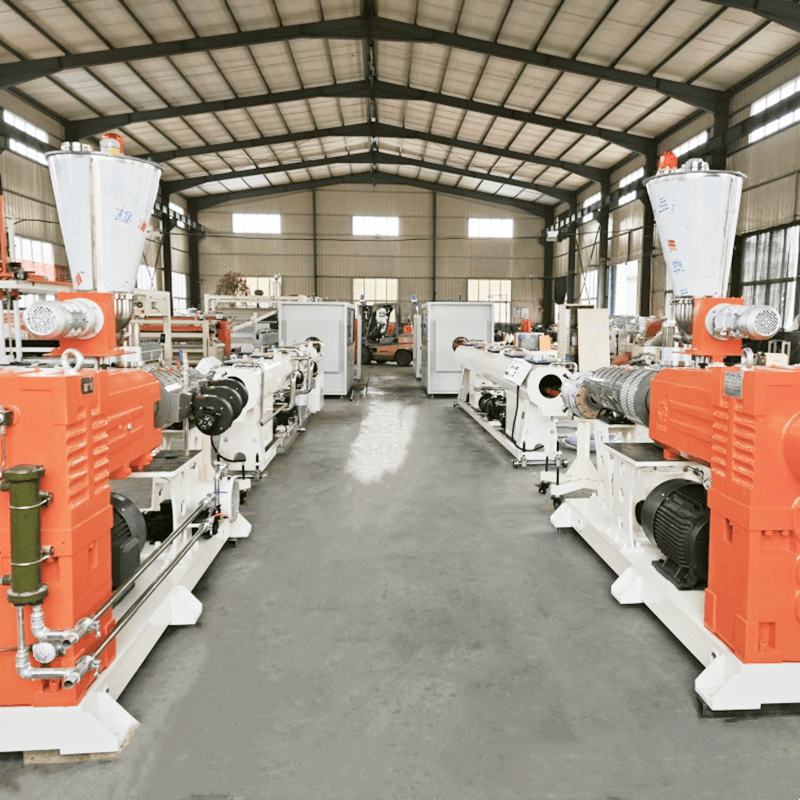
Successfully transitioning to a circular model requires more than just sourcing regrind. It demands evaluating how a modern PVC Pipe Production Line can be configured to process recycled materials efficiently. You must maintain industry-standard pressure and durability ratings. Upgrading your extrusion setup is the only reliable path to profitable material reuse.
- Material Viability: PVC can be recycled multiple times without significant loss of core mechanical properties, provided thermal degradation is managed and feedstock is properly prepared.
- Machinery Adaptation: Processing recycled PVC requires specific adaptations in PVC pipe extrusion machinery, including specialized screw designs, advanced melt filtration, and robust degassing units.
- Strategic Co-Extrusion: Utilizing A-B-A layer technology allows manufacturers to bury recycled content in the core of the pipe, surrounded by virgin resin, preserving surface finish and performance.
- ROI and Compliance: Upgrading equipment to handle regrind offsets virgin resin costs and positions manufacturers to meet emerging regulatory requirements for recycled content in construction materials.
The Reality of PVC Pipe Recyclability and Material Reuse
Understanding the source material dictates the success of your extrusion process. Not all recycled PVC behaves the same way inside the barrel. Manufacturers must categorize feedstock accurately to prevent catastrophic line failures. Mixing different grades of recyclate without proper characterization leads to surging, die drool, and inconsistent wall thickness.
Post-Industrial vs. Post-Consumer PVC
Post-industrial PVC consists of in-house scrap, off-spec pipes, and startup purge. This material offers high purity. Operators easily reintegrate post-industrial scrap directly back into the hopper. It shares the exact chemical formulation as your primary product. Minimal processing is required beyond basic shredding and pulverizing. Because the thermal history is known, operators can adjust processing temperatures with high precision.
Post-consumer PVC presents a completely different operational reality. This category includes end-of-life pipes, old siding, and demolished window profiles. It is a higher-risk material. Post-consumer stock requires rigorous sorting, cleaning, and testing. You must screen for heavy metals or legacy additives that violate modern environmental standards. The melt flow index (MFI) of post-consumer batches fluctuates wildly, requiring constant operator intervention if the machinery lacks automated controls.
The fundamental recycling rule is "empty, clean, and dry." Translating this to an industrial scale requires aggressive intervention. You must remove soil, organic residue, and moisture from excavated pipes before they enter the extrusion process. Failing to clean the material guarantees severe surface defects and internal voids in the finished pipe.
| Material Category | Primary Sources | Purity Level | Processing Requirements | Operational Risk |
| Post-Industrial | In-house scrap, startup purge, off-spec runs | Very High (Known formulation) | Basic shredding and granulating | Low |
| Post-Consumer | Excavated pipes, demolished siding, old profiles | Variable (Mixed formulations) | Washing, optical sorting, thermal drying, melt filtration | High |
End-Use Applications for Recycled PVC
Recycled PVC has distinct limitations in high-pressure applications. You cannot safely extrude 100% post-consumer regrind into potable water mains. The risk of micro-fractures and reduced hydrostatic strength is simply too high. Regulatory bodies strictly govern the use of recyclate in pressure-rated infrastructure. Pushing the limits here invites catastrophic field failures and massive liability.
However, viable "second life" reuse cases are abundant. Manufacturers successfully route lower-value regrind into alternative product lines. Diverting regrind to these products maximizes material yield while mitigating structural risks. Common applications include:
- Non-pressure agricultural drainage pipes.
- Underground electrical and telecommunications conduit.
- Gravity-fed sewer and wastewater pipes.
- Corrugated sub-surface drainage systems.
- Secondary construction profiles like decking substrates and fencing.
- Industrial traffic safety products including speed bumps and wheel chocks.
Evaluating a PVC Pipe Production Line for Recycled Materials
Running regrind through standard extrusion equipment leads to inconsistent output. You must evaluate your machinery's specific capabilities. Processing recycled flakes requires dedicated mechanical configurations. Standard single-screw or twin-screw setups designed purely for virgin powder will choke on high percentages of post-consumer flake.
Extruder Screw Design for Regrind Processing
Standard screws struggle with recycled materials. You need customized screw geometries to handle the variable bulk density of regrind versus virgin powder. Regrind flakes do not feed or melt at the same rate as uniform virgin compounds. A specialized screw ensures consistent material conveyance and prevents surging at the die head. Engineers often specify a longer L/D (Length to Diameter) ratio, such as 36:1 or 40:1, to provide adequate residence time for melting irregular flakes.
Shear rates demand careful management. Recycled PVC has already experienced at least one heat cycle. It is highly susceptible to thermal degradation. High-shear screw profiles will cause localized overheating. Overheating accelerates PVC degradation, releasing hydrochloric acid gas and destroying the polymer chain. Low-shear, high-mixing screw designs equipped with barrier flights are mandatory for processing regrind safely.
Advanced Melt Filtration Systems
Contamination is the primary threat to continuous extrusion. Post-consumer regrind often contains wood, metal, rubber gaskets, and incompatible low-value plastics. Even tiny metal shavings will score the extruder barrel or damage the die tooling. Wood particles burn instantly, creating weak points in the pipe wall and causing immediate failure during impact testing.
You must evaluate continuous screen changers and backflush filtration systems. These units are necessary to maintain line speed without manual intervention. A robust filtration system ensures trace contaminants that slip through upstream sorting are caught. Hydraulic dual-piston screen changers allow operators to swap clogged filters without halting the entire production line. Automatic backflush systems use a small amount of the polymer melt to purge contaminants from the screen, extending filter life and maintaining stable melt pressure.
Co-Extrusion (A-B-A) Capabilities
Multi-layer extrusion is the most reliable method for utilizing post-consumer PVC. Single-wall extrusion of 100% regrind often results in poor surface finish and unpredictable impact resistance. Co-extrusion solves this problem entirely by isolating the recycled material away from the visible surfaces and the immediate structural boundaries.
An A-B-A co-extrusion setup distributes virgin material on the inner and outer walls (A layers). It utilizes up to 80% recycled material in the core (B layer). This configuration buries the recycled content. The pipe retains the smooth, glossy finish of virgin resin on the outside. It also maintains internal chemical resistance for fluid transport. The structural core utilizes cheaper regrind, drastically reducing raw material costs while meeting strict dimensional tolerances.
![PVC Pipe Production Line processing recycled materials]()
Technical Requirements for PVC Pipe Extrusion Machinery
Achieving consistent quality with recycled materials requires precise control over the material blend and the thermal environment. Upgrading your PVC pipe extrusion machinery involves integrating advanced dosing and degassing technologies. Without these systems, operators will constantly fight the machine to maintain output quality.
Gravimetric Dosing and Blending Accuracy
Volumetric feeders fail when processing regrind. The bulk density of recycled flakes fluctuates wildly depending on the source material and the sharpness of the granulator blades. You must assess the requirement for highly accurate gravimetric feeders. These systems weigh the material continuously using precision load cells. They maintain consistent ratios of virgin resin, regrind, and essential stabilizers regardless of density variations.
Automated dosing prevents structural weak points caused by inconsistent material blends. If the regrind ratio spikes unexpectedly, the pipe may become brittle. Gravimetric systems communicate directly with the extruder drive. They adjust feed rates in real-time using loss-in-weight algorithms, ensuring the exact recipe is delivered to the feed throat every second. This eliminates the guesswork associated with manual blending.
Thermal Stability and Degassing
Address the lower thermal stability of recycled PVC immediately. Previous heat histories consume the original heat stabilizers. You often need to dose additional stabilizers into the regrind mix to prevent burning. The processing window for recycled PVC is significantly narrower than for virgin compounds. Operators must monitor barrel zone temperatures meticulously to prevent material degradation.
Evaluate the role of vacuum degassing zones in the extruder barrel. Recycled flakes inherently carry more moisture and volatile gases than virgin powder. If these gases reach the die, they expand. This expansion causes foaming, internal porosity, and severe surface defects. A high-capacity vacuum degassing unit, typically utilizing a water ring vacuum pump, removes moisture and volatiles mid-barrel. Double-vented barrels provide even greater extraction capacity, ensuring a dense, solid pipe wall.
Upgrading PVC Pipe Manufacturing Equipment: Cost vs. ROI
Capital expenditures for recycling-capable machinery can be substantial. However, the operational savings generated by replacing virgin resin with regrind quickly offset the initial investment. Plant managers must look beyond the initial purchase order and analyze the long-term material savings.
Virgin Resin Savings vs. Equipment CapEx
Provide a framework for calculating the payback period of specialized recycling-capable extruders. The calculation relies heavily on the price delta between virgin PVC and regrind. When virgin resin prices spike due to supply chain disruptions, the ROI on recycling equipment accelerates rapidly. Replacing just 30% of your virgin intake with regrind yields massive annual savings in material procurement.
You must also factor in the increased maintenance and tooling wear associated with processing recycled materials. Regrind is inherently more abrasive. Contaminants wear down screw flights and barrel liners faster than pure powder. Upgrading PVC pipe manufacturing equipment with bimetallic barrels and fully hardened screws mitigates this wear. While this increases the upfront CapEx, it prevents costly downtime and extends the lifespan of the plasticizing unit.
Compliance and Market Access Advantages
Modernizing a production facility to handle recycled content future-proofs operations. Governments worldwide are implementing plastic taxes on virgin materials. Utilizing regrind shields your facility from these aggressive tax liabilities. Facilities that fail to adapt will find their margins squeezed by regulatory penalties.
Furthermore, it provides distinct market access advantages. Green-building procurement standards heavily favor recycled materials. Projects seeking LEED certification require specific percentages of recycled content in construction materials. Producing co-extruded pipes with a recycled core allows you to bid on lucrative government and sustainable infrastructure contracts that mandate environmental product declarations (EPDs).
Implementation Risks in a Plastic Pipe Production Line
Integrating regrind is not without operational hazards. Plant managers must implement strict protocols to protect product quality and machinery lifespan. Ignoring these risks leads to high scrap rates and rejected shipments.
Quality Control and Structural Integrity
Identify the risk of reduced impact strength and tensile strength when using high percentages of uncharacterized recyclate. If the regrind contains degraded polymer chains, the final pipe will shatter under impact. Notch sensitivity increases dramatically with poor-quality recycled content. A pipe that looks perfect on the outside may fail instantly when dropped on a job site.
Outline required testing protocols to ensure compliance with ASTM/ISO standards. You cannot bypass quality assurance. Implement rigorous hydrostatic pressure testing and drop-weight impact testing on every batch containing regrind. Continuous monitoring ensures the recycled blend meets the exact mechanical specifications required by your target market. Flattening tests should also be conducted to verify the flexibility and layer adhesion of co-extruded pipes.
Sorting and Pre-Processing Bottlenecks
Inadequate material preparation creates severe operational risks. The failure to separate incompatible polymers from standard PVC is a common disaster. Mixing CPVC (Chlorinated Polyvinyl Chloride) with standard PVC regrind will destroy the batch. CPVC processes at much higher temperatures. It will remain solid and clog the die, or the standard PVC will burn while trying to melt the CPVC.
Mitigation strategies require capital investment. Investing in upstream shredding, pulverizing, and optical sorting equipment is non-negotiable. Near-infrared (NIR) sorters can distinguish between PVC and CPVC automatically, ejecting incompatible flakes before they reach the silo. Furthermore, industrial thermal drying systems ensure a consistent, dry, and clean feedstock before it enters the Plastic Pipe Production Line. Moisture is the enemy of extrusion; dry your regrind thoroughly to prevent surface splay and internal bubbling.
Conclusion
PVC pipe is highly recyclable, but the commercial viability of reusing it hinges entirely on the capabilities of the extrusion equipment and strict quality control of the feedstock. Attempting to force post-consumer regrind through standard machinery will result in high scrap rates and compromised structural integrity. Success requires dedicated technology.
When evaluating a new production line, prioritize manufacturers that offer proven A-B-A co-extrusion dies. Demand robust continuous filtration systems to handle inevitable contamination. Ensure the vendor provides customized screw designs tailored specifically for the thermal and physical properties of regrind.
Execute the following steps to integrate recycled materials effectively:
- Conduct a material audit of available local regrind sources to determine purity, moisture content, and volume consistency.
- Calculate the potential annual resin savings against the CapEx required for A-B-A co-extrusion upgrades and gravimetric dosing systems.
- Request physical trial runs with equipment vendors using your specific recycled material blends to verify melt pressure stability.
- Implement rigorous upstream sorting, friction washing, and thermal drying protocols to protect your extrusion tooling from abrasive contaminants.
- Establish an in-house testing laboratory to perform daily drop-weight impact and hydrostatic burst tests on all regrind-blended batches.
FAQ
Q: How many times can PVC be recycled?
A: PVC can typically be recycled up to seven times without losing its core mechanical properties, provided it is not subjected to excessive thermal degradation during processing. Proper heat stabilization and low-shear extrusion are critical to maximizing its lifecycle.
Q: Can you mix recycled PVC with virgin resin in standard equipment?
A: While small percentages of clean, post-industrial regrind can be mixed into standard lines, processing high volumes or post-consumer material requires specialized dosing, filtration, and screw designs to prevent quality issues.
Q: Does recycled PVC affect pipe pressure ratings?
A: Yes, introducing recycled content can introduce micro-defects that lower pressure tolerance. Recycled PVC is generally restricted to non-pressure applications like drainage or conduit, unless used in the core of a co-extruded pipe.
Q: What is the difference between post-consumer and post-industrial PVC?
A: Post-industrial PVC is clean manufacturing scrap that is easily reused. Post-consumer PVC has been used in the field, requiring extensive cleaning, sorting, and testing for contaminants before it can be re-extruded.
Q: How do manufacturers ensure post-consumer PVC is clean enough for extrusion?
A: Industrial recycling facilities utilize heavy-duty friction washers, sink-float tanks, and thermal dryers to ensure the material meets strict "clean and dry" standards, preventing moisture and debris from ruining the extrusion process.
Q: What machinery is required to recycle PVC pipes?
A: A complete recycling setup requires shredders and pulverizers to reduce the pipe to flake or powder, followed by a specialized PVC pipe production line equipped with melt filtration and degassing capabilities.
Q: Are all PVC pipes recyclable?
A: Technically yes, but pipes containing legacy heavy-metal stabilizers (like lead or cadmium) from decades ago may be restricted from being recycled into new products under current environmental regulations, and incompatible resins like CPVC must be sorted out.



 +86-18561886575 (Mr.Wu)

 +8618561886575
 238 Yangzhou West Road, Jiaozhou City, Qingdao City, Shandong Province