Zhongrui's High-capacity PP Packaging Belt Production Line is engineered for efficiency and high output. This innovative machine produces durable, flexible, and cost-effective PP straps, replacing traditional steel straps across various industries. Ideal for manufacturers seeking quality and sustainability.
According to many years of plastic machinery development and design experience, in the introduction of foreign advanced technology and digestion and absorption, on the basis of self-developed PE pipe production line. Has the unique structure, the design is novel, the equipment entire line layout is reasonable, the control performance is strong and so on.
The PE/PPR Pipe Production Line delivers reliable and efficient manufacturing of various pipes for water supply and drainage in agriculture and construction. Experience advanced technology and precision for high-quality production.
Discover the Highly Cost Effective PVC Pipe Production Line from Zhongrui. Engineered for durability and efficiency, this advanced production line ensures high-quality PVC pipes suitable for a variety of applications. Experience seamless operation, reduced maintenance, and significant cost savings.
The Composite Infiltration Irrigation Pipe Production Line is a high-efficiency system designed to produce drip irrigation tape for agricultural applications. With precision control, energy-saving technology, and advanced automation, it ensures superior performance in greenhouse, field crop, and water conservation irrigation systems.
Discover the PVC Hose Production Line designed for efficient, high-speed manufacturing of PVC hoses. Our advanced system ensures precision, versatility, and durability, making it an ideal choice for various industrial applications.
The PVC Imitation Marble Sheet Slab Extruder Machine Production Line is designed for producing high-quality, durable, and visually appealing marble-like PVC sheets. Offering fire resistance, water resistance, and high-temperature durability, it’s ideal for a variety of interior decoration applications. This advanced extrusion line guarantees high efficiency and stable output, making it a top choice for businesses looking to scale up production.
Zhongrui's PMMA Board Production Line is designed for precision, high-output plastic sheet manufacturing. With advanced technology including a vertical three-roll calender, Siemens motor, and ABB inverter, it ensures high plasticizing ability and energy-efficient performance. Ideal for producing PMMA, PC, and ABS sheets for construction, packaging, and automotive industries.
0
0
Plastic Pipe Extrusion Line Selection Guide for 2026
Views: 0 Author: Site Editor Publish Time: 2026-06-29 Origin: Site
Procuring extrusion machinery represents a high-stakes capital expenditure. Miscalculations in equipment specifications lead directly to long-term margin erosion. You face excessive scrap rates and severe energy inefficiencies when systems mismatch your actual production needs. Plant managers constantly balance scaling production capacity against the rising costs of raw polymers and industrial energy. Purchasing legacy systems introduces massive risk. Older machines lack modern process controls and material flexibility. They struggle to process recycled resins efficiently.
This guide provides a vendor-neutral, technical evaluation framework. We designed it to help plant managers, SME owners, and operations directors specify and evaluate extrusion equipment. You will learn how to shortlist machinery based on verifiable performance metrics, scalability, and long-term operational efficiency.
Key Takeaways
Throughput vs. Footprint: Matching extruder capacity (kg/hr) to facility constraints and downstream cooling capabilities is more critical than theoretical maximum output.
Material-Specific Engineering: Screw geometries and die head designs must be strictly matched to the polymer (e.g., rigid PVC requires different shear management than elastomeric PU/TPU).
End-to-End Auxiliary Integration: Overall line efficiency is dictated by the synchronization of upstream material handling (drying/blending) and downstream units (calibration/haul-off), not just the primary extruder.
Energy and Automation: 2026 procurement standards demand IE4/IE5 synchronous motors, closed-loop inline thickness measurement, and Industry 4.0 connectivity to ensure competitive ROI.
Defining Success Criteria for a Plastic Pipe Production Line
Capacity Planning, Scalability, and Throughput Requirements
Calculating realistic production capacity requires more than reading a manufacturer's maximum output specification. You must base capacity formulas on target pipe diameters, specific wall thicknesses, and sustainable line speeds. A machine rated for 500 kg/hr might only achieve 350 kg/hr when producing thick-walled pressure pipes due to cooling limitations. You must calculate the volumetric output against your downstream cooling capacity. If your water tanks cannot extract heat fast enough, the pipe will deform, rendering the extruder's maximum output irrelevant.
Length-to-Diameter (L/D) ratios directly impact melt homogeneity and overall output stability. Higher L/D ratios, typically 30:1 to 36:1 for polyolefins, provide a longer residence time. This longer time ensures uniform melting and better dispersion of additives. Shorter ratios risk un-melted particles reaching the die head, causing structural flaws. You must match the L/D ratio to your specific resin's thermal profile. Running a 36:1 screw on rigid PVC will burn the material before it ever reaches the die.
Establish strict baseline metrics for acceptable scrap rates during startup and material changeovers. Modern systems should achieve stable production within 15 minutes of startup. Scrap rates should not exceed 2% to 3% during routine operations. High scrap rates indicate poor thermal control, inadequate screw design, or poorly synchronized downstream equipment. You need to track the exact weight of scrap generated during every startup sequence.
Align your equipment scalability with your business growth models. Ensure the chosen plastic pipe production line can accommodate future capacity upgrades. Look for modular cooling tanks and expandable control systems. This modularity prevents the need for a complete system overhaul when production demands increase. You should be able to add a secondary co-extruder or extend the vacuum calibration tank without rewriting the entire PLC logic.
Material Compatibility and End-Use Applications
Specific pipe applications dictate the required polymer types. Municipal water distribution relies heavily on High-Density Polyethylene (HDPE) for its impact resistance and pressure ratings. Telecommunications conduit often utilizes HDPE or Polyvinyl Chloride (PVC) for rigidity and cost-effectiveness during underground trenching. Medical tubing demands specialized polymers like Polyurethane (PU) or Thermoplastic Polyurethane (TPU) for biocompatibility and flexibility. You must map your target market to the correct resin before evaluating machinery.
Consider the trade-offs between dedicating a line to a single virgin resin versus specifying a multi-purpose line. A dedicated line maximizes efficiency and output for one specific product. The screw geometry is perfectly tuned for that exact melt flow index. However, a multi-purpose line equipped to handle Post-Consumer Recycled (PCR) materials and regrind offers superior market adaptability. Processing PCR requires robust melt filtration and specialized barrier screws to handle impurities and varying melt viscosities.
Table: Polymer Processing Parameters and Extruder Configurations
Polymer Type
Recommended Extruder Type
Typical L/D Ratio
Primary Application
HDPE / PE
Single Screw Extruder
30:1 to 36:1
Municipal Water, Gas Pipes
Rigid PVC
Conical / Parallel Twin Screw
22:1 to 28:1
Sewer, Drainage, Telecom Conduit
PP-R
Single Screw Extruder
30:1 to 33:1
Hot and Cold Indoor Plumbing
PU / TPU
Specialized Single Screw
25:1 to 30:1
Medical Tubing, Pneumatic Hoses
Evaluating Core Components of a Plastic Pipe Extrusion Line
Upstream Material Handling and Preparation
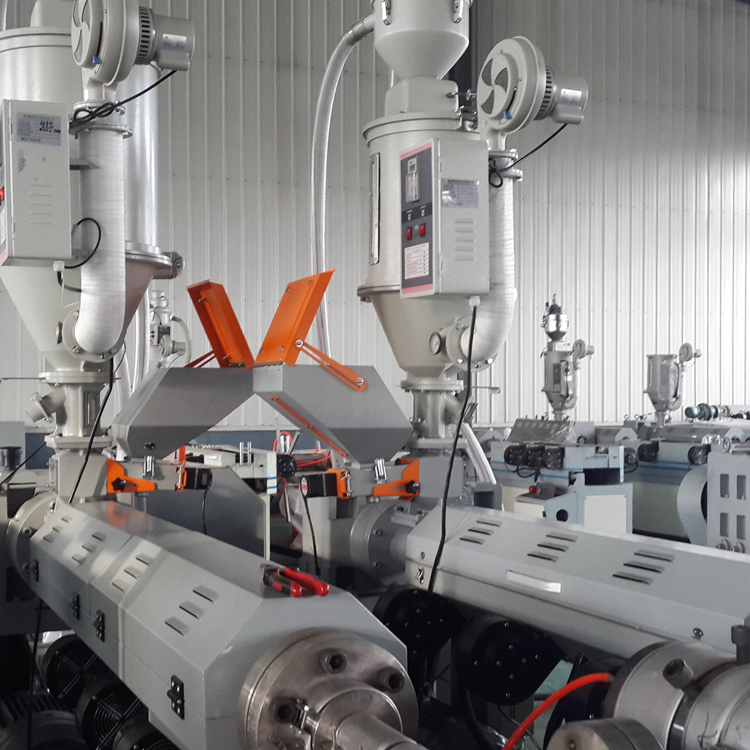
Automated pneumatic conveying systems play a critical role in maintaining consistent feed rates. These systems eliminate manual loading errors and reduce labor costs on the factory floor. They ensure the extruder hopper remains adequately filled, preventing starvation and subsequent pressure drops. Consistent material feeding directly correlates to uniform pipe wall thickness. If the hopper runs low, the screw loses head pressure, and the pipe wall immediately thins out.
Desiccant drying systems are mandatory for hygroscopic materials like TPU, nylon, and certain recycled resins. Improper moisture control leads to severe structural defects. Moisture vaporizes in the extruder barrel, causing surface blemishes, internal voids, and reduced mechanical strength. You must specify twin-tower desiccant dryers capable of achieving dew points below -40°C for sensitive polymers. Standard hot air dryers will not remove internal moisture from the pellet core.
Continuous gravimetric blenders ensure precise mixing of virgin resins, regrind, colorants, and additives. Volumetric dosing relies on volume, which fluctuates with bulk density variations. Gravimetric dosing measures by weight using precision load cells, providing exact formulations. This precision eliminates color variations and prevents the over-consumption of expensive masterbatches. You program the exact percentage of UV stabilizer required, and the gravimetric unit adjusts the auger speed in real-time to maintain that ratio.
Extruder Drive Technologies and Screw Design
The core of any plastic pipe extrusion line is the extruder itself. Single-screw extruders excel at processing polyolefins like PE and PP. They rely on friction against the barrel wall to melt the polymer. Conical or parallel twin-screw extruders are mandatory for heat-sensitive materials like PVC. Twin screws provide positive displacement and precise shear control, preventing PVC degradation during processing. You cannot push rigid PVC through a standard single screw without causing catastrophic material burn.
Evaluate drive mechanisms carefully. Traditional AC motors with gearboxes are common but suffer from mechanical energy losses and require frequent oil changes. Direct-drive torque motors eliminate the gearbox entirely. This design improves energy transfer efficiency, reduces ambient noise, and significantly extends maintenance intervals. Direct drives offer superior torque at low speeds, which is ideal for heavy-wall pipe production where screw RPM is low but resistance is massive.
Barrier screws and grooved feed bushes maximize specific output (kg/hr/rpm). Grooved feed sections force solid pellets forward aggressively, increasing pressure and throughput. Barrier screws separate the solid bed from the melt pool using a secondary flight. This separation prevents un-melted solids from surging forward, ensuring a completely homogeneous melt at the die head. If you run high-density materials without a barrier screw, you will see un-melted gels in the final pipe.
Continuous screen changers and melt filtration systems maintain pressure stability. They are essential when processing recycled polymers containing contaminants like paper, metal flakes, or degraded polymer gels. Dual-piston screen changers allow operators to replace filter meshes without halting production. This continuous operation prevents costly downtime and reduces scrap generated during line restarts. The melt flow simply diverts to the secondary piston while the primary screen is swapped.
Die Head and Tooling Architecture
Spiral mandrel die heads dominate polyolefin pipe production. They distribute the melt evenly through overlapping spiral channels machined into the steel. This design eliminates weld lines, which are common points of mechanical failure in pressure pipes. Spider dies are typically reserved for PVC processing. They offer lower pressure drops but require careful thermal tuning to minimize the impact of spider leg flow marks on the pipe's inner wall.
Internal pipe cooling systems (IPC) drastically improve line speeds for thick-walled pipes. Traditional external cooling relies entirely on thermal conduction through the pipe wall, which is highly inefficient for plastics. IPC circulates chilled air or water through the center of the die head and into the pipe interior. Cooling the pipe from both the inside and outside reduces the required cooling tank length and prevents internal sagging of the molten material.
Downstream and Auxiliary Equipment Integration
Vacuum calibration tanks dictate the final dimensions and surface finish of the pipe. You must evaluate water flow rates, spray nozzle positioning, and vacuum stability. Fluctuating vacuum levels cause immediate diameter variations. Sizing sleeve metallurgy matters heavily. Bronze sleeves offer excellent thermal conductivity for rapid skin freezing, while stainless steel provides superior wear resistance against abrasive polymers filled with calcium carbonate.
Haul-off caterpillar units pull the pipe through the cooling tanks. Servo-driven synchronization with the extruder speed is critical. If the haul-off speed fluctuates independently of the extruder, wall thickness variations occur immediately. Multi-track haul-offs distribute pulling force evenly, preventing ovality and deformation in large diameter pipes. A 630mm pipe requires at least a six-track haul-off to maintain grip without crushing the profile.
Cutting technologies must match the product. Planetary saws are required for large diameter rigid pipes. They orbit the pipe, cutting through thick walls smoothly while utilizing dust extraction systems to maintain a clean environment. Fly-knife cutters suit small, flexible tubing. They execute high-speed, chipless cuts without deforming the flexible profile. Using a standard saw on flexible tubing will shatter the material and create jagged edges.
Specialized Extrusion Systems: Matching Equipment to Pipe Type
Corrugated Pipe Extrusion Line Specifications
Corrugated profiles require entirely different mechanical architectures than solid-wall pipes. The corrugator unit forms the distinct ribbed profile using a continuous track of mold blocks. Mold block cooling efficiency determines the maximum line speed. Water-cooled mold blocks extract heat significantly faster than air-cooled blocks, allowing for higher throughput and better structural rigidity upon exit. You must ensure the chiller system can handle the massive thermal load generated by high-speed corrugators.
Synchronization of the extruder output with the corrugator speed is paramount. Any mismatch causes inconsistent rib formation, thin spots, or complete structural failure. Advanced control systems link the extruder screw speed directly to the corrugator drive, ensuring a constant volume of melt enters the mold blocks regardless of speed adjustments. If the corrugator pulls faster than the extruder feeds, the pipe walls will tear inside the mold.
Double-wall corrugated pipes demand specific die head designs. The die must extrude two concentric tubes simultaneously. A smooth inner layer provides hydraulic efficiency for fluid flow. A corrugated outer layer provides high ring stiffness for underground burial. The die head must ensure proper thermal adhesion between these two layers while they are still in a molten state. Specifying a high-quality corrugated pipe extrusion line ensures these complex mechanical requirements are met without delamination issues.
PU TPU Pipe Extrusion Line Requirements
Processing Thermoplastic Polyurethanes (TPU) and Polyurethanes (PU) presents unique challenges. These elastomers exhibit high melt viscosity and extreme shear sensitivity. Excessive shear heat degrades the polymer, causing a loss of elasticity and mechanical strength. Strict pre-drying is absolute; even trace moisture causes foaming and surface defects in the final tubing. You cannot bypass the drying phase when running TPU.
Specialized screw geometries are necessary to process TPU without burning it. Low-compression screws with gentle transition zones prevent shear spikes. Precise multi-zone temperature control on the barrel and die head prevents localized overheating. Standard haul-off belts often crush or deform elastomeric tubing. You must specify specialized, low-pressure haul-off belts with contoured contact surfaces to preserve the tube's shape. Investing in a dedicated PU TPU pipe extrusion line guarantees the correct configuration for these sensitive materials.
Multi-Layer (Co-Extrusion) Systems
Multi-layer lines, often configured as A-B-A systems, allow manufacturers to optimize material costs and performance. You can incorporate recycled core layers between virgin inner and outer layers. Specialized barrier layers, such as EVOH, prevent oxygen permeation in heating pipes. Co-extrusion maximizes functionality while minimizing the use of expensive specialty resins. You only use the premium material where it physically contacts the environment or the fluid.
Feedblock design dictates the success of co-extrusion. The feedblock merges melt streams from multiple extruders before they enter the die. It must maintain distinct layer separation without mixing. This requires multiple satellite extruders synchronized via a central PLC. The control system must manage different melt temperatures, pressures, and flow rates simultaneously to maintain exact layer ratios. If the pressure from the core extruder overpowers the skin extruder, the outer layer will rupture.
Operational Efficiency and ROI Influencing Factors
Energy Consumption and Thermal Efficiency
Evaluating energy consumption per kilogram of processed material (kWh/kg) provides a clear picture of operational efficiency. Legacy machines often consume excessive power due to outdated heating and drive technologies. You must demand energy consumption data from vendors based on actual production runs, not theoretical idle states. A modern line should operate between 0.25 and 0.35 kWh/kg depending on the polymer and pipe dimensions.
Specify insulated heater bands on the extruder barrel. Ceramic insulation reflects heat inward, reducing surface heat loss and lowering ambient factory temperatures. Variable Frequency Drives (VFDs) on all auxiliary motors adjust power draw based on real-time load requirements. Regenerative braking on haul-off units captures kinetic energy during deceleration and feeds it back into the electrical grid. These incremental energy savings compound massively over a 24/7 production schedule.
Automation, Scrap Reduction, and Industry 4.0
Gravimetric dosing systems significantly reduce resin giveaway. By controlling wall thickness precisely, you avoid producing pipes that are thicker than necessary just to meet minimum standards. Saving even 2% on raw material usage translates to massive financial returns over a year of continuous operation. You stop giving away free plastic to your customers.
Integrate ultrasonic or X-ray inline wall thickness measurement systems. These systems scan the pipe continuously as it exits the cooling tank. When paired with closed-loop thermal centering, the system automatically adjusts die head temperatures to correct wall thickness deviations. This automation eliminates manual caliper checks and prevents out-of-spec production. The operator no longer needs to cut the pipe and measure it manually every hour.
OPC-UA compliance allows seamless integration of the extrusion line into plant-wide ERP or MES systems. This connectivity enables real-time Overall Equipment Effectiveness (OEE) tracking. Plant managers can monitor uptime, scrap rates, and energy usage from remote dashboards. You can identify which shift produces the most scrap and adjust training protocols accordingly based on hard data.
Maintenance, Spare Parts, and Vendor Support
Identify high-wear components early in the procurement process. Screws, barrels, and sizing sleeves degrade over time. Processing abrasive materials, such as highly filled PVC or PCR containing glass fibers, accelerates this wear. Specify bimetallic coatings for screws and barrels. Tungsten carbide alloys extend component lifespans significantly compared to standard nitrided steel. You will spend more upfront, but you will avoid replacing the barrel after just two years of running filled resins.
Define strict expectations for vendor Service Level Agreements (SLAs). Machine downtime costs thousands of dollars per hour. Require remote diagnostic capabilities, allowing vendor technicians to troubleshoot PLC faults via secure VPN connections. Verify regional spare parts availability. Waiting weeks for a replacement drive shaft shipped from overseas destroys production schedules. You need a vendor who stocks critical wear parts within a 24-hour shipping radius.
Implementation Risks, Safety, and Mitigation Strategies
Facility Footprint and Utility Requirements
Address the physical realities of line length during the planning phase. Complete extrusion lines often exceed 30 to 50 meters from the hopper to the cutting saw. Accurate factory floor layout planning prevents bottlenecks. Ensure adequate space for raw material staging at the front and finished goods handling at the rear. You also need overhead crane clearance for removing heavy die heads during maintenance.
Detail the critical utility prerequisites before installation. Extrusion requires massive cooling capacity. Calculate the required tons of chilled water based on the maximum heat output of the polymer. Compressed air systems must provide stable pressure for pneumatic valves and cutting saws. A stable, isolated three-phase power supply prevents voltage drops that can trip sensitive VFDs and ruin production runs. Do not share the extruder's power drop with heavy stamping presses or welders.
Safety Compliance and Environmental Regulations
Mandatory safety certifications are non-negotiable. Ensure the machinery complies with CE, UL, or OSHA standards based on your region. Non-compliant machinery exposes operators to severe risks and invites heavy regulatory fines. Request compliance documentation before signing purchase orders. Look for proper grounding, shielded wiring, and certified safety relays in the electrical cabinet.
Implement robust physical machine guarding. Interlocked guards must cover all rotating shafts, belts, and pinch points. Emergency stop architectures must be hardwired and easily accessible along the entire length of the line. Acoustic enclosures around cutting saws and vacuum pumps protect operators from high decibel levels, ensuring compliance with occupational noise exposure limits. You must enforce strict Lockout/Tagout (LOTO) procedures during any die changes or blade replacements.
Commissioning Timelines and Operator Training
Delayed Factory Acceptance Testing (FAT) and Site Acceptance Testing (SAT) derail project timelines. Define clear testing protocols in the contract. The vendor must prove the machine meets throughput and quality guarantees using your specific resin before the equipment ships. SAT verifies these metrics again after installation on your factory floor. Do not sign off on the final payment until the machine runs continuously for 24 hours without a fault.
Emphasize comprehensive vendor-supplied training programs. Transitioning operators from legacy analog controls to modern HMI touchscreens requires structured education. Operators must understand automated troubleshooting, recipe management, and safe startup/shutdown procedures. Poorly trained operators will bypass automated controls, negating the efficiency gains of modern machinery. They will put the machine in manual mode and run it based on guesswork if they do not understand the PLC.
Conclusion
Audit your current facility footprint, overhead crane clearances, and utility capacities before requesting vendor proposals.
Define your exact material specifications, including the precise percentage of recycled content and fillers you intend to process.
Demand empirical energy consumption data and strict scrap rate guarantees from shortlisted vendors based on your specific pipe dimensions.
Verify the vendor's regional support infrastructure, remote diagnostic capabilities, and guaranteed spare parts availability.
FAQ
Q: How do I determine the correct L/D ratio for my extrusion line?
A: The optimal L/D ratio depends entirely on the polymer you process. Polyolefins like PE and PP require longer ratios, typically between 30:1 and 36:1. This length ensures thorough melting and additive mixing. Heat-sensitive materials like PVC require shorter ratios, usually 22:1 to 28:1. Shorter barrels minimize residence time and prevent thermal degradation. Always match the screw geometry to the specific resin data sheet provided by your material supplier.
Q: Why is gravimetric dosing better than volumetric dosing?
A: Gravimetric dosing measures materials by actual weight using load cells. This ensures exact formulation regardless of bulk density variations in the virgin resin or regrind. Volumetric dosing measures by volume using a timed auger. Volume fluctuates based on pellet size and environmental factors. This fluctuation leads to inconsistent mixing, color variations, and wasted additives. Gravimetric systems eliminate this waste and provide precise material tracking.
Q: What is the purpose of an internal pipe cooling (IPC) system?
A: IPC cools thick-walled pipes from the inside out. The system circulates chilled air or water through the center of the die head and into the pipe interior. This dual-cooling approach prevents internal sagging of the molten polymer. It improves structural integrity and significantly reduces the required length of downstream cooling tanks. IPC is mandatory for high-speed production of large-diameter pressure pipes.
Q: Can I process both rigid PVC and flexible TPU on the same machine?
A: No. Rigid PVC requires a twin-screw extruder to manage shear heat and provide positive displacement. TPU requires a specialized single-screw extruder with low-compression geometry to prevent burning. Using the same machine for both materials results in severe polymer degradation, massive scrap rates, and potential damage to the extruder barrel and screw. You must use dedicated lines for these distinct polymers.
Q: What causes wall thickness variations during extrusion?
A: Wall thickness variations stem from several mechanical issues. Inconsistent material feeding from the hopper causes pressure surging. Fluctuating extruder melt pressure or uneven die head temperatures alter the flow rate. Poorly synchronized haul-off speeds pull the pipe unevenly. Installing melt pumps, gravimetric feeders, and servo-driven haul-offs mitigates these issues and ensures uniform dimensions.
Q: How does a barrier screw improve output?
A: A barrier screw features a secondary flight in the transition zone. This flight physically separates the solid polymer bed from the molten pool. It prevents un-melted solid pellets from surging forward into the die head. This separation ensures a completely homogeneous melt. It allows operators to run the extruder at higher RPMs and achieve greater throughput without sacrificing pipe quality.
Qingdao Zhongrui Plastic Machinery Co., Ltd. is located in Jiaozhou City, Qingdao City, Shandong Province. It is 30 kilometers away from Qingdao Port and only 20 kilometers away from the airport.



 +86-18561886575 (Mr.Wu)
 +8618561886575
 238 Yangzhou West Road, Jiaozhou City, Qingdao City, Shandong Province