Zhongrui's High-capacity PP Packaging Belt Production Line is engineered for efficiency and high output. This innovative machine produces durable, flexible, and cost-effective PP straps, replacing traditional steel straps across various industries. Ideal for manufacturers seeking quality and sustainability.
According to many years of plastic machinery development and design experience, in the introduction of foreign advanced technology and digestion and absorption, on the basis of self-developed PE pipe production line. Has the unique structure, the design is novel, the equipment entire line layout is reasonable, the control performance is strong and so on.
The PE/PPR Pipe Production Line delivers reliable and efficient manufacturing of various pipes for water supply and drainage in agriculture and construction. Experience advanced technology and precision for high-quality production.
Discover the Highly Cost Effective PVC Pipe Production Line from Zhongrui. Engineered for durability and efficiency, this advanced production line ensures high-quality PVC pipes suitable for a variety of applications. Experience seamless operation, reduced maintenance, and significant cost savings.
The Composite Infiltration Irrigation Pipe Production Line is a high-efficiency system designed to produce drip irrigation tape for agricultural applications. With precision control, energy-saving technology, and advanced automation, it ensures superior performance in greenhouse, field crop, and water conservation irrigation systems.
Discover the PVC Hose Production Line designed for efficient, high-speed manufacturing of PVC hoses. Our advanced system ensures precision, versatility, and durability, making it an ideal choice for various industrial applications.
The PVC Imitation Marble Sheet Slab Extruder Machine Production Line is designed for producing high-quality, durable, and visually appealing marble-like PVC sheets. Offering fire resistance, water resistance, and high-temperature durability, it’s ideal for a variety of interior decoration applications. This advanced extrusion line guarantees high efficiency and stable output, making it a top choice for businesses looking to scale up production.
Zhongrui's PMMA Board Production Line is designed for precision, high-output plastic sheet manufacturing. With advanced technology including a vertical three-roll calender, Siemens motor, and ABB inverter, it ensures high plasticizing ability and energy-efficient performance. Ideal for producing PMMA, PC, and ABS sheets for construction, packaging, and automotive industries.
0
0
Schedule 40 PVC Pipe Uses and Applications
Views: 0 Author: Site Editor Publish Time: 2026-11-10 Origin: Site
Schedule 40 PVC pipe is a stiff, medium-wall pipe. You will find it in drinking water lines, drainage and venting, pool plumbing, and irrigation.
Two traits explain these uses. First, the wall thickness handles medium pressure. Second, PVC resists many chemicals, so wastewater and soil contact cause little harm. These traits make schedule 40 PVC a reliable choice for building, plumbing, and irrigation projects.
Common uses include:
Cold water supply in homes and small commercial buildings
Drain, waste, and vent systems
Pool and spa supply and return lines
Lawn and garden sprinkler mainlines
Manufacturers make pvc pipes like these on a PVC Pipe Production Line, and a Plastic Pipe Production Line supports many similar products. This schedule 40 pvc pipe works for medium-pressure and non-pressure jobs. Choose schedule 40 pvc pipes when your system stays within those limits.
Key Takeaways
Schedule 40 PVC pipe works well for cold water lines, drainage, pool plumbing, and lawn watering.
Check your local codes and look for NSF-PW and NSF-61 marks before you use PVC for drinking water.
Schedule 40 PVC works well for medium pressure, but it should not be used for hot water. For hot lines, use CPVC instead.
Only bury Schedule 40 PVC underground where codes allow it, and follow the right installation rules.
Pick Schedule 40 for normal home projects. Pick Schedule 80 for higher pressure or heavy-duty use.
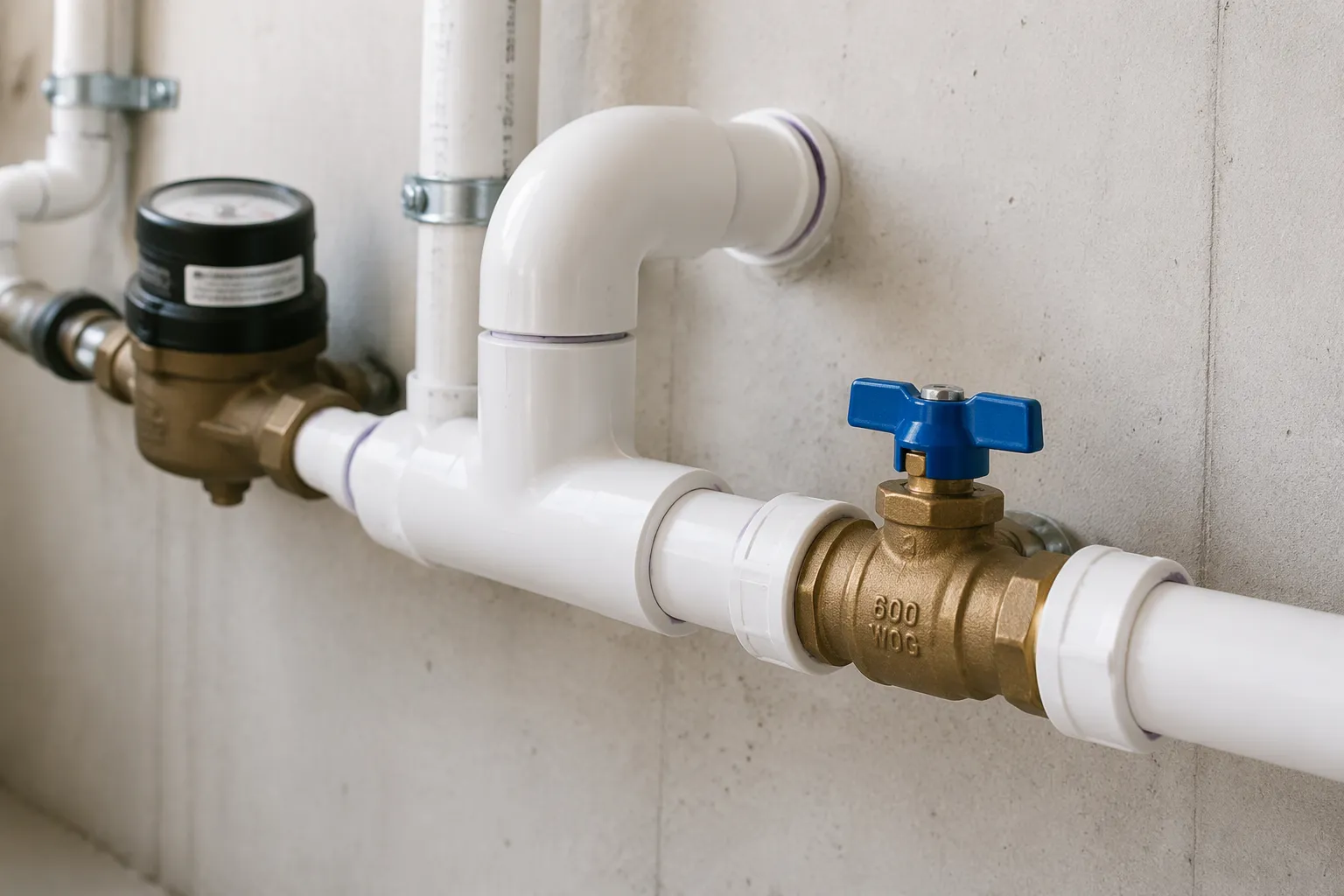
A schedule 40 pvc pipe works well as a cold supply line. You can run it from the city meter to the building's shutoff valve without a problem. Many installers also use it after the meter for cold water distribution. Check your local code first, though. Most states adopt the International Residential Code or use it as a model. Table P2906.4 of that code lists PVC as an acceptable water service pipe. Table P2906.5 leaves PVC out as an acceptable water distribution pipe. Your local authority having jurisdiction makes the final call.
Pressure capacity supports these cold water systems. Schedule 40 PVC carries a rating up to 280 PSI at a reference temperature of 73°F, per Plastic Pipe Valve. Home systems usually run between 40 and 80 PSI, so the pipe keeps a wide safety margin. Temperature matters just as much. Schedule 40 PVC reaches its maximum allowable operating temperature at 140°F, and its pressure rating drops to about half by 140°F, based on the ASTM D1785 derating table. Hot water needs a different material. CPVC handles up to 200°F and works for hot water delivery.
Safety certifications matter for drinking water. Look for NSF-PW and NSF-61 marks on the pipe. NSF-61 testing checks that a product does not release contaminants such as lead into drinking water. The EPA, WHO, and AWWA all support these standards for water supply infrastructure.
Schedule 40 Fittings for Pressurized Lines
Schedule 40 fittings join pressurized lines with solvent cement. Common types include tees, ells, couplings, wyes, caps, adapters, bushings, and plugs. Each one carries its own pressure rating. A half-inch schedule 40 pipe can reach about 450 psi at 73°F, while a 4-inch pipe may only carry around 133 to 220 psi. Large elbows and tees often rate lower than straight pipe because molding adds local stress. Your system's allowable working pressure must never exceed the lowest rated component. Match every valve, union, and pvc fittings adapter to the intended pressure, then apply the temperature derating factor.
These schedule 40 pvc pipes serve low-pressure cold water systems well. Use schedule 40 pvc pipes for potable lines only after you confirm local approval. A pvc pipe with the right certification and the right fittings gives you a dependable plumbing systems component for decades.
Schedule 40 PVC for Drainage and Venting
Drainage and venting is the most common job for this material. Builders use it in homes, hotels, motels, inns, and condominiums. Section 248 CMR 10.00 of the Uniform State Plumbing Code lists PVC and ABS schedule 40 pipe and fittings as allowed materials for drains, waste, or vents in those buildings. The pipe moves waste away by gravity, so it never needs a pressure rating for this work.
Drain, Waste, and Vent Lines
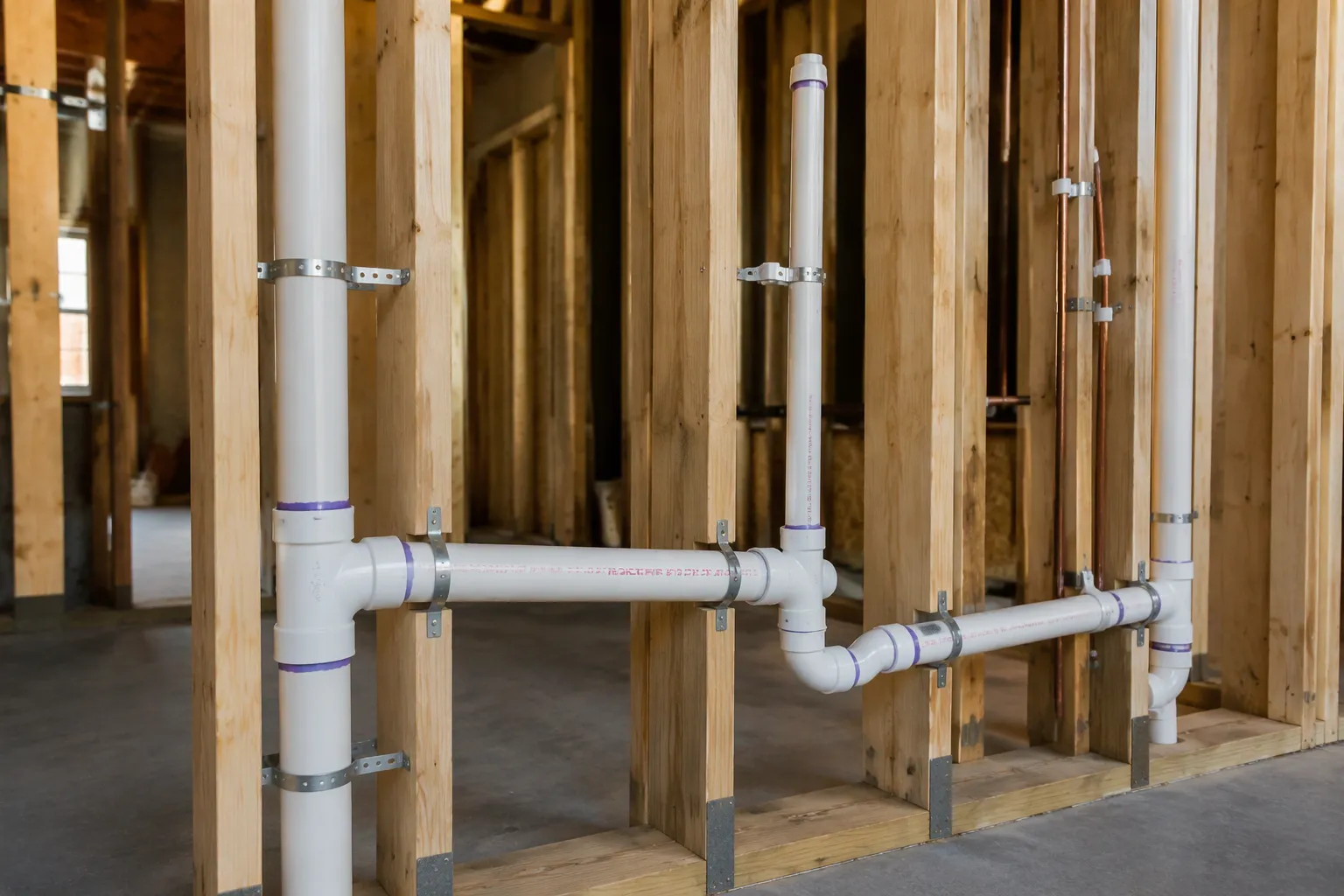
A drain, waste, and vent system moves sewage and gray water out of a building and lets air into the lines. IPEX lists the main jobs for PVC DWV pipe and fittings:
Drains that do not carry pressure
Waste service
Vents
Sewer and backwater valve connections
Grease management
Flue gas venting
The product standard behind these parts is clear about what it covers:
ASTM D2665: Specifications for polyvinyl chloride plastic drain, waste, and vent pipe and fittings. This specification covers requirements for PVC plastic drain, waste, and vent pipe and fittings suitable for the drainage and venting of sewage and certain other liquid waste.
Several codes and standards shape a correct DWV installation. The table below sums up the main ones.
Standard or Code
Scope
ASTM D2665
PVC DWV pipe and fittings with Schedule 40 wall thickness
ASTM D1785
PVC pressure pipe; shares Schedule 40 dimensions with D2665 for sizes 1-1/4 inch and larger
ASTM D2321
Underground installation of thermoplastic pipe for sewers and gravity-flow work
NSF International Standard 14
Required for all DWV pipe and fittings in plumbing systems
IPC and UPC
Minimum slope of 1/4 inch per foot for pipes 3 inches and smaller, 1/8 inch per foot for 4-inch and larger pipes
Support and joining rules matter just as much. Horizontal runs need support every 4 feet at most, at each change of direction, and at the end of every branch. Vertical runs get support at each floor level or every 10 feet, whichever comes first. Join fittings with primer meeting ASTM F 656 and cement meeting ASTM D 2564, then pressure-test the system with water. Buried pipe follows ASTM D2321 and ASTM F 1668.
Sewer Laterals and Condensate Lines
Sewer laterals carry waste from the building to the main. A mid-sized city in Central Java, Indonesia, replaced old concrete sewer lines with 8-inch schedule 40 pvc pipes across more than 50 km. Crews finished in just under 4 months. The city picked the material for easy trench installation, lower labor cost, and strong resistance to root intrusion and corrosion. Sewage overflow incidents dropped 25% during monsoon season. You can bury schedule 40 pvc where local codes allow it, and ASTM D2321 guides the bedding and backfill.
Condensate lines are another good fit. Commercial buildings such as hospitals, schools, and mixed-use sites use schedule 40 pvc in systems without pressure, like floor drains and condensate lines. Industrial plants also run it in washdown drains and low-pressure loops. These schedule 40 pvc pipes resist corrosion and root intrusion, so drainage around buildings stays clear for decades. A pvc pipe with UV inhibitors now meets lifespan expectations of 50+ years, which helps in municipal bidding. Check local code requirements before you install any schedule 40 pipe underground.
Schedule 40 PVC Pipes for Pools and Irrigation
Pool and Spa Plumbing
Pool and spa plumbing is a medium-pressure job. A home pump usually pushes 15 to 40 PSI at the filter, says Apex Flow Solutions. A 2-inch schedule 40 pvc pipe can handle up to 280 psi at 73°F under ASTM D1785. That extra room covers normal pad plumbing and underground runs with space left over. Chlorine at normal pool levels of 1 to 5 ppm does not affect PVC, and muriatic acid and sodium bicarbonate flow through without damage.
Heat is the real limit. Standard PVC gets soft above about 140°F, so Apex Flow Solutions says not to use it on spa heater outlet piping. Put a short CPVC nipple on the heater intake and discharge ports instead. Join every fitting with ASTM F656 primer and ASTM D2564 cement, then hold each joint for at least 30 seconds.
Lawn, Garden, and Landscape Irrigation
Utah State University Extension describes a simple garden drip system made from ½, ¾, or 1 inch PVC pipe, fittings, and manual valves. Glue the main distribution lines and every fitting before the valves so they can handle high water pressure. Leave the lateral lines unglued, which keeps row placement flexible. Clemson University's HGIC notes that schedule 40 pvc pipes are usually the piping of choice for landscape irrigation across the Southern region. The thicker wall handles rocky ground better than PR160 piping.
Bury mainlines 6 to 8 inches deep, per Orbit, and keep velocity under 5 feet per second to limit friction loss. Flush the lines before backfilling, then pressure test every joint. Add a pressure regulator to protect emitters from blowouts. Confirm local code requirements before you install any schedule 40 pvc pipes, whether at a pool pad or under a lawn.
Difference Between Schedule 40 and Schedule 80 PVC
Wall Thickness and Pressure Ratings
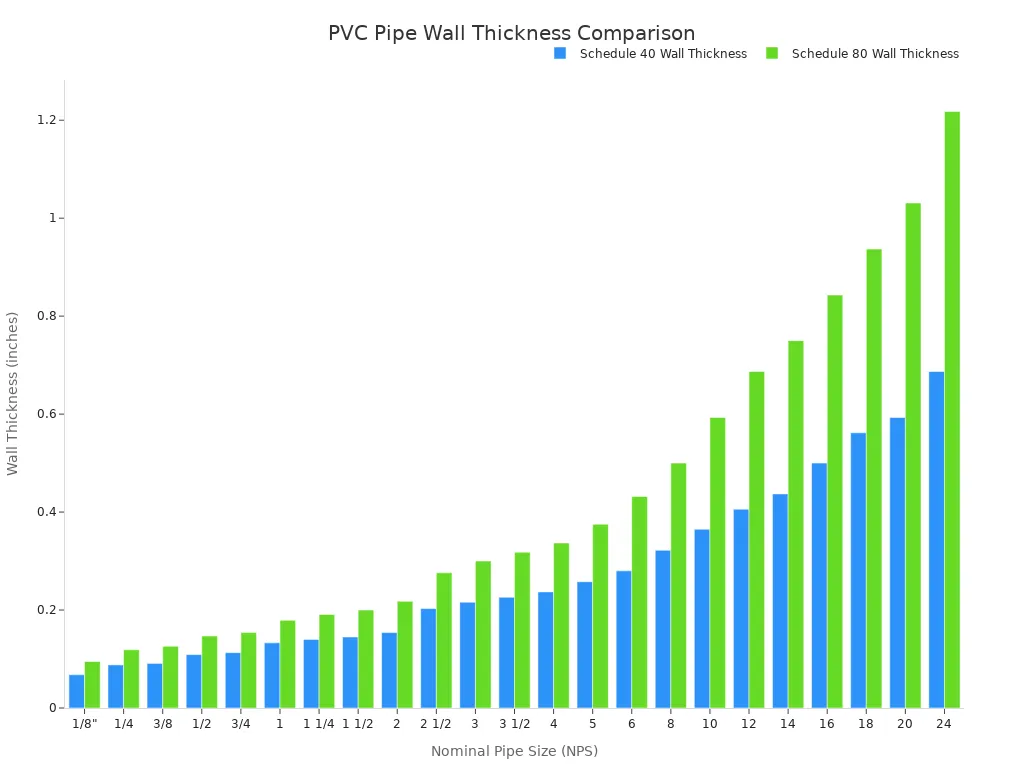
The schedule number shows how thick the pipe wall is. A higher schedule means a thicker wall for the same pipe size. Schedule 80 PVC pipe has more material than schedule 40 PVC at every nominal size. That extra thickness makes schedule 80 pvc pipe stiffer and gives it a higher maximum pressure rating.
The table below from PVC Pipe Supplies shows how the two schedules compare across common sizes.
Nominal Size
Sch 40 Wall
Sch 40 Max PSI
Sch 80 Wall
Sch 80 Max PSI
1/2"
0.109
600
0.147
850
1"
0.133
450
0.179
630
2"
0.154
280
0.218
400
4"
0.237
220
0.337
320
A 1-inch example makes the gap easy to see. Commercial Industrial Supply lists a 0.133-inch minimum wall and 450 PSI for schedule 40, compared with 0.179 inch and 630 PSI for schedule 80. PVC Pipe Supplies also notes that these numbers assume 73°F. Heat lowers the psi rating for both schedules, so always apply the temperature derating factor.
Where Each One Fits Best
The difference between schedule 40 and schedule 80 PVC comes down to matching the pipe to the job. Schedule 40 PVC fits most residential drainage, irrigation, and cold water work. Its thinner wall keeps material costs down, and its pressure headroom covers typical home systems. Schedule 80 PVC pipe suits higher-pressure lines and tougher commercial or industrial settings. The thicker wall also stands up better to impact and physical stress.
Neither schedule wins outright. The difference between schedule 40 and schedule 80 PVC is a trade-off between cost and capacity. Choose schedule 40 pvc pipes for everyday plumbing and landscape lines. Choose schedule 80 pvc pipe where pressure, chemical exposure, or heavy use runs higher. Both schedules share the same outside diameter, so pvc fittings for one size fit either wall class. Confirm your system's pressure and local code before you pick a pvc pipe.
You now know where schedule 40 pvc pipe fits in. It works for potable cold water lines, drainage and venting, pool plumbing, and lawn irrigation. Each job stays within moderate pressure or no pressure at all.
That range is why schedule 40 pvc shows up on so many job sites. The medium wall gives you pressure headroom for cold water supply lines, and the smooth bore keeps drain waste and vent runs moving. For a pool pad or a sprinkler mainline, schedule 40 pvc pipes just work.
Think about schedule 40 pvc for your next installation or upgrade. Check local code requirements first, then pick the right pvc pipe and fittings for the job. A little checking now protects every pvc pipes connection later.
FAQ
What pressure rating does schedule 40 pvc pipe carry?
A 2-inch schedule 40 pvc pipes size rates up to 280 PSI at 73°F under ASTM D1785. Home pvc systems run 40 to 80 PSI, so you keep a wide safety margin. Heat lowers that rating, so apply the derating factor.
Can you use these pvc pipes for hot water?
No. Standard pvc reaches its maximum allowable temperature at 140°F, and the pressure rating drops as heat rises. Use CPVC for hot water lines up to 200°F.
Can you bury schedule 40 pvc pipes underground?
Yes, where local codes allow it. ASTM D2321 guides bedding and backfill for buried pvc pipes in sewer and drainage work. Check with your local authority before you dig.
Is schedule 40 or schedule 80 the better choice?
Neither wins outright. Schedule 80 pvc has a thicker wall and a higher pressure rating. Schedule 40 pvc fits most residential drainage, irrigation, and cold water work. Match the pvc pipe to your system's pressure and code.
Look for NSF-PW and NSF-61 marks on the pipe. NSF-61 testing checks that the product does not release contaminants such as lead into drinking water. Confirm local approval before you install pvc supply lines.
Qingdao Zhongrui Plastic Machinery Co., Ltd. is located in Jiaozhou City, Qingdao City, Shandong Province. It is 30 kilometers away from Qingdao Port and only 20 kilometers away from the airport.



 +86-18561886575 (Mr.Wu)

 +8618561886575
 238 Yangzhou West Road, Jiaozhou City, Qingdao City, Shandong Province