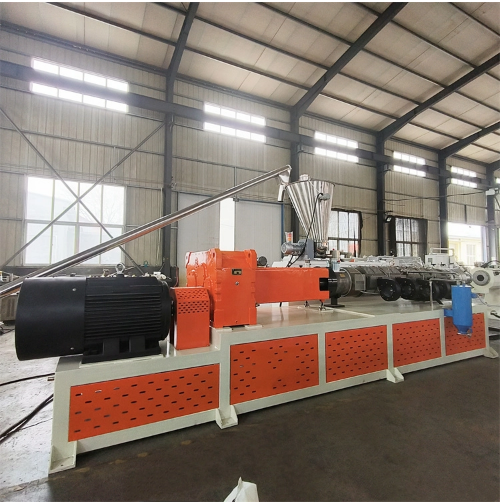
PVC vs CPVC Pipes is one of the most common comparisons designers, contractors, and homeowners face when planning new plumbing or process systems. Both materials look similar at first glance, but their performance, cost, and ideal applications can be very different. Choosing correctly affects safety, service life, and the overall economics of a project.
This guide explains the main differences between PVC and CPVC, lays out their pros and cons, and connects those properties to real-world use cases. It also touches on how a modern PVC Pipe Production Line influences quality and what that means for end users.
What Are PVC and CPVC Pipes?
What Is PVC Pipe?
PVC stands for polyvinyl chloride, a widely used thermoplastic. In pipe form, PVC is typically rigid, lightweight, and corrosion resistant. Manufacturers blend PVC resin with stabilizers, lubricants, and other additives, then extrude it into pipes with different pressure ratings and schedules (such as Schedule 40 and Schedule 80).
PVC pipes are most commonly used for:
Cold water supply lines
Drain, waste, and vent (DWV) systems
Irrigation and landscaping networks
Some low-temperature industrial and chemical lines
Because PVC is easy to process and has been in use for decades, it benefits from mature production technology. A typical PVC Pipe Production Line can produce large volumes of consistent, dimensionally stable pipe in many sizes, which keeps PVC widely available and relatively inexpensive.
What Is CPVC Pipe?
CPVC stands for chlorinated polyvinyl chloride. It starts as PVC but undergoes an additional chlorination step, which increases the chlorine content in the polymer. That chemical modification raises the material’s softening point and improves its resistance to higher temperatures and certain chemicals.
Common applications of CPVC include:
Hot and cold potable water distribution
Hot water recirculation loops
Some fire sprinkler systems (where codes allow)
Industrial lines carrying hot or more aggressive chemicals
Visually, CPVC is often a different color from standard PVC, which helps installers avoid mixing the two in error. CPVC pipes are also marked with temperature and pressure ratings appropriate for hotter service conditions.
What Do PVC and CPVC Have in Common?
Despite their differences, PVC and CPVC share several core characteristics:
Thermoplastic behavior – Both soften when heated and harden when cooled, enabling extrusion into consistent pipe shapes.
Corrosion resistance – Neither material rusts like metal; they are resistant to many acids, bases, and salts.
Light weight – Both are much lighter than steel or copper, making them easier to handle on site.
Ease of fabrication – Cutting, deburring, and joining can be done with relatively simple tools and solvent cement systems.
Many extrusion lines can be configured to process both PVC and CPVC compounds, but CPVC typically requires tighter control of temperature and processing conditions.
Key Technical Differences: PVC vs CPVC Pipes
Temperature and Pressure Ratings
Temperature capability is one of the most important differences in the PVC vs CPVC Pipes comparison. Standard PVC has a lower maximum service temperature and is usually intended for cold or moderately warm water, not for continuous hot water or steam. As temperature rises, the pressure rating of PVC drops significantly.
CPVC, by contrast, is formulated for higher temperatures. It can typically handle sustained hot water service at temperatures where PVC would lose too much strength or become unsafe. Pressure ratings for CPVC at a given temperature are generally higher than those of PVC at the same temperature, making CPVC better suited for hot-water and certain industrial applications.
Chemical Resistance and Compatibility
Both PVC and CPVC resist corrosion from many inorganic chemicals and are widely used in chemical handling. However, CPVC often shows better performance at elevated temperatures, where PVC may soften or lose resistance. For cold to moderate temperature service involving common chemicals, PVC is often sufficient, but for hotter, more aggressive fluids, CPVC is typically the safer choice.
Regardless of the material, designers should consult chemical compatibility charts and the pipe manufacturer’s data when selecting materials for specific chemicals and concentrations.
Mechanical Properties
PVC and CPVC are both rigid plastics, but there are subtle differences in strength and toughness. CPVC’s formulation aims to balance increased temperature capability with mechanical performance. In general:
PVC performs very well for cold-water distribution, drainage, and structural stiffness.
CPVC maintains strength better at higher temperatures but may require more careful handling to avoid damage from impact or over-tightened supports.
Both materials expand and contract with temperature changes. Designers must account for this movement with appropriate support spacing and allowances in long runs to avoid stress on joints.
Joining Methods and Fittings
PVC and CPVC are most commonly joined using solvent cement systems that chemically soften and fuse the surfaces together. However, the chemistry of PVC and CPVC differs, so they require different primers and cements. Using the wrong cement can result in weak joints and premature failure.
It is also important not to mix PVC fittings with CPVC pipes or vice versa unless they are specifically designed as transition fittings. Color coding and printed markings on the pipe help installers keep systems consistent.
Identification and Color Coding
Manufacturers typically use specific colors to help distinguish PVC from CPVC. While exact colors vary by region and brand, CPVC is often a warmer or tan shade, while PVC is usually white or light gray. In addition to color, pipes are printed with:
Material designation (PVC or CPVC)
Nominal size and schedule
Pressure rating
Relevant standards and codes
Proper identification minimizes the risk of installing the wrong material in hot-water lines or other critical services.
Pros and Cons of PVC Pipes
Advantages of PVC Pipes
PVC remains the default choice for many piping applications due to its strong mix of performance and affordability. Key advantages include:
Lower material cost – PVC is generally less expensive than CPVC, which can significantly reduce project budgets for large systems.
Wide availability – Because PVC is so common, it is easy to source pipes, fittings, valves, and accessories in a broad range of sizes.
Good performance in cold and ambient conditions – For cold water, drainage, and venting, PVC offers reliable long-term service.
Lightweight and easy to install – Reduced weight simplifies transport and installation, often allowing faster project completion.
Mature manufacturing technology – The long history of PVC extrusion means that a modern PVC Pipe Production Line can produce highly consistent products, reducing variations that might lead to failures.
Disadvantages of PVC Pipes
Despite its strengths, PVC is not ideal in every situation. Primary disadvantages include:
Limited high-temperature capability – PVC is not designed for continuous hot water or high-temperature process fluids; using it beyond its rated temperature can cause deformation and joint failure.
Code and standard limitations – Many plumbing and mechanical codes restrict the use of PVC in certain hot-water or fire protection applications.
UV sensitivity – Long-term outdoor exposure without protection can lead to surface degradation; paints or coverings are often recommended for exposed installations.
Joint quality dependence – Performance depends heavily on proper solvent welding; poor surface preparation, incorrect cement, or insufficient cure time can result in leaks.
Pros and Cons of CPVC Pipes
Advantages of CPVC Pipes
CPVC was developed to overcome some of PVC’s temperature limitations and is now well established for hot-water and higher-temperature applications. Key advantages are:
Higher temperature resistance – CPVC is engineered for sustained hot-water service, making it suitable for domestic hot water systems and many industrial processes.
Strong performance at elevated temperatures – Pressure ratings remain viable at temperatures where PVC would no longer be acceptable.
Code acceptance for potable hot water – Many plumbing codes recognize CPVC for hot and cold potable water, subject to local regulations and proper installation.
Good chemical resistance – CPVC maintains corrosion resistance even at higher temperatures in contact with many chemicals.
Disadvantages of CPVC Pipes
Some trade-offs accompany the improved temperature performance of CPVC:
Higher initial cost – CPVC pipes and fittings are typically more expensive than equivalent PVC components.
More specialized installation requirements – CPVC needs its own compatible primer and solvent cement; installers must follow the manufacturer’s instructions precisely.
Handling considerations – In certain conditions, CPVC can be more prone to damage from improper support spacing or rough handling, making careful installation important.
Potentially narrower availability – In some markets, CPVC may not be stocked as widely or in as many sizes as PVC, affecting lead times and replacement parts.
Cost Comparison: PVC vs CPVC Pipes
Material Costs
When evaluating PVC vs CPVC Pipes, the first difference many buyers notice is price. PVC usually has the lower per-meter or per-foot cost, which can be decisive in large-scale infrastructure, irrigation, or drainage projects where temperatures remain low.
CPVC’s higher cost reflects its more complex chemistry, its higher performance in hot conditions, and the tighter production controls required during manufacturing. For hot-water plumbing systems, that added cost is often justified by improved safety margins and compliance with relevant codes.
Installation and Labor Costs
Both materials are quicker and easier to install than many metal alternatives, thanks to lightweight construction and solvent-welded joints. However, CPVC may require more experienced installers who are familiar with its specific joining requirements and cure times, especially for hot-water or high-pressure systems.
Where labor costs are high, the overall expense difference between PVC and CPVC may narrow, as both allow relatively rapid installation compared with welded metal piping.
Lifecycle and Maintenance Costs
Initial material prices tell only part of the story. Over the life of a system, the right material can reduce leaks, failures, and downtime. Choosing PVC in an application that sometimes runs above its temperature rating, for example, may save upfront but increase the likelihood of premature replacement, while CPVC in the same situation can offer longer-term reliability.
For cold-water-only systems, PVC can provide decades of service with minimal maintenance. For mixed-temperature or hot-water systems, CPVC’s higher cost may be offset by longer, safer operation within its design envelope.
Application Scenarios: When to Use PVC vs CPVC Pipes
Residential Plumbing and Drainage
In homes, PVC is widely used for drain, waste, and vent lines, as well as for some cold-water supply lines. It is economical, easy to install, and generally suitable for these low-temperature functions.
For hot-water supply, CPVC is usually preferred where plastic piping is allowed by code. It can handle the temperatures created by water heaters and recirculation loops, providing a safer and more durable option for showers, sinks, and appliances.
Commercial Buildings
Commercial projects often mix materials to match specific needs. PVC is commonly found in storm drains, sanitary sewers, and some cold-water systems. CPVC may be deployed in hot- and cold-water distribution networks, mechanical rooms, and in certain fire sprinkler systems where permitted.
Designers must verify local code requirements, which may specify when metal, PVC, or CPVC must be used in particular building areas.
Industrial and Process Piping
Industrial facilities frequently handle corrosive or high-temperature fluids. For cold chemical solutions, PVC’s corrosion resistance and low cost are attractive. For higher temperatures, especially when aggressive fluids are involved, CPVC or other high-performance plastics often become the preferred choice.
A careful review of chemical compatibility, operating temperature, and pressure is essential when selecting between PVC and CPVC in industrial systems.
Fire Protection and Special Applications
Some types of fire sprinkler systems can use CPVC pipes, subject to relevant standards and listing requirements. PVC, with its lower temperature rating, is generally not used where high heat exposure is expected.
Other specialized applications—such as vacuum systems, high-pressure lines, or systems subject to extreme mechanical loads—may require alternate materials entirely. In these cases, PVC and CPVC comparisons are part of a broader material selection process.
PVC Pipe Production Line and CPVC Manufacturing
Overview of a Modern PVC Pipe Production Line
A modern PVC Pipe Production Line is designed to transform raw PVC resin and additives into finished pipes with consistent dimensions and performance. Typical stages include:
Raw material mixing – PVC resin, stabilizers, lubricants, and fillers are blended for uniform composition.
Extrusion – The mixture is fed into an extruder, where it is heated and pushed through a die that shapes it into a pipe.
Calibration and cooling – The hot pipe passes through calibration sleeves and cooling baths to set its final diameter and wall thickness.
Cutting and printing – Pipes are cut to standard lengths and marked with size, material, and rating information.
Quality control – Dimensions, impact resistance, and pressure performance are checked against standards.
Adjustments for CPVC Pipe Production
Producing CPVC pipe on a similar line requires adjustments. CPVC compounds often have narrower processing windows, making temperature control and residence time critical. Equipment may need different screw designs or processing profiles to avoid degrading the material.
Because CPVC is more sensitive to processing conditions, rigorous quality management is important. Consistent wall thickness and uniform material properties are essential for maintaining the intended temperature and pressure ratings.
Impact of Manufacturing Quality on Pipe Performance
Whether the product is PVC or CPVC, the quality of the extrusion process influences long-term performance. Poor control of dimensions or defects like voids and inclusions can significantly reduce a pipe’s strength and pressure capacity.
Users who rely on third-party testing, recognized standards, and reputable producers are more likely to receive pipes that perform as expected throughout their service life.
Installation and Maintenance Best Practices
Planning and Design Considerations
Effective design begins by defining the operating conditions: fluid type, temperature, pressure, and environmental exposure. Based on this information, designers can evaluate PVC vs CPVC Pipes and select the material that meets or exceeds these requirements while staying within budget.
Key planning tasks include:
Confirming local codes and standards
Determining support spacing and expansion allowances
Planning transitions between different materials where necessary
Cutting, Joining, and Supporting Pipes
Proper installation is critical for both PVC and CPVC pipes. Recommended practices include:
Using suitable cutting tools to ensure clean, square cuts
Deburring and chamfering pipe ends to avoid damaging fittings and to improve flow
Cleaning and priming joint surfaces according to manufacturer guidelines
Applying the correct, material-specific solvent cement and allowing adequate cure time
Providing supports at recommended intervals to prevent sagging and stress on joints
Inspection and Maintenance
Once installed, both PVC and CPVC systems benefit from routine inspection. Regular checks may include looking for signs of leakage, discoloration, distortion, or mechanical damage. In industrial environments, fluid conditions should be monitored to ensure they remain within the material’s design envelope.
Promptly addressing minor issues, such as loose supports or early signs of stress, can prevent more serious failures later in the system’s life.
Side-by-Side Comparison: PVC vs CPVC Pipes
Summarizing the major contrasts helps simplify the selection process:
Temperature – PVC is suitable for cold and moderate temperatures; CPVC is designed for hot-water and higher-temperature service.
Cost – PVC is typically more economical; CPVC costs more but extends capability.
Chemical resistance – Both resist many chemicals; CPVC often performs better at higher temperatures.
Availability – PVC enjoys the broadest availability; CPVC is widely available but may offer fewer size options in some markets.
Code compliance – PVC is common for DWV and cold water; CPVC is favored for hot potable water where permitted.
Perspectives from Different Information Sources on PVC vs CPVC Pipes
Different types of organizations and information platforms tend to highlight various aspects of the PVC and CPVC comparison:
Health-Focused Information Platforms
Health-oriented resources often emphasize the safety of drinking water and indoor environments. For them, the main concern in the PVC vs CPVC discussion is whether each material meets regulations for potable water and whether it is used within its temperature ratings to avoid degradation that could affect water quality.
Consumer and Household Guidance Sites
Consumer advice platforms commonly explain the practical differences in simple terms: PVC is typically recommended for drains and cold-water lines, while CPVC is suggested for hot water in kitchens, bathrooms, and laundry areas. They also stress following local codes and qualified installer guidance.
Technical and Educational Resources
Engineering and training materials tend to focus on performance data, such as pressure-temperature curves and chemical resistance tables. They usually present PVC vs CPVC Pipes as a design decision based on quantifiable criteria: operating conditions, standards, and required safety margins.
News and Industry Trend Outlets
News sources that cover building and infrastructure topics discuss how regulations, sustainability concerns, and new technologies influence material choices. They often note that while PVC remains a dominant material, CPVC and other plastics are gaining attention in applications where higher performance is required.
Public and Government Information Portals
Public agencies and official information portals typically provide neutral guidance. They reference building codes and health regulations, advising users to choose pipe materials—PVC, CPVC, or alternatives—based on certified uses, temperature limits, and the specific requirements of each project.
How to Choose the Right Material for Your Project
Selecting between PVC and CPVC involves balancing performance, safety, cost, and regulatory considerations. A structured approach can help:
Identify the maximum and minimum operating temperatures.
Determine the system pressure in normal and upset conditions.
List all fluids the system will carry and check chemical compatibility.
Review applicable plumbing, mechanical, fire, and health codes.
Estimate material and labor costs for each option.
Consider expected service life, maintenance, and replacement costs.
If the system operates only at cold or moderate temperatures and handles non-aggressive fluids, PVC may offer the best value. If continuous or frequent hot-water service is required—or if fluids are hotter and more corrosive—CPVC is usually the better choice.
Conclusion
The comparison between PVC vs CPVC Pipes is ultimately about matching material capabilities to real-world operating conditions. PVC delivers excellent value for cold-water, drainage, and many low-temperature industrial systems. CPVC extends that performance envelope into higher temperatures and more demanding applications, albeit at a higher initial cost.
Understanding the properties of each material, along with the role a reliable PVC Pipe Production Line plays in product quality, allows engineers, installers, and property owners to make informed decisions. By aligning pipe selection with temperature, pressure, chemistry, and regulatory requirements, it is possible to build piping systems that are safe, durable, and cost-effective over their full service life.


 +86-18561886575 (Mr.Wu)
 +8618561886575
 238 Yangzhou West Road, Jiaozhou City, Qingdao City, Shandong Province