Schedule 40 PVC pipe forms the backbone of modern residential, commercial, and agricultural infrastructure. Its apparent simplicity masks strict dimensional and pressure-rating tolerances. Producing this ubiquitous piping requires absolute precision. Manufacturers and large-scale distributors face a continuous operational challenge. They must meet exact ASTM standards for wall thickness and pressure capacity while maintaining profitable extrusion speeds and minimizing material waste. Achieving this balance demands deep technical knowledge and highly calibrated machinery. Facilities must understand the exact material behaviors of unplasticized polyvinyl chloride under heat and pressure. This guide deconstructs the technical specifications of Schedule 40 PVC. We compare it directly against Schedule 80 and other common variants. Finally, we provide a technical evaluation framework for selecting the manufacturing equipment required to produce these pipes at scale efficiently.
Key Takeaways
- Dimensional Consistency: Schedule 40 and Schedule 80 pipes share the same Outside Diameter (OD) for fitting compatibility, but differ in Inside Diameter (ID) and wall thickness.
- Pressure Thresholds: Schedule 40 is optimized for standard plumbing and drainage (e.g., 450 psi for 1-inch pipe), whereas Schedule 80 handles higher-pressure industrial applications (630 psi for 1-inch pipe).
- Production Requirements: Transitioning between pipe schedules requires a highly calibrated PVC pipe production line capable of precise die adjustments and consistent cooling to prevent ovality.
- Equipment ROI: Selecting the right PVC pipe extruder and downstream equipment dictates material efficiency, output volume, and compliance with international quality standards.
Understanding Schedule 40 PVC Pipe: Technical Specifications
Defining the "Schedule" System
The term "schedule" originates from early standardizations in the iron pipe industry. It serves as an indicator of wall thickness and pressure capacity. It operates independently of the pipe's outer diameter. A specific schedule number does not equal a fixed measurement in inches or millimeters. Instead, it represents a standardized profile. This profile dictates how much material forms the pipe wall. Higher schedule numbers indicate thicker walls. Thicker walls inherently withstand greater internal pressure. This system allows engineers to specify piping strength without altering external dimensions. When you specify a schedule, you define the mechanical limits of the fluid transport system.
Standard Dimensions and Tolerances
Understanding the relationship between nominal pipe size, outside diameter (OD), and inside diameter (ID) prevents costly installation errors. Nominal size refers to the general commercial designation, not an exact measurement. For nominal sizes up to 10 inches, "Standard" pipe and Schedule 40 are dimensionally identical. They share the exact same wall thickness. A divergence occurs at larger sizes. For all sizes above 10 inches, "Standard" pipe maintains a fixed 3/8-inch wall thickness. In contrast, Schedule 40 walls continue to thicken proportionally. This continuous thickening ensures the pipe maintains its structural integrity across massive diameters. Extrusion operators must monitor these dimensional shifts closely during production runs.
| Nominal Pipe Size (Inches) | Outside Diameter (Inches) | Schedule 40 Wall (Inches) | Schedule 80 Wall (Inches) |
| 0.50 | 0.840 | 0.109 | 0.147 |
| 1.00 | 1.315 | 0.133 | 0.179 |
| 2.00 | 2.375 | 0.154 | 0.218 |
| 4.00 | 4.500 | 0.237 | 0.337 |
| 6.00 | 6.625 | 0.280 | 0.432 |
Material Properties
Schedule 40 pipes utilize a specific unplasticized polyvinyl chloride (uPVC) formulation. Manufacturers omit plasticizers during compounding. This omission gives the pipe its characteristic rigidity and high tensile strength. The uPVC matrix provides exceptional chemical resistance. It easily withstands acids, alkalis, and most inorganic chemicals found in soil or wastewater. However, this material has strict temperature limitations. The structural integrity of standard Schedule 40 PVC begins to degrade above 140°F (60°C). Operating beyond this threshold causes the material to soften. Pressure capacities drop exponentially as temperatures rise. Engineers must calculate thermal derating factors for any warm-fluid applications to prevent pipe rupture. High-quality uPVC compounds typically utilize a K-value 65-68 resin mixed with calcium zinc stabilizers to ensure thermal stability during the extrusion process.
![PVC Pipe Extrusion and Manufacturing Process]()
Schedule 40 vs. Schedule 80: A Comparative Analysis
Wall Thickness and Inside Diameter
Schedule 80 features significantly thicker walls than Schedule 40. Because the outside diameter remains fixed across both schedules, this extra material pushes inward. The thicker walls of Schedule 80 directly reduce the inside diameter. This ID reduction impacts fluid dynamics heavily. A smaller ID restricts flow rate. It decreases the total fill capacity of the pipeline. System designers must account for increased friction head loss when upgrading to Schedule 80. Pumping systems often require recalibration or larger impellers to push fluids through the narrower internal passage efficiently.
Pressure Ratings and Yield Strength
Pressure capacity defines the primary functional difference between these schedules. Schedule 80 handles substantially more internal force. For example, a 1-inch Schedule 40 pipe safely operates at 450 psi. A 1-inch Schedule 80 pipe manages up to 630 psi. These ratings apply at a baseline temperature of 73°F. Manufacturers determine these figures using a strict safety factor. The actual burst pressure is typically two to three times higher than the stated working pressure. This safety margin prevents catastrophic failures from sudden pressure spikes or water hammer effects in industrial settings.
| Nominal Size | Schedule 40 Max PSI (at 73°F) | Schedule 80 Max PSI (at 73°F) | Burst Pressure Margin |
| 0.5 inch | 600 | 850 | High |
| 1 inch | 450 | 630 | High |
| 2 inch | 280 | 400 | Medium |
| 4 inch | 220 | 320 | Medium |
| 6 inch | 180 | 280 | Low |
Fitting Compatibility and Types
Because the OD is identical, standard PVC fittings physically fit both schedules. Elbows, couplings, and adapters slide onto either pipe type seamlessly. You can cement a Schedule 40 fitting onto a Schedule 80 pipe. Doing so introduces severe structural risks. You must never mix schedules in a high-pressure run. The entire system's pressure rating defaults to the weakest component. Installing a 450-psi fitting on a 630-psi pipeline creates a dangerous bottleneck. Always match the fitting schedule to the pipe schedule for industrial applications. Installers must also use heavier-bodied solvent cements for Schedule 80 to ensure proper chemical welding.
Application Suitability
Selecting the correct schedule depends entirely on the deployment environment. Field engineers evaluate mechanical stress, fluid type, and ambient temperature before specifying a pipe class.
- Schedule 40: Ideal for residential plumbing systems. Contractors use it extensively for irrigation networks. It serves as the standard for DWV (Drain, Waste, Vent) lines. It also functions well as standard electrical conduit in low-impact areas.
- Schedule 80: Designed for harsh industrial environments. It handles chemical processing lines safely. Facilities use it for high-pressure industrial wastewater transport. It survives high-stress mechanical environments where physical impacts are likely.
Cost and Weight Implications
Thicker walls require more raw uPVC compound. Schedule 80 costs significantly more to manufacture. This increased raw material consumption drives up the per-foot price. The heavier weight of Schedule 80 impacts logistics. Transportation costs rise due to the increased freight tonnage. Installation also becomes more labor-intensive. Workers expend more effort maneuvering and supporting the heavier pipe. Hangers and supports must be spaced closer together to handle the added weight. Facility managers must weigh these cost increases against the necessary pressure requirements of their specific project.
Other Common PVC Pipe Classifications
CPVC (Chlorinated Polyvinyl Chloride)
Standard PVC fails under high heat. CPVC solves this problem through a secondary chlorination process. Manufacturers expose the PVC resin to chlorine gas under UV light. This free radical chlorination reaction replaces hydrogen atoms with chlorine atoms. The resulting CPVC handles potable hot water up to 200°F safely. It serves as the standard for indoor drinking water systems where standard PVC is insufficient. CPVC requires specific solvent cements formulated to handle higher temperatures and different chemical structures. You cannot use standard PVC glue on CPVC joints without risking a blowout.
PVC Conduit
Plumbing PVC and electrical PVC conduit serve entirely different purposes. Electrical conduit undergoes distinct testing under UL 651 standards. It must resist crushing and UV degradation. Transitioning from Schedule 40 to Schedule 80 conduit impacts electrical installations significantly. The thicker walls of Schedule 80 reduce the internal wire fill capacity. Electricians experience a different pulling feel during installation due to the tighter space. You must verify fitting compatibility in a continuous run to ensure smooth wire pulls without snagging. Conduit also includes specific flame retardants not found in plumbing pipe.
SDR (Standard Dimension Ratio) Pipe
The SDR system contrasts sharply with the Schedule system. In SDR piping, the ratio of the pipe's outside diameter to its wall thickness remains constant across all sizes. For example, SDR 35 means the OD is 35 times larger than the wall thickness. This constant ratio ensures uniform pressure ratings regardless of the pipe diameter. A 4-inch SDR 21 pipe and a 10-inch SDR 21 pipe share the exact same pressure capacity. Municipalities frequently use SDR pipe for large-scale sewer and water main projects because it simplifies pressure calculations across vast networks.
Manufacturing Standards: The Role of a High-Quality PVC Pipe Production Line
Problem Framing
Producing dimensionally accurate Schedule 40 and 80 pipes is a complex metallurgical and thermodynamic challenge. Manufacturers must overcome severe operational hurdles. Melt fracture ruins surface finishes. Uneven cooling warps the final product. Improper heat management leads to rapid material degradation. Solving these issues requires a highly synchronized PVC Pipe Production Line. Every component must communicate seamlessly to maintain the strict tolerances dictated by ASTM standards. A single temperature drop in the extrusion barrel can compromise an entire production run.
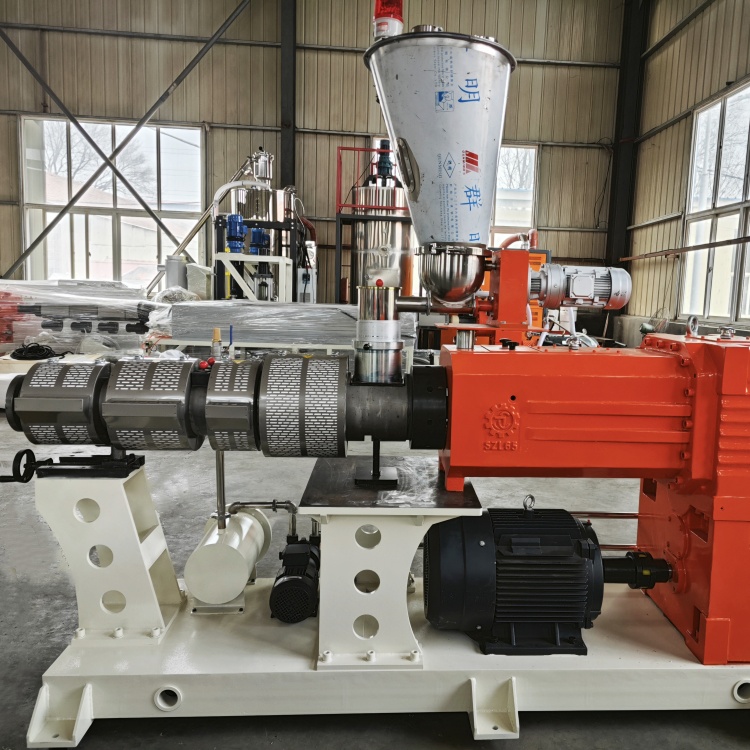
Core Components of a PVC Pipe Extrusion Line
A modern PVC pipe extrusion line relies on several critical stages working in unison. Operators must monitor each phase to ensure product integrity.
- Raw Material Mixing & Feeding: Production begins with compounding. Uniform blending of PVC resin, tin stabilizers, and pigment is mandatory. Inconsistent mixing causes weak spots in the final pipe wall. Gravimetric feeders ensure exact dosing into the extruder hopper.
- The Extrusion Process: The compounded powder enters the heating zones. Conical or parallel twin-screw extruders melt and homogenize the PVC compound. The twin-screw design provides the necessary shear force to process rigid powder without degrading it. Extruders typically operate with an L/D ratio of 28:1 or 36:1 to ensure complete plasticization at melt temperatures around 180-200°C.
- Die Head and Tooling: The molten plastic enters the extrusion die. This component forms the specific OD and wall thickness for different schedules. Precision tooling dictates the initial shape before the plastic enters the cooling phase.
Calibration and Cooling
Molten PVC exits the die in a pliable state. It must be frozen into its final dimensions immediately. Vacuum sizing tanks pull the hot pipe against a calibrated sizing sleeve. This process sets the exact outside diameter. Simultaneously, intense water cooling baths extract heat from the plastic. Spray cooling or water ring systems drop the material temperature rapidly. Consistent cooling prevents warping and locks the molecular structure. Cooling tanks often span 6 to 8 meters in length, maintaining water temperatures between 15-20°C. Any fluctuation in water temperature or vacuum pressure results in immediate dimensional failure. Operators must maintain clean water filters to prevent clogged spray nozzles.
Evaluating PVC Pipe Manufacturing Equipment for Your Facility
Extruder Capacity and Material Compatibility
Evaluate a PVC pipe extruder based on its maximum output rates, measured in kilograms per hour. High-volume facilities require robust gearboxes and high-torque motors capable of pushing 200 kg/hr to over 1000 kg/hr depending on the machine size. Screw design is equally critical. Many manufacturers use calcium carbonate as a filler to reduce costs. High-filler formulations are highly abrasive. They demand specialized bimetallic screws and barrels. These hardened components prevent excessive wear and maintain consistent melt pressure over long production runs. Standard nitrided screws will degrade rapidly when processing heavily filled uPVC compounds.
Automation and Downstream Precision
The efficiency of a Plastic Pipe Production Line depends heavily on its downstream equipment. Automated haul-off machines use multi-track caterpillars to pull the pipe at a constant speed. Any jerking motion alters the wall thickness. Planetary cutters provide clean, swarf-less cuts without slowing down the extrusion process. Inline belling machines automatically form sockets at the pipe ends. Integrating these automated systems reduces manual labor and ensures perfect consistency across thousands of pipe segments. Modern lines synchronize the haul-off speed directly with the extruder RPM.
Changeover Efficiency
Production demands shift rapidly. Facilities must adapt to varying market needs. Evaluate how quickly the machinery can be retooled. Switching production from Schedule 40 to Schedule 80 requires changing the die head pin and bush. It also requires swapping the vacuum calibration sleeve. Modern PVC pipe manufacturing equipment features quick-release mechanisms. These designs minimize downtime during size changeovers. Faster retooling translates directly to higher operational uptime and increased daily output. Operators should be able to complete a full size changeover in under two hours.
Scalability and Operational Lifespan
Investing in extrusion machinery requires long-term strategic planning. Analyze energy consumption closely. Modern extruders utilize energy-efficient AC motors and optimized barrel heating zones. These upgrades reduce electricity usage significantly. Consider the availability of spare parts and regional technical support. A machine's operational lifespan relies on accessible maintenance. High-quality components prevent catastrophic breakdowns. Consistent uptime ensures a faster return on your initial capital expenditure. Facilities should stock critical wear parts like heater bands and thermocouples to prevent extended downtime.
Implementation Risks and Quality Control in PVC Extrusion
Wall Thickness Variation
Uneven wall thickness is the most common extrusion failure. It wastes raw material and compromises pressure ratings. Gravity naturally pulls molten plastic downward inside the die head. This causes the bottom wall to thicken while the top thins out. Manufacturers mitigate this through thermal die centering. Operators adjust heater bands to manipulate the melt flow. Advanced lines utilize automated ultrasonic measuring systems. These gauges scan the pipe continuously. They provide closed-loop feedback to adjust haul-off speeds and die temperatures in real-time. This automation eliminates human error from the calibration process.
Ovality and Dimensional Drift
Pipes must remain perfectly round. Ovality prevents fittings from sealing correctly. This defect usually stems from cooling issues. If the cooling bath temperature fluctuates, the plastic shrinks unevenly. Haul-off speed inconsistencies also stretch the pipe out of round. Manufacturers must maintain strict control over water chillers and vacuum pumps. Proper alignment of the downstream caterpillar tracks ensures the pipe is pulled evenly without being crushed or distorted during the cooling phase. Regular calibration of the vacuum sizing sleeve prevents long-term dimensional drift.
Surface Defects
A smooth surface finish is critical for flow efficiency and aesthetics. Internal or external scratches often indicate damaged die tooling or debris in the calibration sleeve. Discoloration points to severe thermodynamic issues. Yellow or brown streaks mean the PVC compound is degrading. This happens when screw temperatures run too hot or material stagnates in the die head. Troubleshooting requires immediate recalibration of the extruder's heating zones and checking the stabilizer ratios in the raw material mix. Operators must purge the barrel immediately if severe burning occurs.
| Defect Type | Common Cause | Immediate Corrective Action |
| Uneven Wall Thickness | Improper die centering or gravity sag | Adjust thermal centering heater bands |
| High Ovality | Inconsistent cooling bath temperature | Check chiller function and water flow |
| Surface Scratches | Debris in vacuum sizing sleeve | Clean calibration sleeve and inspect tooling |
| Yellow/Brown Streaks | Material degradation from excess heat | Lower barrel temperatures and check stabilizers |
Conclusion
Schedule 40 PVC remains the undisputed industry standard for general-purpose fluid transport. Capitalizing on this massive market demand requires strict adherence to dimensional tolerances. The margin for error is non-existent. The profitability of manufacturing Schedule 40, Schedule 80, or CPVC relies heavily on your equipment. Investing in a versatile, high-precision extrusion line is mandatory. Outdated machinery simply cannot maintain the speeds and tolerances required to compete effectively.
To optimize your production floor, take the following actions immediately:
- Audit your current extrusion capacity and identify bottlenecks in cooling or haul-off speeds.
- Define your target pipe schedules and calculate the required output volumes in kilograms per hour.
- Request detailed technical spec sheets from equipment vendors, focusing on screw design and motor efficiency.
- Demand performance guarantees regarding wall thickness tolerances and energy consumption rates.
FAQ
Q: What is the difference between Schedule 40 and Schedule 80 PVC pipe?
A: The primary difference is wall thickness. Schedule 80 has thicker walls to handle higher internal pressures. Because the outside diameter remains the same, the thicker walls of Schedule 80 reduce the inside diameter, which slightly restricts fluid flow compared to Schedule 40.
Q: Do Schedule 40 and Schedule 80 use the same fittings?
A: Yes, physically they do. Both schedules share the exact same outside diameter. External fittings like couplings and elbows will fit both. However, you must never mix them in high-pressure applications. The system's maximum pressure rating will default to the lowest-rated component.
Q: Can a single PVC pipe extrusion line produce both Schedule 40 and Schedule 80?
A: Yes. A single extrusion line can produce both schedules. Operators achieve this by swapping the die head tooling (pin and bush) and the vacuum calibration sleeves. Quick-change designs allow facilities to transition between schedules with minimal production downtime.
Q: What is the maximum pressure a 1-inch Schedule 40 PVC pipe can hold?
A: A standard 1-inch Schedule 40 PVC pipe has a maximum working pressure of 450 psi at 73°F. If the temperature of the fluid or environment increases, this pressure rating drops significantly. You must apply thermal derating factors for any applications above standard room temperature.
Q: What equipment is required in a standard plastic pipe production line?
A: A complete line requires a material mixer, an automatic feeder, a twin-screw extruder, a precision die head, a vacuum calibration tank, a water cooling bath, a haul-off machine, a planetary cutter, and a belling machine or stacker.
Q: How do manufacturers control the wall thickness of PVC pipe?
A: Manufacturers control thickness using precision extrusion dies and consistent haul-off speeds. Advanced production lines use inline ultrasonic thickness gauges. These sensors scan the pipe and provide real-time feedback to adjust extruder RPM or haul-off speed automatically.
Q: Is Schedule 40 PVC safe for drinking water?
A: Yes, provided the specific pipe carries an NSF-61 certification for potable water. However, standard PVC is only suitable for cold water lines. For indoor potable hot water distribution, building codes require CPVC or PEX to handle the elevated temperatures safely.



 +86-18561886575 (Mr.Wu)

 +8618561886575
 238 Yangzhou West Road, Jiaozhou City, Qingdao City, Shandong Province