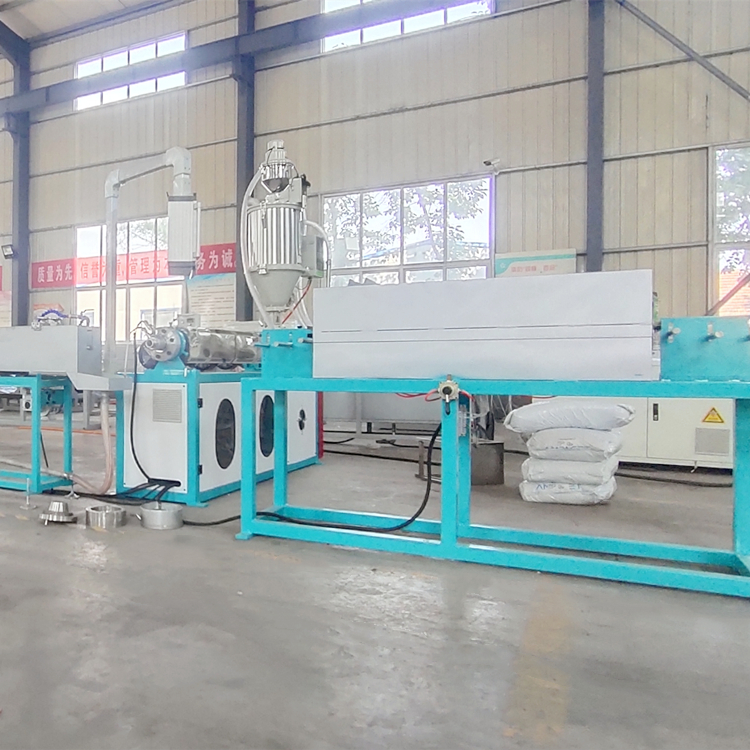
Zhongrui's High-capacity PP Packaging Belt Production Line is engineered for efficiency and high output. This innovative machine produces durable, flexible, and cost-effective PP straps, replacing traditional steel straps across various industries. Ideal for manufacturers seeking quality and sustainability.
According to many years of plastic machinery development and design experience, in the introduction of foreign advanced technology and digestion and absorption, on the basis of self-developed PE pipe production line. Has the unique structure, the design is novel, the equipment entire line layout is reasonable, the control performance is strong and so on.
The PE/PPR Pipe Production Line delivers reliable and efficient manufacturing of various pipes for water supply and drainage in agriculture and construction. Experience advanced technology and precision for high-quality production.
Discover the Highly Cost Effective PVC Pipe Production Line from Zhongrui. Engineered for durability and efficiency, this advanced production line ensures high-quality PVC pipes suitable for a variety of applications. Experience seamless operation, reduced maintenance, and significant cost savings.
The Composite Infiltration Irrigation Pipe Production Line is a high-efficiency system designed to produce drip irrigation tape for agricultural applications. With precision control, energy-saving technology, and advanced automation, it ensures superior performance in greenhouse, field crop, and water conservation irrigation systems.
Discover the PVC Hose Production Line designed for efficient, high-speed manufacturing of PVC hoses. Our advanced system ensures precision, versatility, and durability, making it an ideal choice for various industrial applications.
The PVC Imitation Marble Sheet Slab Extruder Machine Production Line is designed for producing high-quality, durable, and visually appealing marble-like PVC sheets. Offering fire resistance, water resistance, and high-temperature durability, it’s ideal for a variety of interior decoration applications. This advanced extrusion line guarantees high efficiency and stable output, making it a top choice for businesses looking to scale up production.
Zhongrui's PMMA Board Production Line is designed for precision, high-output plastic sheet manufacturing. With advanced technology including a vertical three-roll calender, Siemens motor, and ABB inverter, it ensures high plasticizing ability and energy-efficient performance. Ideal for producing PMMA, PC, and ABS sheets for construction, packaging, and automotive industries.
0
0
Which Line Configuration Supports Multiple Strap Specifications?
Views: 0 Author: Site Editor Publish Time: 2026-10-12 Origin: Site
Volatile raw material costs and shifting end-user demands force manufacturers to rethink equipment investments. We are moving away from rigid, single-purpose machinery toward highly adaptable production environments. Producing different grades of load-securing materials—varying in width, thickness, tensile strength, and polymer base—traditionally requires heavy investment in multiple, dedicated machines. Plant managers must determine if a single, flexible line configuration can handle diverse specifications without unacceptable compromises in throughput or product quality. You need to know if your facility can switch from light-duty bundling to heavy-duty palletizing without losing days to mechanical changeovers. This guide evaluates the technical realities of multi-specification manufacturing on the factory floor. We compare dedicated setups against hybrid configurations to determine which system architecture best supports the profitable production of diverse packaging straps.
Material constraints dictate line architecture: While width and thickness variations are easily managed on a single line, alternating between distinct polymers (e.g., PP and PET) introduces severe thermal and mechanical changeover challenges.
Capacity sharing models maximize throughput: Advanced lines utilize spatially shared configurations (multi-strand extrusion) to produce several strap profiles simultaneously, rather than relying solely on time-shared (sequential batch) production.
Die head and stretching unit adaptability are critical: A true multi-specification packaging belt production line requires modular die heads and adjustable stretching ovens to accommodate different draw ratios and extreme size variations (e.g., from narrow 3/8" bundling straps to heavy-duty industrial bands).
Specialized belts require dedicated sub-systems: Integrating a fiber packaging belt production line or a sandwich packaging belt production line requires specific tensioning and coating modules that standard thermoplastic lines lack.
End-use hardware dictates production specs: Straps designed for medium-duty transport, flat hooks, or loop-back configurations require specific edge treatments and tensile profiles that must be programmed into the line's configuration.
The Business Case for Multi-Specification Production
Problem Framing and Success Criteria
We need strict operational metrics to define success for a multi-specification extrusion setup. You cannot afford to lose a full shift just to change strap dimensions. A highly functional line must hit specific performance benchmarks during transitions on the factory floor.
Achieve sub-two-hour mechanical changeovers when switching between dimensional profiles.
Keep scrap rates below 5% during the transition to protect material yields.
Maintain consistent tensile strength and elongation properties across all profiles.
Ensure a 19mm heavy-duty strap performs just as reliably as a 9mm light-duty variant produced on the same machinery.
If your setup fails these metrics, the flexibility costs more than it earns. You end up burning through raw resin and operator hours without producing sellable coils.
Capital Efficiency vs. Operational Complexity
Investing in a single, highly versatile line reduces initial capital expenditure compared to buying multiple dedicated machines. You preserve plant floor space and centralize utility connections. However, this capital efficiency introduces higher operational complexity on the floor. Maintenance protocols become demanding because the equipment handles varied stress loads. Operators need advanced training to manage distinct thermal profiles, draw ratios, and cooling speeds. You must balance the savings of a consolidated footprint against the inevitable downtime associated with mechanical changeovers.
Comparing Dedicated vs. Multi-Specification Lines
System Architecture
Initial Capital Expenditure
Operational Complexity
Floor Space Required
Changeover Frequency
Multiple Dedicated Lines
High (Requires multiple extruders and winders)
Low (Set-and-forget parameters)
Extensive
Rare (Only for maintenance)
Single Multi-Spec Line
Moderate (One advanced line with modular parts)
High (Requires skilled operators and SMED)
Minimal
Frequent (Dictated by production schedule)
Market Demand Volatility and End-Use Applications
Fluctuating market demands drive the necessity for production agility. Your facility might see a sudden spike in orders for light-duty bundling materials used in e-commerce logistics. The next week, you receive high-volume requests for heavy-duty palletizing bands required in construction material transport. Adapting to niche requirements keeps your plant competitive. For example, producing medium-duty underlift straps designed to interface safely with flat hooks or loop-back tie-down hardware requires precise edge treatments. You must program specific flexibility profiles into the line. A rigid production line cannot pivot quickly enough to capture these diverse market opportunities without incurring severe operational delays.
Analyzing Core Line Configurations for Packaging Straps
Capacity Sharing Models in Manufacturing
Understanding how a machine allocates its output capacity helps you optimize multi-specification production. Facilities generally employ two distinct capacity sharing models.
The time-shared line configuration relies on traditional sequential production. The line operates a single specification for a set batch size. Once complete, operators halt the machinery. They purge the extruder, recalibrate the die head, adjust the stretching rollers, and begin the next specification. This batch processing method is straightforward but incurs significant downtime and material waste.
Conversely, a spatially shared line configuration utilizes multipoint or multi-strand architecture. By leveraging a wider extruder barrel and specialized multi-cavity die heads, the facility runs several strap strands simultaneously. This allows a single machine to share its total extrusion capacity across different widths at the exact same time. You drastically improve throughput and reduce the frequency of complete line shutdowns.
The PP Strapping Production Line
A dedicated PP strapping production line is engineered specifically for the thermal and mechanical properties of Polypropylene. These systems handle lower melting points, allowing for rapid, high-speed extrusion. Polypropylene processes at roughly 220°C to 240°C. Because PP cools relatively quickly, the water-cooling baths are shorter. The overall line footprint remains compact.
However, these lines lack the robust crystallization units and high-temperature, high-torque stretching ovens required to process heavier, more rigid polymers. Attempting to run high-tensile materials through a standard PP configuration results in mechanical failure. The motors lack the torque to draw stiffer materials, and the ovens cannot reach the necessary annealing temperatures.
The PET Strapping Production Line
Built for maximum tensile strength, a PET strapping production line handles the rigorous demands of Polyethylene Terephthalate. PET is highly sensitive to moisture. It requires advanced dehumidification and crystallization units before the resin even enters the extruder. You must dry PET to moisture levels below 50 ppm to prevent hydrolytic degradation during extrusion.
The stretching section utilizes high-force rollers and extended hot air ovens to achieve the necessary draw ratios. PET typically requires a draw ratio of 1:4 or 1:5 to align the polymer chains effectively. While highly capable of producing heavy-duty bands that rival steel, this configuration is over-engineered for lightweight materials. Running low-margin PP straps on a PET line wastes massive amounts of energy.
Specialized Configurations: Fiber and Composite
Standard thermoplastic extrusion cannot accommodate all load-securing materials. Specialized variants demand entirely different mechanical architectures.
A fiber packaging belt production line abandons the traditional melt-and-extrude process. Instead, it processes high-tenacity polyester yarns. The machinery weaves, aligns, and applies specialized glues or polymer coatings to the fibers. Tensioning systems are calibrated for yarn handling rather than molten polymer drawing. You need creels to hold the yarn spools and specialized coating baths to apply the bonding agents.
Similarly, a sandwich packaging belt production line requires co-extrusion or lamination capabilities. These systems bond different material layers together. You might combine a high-strength inner core with a weldable outer layer. This setup necessitates multiple extruders feeding into a single complex die block. It adds significant spatial and operational requirements to your factory floor.
Engineering a Multi-Spec Packaging Belt Production Line
Extruder and Screw Design Adaptability
The heart of any versatile packaging belt production line is the extruder screw. Handling different Melt Flow Indices (MFI) requires careful engineering. Universal screw designs feature specialized mixing zones and barrier flights. They process a wider range of resin viscosities without requiring a physical swap. A standard PP screw might utilize an L/D (Length to Diameter) ratio of 28:1, while a PET screw often requires an L/D ratio of 32:1 to ensure adequate residence time for melting and mixing.
While universal screws offer convenience, facilities demanding absolute precision across extreme material variations often rely on interchangeable screws. Quick-release barrel mechanisms allow maintenance teams to swap a high-shear PP screw for a low-shear PET screw. This ensures optimal melt homogeneity for each specific polymer and prevents un-melted particles from reaching the die.
Modular Die Heads and Melt Pumps
Transitioning between a narrow 9mm profile and a heavy-duty 19mm band relies entirely on the die head architecture. Advanced configurations utilize modular die heads equipped with adjustable lip mechanisms. Instead of unbolting and replacing the entire heavy steel extrusion head, operators adjust the die lips. This alters the thickness and width of the melt stream directly.
Precision melt pumps sit between the extruder and the die. These gear pumps eliminate pressure surges from the extruder screw. They ensure a perfectly consistent volumetric flow regardless of the selected strap dimension. This combination prevents dimensional variations and reduces edge curling on the final product.
Stretching and Annealing Ratios
Molecular orientation gives the strap its strength. Different thicknesses and breaking strengths require distinct draw ratios. A multi-spec line must feature variable-speed godet rollers capable of minute RPM adjustments. During the stretching phase, the amorphous polymer chains align parallel to the direction of the strap. This orientation increases the tensile strength exponentially.
Multi-zone hot air ovens are equally critical. A thin strap requires a shorter residence time in the heat to prevent melting. A thick industrial band needs deep, penetrating heat to ensure uniform stretching. Independent temperature controls across multiple oven zones allow operators to fine-tune the annealing process. This locks in the molecular structure and prevents post-production shrinkage.
Automated Strap Configuration and Winding
The final stage of production often creates the most bottlenecks during changeovers. Modern lines integrate automated dual-station winders controlled by advanced PLC systems. These systems feature auto-strap configuration settings.
When you select a new specification, the PLC instantly adjusts the winding tension, traverse speeds, and edge-profiling parameters. It matches the new profile and core size automatically. This eliminates the manual trial-and-error traditionally required to achieve a perfectly wound, stable coil. You drastically reduce scrap at the end of the line.
Comparison of Line Configurations and Capabilities
Configuration Type
Primary Material Focus
Key Machinery Components
Best Suited For
Dedicated PP Line
Polypropylene
High-speed extruder, short water bath, standard rollers
Material Compatibility Trade-Offs (Value Influencing Factors)
The PP/PET Hybrid Dilemma
Attempting to run both Polypropylene and Polyethylene Terephthalate on the exact same extrusion line introduces severe technical trade-offs. The primary risk is polymer cross-contamination. PET processes at significantly higher temperatures than PP. If a line transitioning from PET to PP is not flawlessly purged, residual PET will not melt at the lower PP temperatures. This causes hard black specks, weak spots, and die blockages.
Furthermore, the cooling requirements conflict. PP requires rapid water quenching to maintain clarity and flexibility. PET requires controlled cooling to prevent brittleness. Running PET-grade high-capacity heaters to process low-temperature PP results in massive energy waste. You destroy the profitability of the lighter strap by overspending on electricity.
Single-Polymer, Multi-Dimensional Focus
Because of the thermal and mechanical conflicts between different resins, the most profitable multi-spec lines restrict their flexibility. Instead of crossing polymer types, they focus on varying dimensions within a single material family.
A highly optimized PET line can seamlessly shift from a 12mm medium-duty strap to a 19mm embossed heavy-duty band. Operators achieve this by adjusting die lips, roller speeds, and winder tensions. This single-polymer, multi-dimensional approach maximizes machinery utilization. It eliminates cross-contamination risks and keeps energy consumption aligned with the material being processed.
Integrating Composite Capabilities
Adding composite capabilities to a standard line fundamentally alters its operational profile. Producing sandwich belts requires the integration of co-extrusion blocks. You must add a secondary, smaller extruder to feed the outer layer material into the main die.
While this allows for the creation of highly specialized, premium straps, it negatively impacts overall line speed. The complex rheology of merging two distinct polymer streams inside the die requires slower extrusion rates to prevent delamination. Additionally, the physical space required for the secondary extruder often eliminates the possibility of running a multi-strand, spatially shared configuration.
Implementation Risks and Mitigation Strategies
Changeover Downtime and Scrap Rates
The most immediate risk of time-shared multi-spec production is the material wasted during changeovers. Purging the extruder barrel and recalibrating the die head can result in hundreds of kilograms of wasted resin before the new specification stabilizes.
To mitigate this, facilities must implement SMED (Single-Minute Exchange of Die) principles.
Pre-heat modular die heads offline before the changeover begins.
Utilize automated hydraulic screen changers to clear contaminants instantly without stopping the line.
Stage all necessary tools and replacement parts directly next to the extruder.
Shift production toward spatially shared multi-strand setups wherever possible to bypass sequential changeover losses entirely.
Operator Expertise and Quality Control
Multi-spec lines inherently increase the risk of human error. Operators must understand multiple thermal profiles, draw ratios, and mechanical behaviors. A slight miscalculation in oven temperature during a specification shift can compromise the tensile strength of an entire production run.
The primary mitigation strategy is investing in centralized PLC systems. By utilizing pre-programmed, locked-in recipes for each specific strap dimension, the facility automates the configuration process. The operator simply selects the SKU from an interface. The machine automatically adjusts the melt pump pressure, roller RPM, and winder tension. This removes the guesswork from the factory floor.
Maintenance Protocols for Hybrid Lines
Frequently shifting between high-torque production (thick, heavy-duty bands) and high-speed production (thin, light-duty straps) accelerates wear on critical components. Stretching rollers experience fluctuating radial loads. Heating elements undergo continuous thermal cycling, leading to premature failure.
Maintenance protocols must adapt to address this hybrid usage. Facilities should implement vibration analysis on godet roller bearings. Conduct regular thermal imaging of oven zones to detect failing heater bands before they cause a sudden drop in product quality. Lubricate gearboxes more frequently to handle the varying torque demands.
Common Changeover Faults and Troubleshooting
Fault Observed
Probable Cause
Corrective Action
Melt Fracture (Sharkskin)
Extrusion temperature too low or extrusion speed too high.
Increase die temperature by 5°C increments; reduce screw RPM.
Edge Curling
Uneven cooling in the water bath or misaligned die lips.
Adjust water flow baffles; recalibrate die lip gap using feeler gauges.
Inconsistent Tensile Strength
Fluctuating oven temperatures or slipping godet rollers.
Check heater bands for failure; increase pneumatic pressure on nip rollers.
Winder Core Slippage
Incorrect tension recipe selected in PLC.
Reload the specific SKU recipe; verify load cell calibration.
Conclusion
Audit your current production volumes by SKU to identify your dominant polymer and most frequent dimensional changes.
Calculate the annual cost of your current changeover downtime and scrap rates to establish a hard budget for machinery upgrades.
Evaluate the physical footprint of your facility to determine if a wider, multi-strand extrusion setup is spatially viable.
Request trial runs from machinery OEMs using your specific raw materials to verify their automated changeover claims before signing purchase agreements.
FAQ
Q: Can a single machine produce both PP and PET straps?
A: While technically possible with extensive modifications, it is highly inefficient. PP and PET have drastically different melting points, cooling requirements, and stretching forces. Switching between them causes severe cross-contamination risks, high scrap rates, and massive energy waste. Dedicated lines for each polymer are recommended.
Q: What is a spatially shared line configuration?
A: A spatially shared configuration, often called multi-strand extrusion, uses a wider extruder and a multi-cavity die head to produce several strap strands simultaneously. This allows a facility to share the machine's capacity across different widths at the same time, maximizing throughput and reducing downtime.
Q: How do automated strap configurations reduce changeover time?
A: Automated configurations utilize a central PLC with locked-in recipes. When an operator selects a new strap profile, the system instantly and automatically adjusts melt pump pressure, roller speeds, oven temperatures, and winder tensions. This eliminates manual trial-and-error and reduces downtime on the factory floor.
Q: What equipment is needed for sandwich packaging belts?
A: Producing sandwich belts requires co-extrusion technology. This involves integrating a primary extruder for the core material and a secondary extruder for the outer layer. Both feed into a specialized complex die block that bonds the layers together before cooling and stretching.
Q: Why are fiber packaging belts manufactured differently?
A: Fiber belts are made from high-tenacity polyester yarns rather than melted polymer resin. Therefore, they require specialized machinery focused on weaving, aligning, tensioning, and applying glues or polymer coatings. This entirely bypasses the traditional melt-and-extrude process used for solid plastic straps.
Q: How can manufacturers reduce scrap rates during specification changeovers?
A: Manufacturers can reduce scrap by implementing SMED practices, using automated hydraulic screen changers, and pre-heating modular die heads offline. Utilizing PLC-controlled auto-strap configurations also helps operators reach stable production parameters faster, minimizing the amount of wasted resin during the transition.
Qingdao Zhongrui Plastic Machinery Co., Ltd. is located in Jiaozhou City, Qingdao City, Shandong Province. It is 30 kilometers away from Qingdao Port and only 20 kilometers away from the airport.



 +86-18561886575 (Mr.Wu)
 +8618561886575
 238 Yangzhou West Road, Jiaozhou City, Qingdao City, Shandong Province