The transition from standard manufacturing to high-speed automated systems is no longer a luxury but a requirement for maintaining margins in a volatile global market. For procurement officers and plant managers, selecting an automatic plastic making machine involves more than comparing output rates. It requires a deep dive into drive intelligence, energy recovery, and long-term mechanical stability. A superficial evaluation based on cycle time alone can lead to high scrap rates, unexpected downtime, and a poor return on investment. This guide provides a technical framework for evaluating high-speed production lines. We will help you ensure your capital expenditure translates into a sustainable competitive advantage. You will learn to look beyond the spec sheet and identify the core technologies that define a truly efficient and profitable automated system.
Key Takeaways
Speed vs. Precision: High-speed production must be balanced with servo-driven accuracy (e.g., 0.3s response times) to prevent high scrap rates.
Energy Efficiency: Modern automatic systems can reduce energy consumption by 30–50% through integrated servo-drive technology and optimized heating zones.
Specialization Matters: Evaluation criteria differ significantly between a plastic pipe production line, a plastic sheet production line, and a PVC board making machine.
Total Cost of Ownership (TCO): Initial purchase price is secondary to cycle time efficiency, maintenance intervals, and material versatility.
The Architecture of High-Speed Automation: Beyond Cycle Times
True high-speed production is not just about moving faster; it is about achieving perfect synchronization between mechanical components and digital controls. This synergy ensures that increased output does not come at the cost of quality or machine longevity. Evaluating the core architecture of a machine reveals its true potential for sustained, high-volume manufacturing.
Drive Intelligence
The brain of a modern high-speed machine is its drive system. Basic PLC (Programmable Logic Controller) systems are no longer sufficient for the demands of precision automation. Top-tier machines now use integrated servo-drive systems that handle critical processes like injection control directly within the drive. This approach drastically reduces latency. By processing commands with cycle times as low as 125 microseconds (µs), these intelligent drives eliminate the communication delays inherent in fieldbus systems. The result is a more responsive, accurate, and repeatable production cycle.
Response Sensitivity
In applications like thin-wall packaging, the injection response time is a critical performance indicator. This metric measures how quickly the machine can execute the injection command. Leading-edge machines can achieve response times of 0.3 seconds. This rapid response is essential for filling complex molds completely before the plastic begins to cool and solidify, preventing short shots and ensuring part consistency. When evaluating a machine, ask for demonstrated response sensitivity data, as it directly impacts your ability to produce high-quality, thin-walled products at speed.
Mechanical Stability
High-speed operation generates significant force and vibration, which can compromise both the machine and the final product. A robust mechanical design is non-negotiable. Look for machines built with high-rigidity, five-point toggle clamping mechanisms. These designs, often optimized through finite element analysis (FEA), distribute clamping force evenly and resist deflection under load. Additionally, a single-cylinder injection structure helps minimize inertia during rapid movements, improving precision and reducing wear and tear on the injection unit over millions of cycles.
Consistency Metrics
What happens when a critical sensor fails mid-production? On a lesser machine, the entire line stops, leading to costly downtime. Advanced systems, however, incorporate sophisticated consistency metrics and fail-safes. Features like "Actual Pressure Estimators" use patented algorithms to calculate pressure without direct sensor input. This sensorless pressure control allows the machine to safely complete the current production cycle even if a transducer fails, preventing material waste and giving operators time to schedule maintenance without an emergency shutdown.
Specialized Configurations: Pipes, Sheets, and Boards
A generic automatic plastic making machine rarely excels at a specific task. High-speed production demands optimization tailored to the unique geometry and material properties (rheology) of the end product. Whether you are making pipes, sheets, or boards, the machine's configuration from the extruder screw to the downstream equipment must be purpose-built.
Plastic Pipe Production Line
For a plastic pipe production line, the primary goals are consistent wall thickness and a smooth, uniform surface. Achieving this at high speed requires a focus on two key areas. First, a high-torque, twin-screw extruder is essential for properly melting and mixing materials like PVC or HDPE. Second, the downstream vacuum calibration and cooling tanks must provide stable, consistent pressure to form the pipe correctly as it is pulled by the haul-off unit. Any fluctuation can lead to ovality or inconsistent diameters, resulting in scrap.
Plastic Sheet Production Line
When manufacturing clear or dimensionally critical sheets, precision is paramount. A high-performance plastic sheet production line places emphasis on the T-die and the calendaring rolls. The T-die must distribute the molten plastic with extreme uniformity across its width to prevent gauge bands. Following extrusion, a multi-roll calendaring system with precise temperature control and adjustable gaps is crucial. It polishes the sheet to achieve high optical clarity and ensures thickness uniformity at high linear speeds.
PVC Board Making Machine
Producing rigid structural boards, such as those used in construction or advertising, presents unique challenges. A PVC board making machine must handle formulations with high filler content, typically calcium carbonate, which is highly abrasive. This requires specialized screw and barrel designs made from hardened, wear-resistant alloys to prevent premature failure. The machine must generate enough torque to process these dense compounds while maintaining a stable output for consistent board density and structural integrity.
Co-extrusion Technology
Modern production often requires more than a single material layer. Co-extrusion technology allows for the creation of multi-layered products in a single pass. This "sandwich" layering technique is incredibly versatile. It can be used to bury a core of recycled material between two layers of virgin plastic, reducing costs without sacrificing surface quality. Alternatively, it can add functional layers, such as a UV-blocking outer layer for outdoor applications or a barrier layer for food packaging, all while maintaining high production speeds.
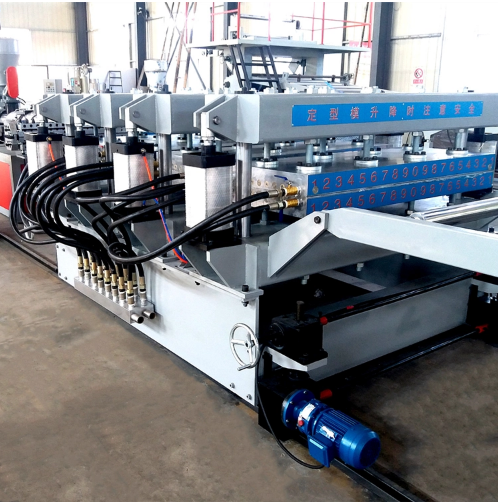
![Automatic Plastic Making Machine For High Speed Production]()
Critical Evaluation Criteria for High-Volume Manufacturing
When you move from initial research to shortlisting specific equipment, it's vital to map technical specifications directly to your business outcomes. A machine with impressive numbers on paper is only valuable if those specs solve a real-world production challenge. Focus on these critical criteria to ensure your chosen machine is a perfect fit.
Clamping Force & Tonnage
Clamping force, measured in tonnage, is the force the machine uses to hold the mold closed during injection. Matching machine tonnage to your mold requirements is crucial. Insufficient clamping force allows the high-pressure molten plastic to push the mold halves apart, creating "flash"—a thin, unwanted excess of material around the part's edge. This leads to scrap and requires secondary trimming operations. Conversely, excessive tonnage puts unnecessary stress on the mold, leading to premature tool wear and potential damage.
Shot Volume Accuracy
In high-volume manufacturing, even small variations add up to significant material waste. Shot volume accuracy refers to the machine's ability to inject the exact same amount of plastic in every single cycle. High-end machines can maintain a weight consistency of +/- 0.1% or better. This level of precision is achieved through closed-loop control systems that constantly monitor and adjust injection parameters. It ensures every part meets weight and dimension specifications, drastically reducing scrap rates and raw material costs over millions of cycles.
Material Versatility
The market is always changing. The ability to process a wide range of materials on a single machine provides critical business flexibility. Evaluate whether a machine can handle common polymers like LDPE, HDPE, and LLDPE, as well as more demanding engineering resins. Increasingly important is the capability to process biodegradable materials or resins with 100% recycled content. This versatility allows you to adapt to new customer demands or supply chain shifts without requiring significant hardware reconfiguration or a new machine purchase.
Cooling Capacity
Often, the biggest bottleneck in a high-speed production cycle is not the injection time but the cooling time. The part must solidify enough to be ejected without deforming. An efficient cooling system can shave critical seconds off every cycle. Evaluate the machine's cooling capacity by looking at its integrated high-efficiency heat exchangers and the design of its mold cooling circuits. Advanced systems offer zoned temperature control, allowing for optimized cooling across different parts of the mold, further reducing cycle times and improving part quality.
Comparison of Mold Cooling Technologies | Cooling Technology | Primary Benefit | Best For | Consideration |
| Standard Water Circuits | Cost-effective and widely used. | Simple parts, non-critical cycle times. | Can be slow and lead to uneven cooling. |
| Zoned Temperature Control | Reduces warping and cycle times. | Complex molds with varying wall thicknesses. | Requires more sophisticated control systems. |
| Conformal Cooling | Dramatically reduces cooling time (30-50%). | Ultra high-speed, thin-wall applications. | Higher initial mold cost (often 3D printed). |
TCO and ROI Drivers: Energy, Maintenance, and Scrap
The true cost and profitability of an automatic plastic making machine are revealed over its operational lifespan, not on its initial price tag. A comprehensive Total Cost of Ownership (TCO) analysis looks beyond the purchase price to include energy consumption, maintenance needs, and scrap rates. These factors are the real drivers of your return on investment (ROI) over a 5 to 10-year horizon.
Energy Recovery Systems
Energy is one of the largest operational costs in plastics manufacturing. Modern servo-driven machines offer significant savings over older hydraulic systems. They consume energy only when movement is required, leading to reductions of 30-50%. But advanced systems go further. Look for features like servo-power gains, which can improve overall machine efficiency by an additional 20%. Furthermore, some machines incorporate kinetic energy recovery systems that capture energy during mold deceleration and opening, feeding it back into the system to reduce net power consumption. These small gains accumulate into substantial utility bill savings over time.
Predictive Maintenance & Protection
Unplanned downtime is a major profit killer. Advanced machines incorporate intelligent features to protect components and enable predictive maintenance. For instance, a "Shock Detection" function can instantly sense if a foreign object (like a broken screw tip) is obstructing the screw's movement. It stops the machine before catastrophic damage occurs to the screw and gearbox. This single feature can prevent costly repairs and significantly extend the Mean Time Between Failures (MTBF), ensuring greater machine availability.
Low-Temperature Processing
Processing plastics at the lowest possible temperature offers a dual advantage. First, it preserves the material's inherent properties, like toughness and impact resistance, which can be degraded by excessive heat. Second, it reduces the energy required for both the heating and cooling phases of the cycle. Machines designed with highly efficient screw geometries and optimized heating zones can achieve a homogenous melt at lower temperatures. This capability not only improves part quality but also contributes directly to lower energy consumption and faster cycle times.
Labor Reduction
In a tight labor market, automation is key to controlling costs and improving efficiency. A high-speed machine should be viewed as the centerpiece of an automated production cell. The integration of robotics for tasks like part removal, gate cutting, and stacking is essential. Fully automated systems can run "lights-out," with robots feeding finished parts directly into packaging or palletizing systems. This drastically reduces the labor cost per part and frees up human operators for more value-added tasks like quality control and process optimization.
Implementation Realities: Integration and Industry 4.0
Purchasing a state-of-the-art machine is only the first step. Successfully deploying a high-speed production line requires a holistic view of your entire factory ecosystem. Seamless integration with existing systems and a strategy for leveraging data are critical for unlocking the full potential of your investment.
System Integration
A modern factory cannot afford to have islands of automation. Your new machine must be able to communicate with other equipment and software on your network. Ensure the machine supports a unified communication protocol like OPC UA (Open Platform Communications Unified Architecture). This industry standard allows the machine to share real-time data with your Manufacturing Execution System (MES) or Enterprise Resource Planning (ERP) software. This connectivity enables centralized monitoring, production scheduling, and data analysis, which are pillars of an Industry 4.0 strategy.
Digital Twins
De-risking a large capital investment is a top priority. Digital twin technology allows you to do just that. Using sophisticated simulation software, vendors can create a virtual model of your machine, mold, and process. You can use this digital twin to test and optimize mold designs, fine-tune cycle times, and predict potential processing issues—all before the physical machine is even built. This proactive approach saves immense time and money by solving problems in the virtual world rather than on the factory floor.
Operator Training
High-speed automated systems require a different skill set than legacy manual equipment. Operators must transition from being hands-on machine runners to system managers who can interpret data, troubleshoot complex control systems, and manage robotic cells. When selecting a vendor, evaluate their training programs. Comprehensive training that covers not just basic operation but also advanced process optimization and troubleshooting is essential for empowering your team and ensuring you get the most out of your new technology.
Scalability Risks
When you install a machine that doubles or triples your output, it will inevitably expose bottlenecks elsewhere in your workflow. It is crucial to plan for these scalability risks.
Upstream: Can your material handling system (silos, loaders, dryers) keep the machine fed without interruption?
-
- Downstream:
Is your packaging and palletizing process fast enough to handle the increased volume of finished parts?
Failing to address these upstream and downstream constraints means your high-speed machine will spend much of its time waiting, negating its primary advantage.
Shortlisting Logic: Moving Toward a Final Decision
A structured, data-driven approach to vendor selection is the final step in protecting your investment. This process helps you avoid common pitfalls like over-speccing a machine with features you don't need or, conversely, purchasing an under-powered machine that can't meet your future demands. Use this logic to move confidently toward a final decision.
Application-Specific Benchmarking
Never rely solely on the manufacturer's brochure or a generic dry-cycle test. The only test that matters is one that replicates your specific production reality. Follow these steps for effective benchmarking:
Provide the vendor with your exact resin formulation.
Insist on using your own mold, or a mold with very similar geometry and complexity.
Request a full-load cycle test, not just a dry-cycle (running without material).
Analyze the output: measure part consistency, check for defects, and verify the claimed cycle time is sustainable over a continuous run.
This real-world test provides the most accurate performance data for your decision.
Support Infrastructure
Even the best machine will eventually require service. The quality of the vendor's support infrastructure is as important as the machine itself. Evaluate their local presence. Do they have factory-trained technicians in your region? How quickly can they provide critical spare parts? A vendor with robust remote diagnostic capabilities can often troubleshoot issues over the internet, getting you back online faster and avoiding a costly service visit.
Compliance and Safety
High-speed machinery presents significant safety risks if not properly designed and guarded. Ensure the equipment meets all relevant local and international safety standards, such as CE (for Europe) or UL (for North America). Verify the presence of essential safety features like light curtains, physical guards with safety interlocks, and emergency stop circuits. Non-compliance can lead to serious accidents and regulatory penalties.
The "Hidden" Costs
The final quote from the vendor is rarely the total cost of implementation. Be sure to factor in these often-overlooked expenses to create a realistic budget:
Shipping & Rigging: The cost to transport and move a heavy machine into position.
Foundation: High-tonnage, high-speed machines may require a specialized, reinforced concrete foundation to manage vibration.
Utilities: Costs for running new electrical services, water lines, and compressed air to the machine's location.
Installation & Commissioning: The vendor's fees for setting up the machine and ensuring it runs to spec.
Accounting for these "hidden" costs upfront prevents budget overruns and ensures a smoother project execution.
Conclusion
Investing in an automatic plastic making machine for high-speed production is a strategic pivot toward operational excellence and long-term profitability. True success, however, depends on moving beyond surface-level speed metrics. A thorough evaluation must focus on the underlying drive intelligence, mechanical durability, and holistic energy efficiency that define a superior system. By prioritizing the Total Cost of Ownership, planning for seamless system integration, and benchmarking performance against your specific application, you can make a confident investment. This ensures your new high-speed line will deliver consistent quality, rapid ROI, and a powerful competitive advantage in an ever-evolving market.
FAQ
Q: What is the difference between a standard and a high-speed automatic plastic making machine?
A: High-speed machines feature specialized servo-valves, higher-capacity accumulators, and reinforced mechanical structures to handle faster cycle times (often under 5 seconds) without losing precision or causing excessive wear. They are engineered from the ground up for rapid, repeatable movements while maintaining stability and part quality.
Q: Can a plastic pipe production line be converted to produce sheets?
A: Generally, no. While the extruder component might be similar, the downstream equipment is fundamentally different and not interchangeable. A pipe line uses vacuum tanks and haul-offs to create a cylindrical shape, whereas a sheet line uses a flat T-die and calendaring rolls to form a flat profile.
Q: How much energy can I realistically save with a servo-driven machine?
A: Depending on the application, material, and cycle time, most manufacturers see a 30% to 50% reduction in energy consumption compared to traditional hydraulic systems. This is because servo motors only draw significant power when work is being performed, unlike hydraulic pumps that often run continuously.
Q: Is high-speed production suitable for recycled materials?
A: Yes, but it requires specific machine considerations. You will need specialized screw designs optimized for the melt characteristics of recycled resins. Additionally, robust melt filtration systems are crucial to remove impurities and handle the inconsistent flow properties often found in recycled materials, ensuring a stable and reliable process.



 +86-18561886575 (Mr.Wu)
 +8618561886575
 238 Yangzhou West Road, Jiaozhou City, Qingdao City, Shandong Province