Transitioning from purchasing strapping materials to in-house manufacturing requires significant capital expenditure. Success depends on aligning machine configuration with exact market demands rather than just comparing top-line capacity metrics. Choosing equipment based solely on raw output numbers often leads to wasted capital. A heavy-duty steel industry application demands vastly different specifications than a lightweight textile baling operation.
You need a precise, evidence-based approach to navigate this complex equipment market. This article provides a step-by-step engineering and procurement framework. We will explore how you evaluate, configure, and deploy a highly profitable in-house setup. You will learn to match extruder sizing to true capacity, optimize dual-material setups, and calculate a realistic payback period. By focusing on critical mechanical components and material flexibility, we ensure you build an operation geared for long-term commercial viability.
Key Takeaways
Output dictates configuration: Choose between single-cavity (flexibility) and multi-cavity (volume scale) setups based on required throughput and line speed.
Material matters: The ability to process 100% recycled PET (rPET) flakes effectively reduces raw material costs and shortens the ROI period.
Precision engineering is non-negotiable: Achieving high joint strength (up to 85%) and minimal stress relaxation requires at least a 5:1 multi-stage stretching ratio.
Targeted ROI: A well-optimized line transitioning a facility from outsourcing to in-house production typically targets a payback period of under 24 months, with per-kilogram material costs dropping by 30–50%.
1. Defining Requirements: Matching Capacity to Packaging Specs
Before purchasing machinery, buyers must define precise production parameters based on end-user applications. Building a successful operation starts by working backward from your target packaging specifications.
Assess End-User Demands
First, establish the required target break strengths and elongation limits. These parameters vary wildly depending on the industry. You must define whether the local market demands manual-grade strapping or machine-grade strapping.
Manual-grade strapping is typically thicker. It requires lower tension during application. Sellers often price this product by weight. In contrast, machine-grade strapping serves fully automatic balers. It requires strict dimensional tolerances, zero camber, and high elasticity. Buyers purchase machine-grade products by length. Understanding this distinction dictates your machine calibration.
Calculate True Capacity Needs
Evaluating capacity by simply looking at extruder maximums is a common mistake. Actual production volume depends on several interconnected variables. You can determine your true capacity yield using a straightforward formula.
Identify the number of concurrent straps produced (Die Cavity Count).
Determine the operational line speed in meters per minute (m/min).
Factor in the equipment online availability (Uptime).
The calculation is: Actual Yield = Die Cavity Count × Line Speed × Equipment Uptime. This formula provides a realistic picture of your daily production capabilities.
Extruder Sizing vs. Throughput
Connecting screw diameter to output capacity helps prevent under-sizing or over-sizing your facility. A small-scale operation differs significantly from a high-volume multi-cavity setup.
Below is a general capacity configuration chart to guide your extruder selection:
Extruder Screw Diameter | Estimated Output Capacity | Concurrent Straps (Cavities) | Ideal Production Environment |
90 mm | 150 - 200 kg/h | 1 to 2 straps | Specialty runs, limited space lines |
110 mm | 350 - 400 kg/h | 4 straps | Medium volume, standard commercial lines |
150 mm | 800 - 900 kg/h | 8 to 12 straps | High-volume, enterprise packaging scale |
![PET Strapping Production Line Equipment]()
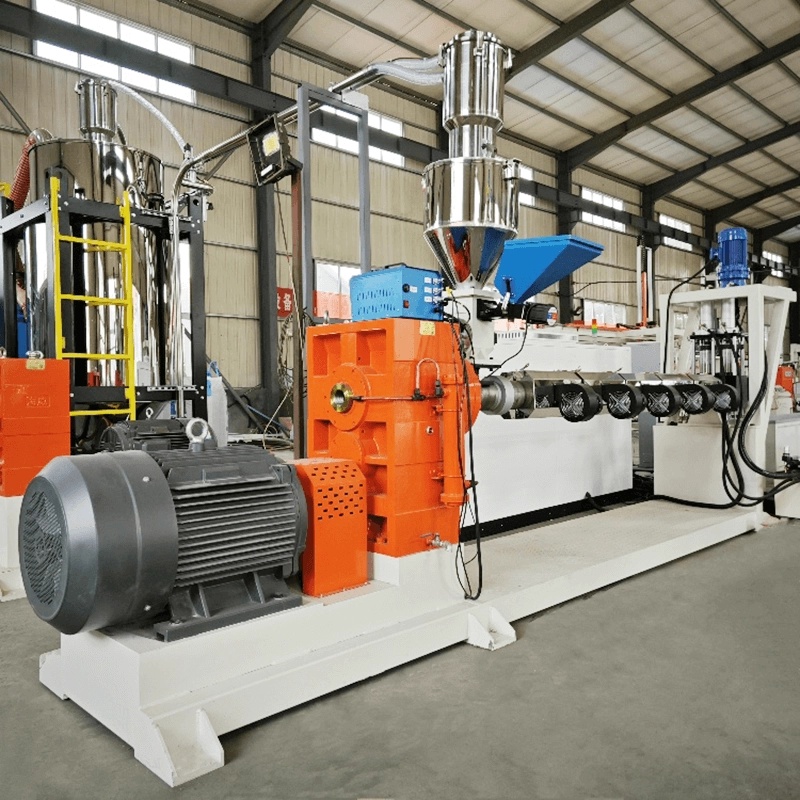
2. Core Equipment Teardown: The PET Packaging Belt Production Line
A reliable PET Packaging Belt Production Line acts as a cohesive ecosystem. Each mechanical module must synchronize perfectly to transform raw polymer flakes into high-tensile strapping. We will tear down these core components step by step.
Raw Material Handling & Extrusion
Extruding polyethylene terephthalate (PET) requires intense moisture control. You must implement industrial crystallization and dehumidifying drying systems. PET polymers absorb moisture rapidly. Heating wet PET causes severe hydrolytic degradation. This breakdown ruins the intrinsic viscosity and destroys final strap strength.
To maximize profitability, the extrusion system must process 100% rPET (recycled PET) flakes. Engineers design specialized screw geometries specifically for recycled inputs. They include dual-vented degassing zones to remove impurities. You also need automatic screen changers. These devices filter out solid contaminants continuously. They maintain stable melt pressure without halting the machine.
Traction and Multi-Stage Stretching
Creating immense tensile strength relies heavily on the Godet traction units and stretching ovens. In its raw extruded state, PET remains brittle and weak. You must orient the polymer chains physically.
The machine passes the heated strap through specialized hot air ovens. Through multi-stage stretching, the system reaches a minimum 5:1 total stretch ratio. This orientation process aligns the chaotic polymer molecules parallel to the strap length. This critical step mitigates tension decay over time, commonly known as creep. It ensures the strap acts like a strong elastic spring holding cargo tightly.
Embossing and Sizing/Relaxation
Surface friction plays a massive role in automatic baling operations. Post-stretching, the line utilizes heavy-duty hydraulic embossing machines. These rollers imprint a precise diamond texture onto the plastic surface.
Embossing increases surface friction significantly. Higher friction improves the performance of thermal and friction welding tools used by end-users. After embossing, the strap enters a relaxing hot air oven. Stretching creates massive internal stress. The relaxing oven applies targeted secondary heat. It releases these internal stresses and forces the surface into an amorphous state. This secondary treatment minimizes brittleness. It prevents the strap from splitting horizontally under heavy loads.
Servo-Controlled Winding Systems
The final processing stage involves winding the finished product onto paper cores. A programmable logic controller (PLC) governs the servo motors in the winding system. Precision tension adjustment remains vital here.
Machine-grade strapping demands absolute straightness, known in the industry as zero-camber. If a strap bows left or right, it will jam high-speed automatic balers. Servo-controlled winding systems monitor tension constantly. They guarantee a consistent camber profile, ensuring every roll meets strict industrial tolerances.
3. Optimizing the Packaging Straps Production Line for Material Flexibility
Agile manufacturers often demand the ability to process multiple polymer types. Configuring a packaging straps production line for dual-material capabilities provides a massive competitive advantage. It allows you to pivot between Polypropylene (PP) and PET easily based on local resin prices.
Dual-Material Capability (PET/PP)
Switching a production line between PP and PET requires both mechanical and software adjustments. These polymers possess entirely different thermal properties. PET requires rigorous dehumidification, while PP does not. The PLC software must store separate temperature profiles and stretch ratio recipes for each material. Cooling water bath temperatures must also adapt dynamically.
Cost vs. Complexity
Dual-material setups undoubtedly improve market responsiveness. However, they introduce specific engineering complexities. You cannot use a generic extruder screw. Manufacturers must design specific screw geometries and die heads. These components must balance the vastly different melt flow indexes (MFI) of PET and PP.
If you primarily target heavy-duty markets, a dedicated PET screw performs better. If your clients split evenly between light carton sealing (PP) and heavy palletizing (PET), the dual-configuration investment makes sense.
Quality Control Checkpoints
Running diverse materials increases the risk of tolerance variations. You must install strict inline measurement systems. These laser-guided sensors monitor thickness and width in real time. If a die head clogs slightly, the system detects the narrowed width instantly. It alerts operators before generating massive spools of out-of-tolerance waste.
4. Automation Integration to Maximize Uptime
Profitability hinges entirely on equipment uptime. Modern extrusion facilities leverage comprehensive automation to remove human error. Smart systems ensure continuous output across long shifts.
PLC Automation Systems
Gone are the days of manual valve adjustments. A centralized PLC control system serves as the brain of the facility. This central hub commands every operational phase.
Extrusion speed coordination: Automatically matches the screw RPM to the haul-off speed.
Filter management: Triggers screen changing procedures based on melt pressure spikes.
Thermal regulation: Modulates oven temperatures based on ambient factory conditions.
Winding precision: Adjusts torque dynamically as the winding roll increases in diameter.
Centralized control significantly reduces your reliance on highly specialized manual labor. It democratizes the operation process.
Risk Mitigation
Production bottlenecks eat into profits directly. Automation fundamentally minimizes human error during critical startup phases. It also standardizes material changeovers. When an operator switches recipes on the touchscreen, the PLC adjusts 30 different set points simultaneously. This rapid synchronization directly impacts the "Uptime" variable. Less downtime equals higher daily yields.
5. Commercial Viability: Calculating Return on Investment (ROI)
Investing in a high-grade PET Strapping Production Line transforms an unpredictable packaging expense into a controlled internal asset. A successful deployment requires analyzing exact operating costs to project a definitive timeline for capital recovery.
Baseline the Current State
Begin by mapping your existing outsourcing expenditures. You must calculate the total delivered cost of purchasing ready-made straps. Do not look exclusively at the per-roll price. Include freight charges, distributor markups, and warehousing fees. Furthermore, quantify the indirect costs of vendor stockouts. When suppliers fail to deliver, stopped shipping lines cost businesses thousands of dollars daily.
Projecting the Operating Cost
Next, determine the exact cost of manufacturing in-house. You need to factor in several core operational variables.
Raw Materials: Sourcing 100% rPET bottle flakes costs significantly less than virgin pellets. Quality recycling networks provide stable, low-cost inputs.
Energy Consumption: Calculate kilowatt-hours required for crystallization heating, extrusion drives, and stretching ovens.
Labor Utilities: Factor in wages for one or two operators per shift utilizing the automated PLC controls.
Preventative Maintenance: Account for spare wear parts, filter meshes, and regular lubrication intervals.
The ROI Timeline
Analyzing these factors provides a realistic financial lens. By internalizing production and utilizing local recycled materials, companies routinely observe a drastic drop in costs. Per-unit material costs often drop by 40% to 50% compared to wholesale purchasing.
This massive margin improvement maps to a highly favorable capital recovery schedule. Depending on daily utilization rates, a standard payback period runs between 18 to 24 months. Operating the machinery across multiple shifts accelerates this return even further. The math heavily favors continuous, high-volume production setups.
Conclusion
Investing in a PET strapping extrusion facility is a comprehensive integration project. It is never a simple, off-the-shelf purchase. Success demands precise alignment between end-user load requirements and your internal machine capabilities. You must focus heavily on moisture control, stretching ratios, and automated winding precision.
We advise buyers to evaluate potential machinery partners rigorously. Prioritize vendors offering full pre-shipment material testing. Ask for yield guarantees based specifically on your local rPET flake quality. Demand transparent production modeling before signing contracts. By leveraging automation and recycled raw materials, you position your facility for immediate cost savings and long-term operational resilience.
FAQ
Q: Can a PET strapping line run entirely on recycled bottle flakes?
A: Yes, absolutely. However, the machine requires specific configurations. The line must feature rigorous crystallization and dehumidifying drying units to extract moisture. Additionally, extruders need dual-vented vacuum systems to remove gases and impurities from the 100% rPET flakes during the melting phase.
Q: What is the difference between single-cavity and multi-cavity extrusion?
A: Single or dual-cavity lines suit niche runs, lower footprint requirements, and highly variable specs. Multi-cavity setups produce 4 to 8 straps simultaneously. They dramatically lower the cost-per-meter through massive economies of scale but demand highly precise die flow distribution engineering.
Q: How does the equipment ensure the strapping meets a 40-60% working tension safety factor?
A: The equipment manages tension safety through a 5:1 multi-stage stretching ratio. It also strictly controls the cooling rate. Finally, a secondary relaxation heat treatment creates an amorphous surface. This prevents splitting under dynamic loads, ensuring joint efficiency holds at approximately 85% of break strength.



 +86-18561886575 (Mr.Wu)
 +8618561886575
 238 Yangzhou West Road, Jiaozhou City, Qingdao City, Shandong Province