Zhongrui's High-capacity PP Packaging Belt Production Line is engineered for efficiency and high output. This innovative machine produces durable, flexible, and cost-effective PP straps, replacing traditional steel straps across various industries. Ideal for manufacturers seeking quality and sustainability.
According to many years of plastic machinery development and design experience, in the introduction of foreign advanced technology and digestion and absorption, on the basis of self-developed PE pipe production line. Has the unique structure, the design is novel, the equipment entire line layout is reasonable, the control performance is strong and so on.
The PE/PPR Pipe Production Line delivers reliable and efficient manufacturing of various pipes for water supply and drainage in agriculture and construction. Experience advanced technology and precision for high-quality production.
Discover the Highly Cost Effective PVC Pipe Production Line from Zhongrui. Engineered for durability and efficiency, this advanced production line ensures high-quality PVC pipes suitable for a variety of applications. Experience seamless operation, reduced maintenance, and significant cost savings.
The Composite Infiltration Irrigation Pipe Production Line is a high-efficiency system designed to produce drip irrigation tape for agricultural applications. With precision control, energy-saving technology, and advanced automation, it ensures superior performance in greenhouse, field crop, and water conservation irrigation systems.
Discover the PVC Hose Production Line designed for efficient, high-speed manufacturing of PVC hoses. Our advanced system ensures precision, versatility, and durability, making it an ideal choice for various industrial applications.
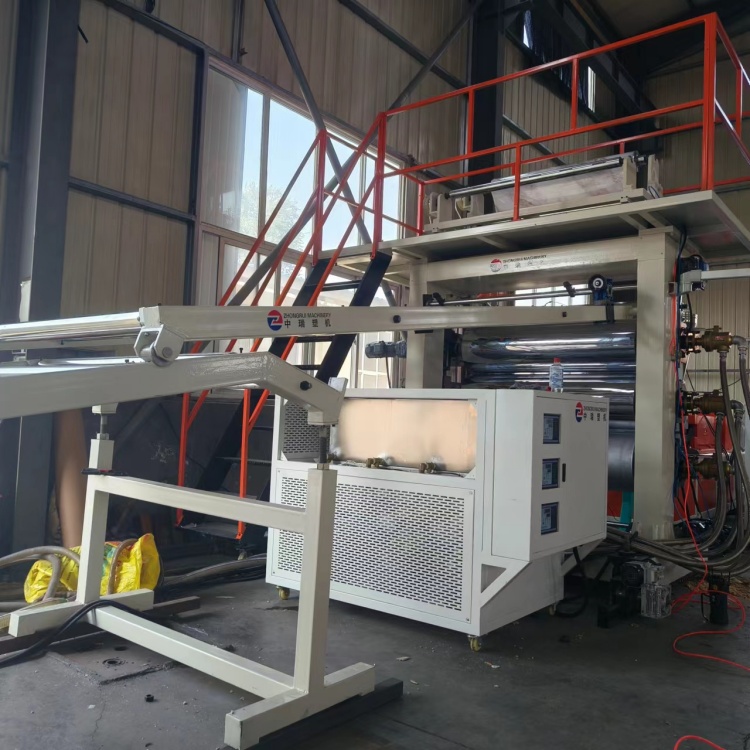
The PVC Imitation Marble Sheet Slab Extruder Machine Production Line is designed for producing high-quality, durable, and visually appealing marble-like PVC sheets. Offering fire resistance, water resistance, and high-temperature durability, it’s ideal for a variety of interior decoration applications. This advanced extrusion line guarantees high efficiency and stable output, making it a top choice for businesses looking to scale up production.
Zhongrui's PMMA Board Production Line is designed for precision, high-output plastic sheet manufacturing. With advanced technology including a vertical three-roll calender, Siemens motor, and ABB inverter, it ensures high plasticizing ability and energy-efficient performance. Ideal for producing PMMA, PC, and ABS sheets for construction, packaging, and automotive industries.
0
0
Plastic Sheet Production Line Eco Friendly Material Usage
Views: 0 Author: Site Editor Publish Time: 2026-06-15 Origin: Site
The manufacturing shift from virgin petrochemical resins to post-consumer recycled (PCR) and bio-based polymers is no longer just a corporate sustainability initiative; it is a baseline requirement driven by regulatory mandates and supply chain demands. Processing eco-friendly materials like rPET, PLA, or high-percentage regrind introduces severe technical challenges, including melt-flow inconsistencies, moisture degradation, and contamination. Standard extrusion equipment often fails to maintain uniform sheet thickness, optical clarity, or downstream processability when fed variable sustainable feedstocks. Selecting the right Plastic Sheet Production Line requires a rigorous evaluation of specialized extrusion technologies—such as advanced degassing, continuous melt filtration, and co-extrusion capabilities—to ensure profitable, high-yield production of circular, food-safe, or thermoforming-grade sheets without sacrificing structural integrity.
Co-Extrusion is the Standard: Utilizing A-B-A layer configurations allows manufacturers to encapsulate up to 80% recycled material in the core layer while maintaining virgin-grade surface properties and ensuring the final sheet remains 100% recyclable.
Moisture and Contamination Control: Processing eco-friendly plastics requires specialized multi-venting systems and automated screen changers to handle the inherent moisture and impurities in recycled feedstocks.
Downstream Compatibility is Critical: A high-quality eco-friendly sheet must preserve the physical properties (e.g., intrinsic viscosity, impact strength) required for subsequent conversion processes like thermoforming or die-cutting.
Decontamination for Food Contact: Producing food-safe rPET packaging sheets on a modern plastic sheet production line requires integrated decontamination systems to meet strict FDA and EFSA standards.
Resin Versatility Determines ROI: A modern production line must offer modular screw designs capable of processing a wide spectrum of polymers (from rPET to bio-PE) to future-proof the investment against volatile raw material markets.
Energy Efficiency Equals Sustainability: True eco-friendly manufacturing extends beyond the resin; evaluating the specific energy consumption (SEC) of the drive motors and heating zones is critical for total operational sustainability.
The Shift to Sustainable Manufacturing in Extrusion
Regulatory Pressures vs. Market Demand
Extended producer responsibility (EPR) laws, single-use plastic bans, and brand-owner commitments are forcing a transition from single-use products to durable, circular economy models. Extrusion facilities can no longer rely solely on prime virgin resins. The market demands packaging and industrial sheets that incorporate high percentages of post-consumer waste. This operational reality means plant managers must evaluate their current machinery fleet. Older single-screw extruders designed for uniform virgin pellets struggle with the bulk density variations and contamination levels found in PCR bales. Upgrading or replacing these lines is a direct response to both legislative action and consumer preference for sustainable goods.
Virgin vs. Recycled/Bio-based Resin Processing Realities
Virgin polymers melt predictably. They have consistent intrinsic viscosity (IV), uniform pellet sizes, and zero moisture if stored correctly. PCR and biodegradable resins behave entirely differently inside the barrel. They exhibit lower thermal stability, meaning they degrade and burn if exposed to high shear heat for too long. They have a high moisture affinity, requiring aggressive venting to prevent hydrolytic degradation. Impurity loads—such as paper labels, aluminum flakes, or incompatible polymers—cause screen blinding and pressure spikes. Plant operators must adjust temperature profiles, screw speeds, and filtration methods to accommodate these variables.
Material Type
Thermal Stability
Moisture Affinity
Filtration Requirement
Typical Extrusion Challenge
Virgin PET
High
Low (if pre-dried)
Standard screen changer
Maintaining optical clarity
rPET (PCR)
Medium to Low
High (hygroscopic)
Continuous backflush
IV drop, black spots, gels
PLA (Bio-based)
Very Low
High
Standard screen changer
Shear degradation, burning
Mixed Regrind
Variable
Medium
Rotary or piston filtration
Pressure surges, gauge variation
Defining Success Criteria
Evaluating an extrusion line for sustainable materials requires a structured approach. You cannot judge a machine solely on its maximum output capacity. Instead, frame the evaluation process around four specific pillars:
Output stability: The extruder must maintain a consistent pounds-per-hour rate despite bulk density changes in the hopper.
Material adaptability: The screw geometry and heating zones must handle both shear-sensitive bio-polymers and highly viscous engineering plastics.
Downstream performance: The extruded sheet must possess the correct orientation and impact strength to survive thermoforming, die-cutting, or routing without cracking.
Overall equipment effectiveness (OEE): The line must run non-virgin materials with minimal downtime for screen changes, die cleaning, or web breaks.
Core Capabilities of an Eco-Friendly Plastic Sheet Production Line
Advanced Screw and Barrel Design
The heart of any extrusion operation is the screw and barrel. When processing shear-sensitive bio-polymers like PLA or PHA, the length-to-diameter (L/D) ratio dictates the residence time and plasticization quality. An L/D ratio of 36:1 or 40:1 provides the necessary length for gentle melting without excessive shear heat. Barrier flight designs separate the melt pool from the solid bed, ensuring that unbelted PCR flakes do not slip through to the die. Mixing elements, such as Maddock or pineapple mixers, are placed strategically to homogenize mixed-grade regrind, dispersing colorants and additives evenly throughout the melt stream. If the screw design is too aggressive, bio-plastics will degrade, resulting in brittle sheets and yellowing.
High-Vacuum Multi-Venting and Degassing Systems
Standard atmospheric venting fails when processing highly hygroscopic materials like rPET and PLA. These polymers absorb moisture from the air, and if that moisture enters the melt phase, it causes hydrolytic degradation, slashing the intrinsic viscosity and ruining the sheet's mechanical properties. Twin-screw extrusion configurations equipped with high-vacuum multi-venting systems pull moisture and volatile gases directly from the melt. This eliminates the need for energy-intensive pre-crystallization and desiccant drying silos, saving massive amounts of floor space and electricity. For food-grade decontamination, these vacuum systems are engineered to extract volatile organic compounds (VOCs) at specific millibar levels, achieving the stringent FDA and EFSA food-contact approvals required for recycled food-safe sheet production.
A-B-A Co-Extrusion Technology
Co-extrusion is the most effective method for utilizing high volumes of recycled material while maintaining a premium product appearance. Multi-layer feedblocks allow manufacturers to hide off-color, highly contaminated, or lower-grade recycled plastics in the core (B layer). This core is then capped on both sides with virgin or virgin-grade eco-friendly resins (A layers). The resulting A-B-A structure looks and performs like a 100% virgin sheet but contains up to 80% recycled content. Designing for circularity means ensuring the A-B-A structure utilizes mono-material or compatible polymer families. For example, capping an rPET core with virgin PET ensures the end-of-life product remains fully curbside recyclable, unlike multi-material laminates that end up in landfills.
Material-Specific Production Line Configurations
PC/PMMA/PE/PP/PS/ABS Sheet Production Line Adaptations
Engineering plastics demand robust machinery. A PC/PMMA/PE/PP/PS/ABS Sheet Production Line must be modular to handle diverse melt flow indices (MFI) and structural demands. Polycarbonate (PC) and acrylic (PMMA) require high-polish chrome calendar rolls to achieve optical clarity, especially when incorporating recycled optical-grade scrap from automotive or display manufacturing. Switching from these high-clarity resins to commodity PE, PP, PS, or ABS blends requires rapid tooling changes and adjustable roll gaps. The cooling matrix must be precisely controlled to prevent internal stresses. Preserving mechanical integrity and polymer chain length during extrusion ensures the industrial-grade sheets and rods meet strict downstream thermoforming and machining specifications. If the cooling is too rapid, the sheet will warp; if too slow, it may stick to the rolls or lose its dimensional stability.
PP Hollow Grid Board Production Line for Circular Packaging
The logistics industry is rapidly replacing single-use cardboard with reusable corrugated plastic. A PP Hollow Grid Board Production Line is engineered specifically for this circular packaging model. Producing these fluted sheets requires specialized calibration blocks and vacuum sizing tanks. When using high percentages of recycled Polypropylene (rPP), the melt strength can fluctuate. The equipment must maintain structural rigidity, flat surfaces, and high compression strength despite these fluctuations. The cooling matrix specifications are exact; chilled water must flow uniformly through the calibration plates to freeze the rib structures in place before they collapse. Operators must monitor the vacuum levels constantly to ensure the outer skins adhere perfectly to the internal flutes, creating a durable, lightweight board capable of surviving hundreds of shipping cycles.
PVC Imitation Marble Slab Production Line Sustainability
Construction materials are also shifting toward sustainable feedstocks. A PVC Imitation Marble Slab Production Line incorporates high percentages of recycled PVC scrap, calcium carbonate fillers, and eco-friendly stabilizers to produce decorative sheets that mimic natural stone. Because these compounds are highly filled, they are extremely abrasive. Standard nitrided barrels will wear out in months. Wear-resistance requirements dictate the use of bimetallic barrels and tungsten carbide coatings on the screws and die lips. The extrusion process must handle the high torque generated by the stiff PVC melt. Downstream, hot-stamping or UV-coating stations apply the marble patterns, creating a premium architectural product from industrial waste and mineral fillers.
Technical Evaluation Dimensions: Features to Outcomes
Continuous Melt Filtration Systems
Post-consumer scrap is dirty. Even the best washing lines leave behind trace amounts of aluminum, paper, and foreign polymers. Evaluating backflush, piston-type, and rotary screen changers is a mandatory step in line specification. A continuous rotary screen changer allows the melt to flow uninterrupted while the dirty screen is indexed out and a clean one moves in. The outcome is clear: minimizing line shutdowns, preventing downstream die damage, and maintaining continuous melt pressure. If you rely on manual screen changers when running PCR, your operators will spend half their shift pulling screens, and the resulting pressure drops will cause massive gauge variations in the sheet.
Melt Pump Integration
Recycled feedstocks cause erratic output surges. As the bulk density of the flake changes in the hopper, the screw's conveying efficiency fluctuates, leading to pressure spikes at the die. Gear pumps (melt pumps) isolate the extrusion die from these upstream variations. Placed between the screen changer and the feedblock, the melt pump acts as a positive displacement device, metering an exact volume of polymer to the die with every revolution. This integration ensures uniform sheet thickness, reduces material giveaway, and stabilizes the entire extrusion process, allowing operators to run closer to the minimum gauge tolerance.
Aesthetic and Structural Finishing
The calendar stack (or roll stack) dictates the final surface quality of the sheet. Precise temperature control of the polishing rolls is required to eliminate surface defects, gel spots, and micro-voids common in sheets with high recycled content. Each roll must have an independent fluid temperature control unit (TCU). If the melt bank between the first and second roll is too large, it causes rolling bank defects; if too small, the sheet will have dull spots. The hydraulic or pneumatic nip pressure must be uniform across the entire width of the web to ensure flat, stress-free sheets that will not warp during storage or subsequent thermoforming.
Automation and Inline Quality Control
Manual gauge measurement is obsolete in modern eco-friendly extrusion. Automated T-dies equipped with thermal expansion bolts (auto-profile control) work in tandem with inline thickness scanners (X-ray, beta gauge, or laser). As the scanner traverses the web, it detects gauge variations caused by recycled material fluctuations. The system instantly sends signals to the die bolts, heating or cooling them to adjust the lip gap on the fly. This closed-loop automation maintains tight tolerances, reduces scrap rates during startup, and ensures every roll of sheet meets customer specifications.
Implementation Risks and Mitigation Strategies
Feedstock Variability and Contamination Risks
Batch-to-batch inconsistency in PCR materials leads directly to finished sheet defects, including gels, black spots, and mechanical weakness. You cannot control what consumers put in their recycling bins. Mitigation requires implementing strict upstream material sorting and blending silos. By homogenizing multiple batches of flake before they reach the extruder, you average out the IV variations and moisture spikes. Furthermore, investing in high-mesh continuous filtration on the extrusion line acts as the final defense against contamination, ensuring only clean melt reaches the die.
Downstream Processing Failures (Brittleness in Thermoforming)
Extruded recycled sheets are prone to cracking, tearing, or thinning unevenly during thermoforming. This brittleness is usually caused by thermal history degradation—the polymer chains were sheared and broken during extrusion. Mitigation involves utilizing low-shear screw profiles and precise melt temperature monitoring. Liquid-cooled barrel zones extract excess shear heat rapidly, limiting degradation and maintaining polymer chain length. Additionally, adjusting the calendar roll temperatures to anneal the sheet properly prevents locked-in stresses that release unpredictably in the thermoforming oven.
Equipment Retrofitting vs. New Line Investment
Plant managers must analyze the cost-benefit of upgrading an existing line versus investing in a purpose-built eco-friendly plastic sheet production line. Retrofitting might involve adding a co-extruder for A-B-A structures, upgrading to a degassing barrel, or replacing a manual screen changer with a continuous backflush system. While retrofitting requires less initial capital, older frames and drives may not support the increased torque and weight of modern components. A new, purpose-built line offers integrated controls, optimized screw geometries, and higher overall energy efficiency, often resulting in a faster return on investment when processing difficult sustainable materials.
Thermal Degradation of Bio-Plastics
Burning or degrading PLA and PHA due to excessive shear heat is a constant risk. These materials have narrow processing windows. If the melt temperature exceeds the threshold by even a few degrees, the polymer unzips, losing all structural integrity. Specifying low-shear screw profiles and precise, liquid-cooled barrel temperature control zones is mandatory. Operators must also ensure the line is purged completely with a stable transition resin before shutting down, as stagnant bio-plastics will carbonize rapidly inside a hot barrel.
Conclusion
Successfully processing eco-friendly and recycled materials requires moving away from commodity extrusion equipment and investing in highly engineered, adaptable production lines with robust degassing, filtration, and co-extrusion capabilities. Buyers should prioritize OEMs that offer modular screw designs, demonstrate proven success with A-B-A co-extrusion, offer integrated decontamination systems for food-grade certifications, and provide transparent energy consumption metrics.
Audit your current material feedstocks to determine the exact moisture and contamination levels you need to process.
Specify continuous melt filtration and gear pumps on all new equipment quotes to guarantee gauge stability.
Design your product structures around A-B-A co-extrusion to maximize PCR usage without sacrificing surface aesthetics.
Implement closed-loop inline thickness scanning to reduce scrap rates and material giveaway.
FAQ
Q: What is the main challenge when extruding recycled plastics?
A: The primary challenges include managing melt-flow inconsistencies, moisture degradation, and high contamination levels found in post-consumer recycled materials. These variables cause pressure spikes, gauge variations, and mechanical weakness in the final sheet if not properly managed by the extrusion equipment.
Q: How does A-B-A co-extrusion benefit sustainable manufacturing?
A: A-B-A co-extrusion allows manufacturers to place lower-grade or highly contaminated recycled plastics in the core layer while using virgin or high-quality resins on the outer layers. This maintains premium surface quality and ensures the final product remains fully recyclable.
Q: Why is multi-venting important for eco-friendly materials?
A: Materials like rPET and PLA are highly hygroscopic. High-vacuum multi-venting systems remove moisture and volatile organic compounds directly from the melt during extrusion, preventing hydrolytic degradation and eliminating the need for energy-intensive pre-drying silos.
Q: Can bio-plastics be processed on standard extrusion lines?
A: Bio-plastics like PLA and PHA are shear-sensitive and prone to thermal degradation. They typically require specialized low-shear screw profiles, higher L/D ratios, and precise liquid-cooled temperature control zones that are not standard on older commodity lines.
Q: What role do melt pumps play in processing recycled resins?
A: Melt pumps stabilize the extrusion process by isolating the die from pressure fluctuations and output surges caused by inconsistent recycled feedstocks. They meter an exact volume of polymer to the die, ensuring uniform sheet thickness and reducing material waste.
Qingdao Zhongrui Plastic Machinery Co., Ltd. is located in Jiaozhou City, Qingdao City, Shandong Province. It is 30 kilometers away from Qingdao Port and only 20 kilometers away from the airport.



 +86-18561886575 (Mr.Wu)
 +8618561886575
 238 Yangzhou West Road, Jiaozhou City, Qingdao City, Shandong Province