Zhongrui's High-capacity PP Packaging Belt Production Line is engineered for efficiency and high output. This innovative machine produces durable, flexible, and cost-effective PP straps, replacing traditional steel straps across various industries. Ideal for manufacturers seeking quality and sustainability.
According to many years of plastic machinery development and design experience, in the introduction of foreign advanced technology and digestion and absorption, on the basis of self-developed PE pipe production line. Has the unique structure, the design is novel, the equipment entire line layout is reasonable, the control performance is strong and so on.
The PE/PPR Pipe Production Line delivers reliable and efficient manufacturing of various pipes for water supply and drainage in agriculture and construction. Experience advanced technology and precision for high-quality production.
Discover the Highly Cost Effective PVC Pipe Production Line from Zhongrui. Engineered for durability and efficiency, this advanced production line ensures high-quality PVC pipes suitable for a variety of applications. Experience seamless operation, reduced maintenance, and significant cost savings.
The Composite Infiltration Irrigation Pipe Production Line is a high-efficiency system designed to produce drip irrigation tape for agricultural applications. With precision control, energy-saving technology, and advanced automation, it ensures superior performance in greenhouse, field crop, and water conservation irrigation systems.
Discover the PVC Hose Production Line designed for efficient, high-speed manufacturing of PVC hoses. Our advanced system ensures precision, versatility, and durability, making it an ideal choice for various industrial applications.
The PVC Imitation Marble Sheet Slab Extruder Machine Production Line is designed for producing high-quality, durable, and visually appealing marble-like PVC sheets. Offering fire resistance, water resistance, and high-temperature durability, it’s ideal for a variety of interior decoration applications. This advanced extrusion line guarantees high efficiency and stable output, making it a top choice for businesses looking to scale up production.
Zhongrui's PMMA Board Production Line is designed for precision, high-output plastic sheet manufacturing. With advanced technology including a vertical three-roll calender, Siemens motor, and ABB inverter, it ensures high plasticizing ability and energy-efficient performance. Ideal for producing PMMA, PC, and ABS sheets for construction, packaging, and automotive industries.
0
0
Plastic Pipe Extrusion Line Cost Factors Explained
Views: 0 Author: Site Editor Publish Time: 2026-07-07 Origin: Site
The initial sticker price of extrusion machinery represents only a fraction of its total lifecycle cost. Focusing solely on capital expenditure often leads to compromised long-term profitability. At its core, a plastic pipe extrusion line is an integrated manufacturing system designed to melt resin pellets and force them through a shaped die to produce continuous, uniform cross-sections. Scaling this fundamental process for industrial output requires significant, complex investments. Manufacturers frequently miscalculate capacity requirements, underestimate operational expenses like energy and raw material waste, and fail to account for the hidden costs of downtime and localized compliance. This results in production bottlenecks and degraded ROI. A rigorous, evidence-based framework is required to evaluate the capital expenditure (CAPEX) and operational expenditure (OPEX) of modern extrusion systems. This guide breaks down the technical variables and financial trade-offs necessary to make a defensible procurement decision.
Defining your exact production capacity needs is the first and most critical step; it dictates machine type, automation levels, and the entire financial model of the investment.
Initial setup costs are heavily dictated by automation levels, drive technology, and the specific polymer requirements of the target application.
Long-term profitability relies on energy efficiency and raw material yield, which typically eclipse the initial machine purchase price within the first 12 to 24 months of operation.
Selecting the correct configuration depends entirely on matching the machine’s specifications (e.g., L/D ratio, torque) to the specific product (HDPE, PPR, or PE-RT) and required throughput.
Hidden costs—including facility modifications, OEM commissioning fees, and operator training—must be factored into the initial procurement budget to avoid project overruns.
Framing the Investment: CAPEX vs. OPEX in Extrusion Manufacturing
Capital Expenditure (CAPEX) Realities
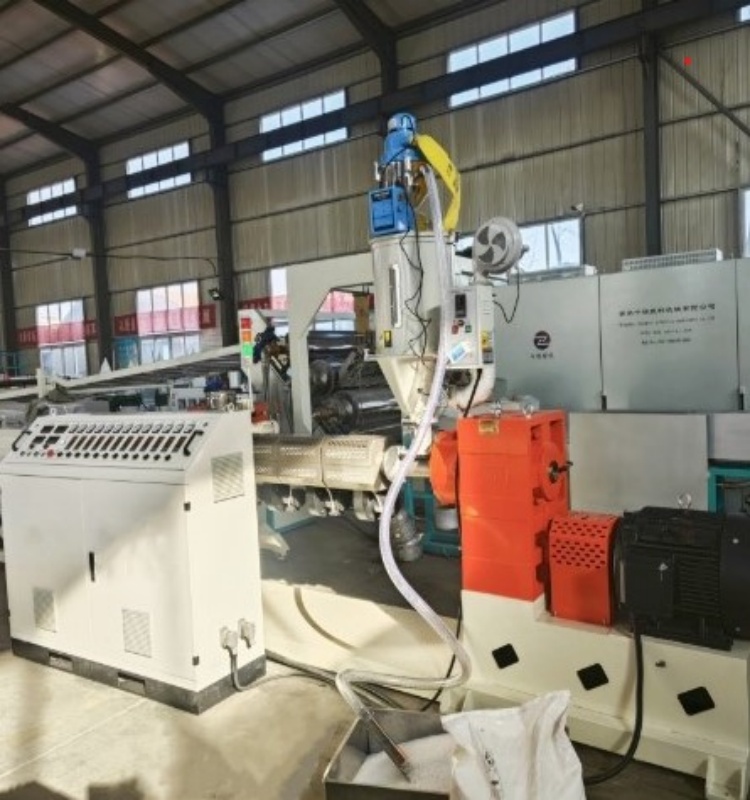
Procuring an extrusion system involves far more than purchasing the main extruder. High initial setup costs spread across the entire production sequence. A complete system includes the main extruder, co-extruders for color stripes or functional layers, precision die heads, vacuum calibration tanks, cooling baths, haul-off units, cutting saws, and tipping or belling machines. Each component requires specific engineering to match the desired pipe diameter and wall thickness. Upgrading any single downstream component to handle higher speeds directly increases the initial capital outlay. You cannot run a high-output extruder if your cooling tanks are too short to freeze the polymer before it hits the haul-off tracks. Furthermore, auxiliary equipment like industrial water chillers, high-capacity air compressors for pneumatic cutters, and centralized vacuum systems add substantial upfront costs.
Secondary capital expenditure factors often catch manufacturers off guard. Installing heavy industrial machinery requires extensive facility modifications. You must evaluate your factory floor for load-bearing capacity. Large extruders generate intense vibration and require reinforced concrete foundations. Utility upgrades represent another major capital drain. High-capacity lines demand dedicated high-voltage power drops and robust chilled water systems to manage the immense heat generated during polymer processing. Failing to budget for these infrastructure upgrades leads to stalled installations and delayed production launches. You will also need overhead cranes for die changes and screw maintenance.
Operational Expenditure (OPEX) Drivers
Raw material consumption dominates the operational expenditure of any extrusion facility. Polymer resins account for the vast majority of ongoing costs. The financial impact of scrap rates cannot be overstated. Producing off-spec pipe during startup, material changeovers, or routine running directly destroys profit margins. Resin form also plays a role. Pellets flow differently than regrind or granules. Managing these variations requires precise dosing equipment. Inaccurate feeding leads to overweight pipes, effectively giving away expensive raw material for free. You must also account for the cost of purging compounds used during color changes and the continuous expense of replacement mesh screens for the melt filter.
Energy consumption ranks as the second highest operational cost. Extrusion is an energy-intensive process. You must analyze the power draw of multiple heating zones along the barrel and die. Motor efficiency dictates the electrical load required to turn the screw against immense backpressure. Furthermore, cooling systems run continuously to freeze the molten plastic into its final shape. Evaluating the energy efficiency of these combined systems over a continuous production cycle reveals the true operational burden.
Routine maintenance requires a dedicated budget. Extrusion involves processing abrasive and sometimes corrosive materials under high heat and pressure. Wear parts degrade predictably. Screws and barrels lose their tight tolerances over time, reducing output and increasing melt temperatures. Vacuum calibration sleeves wear down, affecting the outer diameter of the finished pipe. Budgeting for the regular replacement of these critical components prevents catastrophic failures and unplanned downtime.
Revenue Factors vs. Cost
Financial viability depends on balancing ongoing operational costs against revenue generation. You must calculate the revenue generated by the machine's daily and hourly production capacity. This requires realistic assumptions about machine uptime, maintenance intervals, and product changeover times. Nameplate capacity rarely equals actual sellable output. By mapping realistic production volumes against material, energy, and labor costs, you establish an accurate break-even timeline. This financial model justifies the initial capital investment and guides future expansion strategies.
Cost Variations by Pipe Material and Application
PE HDPE Pipe Extrusion Line Requirements
Processing high-density polyethylene demands specific mechanical configurations. HDPE is highly viscous and requires immense mechanical force to shear and melt properly. A PE HDPE pipe extrusion line relies on high-torque gearboxes to handle this resistance without failing. The screw design must feature a high Length-to-Diameter (L/D) ratio, often 33:1 or 38:1. This extended length ensures proper melt homogeneity at high outputs. Upgrading to these heavy-duty gearboxes and longer barrels increases the initial machine cost but guarantees stable production. When producing thick-walled pressure pipes like SDR 9 or SDR 11, the haul-off unit requires multiple caterpillar tracks. These tracks must apply precise, distributed pressure to pull the heavy pipe without deforming its still-warm profile.
Footprint costs escalate quickly when producing large-diameter HDPE pipes. Thick-walled pipes retain massive amounts of heat. Cooling them requires extended vacuum calibration and multiple spray cooling tanks. A large-diameter line can stretch over fifty meters in length. This necessitates significant floor space and careful facility planning. You must account for the real estate costs associated with housing such massive equipment, along with the extensive water trenching required to service the cooling tanks.
PPR Pipe Extrusion Line Considerations
Polypropylene random copolymer (PPR) introduces multi-layer complexity. Modern plumbing systems often require fiberglass-reinforced PPR pipes to reduce thermal expansion. A standard PPR pipe extrusion line must therefore incorporate multiple co-extruders feeding into a complex multi-layer die head. Adding co-extrusion capabilities increases the capital expenditure significantly. You must purchase additional extruders, specialized dies, and synchronized control systems to manage the different material layers simultaneously. The melt flow index of PPR requires careful handling to prevent surging at the die exit.
Thermal sensitivity defines PPR processing. The material degrades rapidly if exposed to excessive heat or prolonged residence times in the barrel. Precision temperature control systems are non-negotiable. The machinery requires advanced Programmable Logic Controllers (PLCs), highly responsive solid-state relays, and premium heating elements. Investing in these advanced thermal management systems prevents material degradation, reduces scrap, and ensures the mechanical integrity of the final pressure pipe.
PE-RT Pipe Extrusion Line Specifications
Polyethylene of raised temperature resistance (PE-RT) is primarily used for underfloor heating systems. These applications demand small-diameter pipes produced at exceptionally high speeds. A PE-RT pipe extrusion line focuses entirely on speed and volume. The extruder must deliver a highly stable melt at rapid RPMs. The cooling tanks must strip heat away instantly to prevent the fast-moving pipe from deforming before it reaches the haul-off unit.
Downstream automation drives the cost structure for PE-RT lines. Because the pipe exits the machine at high velocity, manual coiling is impossible. You must invest in specialized, high-speed dual-station winding equipment. These fully automated coilers cut the pipe, switch reels, and strap the finished coils without operator intervention. The coilers must maintain exact tension control to prevent inducing ovality into the warm pipe. While automated packaging systems increase upfront costs, they drastically reduce labor OPEX and eliminate the primary bottleneck in high-speed floor heating pipe production.
Core Component Breakdown and Price Influencers
Extruder Drive and Motor Technology
The main drive motor dictates both the capability and the energy consumption of the extruder. Standard AC motors paired with traditional gearboxes represent the baseline technology. They offer reliable performance at a lower initial price point. However, modern facilities increasingly evaluate Permanent Magnet Synchronous Motors (PMSM). PMSM technology eliminates the traditional gearbox in some direct-drive configurations, reducing mechanical losses and maintenance requirements.
Trade-off analysis heavily favors advanced motor technology for continuous operations. The higher upfront cost of PMSM is offset by verifiable long-term energy savings. These motors maintain high efficiency across a wider range of operating speeds. They also run cooler and quieter. When calculating the financial impact over a multi-year continuous production cycle, the energy savings from a highly efficient drive system quickly recover the initial capital premium.
Die Head and Calibration Design
The die head shapes the molten plastic and determines the final pipe quality. Traditional spider dies are cost-effective but force the polymer melt to split and rejoin around the internal supports. This creates weld lines, which can be points of mechanical weakness. Advanced spiral mandrel dies distribute the melt evenly through complex internal channels. This eliminates weld lines and provides superior control over the melt flow, regardless of the extrusion speed. Upgrading the die head heating elements from standard mica bands to insulated ceramic heater bands increases upfront costs but drastically reduces radiant heat loss, lowering ongoing energy OPEX.
Superior die design exerts a massive financial impact on daily operations. Spiral mandrel dies improve wall thickness uniformity. When wall thickness fluctuates, manufacturers must set the minimum thickness higher to ensure no part of the pipe falls below standard. This results in giving away excess plastic. By maintaining tight dimensional tolerances, advanced dies directly reduce raw material giveaway. Lowering material consumption per meter of pipe drastically lowers OPEX.
Downstream Automation and Integration
Material feeding systems dictate production stability. Volumetric dosing feeds material based on screw speed, which fluctuates as the bulk density of the resin changes. Gravimetric dosing systems weigh the material continuously, adjusting the feed rate to deliver an exact mass of polymer per meter of pipe. Calculating the ROI of upgrading from volumetric to gravimetric feeding is straightforward. The exact material precision eliminates overweight pipes and reduces resin consumption, paying for the upgrade rapidly.
Automated haul-off, cutting, and belling units complete the production line. Planetary saws provide clean, chamfered cuts without generating excessive dust. Automated belling machines heat and form the pipe ends for jointing without human intervention. You must balance the high CAPEX of fully automated downstream equipment against the reduction in manual labor. Automation eliminates human error, reduces scrap generated during manual handling, and allows a single operator to manage multiple extrusion lines simultaneously.
Core Component Cost and Efficiency Comparison
Component
Standard Technology
Advanced Technology
Primary Financial Impact
Drive Motor
Standard AC Motor
Permanent Magnet Synchronous Motor (PMSM)
Reduces electrical consumption and mechanical maintenance.
Die Head
Traditional Spider Die
Spiral Mandrel Die
Eliminates weld lines and reduces raw material giveaway.
Dosing System
Volumetric Feeder
Gravimetric Dosing System
Ensures precise weight per meter, saving resin costs.
Procurement must begin with a capacity-first mindset. Defining the exact amount of plastic items the machine must produce per hour or day is the foundational metric. Buying a machine based solely on its physical size or price leads to severe operational mismatches. You must analyze your market demand, calculate the required output in kilograms per hour, and specify machinery that meets this exact target while allowing a reasonable margin for maintenance downtime.
Defining success criteria requires understanding the discrepancies between a manufacturer's nameplate capacity and realistic sustained output. Nameplate capacity often represents theoretical maximums achieved under perfect laboratory conditions with specific resin grades. Factory conditions involve ambient temperature fluctuations, varying operator skill levels, and imperfect material lots. Realistic sustained output is typically lower than the theoretical maximum. Procurement contracts must specify guaranteed output rates using your exact resin formulations.
Risk mitigation involves navigating the dangers of over-specifying and under-specifying. Over-specifying results in wasted capital. Running a massive extruder at half capacity degrades melt quality and wastes energy. Under-specifying creates an inability to meet contract demands, leading to lost clients and forced overtime. Accurate capacity calculations prevent these financial traps and ensure the machinery matches the business model.
Scalability and Future-Proofing
Investing in modular line designs offers significant cost-benefits. Markets evolve, and regulatory standards change. Purchasing systems that allow for future co-extrusion add-ons protects your initial investment. A modular control system and a flexible die head design allow you to add color striping or functional barrier layers later without replacing the entire primary line. This future-proofing strategy extends the useful life of the machinery.
Industry 4.0 integration represents another critical scalability factor. Advanced Supervisory Control and Data Acquisition (SCADA) systems and OPC UA connectivity require a higher upfront cost. However, they deliver immense value through predictive maintenance and centralized data logging. Real-time monitoring detects degrading heater bands or wearing bearings before they cause catastrophic failures. Centralized data allows management to analyze OEE, track exact material usage, and optimize production schedules based on hard data rather than operator guesswork.
Implementation Risks and Mitigation Strategies
Installation and Commissioning
Logistics costs add a substantial burden to the initial investment. Extrusion lines are heavy, bulky, and require multiple shipping containers. You must calculate freight charges, customs duties, import taxes, and specialized marine insurance. Moving the equipment from the port to your facility often requires oversized load permits and specialized rigging crews. Ignoring these logistical expenses completely skews the procurement budget.
OEM integration ensures the equipment functions as designed. Budgeting for vendor technician fees is essential. Complex extrusion lines require factory-trained engineers for on-site setup, leveling, and alignment. The commissioning phase culminates in a Site Acceptance Testing (SAT) protocol. During SAT, the machine must prove it can hit the contracted throughput and quality metrics using your materials. Never bypass professional commissioning to save money; improper setup guarantees years of operational headaches.
Operator Training and Skill Gaps
Learning curve costs impact the bottom line immediately after installation. Anticipate higher scrap rates and lower throughput during the initial months of operation. Extrusion remains part science and part art. Operators must learn how the specific machine responds to different temperature profiles and screw speeds. Inexperienced operators will inevitably crash screws, burn resin, and produce out-of-spec pipe while learning the system.
Mitigation relies on aggressive training investments. Modern machinery features intuitive Human-Machine Interface (HMI) systems that simplify operation. However, HMI screens cannot replace fundamental processing knowledge. Invest heavily in comprehensive vendor training programs. Operators must understand polymer behavior, troubleshooting protocols, and safe maintenance procedures. A well-trained operator detects minor process variations and corrects them before they result in massive scrap generation.
Compliance and Safety Standards
Certification costs ensure the machinery meets legal and safety requirements. Depending on your location, the equipment must comply with CE, UL, or other local regulatory standards. Non-compliant machinery faces severe operational restrictions or complete shutdown by safety inspectors. Ensure the OEM provides all necessary electrical and mechanical certifications before finalizing the purchase agreement.
Environmental compliance introduces ongoing operational costs. Extrusion facilities must manage emissions from heated polymers. Noise levels from high-speed saws and vacuum pumps require acoustic enclosures or specialized ear protection programs. Wastewater from cooling systems must be filtered and treated before discharge. Factoring in the costs of managing these environmental and safety impacts ensures long-term regulatory compliance and protects the workforce.
Conclusion
To finalize your procurement strategy and ensure maximum operational efficiency, execute the following immediate actions:
Audit your factory floor load-bearing capacity and available utility drops before requesting machine quotes.
Calculate your exact required kilograms per hour based on contracted pipe diameters and wall thicknesses.
Demand verifiable energy consumption data and gravimetric material savings projections from shortlisted OEMs.
Schedule a mandatory Site Acceptance Test (SAT) using your specific resin grades before authorizing final shipment.
FAQ
Q: What is the first and most important factor to consider when buying a plastic pipe extrusion line?
A: The most critical factor is defining your exact production capacity requirements. Knowing the precise kilograms per hour and specific pipe dimensions you need dictates the machine size, motor power, downstream cooling requirements, and overall automation level. Without this data, you risk buying a system that is either underpowered or unnecessarily expensive.
Q: What is the average ROI period for a new plastic pipe extrusion line?
A: The return on investment period typically ranges from 12 to 36 months. This timeline depends heavily on continuous operational uptime, local raw material costs, and the energy efficiency of the machine. Systems equipped with advanced automation and gravimetric dosing achieve faster ROI by drastically reducing material waste and labor requirements.
Q: How does a PE HDPE pipe extrusion line differ from a PPR line in terms of cost?
A: HDPE lines generally require higher initial capital for heavy-duty gearboxes, longer L/D ratio screws, and extensive cooling tanks due to the material's viscosity and heat retention. PPR lines often incur costs related to precision thermal control systems and co-extrusion capabilities needed for multi-layer, fiberglass-reinforced plumbing pipes.
Q: What are the most expensive wear parts on a plastic extrusion machine?
A: The extruder screw and barrel are the most expensive wear parts. They endure high heat, pressure, and abrasive polymer flow. Over time, the clearance between the screw and barrel increases, reducing output efficiency. Calibration sleeves and die head tooling also require periodic replacement to maintain precise pipe dimensions.
Q: Is it more cost-effective to upgrade an existing extrusion line or purchase a new one?
A: Upgrading is cost-effective if the main extruder base and gearbox are structurally sound. Retrofitting a new PLC, adding gravimetric dosing, or upgrading the die head can improve efficiency at a fraction of the cost of a new line. However, if the core mechanical components are obsolete, purchasing a modern, energy-efficient system is better.
Q: How do I verify the true production capacity of an extrusion line before purchase?
A: Never rely solely on brochure specifications. You must mandate a Site Acceptance Test (SAT) at the manufacturer's facility before shipping. During this test, the machine must run your specific resin grade at the contracted speed and dimensional tolerances for a sustained period to prove its actual operational capability.
Qingdao Zhongrui Plastic Machinery Co., Ltd. is located in Jiaozhou City, Qingdao City, Shandong Province. It is 30 kilometers away from Qingdao Port and only 20 kilometers away from the airport.



 +86-18561886575 (Mr.Wu)
 +8618561886575
 238 Yangzhou West Road, Jiaozhou City, Qingdao City, Shandong Province