Investing in plastic extrusion machinery represents a high-stakes capital expenditure. Facility managers and investors face immense pressure to select equipment properly. Getting it wrong means continuous production bottlenecks. We must move beyond basic machinery definitions. You need to understand operational realities, strict equipment specifications, and how to evaluate vendors effectively. Long-term profitability depends heavily on mitigating line downtime and controlling energy consumption. It also requires excellent raw material adaptability. Specifically, you must successfully process 100 percent recycled PET flakes to protect your profit margins. In this guide, we explore the exact metrics you need to succeed. You will learn how to align extruder capacity to market demands. We also cover system architecture, dual-output scalability, and rigorous testing protocols.
Key Takeaways
Maximizing ROI requires precise alignment between your target strap specifications (tensile strength, width) and extruder capacity (kg/h).
Handling recycled PET (rPET) effectively is the primary driver of margin; robust crystallization and dehumidification systems are non-negotiable.
Evaluating a customizable dual-output setup can double capacity with a marginal footprint increase, but requires stricter tension control.
Vendor selection must hinge on demonstrable Factory Acceptance Testing (FAT), not just upfront sticker price.
Defining Success: Baseline Metrics for Your Packaging Straps Production Line
Success begins long before you install the machinery. You must establish strict operational baselines. A properly specified packaging straps production line functions as a finely tuned ecosystem. Every component must align with your exact market demands and facility constraints.
Aligning Machinery with Market Demand
Operators frequently make the mistake of over-sizing or under-sizing their extrusion equipment. You need to specify target output capacities based on projected regional demand. For instance, running 150 kg/h suits localized, medium-duty strapping needs. Conversely, targeting 400 kg/h makes sense for high-volume, heavy-duty industrial strapping. Establish acceptable tolerance levels early. Automatic strapping machines jam if strap width and thickness deviate even slightly. Your production line must guarantee dimensional stability within fractions of a millimeter.
Raw Material Economics
Material costs dominate your ongoing operational expenses. Using 100 percent post-consumer bottle flakes dramatically improves profitability compared to virgin PET resin. However, recycled inputs introduce significant complexity. You must account for Intrinsic Viscosity (IV) stability. Recycled flakes inherently vary in molecular weight. If your system cannot stabilize this viscosity, your straps will fail under tension. Equipment designed to handle low-grade rPET directly protects your financial margins.
Space and Utility Prerequisites
A continuous linear extrusion setup requires extensive factory space. You cannot easily bend or corner a hot stretching line without compromising strap integrity. Facility managers must prepare a linear footprint ranging from 30 to 45 meters. Additionally, establish robust utility baselines before installation:
Electrical Power: Ensure adequate transformer capacity to handle large heating zones and multi-drive servo motors.
Cooling Water: High-volume industrial chillers must deliver consistent water temperatures to the cooling tanks to freeze the polymer structure quickly.
Compressed Air: Reliable pneumatic pressure remains vital for screen changers and tensioning pneumatics.
Core System Architecture: Feature-to-Outcome Mapping
Modern extrusion relies on specialized subsystems working in perfect synchronization. A robust PET Strapping Production Line integrates several discrete processes, transforming raw flakes into high-tensile packaging materials.
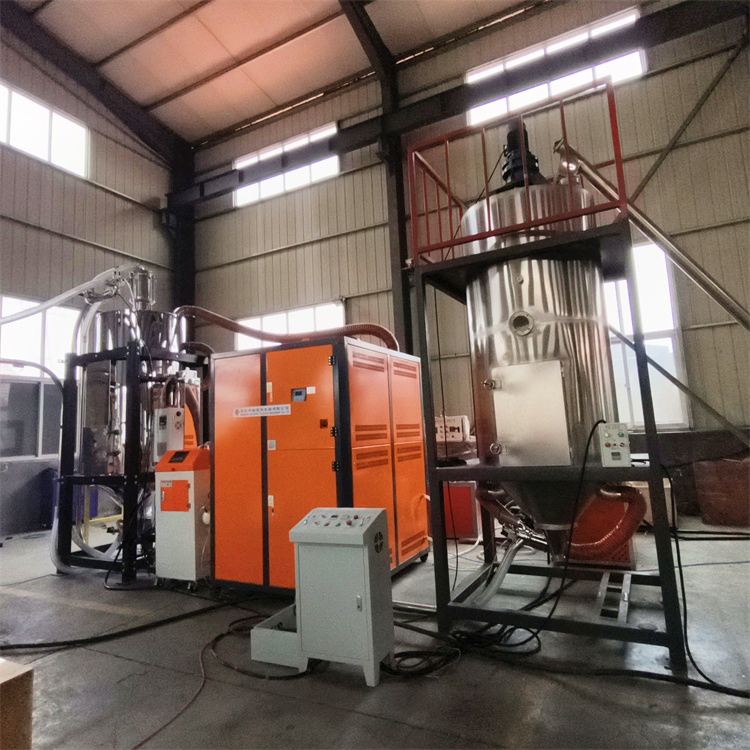
Dehumidification and Crystallization
Moisture serves as the primary enemy of PET extrusion. When you melt wet PET, water causes rapid hydrolytic degradation. This chemical reaction chops the polymer chains, destroying the material's tensile strength. Proper drying prevents this structural failure. High-performance crystallizers agitate the flakes, preventing them from clumping. Subsequently, deep-vacuum dehumidifiers strip ambient moisture, ensuring the material enters the extruder in an optimal state.
Extrusion & Filtration Systems
The extruder melts and homogenizes the plastic. Engineers evaluate screw design heavily based on the Length-to-Diameter (L/D) ratio. A higher L/D ratio provides better melt mixing, which proves essential when processing inconsistent rPET. Filtration plays an equally critical role. Because post-consumer flakes contain impurities, you need a continuous dual-piston screen changer. This device allows operators to swap clogged filters without halting the extrusion process. Continuous operation prevents costly line restarts.
Stretching and Embossing Dynamics
Raw extruded PET lacks strength. You must stretch it. We use a multi-stage hot drawing process known as Machine Direction Orientation (MDO). Ovens heat the material while variable-speed godet rollers pull it. This stretching aligns the polymer chains longitudinally, maximizing tensile strength. Following the stretching phase, embossing rollers press a diamond pattern into the strap. Precise embossing depth directly impacts the strap's stiffness and joint strength during heat-sealing in automatic packaging machines.
Winding Automation
The final stage dictates product presentation. Traditional manual winders require constant operator intervention. They often result in uneven tension and collapsed coils. Fully automatic servo-driven winders reduce labor costs drastically. They automatically cut the strap, switch to an empty paper core, and maintain perfect winding tension from start to finish.
Feature-to-Outcome Mapping Table
System Component | Technical Function | Production Outcome |
Crystallizer & Dehumidifier | Removes moisture and crystallizes flakes | Prevents hydrolytic degradation; ensures high tensile strength. |
Dual-Piston Screen Changer | Filters melt impurities continuously | Eliminates line stoppages; allows 100% rPET usage. |
MDO Hot Drawing Ovens | Aligns polymer chains via thermal stretching | Maximizes load-bearing capacity and stiffness. |
Servo-Driven Winders | Automates tension control and spool swapping | Prevents coil collapsing; minimizes labor overhead. |
![Customizable PET Strapping Dual Output Production Machine]()
Scaling Operations: Evaluating a Customizable PET Strapping Dual-Output Production Machine
When demand surges, scaling up becomes an urgent priority. Many factory owners debate whether to buy a second independent line or invest in a dual-output system. Choosing a Customizable PET Strapping Dual-Output Production Machine fundamentally alters your production economics.
A dual-output setup runs two separate straps simultaneously from a single extruder head. The cost-benefit analysis heavily favors this configuration. You achieve higher throughput per square meter of factory space. Because both lines share the primary extruder and heating zones, your specific energy consumption per kilogram produced drops significantly. This efficiency creates a massive competitive advantage in high-volume markets.
Operational Trade-offs & Risks
A skeptical view highlights the engineering complexity. Dual-output extrusion requires perfectly synchronized tension control. If a flaw causes one strap to snap inside the stretching oven, the sudden tension release can disrupt the adjacent strap. To mitigate this risk, modern systems utilize advanced Programmable Logic Controller (PLC) networks. These controllers monitor torque instantly. Independent accumulator systems buffer the tension, isolating the two strands. If one breaks, the other continues running seamlessly while the operator re-threads the broken line.
Customization Parameters
The term "customizable" frequently appears in brochures, but you must define it rigidly during procurement. True customization impacts daily operation. Demand the following modular features:
Modular Cooling Tanks: Sections you can easily expand or contract depending on ambient seasonal temperatures.
Interchangeable Embossing Rollers: Quick-release mechanisms allowing you to switch between deep and shallow embossing patterns in minutes.
Variable Frequency Drives (VFDs): Allowing granular speed control across different sections of the drawing process to accommodate varying rPET quality.
Single vs. Dual Output Comparison Chart
Metric | Single-Output Line | Dual-Output Line |
Space Requirement | Standard linear footprint (~35m x 3m) | Marginally wider footprint (~35m x 4.5m) |
Production Capacity | 100 - 200 kg/h | 250 - 400+ kg/h |
Energy per Kg | Baseline consumption | Up to 25% lower energy per kg |
Operational Complexity | Low; easy for novices to thread | High; requires advanced tension isolation |
Implementation Realities: Common Failure Points & Risk Mitigation
Even the most advanced machinery encounters real-world friction. Recognizing common failure points early allows you to engineer proactive solutions. We routinely see production lines fail to hit output targets due to unaddressed material and energy bottlenecks.
The IV Drop Phenomenon
Recycled PET inevitably loses intrinsic viscosity during the melting phase. Heat and shear stress break down the molecular bonds. If left unmanaged, IV drop produces brittle strapping that snaps during transport. To solve this, you can integrate Solid State Polycondensation (SSP) equipment to rebuild the molecular weight before extrusion. Alternatively, specify specialized multi-venting extruders. These advanced screws utilize powerful vacuum pumps to extract volatile gases directly from the melt zone, minimizing degradation.
Energy Consumption Bottlenecks
Hidden operational costs quietly destroy profit margins. Heating ovens and drying silos draw immense amounts of electricity. Standard uninsulated lines bleed heat into your factory, forcing your air conditioning to work harder. We strongly recommend specifying insulated barrel covers for the extruder. Furthermore, mandate energy-efficient permanent magnet servo motors across all driving axes. These specific upgrades pay for themselves within the first few months of continuous operation.
Operator Adoption and Training
High-tech lines fail instantly without skilled operators. Complex touchscreens and PID temperature controllers intimidate untrained staff. Your procurement contract must explicitly establish a training requirement. Vendors must provide comprehensive onsite commissioning. They should deliver troubleshooting matrices detailing exactly what to do when strap width fluctuates or when the screen changer pressure spikes. Prioritize suppliers who offer hands-on, multi-week training.
Vendor Shortlisting & Factory Acceptance Testing (FAT)
Procuring industrial machinery requires aggressive vetting. You are not buying a standard commodity; you are entering a long-term technical partnership. Evaluating B2B machinery suppliers requires looking far beyond polished marketing claims.
Vetting B2B Machinery Suppliers
Never rely solely on standard brochure specifications. Request detailed case studies demonstrating 24/7 continuous operation data over a 12-month period. You need proof the machine holds up under relentless industrial strain. Additionally, evaluate their spare parts infrastructure. Wear components like extruder screws, barrel liners, and screen meshes degrade constantly. Verify the availability of domestic or rapid-response spare parts. Waiting weeks for a replacement screen mesh paralyzes your entire operation.
The FAT Checklist
The Factory Acceptance Test (FAT) serves as your final safeguard. Never release final payment until the machine passes rigorous criteria on the vendor's floor. Use this specific checklist:
Material Authenticity: Run the exact raw material recipe you plan to use locally (e.g., 100% unwashed post-consumer flakes), not the vendor's clean test resin.
Endurance Run: Operate the line at 100 percent of its rated speed for a minimum of 8 continuous hours without a single web break.
Energy Verification: Attach power meters to verify actual energy consumption against the quoted specifications during the heavy test run.
Tolerance Checking: Measure the finished strap every 15 minutes to confirm width and thickness remain within a 0.05mm tolerance.
Conclusion
Successfully establishing a production line requires a rigorous, evidence-based approach. Prioritize raw material flexibility above all else. Machinery capable of handling low-grade rPET secures your profitability against fluctuating virgin resin prices. Embrace automated reliability, such as continuous screen changers and servo-driven winders, over initial upfront cost savings. These features eliminate the hidden costs of line stoppages and operator errors.
Build your shortlisting criteria around actual production metrics. Measure success by specific energy consumption per kilogram and raw material scrap rate percentages, rather than theoretical brochure capacities. Finally, compile a comprehensive localized site-survey. Document your exact power availability, cooling water capacity, and floor dimensions. Present this technical specification sheet to vendors before soliciting final bids. This proactive step guarantees you receive accurate, customized machinery proposals that align perfectly with your operational realities.
FAQ
Q: What is the minimum factory length required for a standard PET strapping production line?
A: A continuous linear extrusion line requires a straight, unobstructed path. You should plan for a dimensional range of 30 to 45 meters. This length accommodates the extruder, extended cooling tanks, multi-stage stretching ovens, and the final accumulator before the winding stations.
Q: Can a PET strapping line run entirely on 100% recycled bottle flakes?
A: Yes, it absolutely can. However, running 100% rPET requires specialized equipment. You must utilize robust pre-crystallization, deep-vacuum dehumidification, and specific vacuum degassing extrusion screws to prevent hydrolytic degradation and maintain the strap's tensile strength.
Q: What is the typical ROI timeline for a dual-output PET strapping machine?
A: Return on investment depends heavily on production volume, local electricity costs, and the price delta between recycled flakes and finished straps. Generally, highly utilized dual-output lines operating at 80% capacity or higher achieve a standard ROI range of 12 to 24 months.
Q: How much cooling water and power does the line consume?
A: Consumption varies by capacity. A standard 200 kg/h line typically requires an installed electrical capacity of 250-300 kW, with actual running power around 150-180 kW. You will also need an industrial chiller capable of delivering 20 to 30 tons of cooling capacity to freeze the polymer quickly.



 +86-18561886575 (Mr.Wu)
 +8618561886575
 238 Yangzhou West Road, Jiaozhou City, Qingdao City, Shandong Province