Transitioning to modern extrusion technology is not just about environmental compliance. It serves as a vital lever for minimizing overall operational costs. Historically, manufacturers relied heavily on expensive virgin resins to maintain strap quality. Now, the global packaging industry is shifting rapidly. Facilities are actively utilizing 100% recycled PET flakes to meet circular economy demands. Legacy equipment simply fails to process these variable inputs efficiently. As a result, older machines suffer from frequent blockages, inconsistent melt flows, and high scrap rates. Evaluating a new PET Strapping Production Line means you must look well beyond baseline output capacity. You must focus heavily on energy consumption. You need to assess waste reduction capabilities. You also need to verify raw material flexibility. Integrating advanced extrusion machinery modernizes your entire packaging strategy. You will learn how precise engineering, thermal efficiency, and smart automation transform plastic waste into premium industrial strapping. Ultimately, this approach protects your profit margins against volatile raw material markets.
Key Takeaways
Modern production lines process 100% recycled PET flakes, reducing raw material costs by up to 40% without compromising strap tensile strength.
Advanced automation (continuous screen changers, servo-controlled winders) actively suppresses scrap rates to an industry-low 2–3%.
Energy-optimized components, such as insulated stretching ovens and high L/D ratio screws, drastically lower the kilowatt-hour (kWh) cost per kilogram of produced strap.
Implementing eco-friendly lines requires evaluating specific factory capacities, balancing heavy-duty multi-strap configurations against high-efficiency eco-models.
The Business Case for Sustainable Packaging Straps Production Lines
Virgin raw material costs continue to escalate globally. Regulators are simultaneously tightening rules on industrial packaging waste. Extended Producer Responsibility (EPR) laws force plant managers to rethink sourcing strategies. You can no longer rely on newly synthesized resins to remain competitive. A modern packaging straps production line flips this challenge completely. It transforms a logistical liability—post-consumer PET waste or bottle flakes—into a high-margin industrial consumable.
Buying new equipment requires a specific evaluation lens. You should measure machinery based on its "Resource-to-Revenue" ratio. This metric asks a fundamental question. How efficiently does the machine convert variable-quality recycled input into consistent, commercial-grade strapping? Legacy setups waste energy and produce brittle straps. Upgraded equipment ensures continuous, reliable output. This shift aligns environmental sustainability directly with robust financial performance.
Many plant managers initially view recycled materials as a risk. They worry about inconsistent product strength. However, the business problem framing changes when you introduce advanced extrusion technology. The machinery bridges the gap between low-cost input and high-value output. You achieve independence from fluctuating oil prices. You also create an internal recycling loop. This loop significantly reduces your reliance on external supply chains.
Maximizing ROI with 100% Recycled PET Flake Utilization
Utilizing recycled flakes offers an immediate economic advantage. You can achieve up to a 40% reduction in raw material expenditure. This massive saving directly funds the machinery's return on investment. The economic logic is undeniable. However, processing 100% recycled material presents a unique material science reality. Post-consumer flakes vary wildly in moisture and purity.
Precise engineering is absolutely essential. PET is a hygroscopic material. It absorbs moisture from the air. If you process damp flakes, they undergo hydrolytic degradation during extrusion. This causes a sudden drop in Intrinsic Viscosity (IV). Lower IV results in brittle, weak straps. Modern lines counter this by utilizing advanced crystallizers and dehumidification systems. They dry the flakes before melting begins. They maintain melt consistency flawlessly.
Quality assurance dictates strict monitoring protocols. Operators cannot rely on manual checks alone. Advanced lines feature online strap size measurement systems. They integrate real-time tension controllers. These smart tools guarantee your straps meet international heavy-load standards. In fact, high-quality recycled PET successfully replaces traditional steel strapping in demanding scenarios. You get robust shock absorption. You completely avoid the dangerous recoil associated with steel bands.
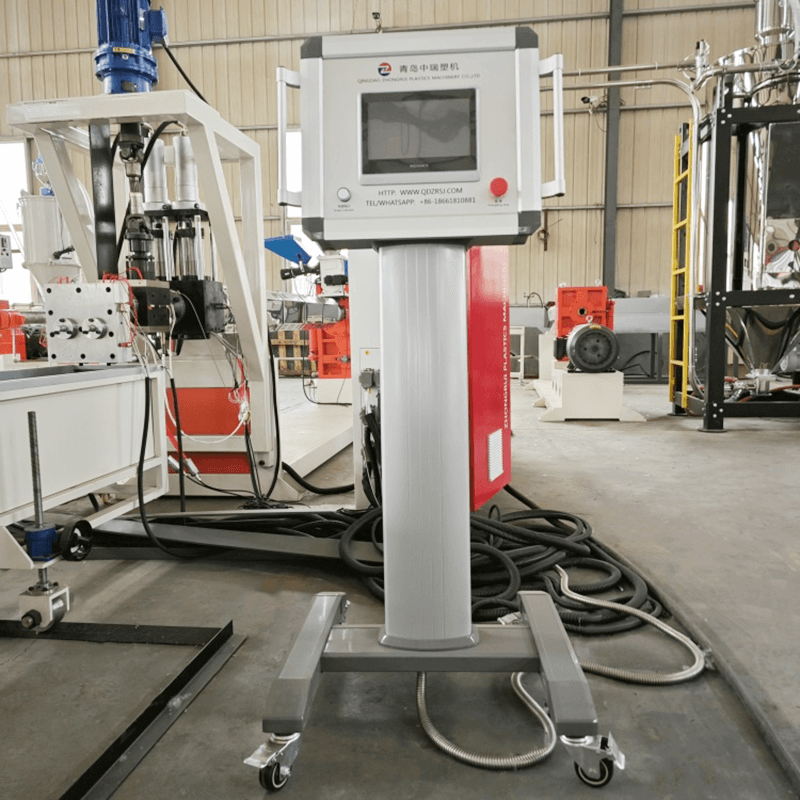
![High-efficiency PET strapping machinery running recycled flakes]()
Core Technologies Driving Energy and Material Efficiency
Efficient extrusion relies on highly specialized screw geometry. You need a dedicated 33:1 L/D (Length to Diameter) ratio screw for optimal plastification. This extended design gently melts recycled flakes. It provides a longer residence time for mixing. It ensures a homogenous melt flow while using less thermal energy. High-performance PET Plastic Strapping Band Machinery incorporates these advanced screws to handle varying flake qualities seamlessly.
Waste reduction is another critical focus area. Continuous screen changers filter impurities from the recycled melt. They utilize dual-piston mechanisms to swap filter meshes. They do this without halting the entire production line. This continuous filtration prevents pressure spikes. It keeps your scrap rate strictly between 2% and 3%. Without this automation, frequent manual screen changes cause massive material waste.
Next, you must consider thermal efficiency. Insulated stretching ovens retain essential heat during the molecular orientation process. Uninsulated legacy ovens leak heat constantly. They force electrical heaters to run at maximum capacity. Proper insulation significantly reduces the electrical load on your factory infrastructure. It ultimately lowers your kilowatt-hour cost per kilogram of produced strap. Smart PID temperature controllers further optimize this energy usage.
Evaluating Equipment Capabilities: Heavy-Duty vs. Eco-Models
Shortlisting machinery requires careful capacity matching. Do not simply buy the largest machine available. You must align the equipment with your actual operational scale. Oversized machines draw excessive power during low-demand periods. Undersized units bottleneck your supply chain and require expensive overtime shifts. We generally categorize production lines into two main operational tiers.
High-Volume Scenarios
Massive distribution centers and dedicated strap manufacturers need heavy-duty configurations. These setups process 800–900 kg/h continuously. They feature 1-12 strap outputs. They rely on advanced servo-driven winders for high-speed tension control. These lines dominate large-scale industrial markets.
Lean Manufacturing Scenarios
Smaller facilities benefit immensely from eco-models. These lines process 200–600 kg/h efficiently. They typically output 1-2 straps simultaneously. Eco-models use robust torque motor winders. They are perfect for operations seeking self-sufficiency in their own packaging materials.
Follow these specific steps when matching capacity to your factory:
Audit your monthly strapping consumption by weight and width.
Calculate the necessary hourly output, factoring in standard maintenance downtime.
Evaluate your factory floor space and available electrical grid capacity.
Select a winder technology that matches your required production speed.
| | Heavy-Duty vs. Eco-Model Specifications |
Specification Category | Heavy-Duty Configurations | Eco-Model Configurations |
Output Capacity | 800 – 900 kg/h | 200 – 600 kg/h |
Simultaneous Strap Lines | Up to 12 straps | 1 to 2 straps |
Winder Technology | Servo-driven controls | Torque motor controls |
Target Application | Large commercial strap manufacturers | In-house packaging material hubs |
Footprint Requirements | Extensive linear floor space | Compact, space-saving design |
Implementation Realities: Mitigating Risks in Recycled PET Extrusion
Running highly variable recycled flakes is mechanically taxing. You must acknowledge this transparent assumption. Not all machines marketed as "eco-friendly" handle 100% unblended post-consumer flakes effectively. Some still secretly require a virgin resin mix to maintain melt stability. You will face stricter operational realities when dealing with pure recycled inputs.
Be prepared for the following maintenance considerations:
More frequent filter changes due to paper, glue, and aluminum residues on bottle flakes.
A strict requirement to remove PVC contamination, which degrades PET heavily at high temperatures.
Higher reliance on robust, name-brand PLC integration (e.g., Siemens, Allen-Bradley) for real-time fault troubleshooting.
Intensive moisture control regimens prior to the extrusion phase.
Technical buyers need a clear shortlisting logic. Do not finalize procurement based on marketing brochures alone. Demand live demonstrations from suppliers. Request solid performance guarantees from the equipment manufacturer. Insist they test the machine using your locally sourced recycled PET flakes. This practical step reveals how the system truly handles your specific raw material profile. It exposes hidden flaws in weak extrusion designs.
Conclusion
The environmental benefits of modern extrusion lines are inseparable from their economic advantages. Turning plastic waste into high-strength strapping solves a critical sustainability challenge. It also protects your profit margins against volatile global resin markets. The technology exists to process 100% recycled flakes reliably. Precision screws, automated screen changers, and insulated ovens make this process highly efficient.
Decision-makers must take proactive steps today. First, audit your current strapping material costs to establish a baseline. Next, assess the local availability and quality of PET bottle flakes in your region. Finally, request highly specific operational expenditure calculations from equipment manufacturers. Make sure these calculations account for local energy rates, expected scrap rates, and actual output capacity. Smart procurement guarantees long-term manufacturing success.
FAQ
Q: Can a modern PET line run strictly on 100% recycled bottle flakes without virgin resin?
A: Yes. A modern production line easily processes 100% recycled bottle flakes. However, the system must feature advanced dehumidification units. It also requires specialized screw geometries and continuous filtration systems. These components stabilize the melt flow and prevent the strap from becoming brittle during the stretching phase.
Q: How does the energy consumption of a modern line compare to legacy equipment?
A: Modern equipment is highly energy-efficient. Legacy machines waste power through heat loss and continuous motor running. New lines use insulated stretching ovens and servo motors. This combination drastically reduces power consumption per kilogram of output. It lowers your overall factory electrical load significantly.
Q: Will straps produced from recycled materials compromise load stability compared to steel?
A: No. Properly extruded recycled PET offers superior shock absorption. It maintains excellent tension retention over long transport distances. This makes it a safer, lighter alternative to steel for heavy-duty transport. It completely eliminates the risk of dangerous recoil and rust associated with traditional metal banding.



 +86-18561886575 (Mr.Wu)
 +8618561886575
 238 Yangzhou West Road, Jiaozhou City, Qingdao City, Shandong Province