Cold-weather extremes place massive physical stress on thermoplastic infrastructure. PVC resists corrosion and handles high flow rates, but it remains highly vulnerable to hydrostatic pressure from freezing water. When ambient temperatures drop below 20°F (-6°C), facilities face severe operational disruptions from pipe ruptures. Sudden cold snaps in warmer climates cause devastating water-related property losses because the infrastructure sits completely unprepared for freezing conditions. Facility managers and contractors must pivot from reactive measures to proactive infrastructure evaluation. A pipe’s ability to withstand cold-weather stress without catastrophic failure depends on two distinct factors. First, you need proper environmental protection to delay the freezing process. Second, you rely on the structural integrity established at the PVC Pipe Production Line. Factory-level calibration dictates how well the plastic handles thermal contraction and internal pressure spikes.
- Temperature Thresholds: Uninsulated PVC pipes typically face freezing risks when ambient temperatures sustain 20°F (-6°C) or lower, leading to a 9% volume expansion of internal water.
- Manufacturing Impact: The baseline defense against freeze-cracking is wall thickness consistency and material compounding, directly dictated by the quality of the PVC pipe production line.
- Protection Hierarchy: Effective cold-weather mitigation requires a combination of passive insulation, active heat tracing (where compatible), and pressure relief strategies. Immediate tactical steps, such as opening cabinets and monitoring for low water pressure, serve as critical first lines of defense for indoor plumbing.
- Specification Criteria: Evaluating PVC for cold climates requires analyzing Schedule ratings, temperature derating factors, and the extrusion tolerances of the manufacturer.
The Physics of Freezing: At What Temperature Does PVC Pipe Fail?
Problem Framing
Preventing pipe failure requires understanding the exact environmental conditions that trigger freezing. Success means keeping the internal fluid above 32°F (0°C), rather than just managing the ambient air temperature. PVC itself does not freeze or shatter simply because the air gets cold. The failure happens when the water inside changes state from liquid to solid. Managing the thermal transfer between the cold outside air and the water inside the pipe drives every winterization strategy on a job site. We focus entirely on slowing down heat loss.
The 20°F Threshold
Industry standards cite 20°F (-6°C) as the danger zone for uninsulated pipes. You might wonder why water, which freezes at 32°F, requires a 20°F ambient temperature to cause a rupture. This threshold accounts for the thermal mass of the water, the insulating properties of the building envelope, and ambient heat radiating from nearby structures. It takes sustained exposure to 20°F air to overcome these factors and pull enough heat out of the pipe to freeze the water. Wind chill accelerates this heat loss on exposed outdoor lines. A stiff breeze strips away the thin layer of insulating air around the pipe, rapidly shrinking the time you have before ice forms.
Indoor vs. Outdoor Vulnerabilities
Exposed outdoor lines face the most immediate threat from dropping temperatures. However, indoor pipes are never guaranteed safe. Pipes routed through exterior walls, unheated attics, crawlspaces, or closed under-sink cabinets remain highly vulnerable. In regions unaccustomed to prolonged freezes, builders often place plumbing in exterior walls without adequate insulation. When a cold snap hits, the wall cavity temperature plummets. Opening cabinet doors allows heated room air to circulate around hidden pipes. This simple action provides a buffer against freezing. We always tell building owners to keep air moving around plumbing fixtures during a freeze.
Hydrostatic Expansion vs. Tensile Strength
The mechanics of a freeze rupture rely on basic physics. When water turns to ice, it expands by approximately 9% in volume. This expansion creates immense internal hydrostatic pressure. As the ice block grows, it pushes water toward the closed faucet. Pressure spikes to thousands of pounds per square inch (PSI). Rigid PVC has high tensile strength, but it cannot stretch to accommodate this expansion. The pressure seeks the weakest point in the pipe wall or the glued joint. Once the internal pressure exceeds the material's tensile limit, the pipe splits. You end up with massive water discharge once the ice thaws.
Why Manufacturing Matters: The Impact of the Production Line
Solution Categories
Pipe quality directly dictates failure rates under thermal stress. Not all PVC performs the same in the field. The material's behavior during a freeze event results directly from the manufacturing process. No rigid plastic pipe can infinitely contain expanding ice. However, high-quality manufacturing ensures the pipe reaches its maximum theoretical pressure rating before failing. Poorly manufactured pipes fail prematurely. They burst well below standard pressure thresholds because of structural inconsistencies hidden in the plastic.
Wall Thickness and Extrusion Tolerances
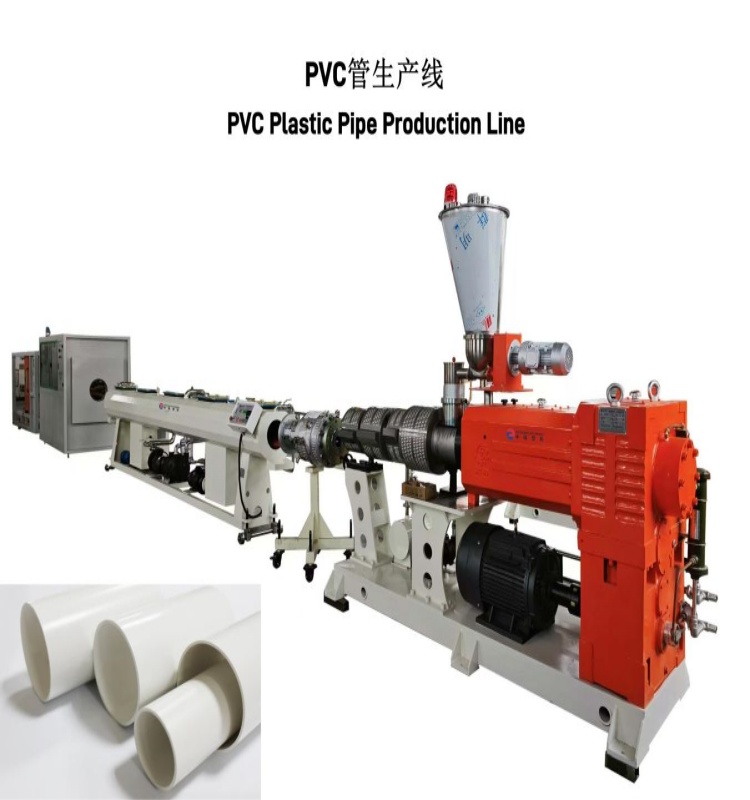
Advanced PVC pipe extrusion systems ensure uniform wall thickness throughout the entire length of the pipe. Extrusion requires high mechanical precision. If the machinery lacks proper calibration, the resulting pipe develops microscopic variations in wall thickness. Thin spots caused by poor extrusion become immediate failure points under ice expansion pressure. A high-grade production line uses automated sensors and vacuum calibration tanks. These systems guarantee that every inch of the pipe meets strict dimensional tolerances. You get a uniform defense against hydrostatic stress.
Material Compounding and Impact Modifiers
The chemical formulation of the PVC resin plays a massive role in cold-weather durability. Standard PVC becomes increasingly brittle as temperatures drop below freezing. High-quality production lines integrate specific impact modifiers, like Chlorinated Polyethylene (CPE), and UV stabilizers, such as Titanium Dioxide, into the raw material mix before extrusion. These chemical additives maintain the polymer chain's flexibility. They prevent the plastic from shattering like glass when struck or pressurized in sub-zero temperatures. Proper compounding ensures the pipe retains structural integrity even when the ambient environment severely degrades its baseline flexibility. We notice a massive difference on site between cheap, poorly compounded pipe and premium pipe. The cheap stuff splinters when you cut it in the cold. The premium pipe cuts clean because the resin mix holds the polymer structure together.
Application-Specific Manufacturing
Different environments require specific manufacturing approaches. Equipment must match the end-use of the product.
- A dedicated PVC downpipe production line accounts for extreme exterior weather exposure. Downpipes handle roof runoff and face constant freeze-thaw cycles. The extrusion process for these pipes prioritizes high UV resistance and impact strength. They must survive ice buildup and external physical strikes during winter storms.
- A PVC conduit production line focuses heavily on protecting internal electrical wiring. These pipes sit underground and must resist ground-frost heave. The manufacturing parameters emphasize crush resistance and watertight joint integrity. This prevents moisture ingress, which could freeze and destroy the electrical cables inside.
![PVC Pipe Production Line]()
Evaluating PVC Pipe Specifications for Cold-Weather Applications
Evaluation Dimensions
Selecting the right PVC materials for freeze-prone environments requires a structured framework. You cannot simply buy the cheapest pipe and expect it to survive a winter storm. Evaluating specifications means looking at pressure ratings, wall thickness, and how the material behaves when temperatures deviate from standard testing conditions. We look at the data sheets before putting anything in the ground.
Schedule 40 vs. Schedule 80
The most common field decision involves choosing between Schedule 40 and Schedule 80 PVC. Schedule 80 has a thicker wall, which reduces the internal diameter but significantly increases the pressure rating. Schedule 80 offers higher tensile strength against internal expansion. However, neither pipe is freeze-proof without proper fluid management. Schedule 80 simply buys you a small margin of extra time and pressure resistance before the inevitable rupture occurs.
| Specification Feature | Schedule 40 PVC | Schedule 80 PVC | Cold Weather Performance Impact |
| Wall Thickness (2-inch pipe) | 0.154 inches | 0.218 inches | Thicker walls delay the transfer of cold temperatures to the internal fluid. |
| Max Operating Pressure (at 73°F) | 280 PSI | 400 PSI | Higher baseline pressure provides a slightly larger buffer against hydrostatic expansion. |
| Internal Diameter (2-inch pipe) | 2.067 inches | 1.939 inches | Smaller internal volume in Schedule 80 means slightly less water mass to freeze and expand. |
| Impact Resistance at 20°F | Low | Moderate | Schedule 80 withstands external physical strikes better when the plastic becomes brittle. |
Temperature Derating Factors
Manufacturers calculate PVC pressure ratings at a baseline temperature of 73.4°F (23°C). As temperatures rise above this baseline, the pipe loses pressure capacity. Conversely, as temperatures drop below freezing, the pipe technically gains tensile strength but loses impact resistance. Extreme cold makes the material stiff and brittle. Engineers must adjust their specification models using temperature derating factors to account for this brittleness. A pipe rated for 400 PSI at room temperature might shatter from a minor physical impact when the ambient air hits 10°F. You have to handle the pipe carefully during winter installations. Dropping a length of PVC off a truck bed in January will crack it, whereas it would bounce in July.
Cold-Weather Protection and Mitigation Strategies
Overall Value Influencing Factors
Protecting PVC infrastructure requires balancing cost, maintenance requirements, and reliability. Passive systems cost less and require zero maintenance, but they offer limited protection during multi-day freezes. Active systems cost more to install and run but provide guaranteed frost prevention. You must evaluate the specific risk profile of your piping layout to choose the right mitigation strategy. We always look at the worst-case historical weather data for the site.
Passive Insulation
Insulation slows the transfer of heat out of the pipe. It does not generate heat. Common materials include elastomeric foam, fiberglass, and polyethylene sleeves. The effectiveness of insulation is measured by its R-value. For standard residential and commercial PVC lines exposed to cold air, we recommend an R-value of at least R-3 to R-5. Thicker pipes require thicker insulation to achieve the same protective effect. Ensure you tape and seal all joints and elbows completely. A single gap in the insulation creates a thermal bridge where freezing will initiate.
Active Heat Tracing
Heat tape provides active thermal energy to keep the water above 32°F. Applying heat tape to plastic pipes requires strict safety protocols. You must only use self-regulating heat tape on PVC. Self-regulating cables automatically adjust their heat output based on the ambient temperature. Constant-wattage heat tape, often used for metal pipes, can overheat, melt, or structurally degrade PVC. This leads to toxic off-gassing and catastrophic pressure failures. Always install heat tape in a straight line along the bottom of the pipe. Never wrap it in a tight spiral. A straight run ensures even heat distribution without localized melting.
Pressure Relief and Flow Management
The mechanical strategy of allowing faucets to drip works incredibly well. Dripping does not prevent the water from freezing by keeping it moving. Instead, it relieves the hydrostatic pressure buildup that actually causes the rupture. When a blockage forms, the ice expands toward the closed faucet. Opening the faucet gives the expanding water a place to escape. For hidden indoor plumbing, make immediate environmental adjustments. Open under-sink cabinets to allow ambient room heat to circulate around pipes located on cold exterior walls.
Trench Depth and Frost Line Considerations
When installing underground PVC lines, the depth of the trench dictates the pipe's survival during winter. Every geographic region has a designated frost line. This line represents the maximum depth that groundwater in the soil is expected to freeze. If you bury a PVC pipe above the frost line, the surrounding soil will freeze, expand, and crush the pipe, or the water inside will freeze and burst it. We always trench at least 12 to 18 inches below the local frost line. In northern climates, this often means burying pipes four to six feet deep. Proper bedding material, like sand or pea gravel, must surround the pipe to prevent frozen soil clods from point-loading the plastic and causing stress fractures.
Early Detection and Damage Control
Identifying a freezing pipe before it bursts saves thousands of dollars in property damage. Rapid detection requires you to immediately shut off the main water valve to the facility. This prevents catastrophic water discharge when the ice eventually thaws. Once you secure the main, leave the affected faucets open to allow the ice to melt and drain safely. Watch for these early warning signs:
- Frost accumulation on the exterior of exposed indoor pipes.
- Strange gurgling sounds when you open a faucet, indicating restricted flow.
- Damp drywall or ceiling stains, which point to a micro-fracture that has already started leaking.
- Faucets that produce only a trickle of water or no water at all.
Implementation Risks: Retrofitting vs. Specifying High-Grade PVC
Assessing Existing Vulnerabilities
Upgrading existing infrastructure presents different challenges than installing new systems. Facility managers must conduct pre-winter audits of current piping. Look for micro-fractures, UV degradation on exposed lines, and sagging pipe runs. Sagging creates low spots where water pools and remains static. These low spots form perfect traps for ice blockages. Inspect existing insulation for animal damage, moisture saturation, or UV breakdown. Wet or degraded foam offers zero thermal resistance. We often find that replacing old insulation solves most of a building's winter plumbing issues.
Handling and Installing PVC in Sub-Zero Conditions
Installing PVC during the winter requires modified site practices. The cold makes the plastic brittle, increasing the risk of damage during transport and handling. You cannot drop or throw pipes off the truck. Furthermore, solvent welding PVC in freezing temperatures requires specialized cold-weather cements. Standard PVC cement takes significantly longer to cure in the cold. If you pressurize the line before the joint fully cures, the fitting will blow apart. We use primers and cements specifically formulated for sub-zero applications, and we allow double the standard cure time before running water through the system.
Sourcing from Reliable Manufacturers
For large-scale buyers, contractors, and facility engineers, vetting suppliers acts as a critical risk mitigation step. You cannot inspect the microscopic wall thickness of every pipe you purchase. You must trust the manufacturing process. Ensure the pipes you source come from a modern Plastic Pipe Production Line capable of meeting strict ASTM standards for cold-weather durability. High-end extrusion machinery guarantees the dimensional stability and material compounding necessary to survive harsh winter environments. Cutting costs on poorly manufactured pipe inevitably leads to expensive emergency repairs when the temperature drops.
Conclusion
PVC pipe will freeze and potentially rupture if water remains static inside the line during sub-20°F temperatures. The resulting hydrostatic pressure easily overwhelms the tensile strength of the plastic. Catastrophic failures are entirely preventable through a combination of environmental protection, early detection, and strict manufacturing standards. Relying on high-quality extrusion ensures the pipe lacks the weak points that ice expansion actively exploits. Decision-makers should prioritize Schedule 80 PVC for exposed critical infrastructure due to its thicker walls. Mandate proper elastomeric insulation and verify the extrusion quality of your pipe suppliers. Proactive management secures water systems against extreme cold.
- Conduct a comprehensive pre-winter audit to identify sagging lines, missing insulation, and exposed exterior pipes.
- Install self-regulating heat tape on highly vulnerable outdoor PVC lines, ensuring the tape is specifically rated for plastic piping.
- Upgrade insulation protocols by replacing degraded foam with high R-value materials and sealing all joints meticulously.
- Establish an emergency protocol for sudden pressure drops so all personnel know the exact location of the main water shut-off valve.
FAQ
Q: At exactly what temperature will standard PVC pipe freeze and crack?
A: Water inside the pipe freezes at 32°F (0°C). However, due to thermal mass and building insulation, ambient outside temperatures usually need to drop to 20°F (-6°C) or lower for a sustained period to freeze water inside uninsulated PVC pipes.
Q: Why is my water pressure suddenly low during a freeze?
A: Low water pressure during freezing weather is a primary indicator that an ice blockage is forming inside the pipe. You must take immediate action, such as shutting off the main water valve and opening faucets, to relieve pressure and prevent a burst.
Q: Are indoor PVC pipes safe from freezing?
A: No. Indoor pipes located in uninsulated exterior walls, unheated attics, crawlspaces, and closed cabinets remain highly vulnerable to freezing. This risk increases in warmer climates where homes lack heavy winter insulation and wall cavities get extremely cold.
Q: Does Schedule 80 PVC freeze slower than Schedule 40 PVC?
A: Schedule 80 PVC has thicker walls, providing slightly more thermal mass and higher tensile strength. While it withstands more internal pressure than Schedule 40, the water inside will still freeze at the same temperature without proper insulation.
Q: Can you use heat tape on PVC pipes safely?
A: Yes, but you must strictly use self-regulating heat tape. Constant-wattage heat tape can overheat, melt the plastic, and cause catastrophic pipe failure. Always follow the manufacturer's installation guidelines for plastic piping and run the tape in a straight line.
Q: How does the quality of a plastic pipe production line affect freeze resistance?
A: High-quality production lines ensure precise extrusion, preventing thin spots in the pipe wall. They also properly mix impact modifiers into the resin. These factors prevent weak points where expanding ice would normally cause a rupture.
Q: What should I do if my PVC pipe is already frozen but hasn't burst?
A: Shut off the main water valve immediately to prevent flooding if the pipe cracks. Open the affected faucets to relieve pressure. Use a hair dryer or warm towels to gently thaw the pipe. Never use an open flame or high-heat gun on PVC.



 +86-18561886575 (Mr.Wu)

 +8618561886575
 238 Yangzhou West Road, Jiaozhou City, Qingdao City, Shandong Province