In high-volume plastic manufacturing, unscheduled downtime is the silent killer of profitability. For plant managers operating extrusion or injection molding facilities, every minute a machine sits idle translates directly to lost revenue and disrupted supply chains. Yet, many operations still treat maintenance as a reactive necessity—fixing things only after they break. This approach ignores the reality of modern manufacturing: machinery maintenance is actually Asset Lifecycle Management (ALM).
Effective management of plastic process equipment requires a shift in perspective. It is about preserving the Total Cost of Ownership (TCO) rather than just minimizing repair bills. A robust strategy prioritizes critical systems over generic cleaning, focusing resources on the components that drive uptime and product quality. This guide serves as a blueprint for operations leads looking to establish a skeptical, evidence-based maintenance culture. You will learn how to transition from "putting out fires" to a disciplined regimen that maximizes ROI.
Key Takeaways
Shift to Predictive: Moving from reactive repairs to condition-based monitoring can reduce catastrophic failures by over 50%.
Fluid Integrity is Paramount: Up to 70% of equipment failures in plastic process equipment stem from contaminated hydraulic fluids or improper lubrication.
Precision Matters: Machine leveling and alignment (parallelism) are non-negotiable for component longevity, especially in high-tonnage applications.
Calibration > Cleaning: While hygiene is important, sensor calibration and thermal accuracy have a more direct impact on product quality (OEE).
1. Establishing a Tiered Preventive Maintenance (PM) Framework
Moving your facility from ad-hoc repairs to a structured business process is the first step toward reliability. Relying on a "run-to-failure" model might seem cheaper in the short term because it saves on scheduled labor. However, the cost of emergency overtime, expedited shipping for parts, and scrap generation far outweighs the expense of a planned Preventive Maintenance (PM) schedule.
To implement this effectively, we recommend a "Check-Act" tiered system. This divides responsibility across your workforce, ensuring that maintenance is a collective effort rather than solely the job of the engineering department.
The "Check-Act" Tiers
| Frequency | Owner | Key Activities | Goal |
| Daily | Operators | Visual checks for leaks, acoustic checks for pump cavitation, safety gate functionality. | Immediate hazard detection and shift hand-off integrity. |
| Weekly | Technicians | Filter inspections, heater band resistance checks, verification of auto-lube reservoir levels. | maintaining consumables and preventing minor wear from escalating. |
| Monthly/Quarterly | Engineers | Comprehensive sensor calibration, screw/barrel wear measurement, hydraulic oil analysis. | Deep-dive diagnostics and long-term asset health verification. |
Digitizing this process is crucial. Paper logs often get lost or ignored. By logging maintenance data digitally, you can identify "nuisance alarms" versus genuine trendlines. If a specific motor trips a thermal overload once a month, it might be a glitch. If it happens three times a week, the data screams of component fatigue. This insight allows you to intervene before a catastrophic stop occurs.
2. Critical Mechanical Integrity: Leveling, Alignment, and Wear
The physical "bones" of your machinery determine its lifespan. Even the most advanced control software cannot compensate for a machine that is mechanically compromised. Following high-authority OEM standards, such as those from major manufacturers, reveals that mechanical precision is non-negotiable.
Level and Parallel (The Foundation)
An un-leveled machine is a twisted machine. When the frame is not perfectly level, gravity and clamping forces cause the structure to twist. This leads to uneven wear on tie bars, bushings, and guide rails. It can eventually crack the platen or the frame itself.
An actionable insight for checking this is to observe the "grease flow" on tie bars. In a perfectly aligned system, grease distributes evenly around the circumference. If you see dry spots on one side and heavy accumulation on the other, it often indicates parallelism issues. The machine is fighting itself with every cycle.
Screw and Barrel Management
Wear in the plasticizing unit is often invisible until quality drops. As the clearance between the screw and barrel increases, material backflow occurs. This forces the machine to work harder to push plastic forward, generating higher shear heat and wasting energy.
You should establish a baseline for screw recovery times. If recovery time increases without any changes to the process parameters, it is a red flag. Specifically, check the check-ring (non-return valve). Wear here is a primary cause of inconsistent shot sizes and cushion instability.
Toggle and Clamping Systems
For injection molding units, the toggle system takes immense stress. Inspect links and bushings regularly for "fretting corrosion." This reddish dust appears when lubricant starvation causes metal-on-metal friction. Catching this early prevents expensive rebuilds of the clamping unit.
3. The Lifeblood of Plastic Process Equipment: Hydraulic & Lubrication Strategy
Industry data consistently suggests that up to 70% of downtime in hydraulic machinery is related to fluid integrity. If you treat hydraulic oil and lubricants as "fill and forget" consumables, you are inviting failure.
Contamination Control
Standard filters are often insufficient for modern high-precision machines. Servo valves have extremely tight tolerances and can jam due to microscopic particles that standard filters miss. Beyond particles, you must control thermal contamination. When oil degrades due to overheating, it forms "varnish" and sludge. This sticky residue coats valves and heat exchangers, acting as an insulator that causes the system to run even hotter.
Lubrication Specifics
There is a common misconception that "more is better" when it comes to grease. This is false. Over-greasing causes churning, which generates excess heat. It also attracts abrasive contaminants like dust and plastic pellets, creating a grinding paste that destroys bearings.
You face a critical decision point regarding lubricant types. While general-purpose lithium-based greases are common, high-load or high-temperature applications may require synthetic specific lubricants. Always match the grease to the operating temperature and load rating specified by the equipment manufacturer.
Tank Breathers
The tank breather is an often-ignored component. As hydraulic levels change in the tank, air is drawn in. If you operate in a high-humidity environment, that air brings moisture, which emulsifies the oil. We recommend replacing standard caps with desiccant breathers. These remove moisture from the intake air, keeping your hydraulic fluid dry and extending its service life.
![Custom High Yield 1220mm PVC Sheet Line]()
4. Thermal Control and Calibration for Quality Assurance
The thermal and sensing systems act as the "brains" and "nervous system" of your equipment. If these inputs are wrong, the machine creates scrap regardless of how mechanically sound it is.
Heater Band Health
Many technicians simply check heater bands for continuity to see if they are "alive." This is not enough. You must monitor amperage draw. A heater band can have continuity but still be degrading, drawing less power than required. This creates "cold spots" in the barrel, leading to poor plastic melt homogeneity and potential unmelted particles in the final product.
Sensor Calibration
Thermocouples and pressure transducers drift over time due to thermal cycling and aging. This presents a significant risk to process stability. If the machine "thinks" the melt is at 200°C but is actually at 190°C, the material viscosity changes. This affects fill rates, packing pressure, and final part dimensions.
A structured calibration schedule ensures that what you see on the HMI screen matches reality. This is critical for repeating jobs accurately months apart.
Electrical Cabinet Hygiene
Dust is the enemy of electronics. In plastic processing plants, polymer dust is ubiquitous. If it builds up inside electrical cabinets, it coats the cooling fans and heat sinks of VFDs and servo drives. This leads to overheating and premature failure. Additionally, use thermal imaging cameras to scan the cabinet for "hot spots." A loose wire connection generates heat before it fails; detecting this early prevents electrical fires and sudden power loss.
5. Maintenance Nuances for Continuous Production Lines
While the principles of hydraulics and heat apply universally, continuous extrusion lines have unique maintenance requirements compared to cyclic injection molding. The focus here shifts to traction, surface finish, and cooling uniformity.
Plastic Sheet Production Line Considerations
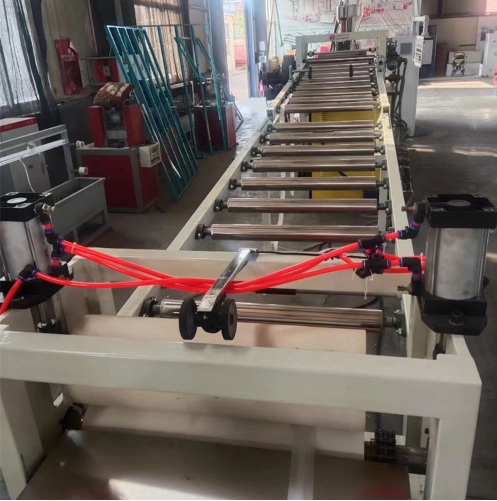
When maintaining a plastic sheet production line, the surface quality of the rollers is paramount. Even microscopic defects on a chrome roller will transfer to the sheet, ruining the optical clarity or texture. Regular polishing and protection of these surfaces are critical.
Furthermore, the calendar cooling system requires vigilance. You must ensure internal water channels in the rollers are free of scale or calcium buildup. Scale acts as an insulator. If the roller does not cool uniformly across its width, the sheet will warp or have gauge variations that make it unsellable.
Plastic Profile Production Line Considerations
Operating a plastic profile production line presents different challenges. The haul-off traction unit is the heartbeat of the line. You must inspect belts and pads regularly for wear. Slippage here causes "chatter marks" on the profile or dimensional variance that pushes the product out of tolerance.
The vacuum calibration table also demands attention. Vacuum slots and water spray nozzles frequently clog with process water debris or wax buildup. A clogged slot distorts the profile geometry during the critical cooling phase. Finally, maintain a strict sharpness schedule for cutters and saws to prevent swarf buildup and rough end-cuts.
6. Transitioning to Predictive Maintenance (PdM)
Once you have mastered preventive maintenance, the next level of efficiency is Predictive Maintenance (PdM). This approach uses data to predict failures before they happen, allowing you to schedule repairs during planned downtime.
From Preventive to Predictive
The business case for PdM is strong. Installing vibration sensors on motors and pumps can detect bearing faults months in advance. Similarly, inline oil quality monitors provide real-time data on fluid health, eliminating the guesswork of calendar-based oil changes.
Retrofit Feasibility
You do not always need new machinery to benefit from this. Evaluating legacy equipment for IIoT (Industrial Internet of Things) sensor compatibility is often more cost-effective than buying new. Simple retrofits can add smart monitoring to older, robust iron.
Strategic Spare Parts Inventory
Data should drive your inventory strategy. Use your failure history to stock "insurance spares"—expensive, long lead-time items like specialized screws or servo drives. These are different from "consumable spares" like heater bands and O-rings. Having a critical drive on the shelf can save weeks of downtime, easily paying for the inventory cost.
Conclusion
Effective maintenance is an investment in production capacity, not merely an operational expense. By shifting from reactive firefighting to a structured, tiered maintenance framework, you protect your machinery and your bottom line. We recommend starting with the basics: ensure fluids are clean, machines are level, and daily checks are performed religiously.
Once these foundations are solid, you can explore predictive technologies to further optimize uptime. We encourage you to review your current Standard Operating Procedures (SOPs) against the OEM recommendations today to identify immediate gaps. The path to higher ROI starts on the shop floor.
FAQ
Q: How often should hydraulic oil be changed in plastic process equipment?
A: You should move away from calendar-based changes (e.g., every year) to condition-based changes. By performing regular oil analysis, you only change the fluid when its properties (viscosity, acidity, contamination) degrade. This approach saves significant money on unnecessary fluid purchases and disposal fees while ensuring optimal machine performance.
Q: What are the signs of screw and barrel wear?
A: Common signs include inconsistent shot sizes, the need for increased cushion, and longer screw recovery times. You might also notice that you need higher melt temperatures to get the same flow, as the material is suffering from excessive shear heat due to backflow across the check ring or flight clearance.
Q: How does improper leveling affect a plastic sheet production line?
A: Improper leveling causes twisting in the machine frame and rollers. In sheet production, this results in uneven sheet thickness (gauge variation) across the web. Severe misalignment can also permanently warp roller bearings and drive shafts, leading to expensive mechanical failures and extended downtime.
Q: Is it worth upgrading legacy plastic profile production lines with smart sensors?
A: Yes, it is often highly effective. Adding sensors for temperature control and motor load monitoring offers a high ROI. These sensors can detect heater band failures or haul-off slippage early, preventing thousands of feet of scrap profile from being produced before an operator notices the defect.
Q: What is the most common cause of heater band failure?
A: The two most common causes are loose tightening and contamination. If a band is loose, heat transfer is poor, causing the element to overheat and burn out. Plastic "drool" or leakage that gets onto the heater band can also carbonize and short out the electrical leads.



 +86-18561886575 (Mr.Wu)
 +8618561886575
 238 Yangzhou West Road, Jiaozhou City, Qingdao City, Shandong Province