Surface smoothness is rarely just an aesthetic requirement. We view it as a critical operational metric. It directly dictates scrap rates, print adhesion quality, and your overall profit margin. Legacy manufacturing often struggles here. Common pain points like pinholing, wavy textures, and inconsistent density plague operators daily. These defects actively prevent manufacturers from capturing high-end architectural or advertising markets. Customers in these sectors demand flawless finishes. While material formulation absolutely matters, you cannot out-formulate bad equipment. The structural ceiling for surface quality is ultimately dictated by the precision of your PVC foam board extrusion and cooling machinery. If you produce these boards, relying on outdated calibration units severely restricts your growth. In this article, you will learn exactly how advanced machinery components eliminate micro-variations. We will also explore actionable criteria for upgrading your lines to achieve repeatable, premium-grade surface consistency.
Key Takeaways
- Surface smoothness directly impacts product yield and downstream processing (printing, laminating, routing).
- Precision in the T-die and vacuum calibration unit eliminates the micro-variations that cause surface defects.
- Advanced temperature control zones prevent premature foaming and surface cell rupture.
- Evaluating a new PVC foam board production line requires looking beyond theoretical output speeds to focus on cooling consistency and haul-off stability.
The Business Impact of Surface Quality on Profitability
Manufacturers often underestimate the financial drain of poor surface quality. When boards exit the line covered in pits or waves, they immediately compromise your bottom line. We must analyze surface smoothness as a direct driver of profitability rather than a subjective quality standard.
Defect-to-Waste Ratio
Surface imperfections directly correlate with rejected batches. Pits, craters, and wavy textures force quality control teams to downgrade or scrap entire pallets. Wasted raw material devours your margins. When operators run a continuous shift, a minor calibration error can generate hundreds of kilograms of unsellable scrap before anyone notices the defect. Reducing this waste ratio immediately adds pure profit back into your operation.
Downstream Compatibility
Modern fabrication demands strict smoothness requirements. Direct UV printing requires an exceptionally flat substrate. If a board has microscopic peaks and valleys, the printer ink settles unevenly. Worse, high spots can physically strike and damage expensive printheads. Vinyl lamination presents similar challenges. Air trapped under the vinyl creates unsightly bubbles on rough surfaces. You need a glass-like finish to ensure perfect adhesion and vibrant color reproduction.
Market Positioning
You cannot compete in premium segments without reliable, repeatable surface consistency. High-end sign makers and architectural cladding buyers refuse inconsistent materials. If your boards vary from batch to batch, buyers will quickly shift to competitors. Producing a reliably smooth product allows you to command higher prices and enter lucrative, specialized markets.
Defining Success Criteria
A successful equipment upgrade should deliver measurable outcomes. Before you alter your operations, establish clear benchmarks. You should target specific improvements to justify any investment. Consider these baseline goals for a successful upgrade:
- Target a reduction in surface-related scrap by at least 15% within the first quarter.
- Achieve the capability to run thinner, denser skin layers without compromising core density.
- Eliminate all visible drag lines under angled fluorescent lighting.
- Maintain consistent surface thickness across the entire width of the board.
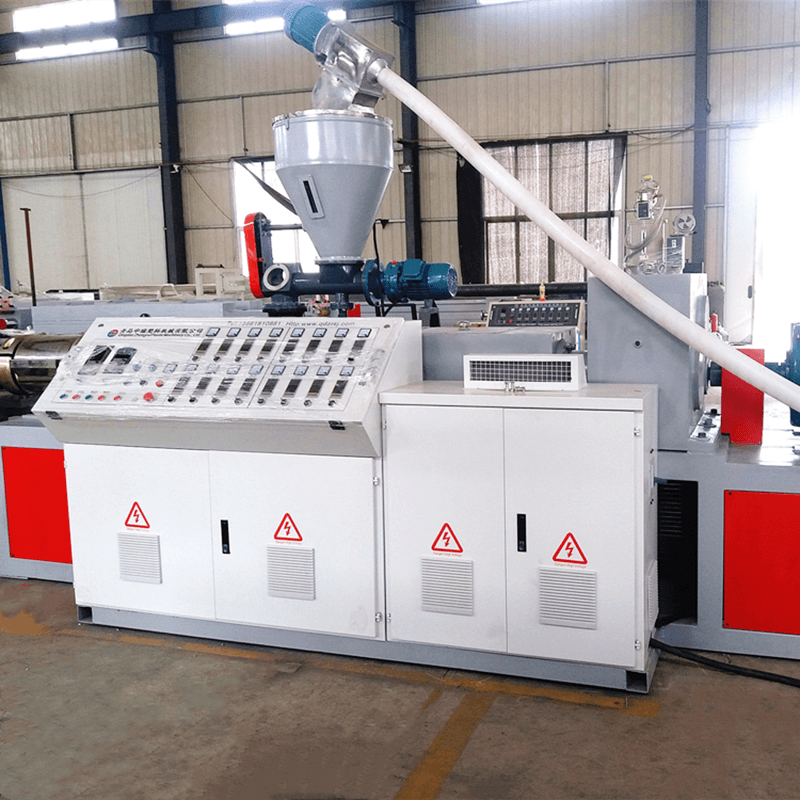
![Precision machinery operating in a modern plastic manufacturing facility]()
Core Extrusion Components That Dictate Smoothness
Formulation additives can only mask mechanical flaws for so long. The true foundation of surface smoothness relies entirely on your extrusion hardware. Every component from the feeder to the haul-off must function in perfect harmony.
Twin-Screw Precision
The journey to a flawless surface begins in the extruder barrel. Twin-screw extruders provide the consistent shearing and mixing required for proper PVC plastification. If the screws wear down, they fail to melt resin particles completely. These un-melted particles travel through the die and create visible bumps on the finished board. Proper screw geometry ensures uniform gas dispersion from the blowing agents. This creates microscopic, evenly distributed bubbles rather than large, unstable voids.
T-Die Engineering
The T-die acts as the gateway for the molten plastic. Its internal flow channels must distribute the melt perfectly across the entire width. If the flow speed varies, the material creates visible surface flow marks. Operators must rely on adjustable die lips to fine-tune the thickness. A modern PVC foam sheet board extrusion machine production line heavily depends on advanced die metallurgy. Highly polished internal surfaces prevent material hang-up, which would otherwise burn and cause dark streaks on the finished product.
Vacuum Calibration Units
Once the material exits the die, the vacuum calibrator takes over. This unit "freezes" the skin of the board. It uses strong negative pressure to pull the expanding PVC melt against a chilled, polished metal surface. Precision-machined cooling plates are vital here. If the plates have microscopic rough patches or uneven water flow, they generate localized friction. This friction creates long drag lines down the length of the board. Mastering the calibration unit allows you to produce either a high-gloss finish or a perfectly matte texture on demand.
Extrusion Component Impact on Surface Quality
| Component | Primary Function | Surface Defect Prevented |
| Twin-Screw Extruder | Melts and mixes resin uniformly | Un-melted bumps, irregular cell sizes |
| T-Die | Distributes melt evenly across width | Flow marks, uneven thickness |
| Vacuum Calibrator | Freezes and shapes the outer skin | Drag lines, surface pitting, warping |
| Haul-Off Unit | Pulls board at a consistent speed | Chatter marks, wavy textures |
Managing Extrusion Variables: Temperature and Foaming Control
Mechanical precision must pair with exact thermodynamic control. PVC foam expands rapidly. Managing the exact moment of this expansion determines whether the surface remains pristine or becomes porous.
Zone-Specific Heat Management
Extruders use multiple heating zones along the barrel and die. You must isolate these temperature zones carefully. If the melt becomes too hot too early, the blowing agent activates prematurely inside the barrel. This leads to chaotic cell growth. By maintaining a strict, step-by-step heating profile, you control the exact moment of expansion. The melt should only begin fully expanding as it exits the die lips. Advanced control panels allow operators to adjust temperatures in single-degree increments.
Preventing Surface Cell Rupture
Surface pitting occurs when internal gas bubbles break through the outer skin. You must maintain adequate pressure right up to the calibrator entry to prevent this. High melt strength keeps the bubbles trapped inside the core. The rapid cooling of the calibrator solidifies a dense outer layer before the internal gas can escape. If your cooling water temperature fluctuates, the skin stays soft for too long. The gas then ruptures the surface, leaving tiny craters that ruin the board for printing applications.
Implementation Risk
Even the best machinery carries implementation risks. Advanced equipment requires skilled operators. They must fine-tune the cooling gradient based on ambient plant conditions. A production line runs differently in humid summer months compared to dry winter days. Specific PVC resin formulations also require unique temperature profiles. You must train your team to interpret surface changes and adjust the vacuum pressure or water flow accordingly. Relying entirely on automated presets without operator intuition often leads to extended scrap runs.
Upgrading vs. Replacing: Evaluating Your Production Assets
Manufacturers eventually face a difficult crossroad. Do you attempt to retrofit an aging system, or do you invest in a completely new line? Understanding the limits of your current machinery will guide this decision.
Retrofit Limitations
Upgrading individual parts often seems financially attractive. You might consider swapping the T-die or adding a modern calibrator to an older system. However, these retrofits frequently fall short. If the underlying extruder barrel suffers from severe wear, a new die cannot fix the inconsistent melt pressure. Outdated Programmable Logic Controllers (PLCs) struggle to communicate with modern sensors. You end up creating a bottleneck. The new components wait for the old components to catch up, negating any potential surface quality improvements.
Scalability and Line Speed
Legacy systems force a frustrating compromise. Operators often have to run an older plastic sheet production line at much slower speeds just to maintain acceptable smoothness. The older calibration units simply cannot cool the material fast enough at high throughputs. Investing in a new line designed for high-speed stability eliminates this trade-off. You can double your output without sacrificing the glass-like finish your clients demand. Scalability requires equipment built specifically to handle rapid heat exchange and robust haul-off tension.
Energy and Output Efficiency
Replacing less efficient equipment dramatically transforms your daily operational metrics. Modern lines utilize high-torque servo motors and superior barrel insulation. These upgrades significantly reduce the amount of electricity required to produce each kilogram of material. You achieve a much higher yield of premium, defect-free boards per shift. The reduction in wasted energy, combined with lower scrap rates, generates immediate cash flow improvements. Operating a modernized line ensures your utility bills scale efficiently with your production output.
Shortlisting a Machinery Partner
Purchasing extrusion equipment involves high stakes. You must move past glossy brochures and demand verifiable engineering data. Choosing the right vendor determines your competitive advantage for the next decade.
Evidence-Based Evaluation
Ignore vague marketing claims about "high quality." Request specific technical data. Ask for the manufacturing tolerances of their cooling plates. Investigate the metallurgy of their screw designs. Do they use bimetallic treatments for extended wear resistance? Most importantly, demand verifiable surface finish metrics. Ask to see actual gloss meter readings and micro-roughness test results from boards produced on their machines. A reputable vendor will gladly share empirical data proving their equipment's capability.
Formulation Testing (FAT)
Never sign off on machinery based on a generic test run. You must insist on a Factory Acceptance Test (FAT). The crucial detail here involves the raw materials. You must run the FAT using your specific material formulation, not the manufacturer's optimized test batch. Vendors often use heavily stabilized, easy-to-process recipes for demonstrations. Your real-world recycled content or high-filler recipes behave differently. Running your own material ensures the machine handles your exact viscosity and foaming characteristics perfectly.
Compliance, Safety, and Support
Global standards matter. Verify all CE and UL certifications. Check their electrical panel configurations for compliance with your local safety standards. Machinery goes down, and when it does, you need immediate help. Investigate the availability of localized aftermarket support. Can they overnight spare die lips? Do they have technicians in your time zone? Position the right PVC advertising board production machinery vendor as a strategic partnership. This is not a transactional equipment purchase; it is a long-term operational alliance.
Conclusion
Surface smoothness sits at the complex intersection of chemical formulation, operator skill, and rigid machinery limits. You cannot overcome outdated extruder mechanics with better additives alone. By investing in precise twin-screw technology, engineered T-dies, and robust vacuum calibration units, you eliminate the micro-variations that cause costly surface defects. High-quality output opens doors to premium advertising and architectural markets that demand perfection.
Your next steps require honest operational auditing. Begin by analyzing your current scrap rates to identify exactly how much money you lose to surface imperfections. Document your most frequent defect types, such as drag lines or pitting. Finally, approach machinery vendors with this data. Demand empirical testing and a customized FAT before committing to any capital expenditure. Upgrading your production capabilities correctly will secure your profitability for years to come.
FAQ
Q: How does the vacuum calibrator affect the surface of a PVC foam board?
A: It applies negative pressure to pull the expanding PVC melt against a chilled, polished metal surface, solidifying a dense, smooth outer skin before the core fully expands.
Q: Can formulation changes fix surface issues on an older PVC foam board production line?
A: Only to a degree. Additives (like processing aids or higher-quality blowing agents) can improve melt strength, but they cannot overcome inconsistent die pressure or uneven cooling plates.
Q: What causes "drag lines" or longitudinal scratches on the board surface?
A: Typically caused by localized friction in the calibration unit, un-melted resin particles, or poor synchronization between the haul-off speed and extruder output.
Q: How do I test machinery for surface smoothness before purchasing?
A: Require a live demonstration or Factory Acceptance Test (FAT) using your own raw materials, and measure the output using a surface profilometer to ensure it meets your minimum tolerance.



 +86-18561886575 (Mr.Wu)
 +8618561886575
 238 Yangzhou West Road, Jiaozhou City, Qingdao City, Shandong Province