Bending rigid PVC and plastic pipe fundamentally alters its molecular structure. This presents a high risk of kinking, micro-fracturing, or catastrophic failure under pressure if executed incorrectly. For contractors and manufacturers, achieving consistent, structurally sound bends without compromising the pipe’s pressure rating or internal diameter remains a major operational challenge. Manual methods are highly variable. They lead to high scrap rates, labor inefficiencies, and compliance failures on the job site. While field techniques utilizing internal supports, localized heat, and radius forms work for low-volume or custom installations, scaling this process requires a complete shift in methodology. This guide evaluates manual bending techniques for field use and the transition to a commercial PVC Pipe Production Line and automated processing systems for high-volume, defect-free manufacturing.
- Temperature Control is Non-Negotiable: PVC must reach its glass transition temperature (approx. 165°F to 175°F) for safe deformation; uneven heating causes localized thinning and structural weakness.
- Internal Support Prevents Collapse: Utilizing packed sand (sealed with duct tape or caps) or specialized bending springs is mandatory for manual bends to maintain the pipe's internal diameter and prevent kinking.
- Setting the Bend is Critical: Rapid cooling using a wet rag or water bath is required to immediately lock the polymer structure into its new shape and prevent spring-back.
- Manual Bending Degrades Pressure Ratings: Field-bent PVC pipe typically loses a portion of its original pressure rating, making it unsuitable for high-pressure industrial applications without rigorous testing.
- Industrial Scaling Requires Extrusion Solutions: For high-volume needs, manufacturers bypass manual bending entirely by utilizing a corrugated pipe extrusion line or automated belling and forming machines to produce flexible or pre-angled pipes at scale.
The Physics of Bending Plastic Pipe: Why Kinking and Cracking Occur
Understanding the Glass Transition Temperature (Tg)
Polyvinyl Chloride (PVC) operates as an amorphous thermoplastic. It remains highly rigid at room temperature due to tightly bound polymer chains. To manipulate this material without causing catastrophic fractures, you must elevate its core temperature to the glass transition state. For standard PVC formulations, this critical window exists between 165°F and 175°F. Reaching this specific thermal threshold allows the polymer chains to slide past one another. The material transitions from a brittle solid into a pliable, rubber-like state.
Operating outside this narrow temperature band guarantees failure on the job site. Attempting to bend the pipe below 165°F forces the polymer chains to tear rather than stretch. This induces stress whitening, micro-fracturing, and eventual snapping. Conversely, pushing the temperature beyond 175°F pushes the material toward its melting point. The plastic begins to scorch, blister, and lose all structural integrity.
Thermal management strategies must adapt to the pipe's specific schedule. Schedule 40 PVC features a relatively thin wall. It absorbs heat rapidly, making it highly susceptible to accidental overheating and sudden collapse. Schedule 80 PVC possesses a much thicker wall profile. It requires a prolonged, low-intensity heat soak. You must ensure the inner diameter reaches the glass transition temperature before the outer diameter begins to scorch.
Structural Risks: Wall Thinning and Pressure Rating Loss
Bending a rigid cylinder fundamentally alters its physical geometry. As you force the pipe into a curve, the material on the outer radius stretches significantly. This stretching action physically thins the pipe wall. Simultaneously, the material on the inner radius compresses. This often creates microscopic wrinkles or material buildup inside the curve. This uneven distribution of mass creates inherent structural vulnerabilities.
Wall thinning directly impacts the pipe's hydrostatic design basis (HDB). The HDB represents the long-term internal pressure the pipe can safely withstand. Factory-straight PVC pipe relies on uniform wall thickness to distribute internal fluid pressure evenly. A field-bent pipe loses this uniformity. The thinned outer curve becomes a localized weak point. Fluid pressure naturally concentrates stress on this compromised section. Consequently, manually bent PVC pipe will never retain its original factory pressure rating. Relying on field-bent pipes for high-pressure fluid transport introduces significant operational risks.
Low-Volume and Manual Bending Techniques (Field Applications)
The Internal Support Method (Sand and Bending Springs)
Applying heat to a hollow plastic tube and bending it will inevitably cause the walls to cave inward. The pipe kinks, destroying both its internal diameter and its structural flow capacity. You must provide robust internal support to counteract the compressive forces of the bend.
The most reliable field technique utilizes dry, tightly compacted sand. You must follow a strict sequence to ensure the sand provides adequate structural support:
- Seal one end of the PVC pipe securely using heavy-duty duct tape or glued PVC end caps.
- Pour fine, completely dry silica sand into the open end. Avoid play sand, as it often contains moisture.
- Tap the exterior of the pipe continuously with a rubber mallet as you fill it. This settles the sand and eliminates hidden air pockets.
- Fill the pipe to the absolute brim, leaving zero empty space.
- Seal the second end tightly to lock the sand in place.
The sand must be completely devoid of moisture. Wet sand generates steam when heated. This creates dangerous internal pressure spikes that will blister the plastic from the inside out. The compacted sand acts as a flexible, solid core. It transfers the bending force evenly across the pipe wall, preventing collapse.
For smaller diameter pipes, such as electrical conduit, internal bending springs offer a faster alternative. These tightly coiled, heavy-gauge steel springs slide directly into the pipe. You position the spring exactly where the bend will occur. The metal coils physically block the plastic walls from kinking inward. Once the bend is complete and the pipe cools, you simply pull the spring out.
Controlled Heat Application (Heat Blankets, Water, and Air)
Delivering even, penetrating heat dictates the success of any manual bend. Professional heat guns and specialized PVC heat blankets serve as the primary tools for field work. Heat blankets wrap entirely around the target section. They utilize thermostatically controlled elements to bake the pipe evenly from all sides. Hot boxes operate on a similar principle. They enclose the pipe in a heated chamber to ensure uniform thermal saturation.
For small-diameter applications, boiling water provides an exceptionally reliable heat source. Submerging the target section in boiling water (212°F) guarantees perfectly even heat distribution. It completely eliminates the risk of localized surface scorching. The water penetrates the plastic steadily, bringing the entire wall thickness up to the required pliable state.
Contractors must strictly avoid open flames. Blowtorches apply intense, localized heat that overwhelms the plastic's thermal capacity. The surface scorches and degrades long before the inner wall reaches the glass transition temperature. This creates brittle, burned sections prone to immediate failure. Standard hair dryers represent the opposite problem. They lack the necessary BTUs to heat the pipe efficiently, resulting in localized cooling and uneven bends.
Forming and Setting the Bend
Freehand bending relies entirely on guesswork. It produces inconsistent angles, irregular sweeps, and visually unappealing results. Professional installations require precise, repeatable geometry. You must utilize a radius form or a custom wooden jig. A jig provides a solid, curved template. You anchor the heated, pliable pipe to one end of the jig and pull it smoothly around the curved form. This guides the plastic into an exact 45-degree, 90-degree, or custom sweep.
Once the pipe conforms to the jig, you must address the material's thermal memory. PVC exhibits a strong spring-back effect. If allowed to cool slowly in ambient air, the polymer chains will attempt to pull the pipe back to its original straight configuration. You must lock the new shape in place immediately. Wipe the formed pipe down with a soaking wet rag, or pour cold water directly over the bend. This rapid quenching drops the core temperature below the glass transition state instantly. The polymer chains freeze in their new alignment, setting the bend permanently.
Limitations of Manual Bending for Commercial Scaling
Manual bending serves adequately for low-volume, custom field installations. However, it fails entirely as a scalable production method. The manual workflow is inherently bottlenecked. Taping ends, compacting sand, applying localized heat, pulling the pipe around a jig, and quenching the plastic requires intensive manual labor. These labor costs compound rapidly on large projects.
Furthermore, manual processes lack repeatability. Ambient temperature fluctuations, varying operator techniques, and inconsistent heating durations lead to high QA/QC failure rates. You will inevitably produce pipes with incorrect bend radii, severe wall thinning, or internal kinks. Relying on manual manipulation for commercial-scale output guarantees high scrap rates and unacceptable profit margins.
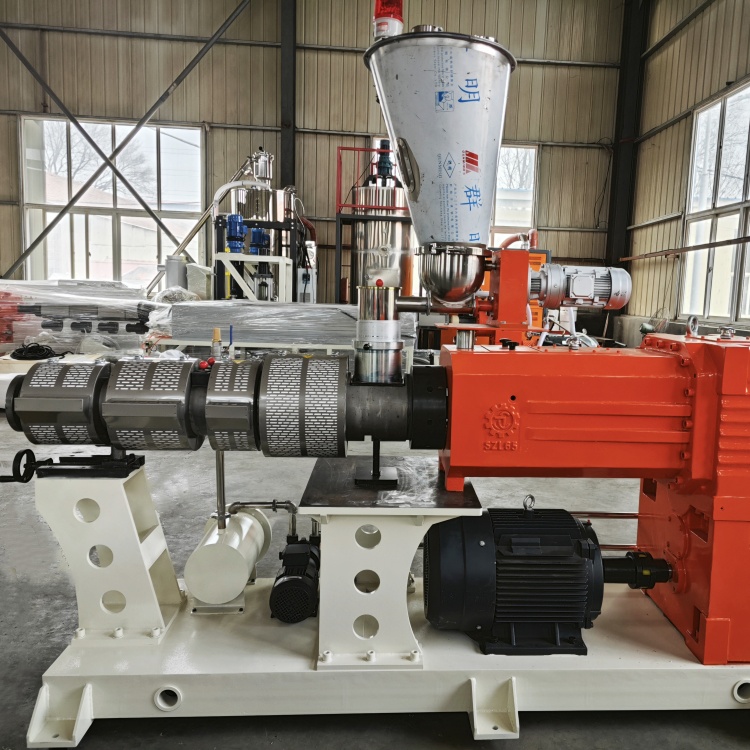
![Industrial PVC pipe production and bending machinery]()
Industrial Solutions: Transitioning to a PVC Pipe Production Line
When to Abandon Manual Bending
Operations must recognize the exact threshold where manual manipulation becomes a financial liability. When project demands escalate from dozens of custom bends to thousands of identical sweeps, manual labor cannot keep pace. Municipal infrastructure projects, large-scale agricultural irrigation, and industrial fluid transport demand strict adherence to dimensional standards. Organizations like ASTM and ISO mandate specific wall thicknesses and pressure ratings. Field-bent pipes routinely fail these compliance checks due to the inherent wall thinning caused by manual stretching. High-volume, compliant manufacturing absolutely requires a transition to automated production environments.
| Production Method | Volume Suitability | Wall Thickness Integrity | Labor Intensity | Compliance Reliability |
| Manual Field Bending | Low / Custom One-offs | Highly Variable (Thinning occurs) | Extremely High | Low (Fails strict ASTM tests) |
| Automated Inline Forming | High / Continuous Batch | Consistent / Controlled | Low (Machine Operator only) | High (Meets exact tolerances) |
| Corrugated Extrusion | Very High / Continuous | Engineered for Flexibility | Low (Automated Line) | High (Purpose-built standards) |
Automated Bending and Belling in PVC Pipe Processing Systems
Industrial manufacturers eliminate the variables of manual labor by integrating automated forming stations directly into their extrusion workflows. Modern PVC pipe processing systems utilize sophisticated inline infrared heating zones. These zones feature Programmable Logic Controllers (PLCs) that monitor the surface and core temperatures of the pipe continuously. The PLCs adjust the infrared emitters in real-time. This ensures the pipe reaches its exact pliable state without a single degree of overheating.
Once the pipe achieves the perfect thermal state, automated robotic arms or pneumatic presses take over. They guide the softened pipe into precision-machined steel molds. These machines execute perfect sweeps, elbows, and bell ends in a matter of seconds. The entire cycle is monitored, controlled, and endlessly repeatable. This automated approach guarantees zero degradation of the polymer chain and ensures every single piece matches the exact required dimensions.
Manufacturing Flexible Alternatives: The Corrugated Pipe Extrusion Line
In many applications, the most efficient way to handle pipe bending is to eliminate the need for it entirely. Corrugated pipe represents an engineered solution to routing challenges. Instead of bending rigid pipe after it is manufactured, you produce a pipe that is inherently flexible from the start.
A dedicated corrugated pipe extrusion line replaces the standard vacuum sizing tank with a specialized corrugator unit. As the molten plastic exits the extruder die, it enters the corrugator. Inside, a continuous track of moving mold blocks clamps around the hot plastic. Vacuum pressure pulls the material against the ribbed interior of the mold blocks. This creates the distinct corrugated profile. The ribbed geometry provides high external crush resistance while allowing the pipe to bend freely. Installers can route corrugated drainage or conduit lines around obstacles effortlessly on-site. This completely bypasses the need for heat blankets or sand packing.
Evaluating a Plastic Pipe Production Line for Formed and Flexible Pipes
Core Components of PVC Pipe Extrusion Machinery
Transitioning to automated manufacturing requires a deep understanding of the equipment involved. A complete Plastic Pipe Production Line operates as a synchronized system of highly specialized modules. The process initiates at the twin-screw extruder. Twin-screw configurations are mandatory for rigid PVC production. The interlocking screws provide the precise shear and mechanical mixing required to process heat-sensitive PVC dry blend powder without degrading it.
The molten polymer then flows through the extrusion die head. The die head distributes the melt evenly around a central mandrel, forming the initial tubular profile. Immediately upon exiting the die, the hot, formless tube enters the vacuum calibration tank. This critical module utilizes vacuum pressure to pull the soft plastic against a precisely machined sizing sleeve. Simultaneously, high-pressure water jets spray the exterior of the pipe. This freezes the outer skin, locking in the exact outside diameter. Finally, a motorized haul-off unit grips the cooled pipe. It pulls the continuous length down the line at a strictly regulated speed, ensuring consistent wall thickness.
Features-to-Outcomes: Temperature Control and Calibration
The quality of the final product relies entirely on the precision features integrated into the PVC pipe extrusion machinery. Gravimetric dosing systems sit above the extruder hopper. They weigh and feed the PVC resin, stabilizers, and impact modifiers with exact precision. This guarantees that the chemical composition remains identical across every batch. Consistent material strength is mandatory during any subsequent automated bending processes.
Closed-loop thermal regulation within the extruder barrel is equally critical. Thermocouples monitor the melt temperature constantly. If the friction of the twin screws generates excess heat, the system automatically activates cooling fans or oil circulation pumps to stabilize the barrel. Perfect thermal control prevents material degradation. It ensures the extruded pipe maintains a perfectly uniform wall thickness. Uniform walls are the prerequisite for successful automated belling or forming downstream.
Scalability and Compliance
Automated extrusion systems deliver unparalleled scalability. A well-maintained line operates continuously, converting raw powder into thousands of feet of finished pipe daily. Beyond raw output, automation guarantees strict compliance. By removing human error from the equation, manufacturers control every variable. Extrusion speed, vacuum pressure, and cooling rates remain locked. The resulting pipes exhibit exact dimensional tolerances. Every single batch meets stringent municipal codes, plumbing standards, and industrial specifications. This level of reliable compliance is impossible to achieve with variable field-bent materials.
Implementation Risks and ROI in Pipe Manufacturing
Capital Expenditure vs. Labor Savings
Deploying automated extrusion and forming equipment demands a substantial initial capital expenditure. Facility upgrades, machinery acquisition, and installation represent significant upfront investments. However, the return on investment materializes rapidly when analyzing high-volume production metrics. You must evaluate the ongoing, hidden costs of manual forming operations. Calculate the hourly wages of skilled laborers spending hours packing sand, heating pipes, and building custom jigs. Factor in the massive cost of scrapped materials resulting from burned surfaces, collapsed walls, or incorrect angles.
Automated machinery fundamentally alters this financial equation. It drastically reduces per-unit labor costs, requiring only a few trained operators to oversee continuous production. It virtually eliminates scrap caused by human error. The speed and consistency of an automated line allow manufacturers to take on larger, more lucrative contracts that manual operations simply cannot fulfill.
Mitigating Extrusion and Forming Defects
Automated production introduces its own set of technical challenges that require proactive management. Die swell remains a constant risk. As the pressurized plastic exits the die head, it naturally expands. If the haul-off speed and vacuum calibration are not perfectly synchronized, the pipe's outside diameter will drift out of tolerance. Uneven cooling within the water spray tank presents another major risk. If the water jets do not cool the pipe uniformly, internal stresses build up within the plastic. These stresses can cause the pipe to warp or bow days after it leaves the production line.
| Common Extrusion Defect | Root Cause | Mitigation Strategy |
| Wall Thickness Variation | Inconsistent haul-off speed or uneven die temperature. | Calibrate haul-off motors and verify die head thermocouple accuracy. |
| Surface Blistering | Moisture in the raw PVC blend or excessive barrel heat. | Ensure proper material drying and lower extruder zone temperatures. |
| Post-Extrusion Warping | Uneven cooling in the vacuum calibration tank. | Clean spray nozzles and balance water flow across all tank sections. |
Mitigating these defects requires a commitment to operational excellence. Operator training stands as the primary defense. Technicians must possess the expertise to read the plastic's behavior and adjust screw speeds, vacuum levels, and cooling flows on the fly. Routine calibration of all heating zones and sensors prevents gradual material degradation. Finally, investing in top-tier extrusion technology provides better baseline stability, superior metallurgy in the screws and barrels, and tighter overall production tolerances.
Conclusion
- Audit your current manual bending operations to track labor hours spent per bend and the monthly cost of scrapped materials.
- Test your field-bent pipes against ASTM pressure rating standards to identify compliance vulnerabilities in your current workflow.
- Calculate the break-even point of replacing manual labor with an automated inline forming station based on your annual production volume.
- Consult an extrusion machinery manufacturer to spec a custom corrugation line if your projects require high volumes of flexible routing.
FAQ
Q: Can you bend Schedule 40 PVC without heating it?
A: No. Attempting to cold-bend rigid Schedule 40 PVC beyond its natural, very limited flexibility will cause micro-fractures, stress whitening, and eventual snapping.
Q: At what temperature does PVC pipe become pliable?
A: PVC typically reaches its glass transition state and becomes pliable for bending between 165°F and 175°F (74°C - 79°C).
Q: How do you set a bend in PVC pipe so it doesn't spring back?
A: Once the pipe is bent around a radius form, immediately wipe it down with a wet rag or pour cool water over it. This rapidly drops the temperature below the glass transition state, locking the bend in place.
Q: How does a corrugated pipe extrusion line differ from standard PVC pipe extrusion machinery?
A: A corrugated line includes a specialized corrugator unit with moving mold blocks that shape the hot plastic into a ribbed profile, granting it flexibility, whereas standard lines use a vacuum sizing tank to keep the pipe perfectly straight and rigid.
Q: Does bending PVC pipe weaken its pressure rating?
A: Yes. Manual bending stretches the outer wall of the curve, thinning the material and reducing its ability to withstand internal hydrostatic pressure.
Q: What is the minimum bend radius for rigid PVC?
A: As a general industry rule, the minimum bend radius for heated PVC is typically 3 to 4 times the outside diameter of the pipe, provided internal supports are used to prevent kinking.
Q: Why use sand and duct tape when bending plastic pipe?
A: Packed sand acts as an internal support structure, preventing the pipe walls from collapsing inward (kinking) when the material softens. Duct tape or end caps are used to seal the ends so the sand remains tightly compacted during the bending process.



 +86-18561886575 (Mr.Wu)

 +8618561886575
 238 Yangzhou West Road, Jiaozhou City, Qingdao City, Shandong Province