Fixing a leaking, cracked, or broken PVC pipe requires distinguishing between localized field damage and systemic manufacturing failures. A sudden pipe burst often looks like an installation error. However, it frequently points to deeper structural flaws. A leaking or cracked pipe is often a symptom of underlying issues in the original manufacturing equipment used to create it. Field repairs offer temporary relief but do not solve inherent material weaknesses.
Our goal is to provide a clear diagnostic framework. You will learn how to determine when a pipe leak is an isolated incident. You will also learn when frequent failures signal that your current extrusion systems have reached the end of their operational lifecycle. Understanding this difference prevents wasted labor on patching defective products. It shifts the focus toward long-term manufacturing reliability.
- Structural Integrity Analysis: Identifying the difference between stress-cracking caused by installation error versus material degradation caused by inconsistent PVC pipe production line output.
- Lifecycle Economics: Assessing whether frequent patch-work on existing piping justifies the capital expenditure of a modern, high-precision plastic pipe production line.
- Operational Risk: Understanding the role of wall thickness uniformity and molecular weight consistency in preventing future pipe failures.
How Do You Fix a Leaking, Cracked, or Broken PVC Pipe in the Field? (The Band-Aid Solutions)
Field repairs address immediate leaks and restore flow. They act as tactical responses to physical damage on the job site. Plumbers and maintenance teams rely on several established methods to patch PVC pipes. These methods work well for impact damage from a backhoe or isolated joint failures caused by poor solvent application. They require clean surfaces and proper curing times to hold pressure.
Chemical Bonding and Sealants
Chemical bonding remains the standard approach for joint leaks. You utilize PVC primer and cement to fuse the plastic. The primer softens the PVC surface chemically. The cement melts the layers together, creating a solvent weld. You must bevel the pipe ends before applying solvent cement. Failing to bevel the edge pushes the cement down the pipe, starving the joint. For minor, accessible hairline cracks, waterproof epoxy resins provide a quick seal. You must clean and sand the area before applying the epoxy. Dirt and moisture compromise the chemical bond. Epoxy cures into a hard shell over the crack. This method handles low-pressure drainage lines effectively. It struggles under high-pressure municipal water loads. We often see epoxy fail when water hammer occurs in the system. The sudden pressure spike cracks the rigid epoxy shell.
Mechanical Replacements
Severe damage requires mechanical replacement. You cut out heavily damaged sections entirely. You then install slip couplings to bridge the gap. This method is frequently required for underground pipe repairs. Full replacement of an underground line is invasive. You excavate the damaged area, leaving clearance around the pipe. You measure the replacement segment precisely. Slip couplings slide over the existing pipe ends. You glue the new segment into place. This restores the structural integrity of that specific section. We use shielded rubber couplings for temporary underground fixes when ground movement is still occurring. They offer flexibility that rigid slip couplings lack. We use this method when tree roots crush a sewer lateral. It isolates the repair to the exact point of failure.
Advanced Patching Techniques
Industrial applications sometimes demand advanced patching techniques. You can employ plastic welding to recreate broken sections. This involves a heat gun and a PVC filler rod. You melt the rod directly into the crack or puncture. The melted plastic fuses with the pipe wall. Specialty acrylic resins also seal severe punctures. You mix a two-part resin and apply it over fiberglass mesh. The mesh reinforces the resin, creating a strong patch. These techniques require specialized tools and training. They work best on large-diameter pipes where cutting out a section is physically impossible without heavy machinery.
The Limitation of Field Repairs
Field repairs have strict limitations. Epoxy, slip couplings, and welding only offer temporary relief if the pipe suffers from inherent extrusion weaknesses. A pipe with dimensional instability will simply crack again next to the repair. Poor manufacturing leaves residual stress in the plastic. When you patch one area, the pressure shifts to the next weak point. Band-aid solutions cannot fix poor molecular fusion. If the pipe is brittle from the factory, field repairs become a recurring maintenance nightmare. You end up chasing leaks down the entire length of the line.
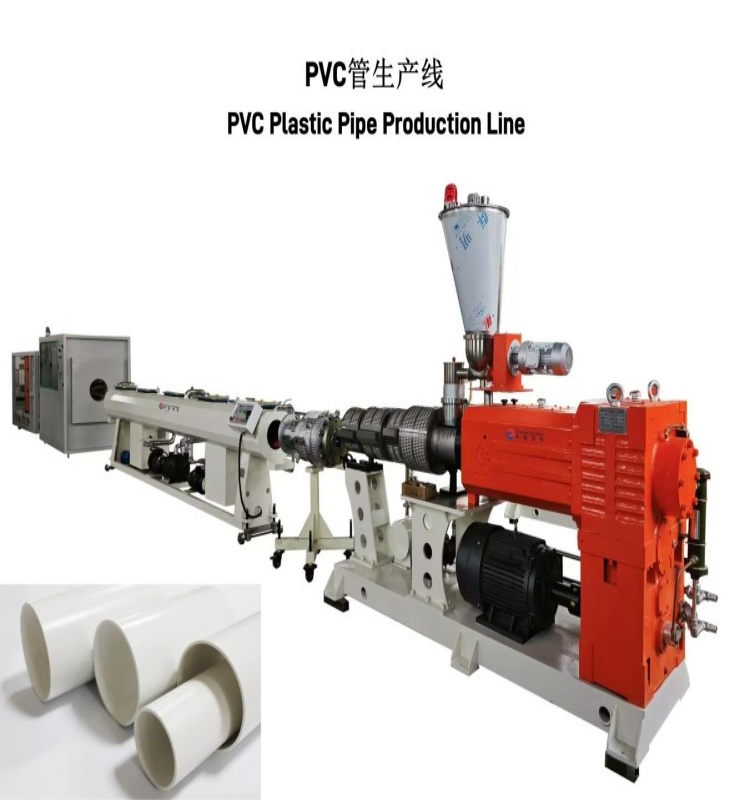
![PVC Pipe Production Line Equipment]()
Diagnosing Pipe Failure: Environmental Stress vs. Manufacturing Quality
Accurate diagnosis prevents repeated failures. You must determine exactly why the pipe broke. This requires looking beyond the immediate crack. You need to analyze the installation environment and the pipe's physical properties. A proper diagnosis dictates whether you patch the pipe or investigate the manufacturing source.
Root Cause Analysis (RCA)
Root Cause Analysis determines the fracture origin. You must check for external pressure first. Shifting underground soil bends the pipe past its tolerance. Heavy surface impacts shatter the plastic. These represent environmental stresses. Internal extrusion defects look different. They often appear as straight, longitudinal cracks. They follow the extrusion line. If the pipe shatters into many sharp fragments under normal pressure, the material is brittle. This points directly to a manufacturing defect. We look at the fracture edges. Smooth edges indicate a slow stress crack. Jagged edges indicate a sudden brittle failure. We run hydrostatic pressure tests to isolate the failure zone. You cap the line and pump it to 150 PSI. If the pressure drops immediately, you have a blowout. If it drops slowly, you have a weeping joint or a hairline extrusion crack.
Visual and Technical Indicators
You can identify manufacturing flaws through visual and technical indicators. Evaluate the wall thickness consistency at the point of failure. Use calipers to measure the pipe wall around the circumference. Uneven thickness means the extruder die was off-center. The thin side handles less pressure and bursts easily. We often find pipes where one side is 3mm thick and the opposite side is 1.5mm. This is a guaranteed failure point.
Thermal stabilization also plays a massive role. PVC requires stabilizers to prevent degradation during melting. If stabilization fails, the pipe becomes brittle. This brittleness renders standard PVC primer and cement ineffective. The solvent cannot penetrate the degraded plastic properly. The joint will eventually leak. You can sometimes spot poor stabilization by a slight yellowish tint in white PVC pipes. Pipes stored outside without UV protection become brittle before they even enter the trench. Sun exposure degrades the impact modifiers in the PVC matrix.
The Manufacturing Connection
Pipe quality traces directly back to the factory floor. Inadequate calibration in your PVC downpipe production line leads to microscopic weaknesses. If the vacuum sizing tank fluctuates, the pipe dimensions vary. If the cooling water is too cold, it shocks the plastic. This locks internal stress into the pipe wall. Over time, normal water pressure forces these microscopic weaknesses to expand. They manifest as longitudinal cracks. No amount of field epoxy can fix a pipe that was extruded poorly. The entire batch is compromised.
When to Repair vs. When to Replace Your Extrusion Infrastructure
Manufacturers face a critical decision when product failure rates rise. You must decide if the issue is an anomaly or a systemic failure. Continually handling warranty claims and field repairs drains resources. Upgrading the extrusion infrastructure stops the problem at the source.
Defining "Failure Thresholds"
You must define strict failure thresholds. At what point does a field repair strategy become an unsustainable operational expense? Epoxy, slip couplings, and plastic welding are acceptable for rare field accidents. They become a liability when batch failure rates spike. If your customers report consistent longitudinal cracking, your failure threshold is breached. High scrap rates on the factory floor also indicate a breached threshold. You cannot patch your way out of bad extrusion. We track the percentage of pipe that fails pressure testing. Anything over a fraction of a percent warrants an equipment audit. A healthy extrusion line maintains a scrap rate below two percent. When you see scrap bins overflowing with out-of-spec pipe, your machinery is failing. Operators cannot manually compensate for worn barrel liners or degraded screw flights.
Strategic Evaluation Matrix
A strategic evaluation matrix clarifies the decision-making process. It separates isolated incidents from systemic equipment failures.
| Evaluation Criteria | Repair Logic (Field Fixes) | System Upgrade Logic (Infrastructure) |
| Failure Origin | Physical installation damage or heavy impact. | Batch failure rates exceeding industry standard deviations. |
| Damage Type | Localized joint leaks or isolated punctures. | Longitudinal stress cracks and brittle shattering. |
| Wall Thickness | Consistent and within acceptable tolerances. | Uneven, showing significant eccentricity. |
| Financial Impact | Low cost, handled by end-user maintenance. | High warranty claims and severe brand damage. |
| Action Required | Apply epoxy, slip couplings, or solvent weld. | Audit and replace aging extrusion machinery. |
Future-Proofing
Integrating a high-performance PVC pipe production line reduces long-term maintenance overhead. Legacy systems rely on manual adjustments. They drift out of calibration easily. Modern systems hold tight tolerances automatically. This future-proofs your operation against material waste and product returns. High-quality pipe rarely requires field patching. This protects your market reputation and keeps your customers satisfied. You spend less time answering complaint calls and more time fulfilling large orders.
Evaluating Modern PVC Pipe Manufacturing Equipment
Upgrading your facility requires careful equipment evaluation. You must look beyond basic output metrics. Modern machinery offers advanced control over the entire melting and cooling process. This control dictates the final strength of the pipe.
Precision and Throughput
Next-generation PVC pipe extrusion systems balance precision with high throughput. Older machines sacrifice quality when pushed to higher speeds. Modern extruders use optimized screw designs. These screws melt the PVC powder uniformly at high speeds. This prevents un-melted particles from creating weak spots in the pipe wall. High throughput only matters if every meter of pipe meets pressure ratings. We look for extruders that maintain melt temperature within a one-degree variance.
Core Evaluation Dimensions
You must evaluate new equipment across several core dimensions. These dimensions determine the machine's overall effectiveness and reliability.
- Automation Level: Modern lines reduce human error in the cooling and calibration stages. Automated haul-off speeds sync directly with extruder output. This prevents the pipe from stretching and thinning out.
- Material Uniformity: Advanced vacuum calibration tanks ensure consistent dimensional accuracy. They hold the pipe perfectly round while it cools. This prevents the weak spots that lead to punctures and field failures.
- Energy Efficiency: You calculate ROI through reduced kilowatt-per-meter output costs. New servo motors and insulated barrel heaters draw significantly less power. This lowers the daily operational cost of the line.
- Screw Design: Twin-screw extruders provide better mixing for dry PVC powder. They ensure the stabilizers and lubricants blend perfectly with the resin.
- Die Head Technology: Spider die heads distribute the melt evenly. This eliminates weld lines in the finished pipe, which are common failure points under pressure.
- Gravimetric Dosing: Modern systems utilize gravimetric dosing units. These units weigh the resin and additives continuously before they enter the extruder. This guarantees the exact chemical recipe for every batch, eliminating human error in the mixing room.
Scalability
Scalability is a critical factor for growing manufacturers. Modular system design allows your equipment to adapt to varying diameters and output demands. You do not need a full system replacement to produce a different pipe class. You simply swap the die head and adjust the vacuum tank seals. This flexibility allows you to respond to market changes quickly. It maximizes the utilization rate of your factory floor space. We often run 2-inch pipe in the morning and switch to 4-inch pipe by the afternoon using modular tooling.
Implementation Realities and Adoption Risks
Installing a new extrusion line involves logistical challenges. You must manage the transition carefully to avoid disrupting your supply chain. Proper planning mitigates the risks associated with heavy machinery installation.
Downtime Mitigation
Strategies for transitioning from an aging setup require strict downtime mitigation. You cannot halt total output during the installation. Most facilities prepare the new foundation and utility connections while the old line runs. You schedule the physical swap during a holiday weekend or planned maintenance shutdown. This keeps your inventory flowing. You build up a safety stock of pipe before taking the old machine offline. This buffer protects your delivery schedules. We typically aim for a 72-hour changeover window from power-down to first article inspection.
Technical Integration
Technical integration presents another hurdle. The new extruder must communicate with existing downstream equipment. Haul-offs, cutters, and stackers need to sync with the new line speed. If the communication protocols mismatch, the line will jam. You must verify PLC compatibility before purchase. Sometimes, upgrading the extruder requires retrofitting the downstream sensors to match. We use centralized control panels to tie the entire line together. This gives the operator a single point of control. New extruders often require upgraded chilled water systems. High-speed lines need massive cooling capacity to freeze the pipe profile quickly. You must evaluate your existing chiller tonnage before installing a faster line.
Quality Compliance
Meeting ISO and ASTM standards is non-negotiable. You upgrade to systems that offer real-time wall thickness monitoring and auto-correction. Ultrasonic sensors measure the pipe wall continuously. If the wall thins out, the system adjusts the die or haul-off speed automatically. This guarantees every batch meets international pressure ratings. It eliminates the risk of shipping non-compliant pipe that will inevitably crack in the field. We rely on these sensors to print the certification stamps on the pipe automatically.
Long-Term Operational Value and ROI
Capital investments in extrusion machinery require a clear path to profitability. The initial expense is offset by massive gains in efficiency and material savings. Modern equipment transforms the economics of pipe manufacturing.
Reducing Cost-per-Foot
Modern extrusion technology optimizes resin usage while maintaining structural standards. Legacy machines force you to run thicker walls to compensate for uneven extrusion. This wastes expensive PVC resin. Precision control allows you to run exactly at the nominal wall thickness. You save raw material on every meter produced. This drastically reduces your cost-per-foot. Over a year of continuous production, these resin savings often cover the financing cost of the machine. We have seen material savings of up to five percent just by eliminating overweight pipe.
Maintenance Lifecycle
Comparing the operations and maintenance cycles reveals stark differences. Manual legacy equipment requires constant tinkering. Operators spend hours adjusting water flow and die bolts. Bearings and gearboxes wear out quickly due to vibration. Highly automated PVC pipe manufacturing equipment features self-lubricating components and vibration monitoring. The maintenance lifecycle extends significantly. You spend less time fixing the machine and more time running it. Predictive maintenance alerts replace unexpected breakdowns. Automated lines require fewer operators. One technician can monitor three automated lines simultaneously from a central control room. This reduces your direct labor costs and shifts your workforce toward quality control rather than manual machine adjustment.
The Competitive Edge
Manufacturing consistency translates directly into brand reliability. When your pipe installs perfectly every time, contractors notice. They stop dealing with split ends and brittle joints. Ensuring end-users aren't forced to constantly patch, epoxy, and weld your products builds intense loyalty. Your brand becomes synonymous with durability. This competitive edge allows you to command premium pricing in a crowded market. Plumbers will pay more for pipe they trust not to leak behind a finished wall.
Conclusion
- Schedule a technical audit of your current extrusion line capacity and output quality to identify calibration drift.
- Measure the specific gap between your current capabilities and projected production requirements for the next fiscal year.
- Calculate your annual resin waste caused by running overweight pipe to compensate for poor machinery calibration.
- Request performance data on modern vacuum sizing tanks and automated wall thickness controls from equipment manufacturers.
FAQ
Q: What is the difference between a minor pipe crack and a systemic manufacturing defect?
A: A minor crack usually results from impact or shifting soil. A systemic defect shows up as consistent longitudinal splitting or brittle shattering across multiple pipes. This indicates poor wall thickness uniformity and material aging caused by improper thermal stabilization during extrusion.
Q: Can a leaking PVC pipe be permanently fixed with epoxy or plastic welding?
A: Field repairs are highly effective for localized impact damage. However, they fail against systemic extrusion flaws. If the pipe is inherently brittle or dimensionally unstable from the factory, the stress will simply cause a new crack next to the epoxy or weld.
Q: Can a low-quality PVC pipe production line be retrofitted to reduce product failures?
A: Sometimes. Modular upgrades like adding a new vacuum calibration tank or ultrasonic thickness sensors can improve quality. However, if the main extruder screw and barrel are worn or poorly designed, a full system replacement is necessary to achieve consistent melt quality.
Q: What are the primary indicators that your plastic pipe production line needs an overhaul?
A: The primary indicators include high downtime frequency, excessive scrap rates on the factory floor, and severe dimensional inconsistency. If operators constantly fight the machine to keep the pipe round and on-spec, the equipment is failing.
Q: How does the precision of a PVC pipe extrusion system affect the longevity of the pipe?
A: Precision ensures even wall thickness and proper molecular fusion. This guarantees uniform stress distribution across the pipe wall under pressure. It also ensures proper chemical resistance, preventing the pipe from degrading prematurely underground.
Q: What is the typical ROI period when investing in modern PVC pipe manufacturing equipment?
A: The ROI period varies, but it is heavily driven by raw material savings. By eliminating overweight pipe and reducing scrap, manufacturers often see ROI within 18 to 36 months. Energy savings from efficient motors and reduced labor costs also accelerate this timeline.
Q: Are there industry standards for acceptable PVC pipe tolerances that modern systems must meet?
A: Yes. Modern systems must meet strict international manufacturing benchmarks like ASTM D1785 and ISO 1452. These standards dictate exact tolerances for outside diameter, wall thickness, and burst pressure. Automated extrusion lines ensure every batch complies with these metrics.



 +86-18561886575 (Mr.Wu)

 +8618561886575
 238 Yangzhou West Road, Jiaozhou City, Qingdao City, Shandong Province