A failed PVC joint is rarely just an inconvenience; in commercial, industrial, or high-pressure residential systems, it results in catastrophic leaks, operational downtime, and severe water damage. Installers and facility managers frequently miscalculate solvent cement curing times, use the wrong glue type for their specific pipe size, or rely on pipes with poor dimensional tolerances, leading to premature pressurization and joint blowouts. Achieving a permanent, leak-proof weld requires more than just applying adhesive. It demands a strict adherence to chemical curing timetables, precise field preparation, and an understanding of how the dimensional accuracy dictated by the PVC pipe production line fundamentally determines joint integrity. When you combine exact field execution with high-quality extruded materials, you create a piping network capable of withstanding decades of intense hydrostatic pressure without a single drop of leakage.
- Solvent Welding, Not Gluing: PVC "glue" does not stick parts together; it chemically melts and fuses the plastic. An interference fit is mandatory for success.
- Curing Timetables: Standard guidelines dictate 5–30 minutes for safe handling, 2 hours for low-pressure testing, and 4 to 24 hours for high-pressure system activation, depending heavily on pipe size and glue type.
- Variable Dependencies: Cold temperatures, high humidity, and the use of heavy-bodied cements for larger pipes exponentially increase required curing times, necessitating adjusted installation schedules.
- Manufacturing Dependency: A perfect solvent weld is impossible without precise pipe geometry. The quality of the plastic pipe production line ensures the exact tolerances required for the chemical fusion process.
The Mechanics of Solvent Welding: It’s Not Just "Gluing"
Chemical Fusion vs. Surface Adhesion
Solvent cement does not function like traditional construction adhesive. Traditional glue sits between two surfaces and binds them through mechanical adhesion, relying on surface texture to hold parts together. Solvent cement operates through chemical fusion. It contains aggressive solvents like tetrahydrofuran (THF) and methyl ethyl ketone (MEK). These chemicals physically soften and dissolve the top layer of the PVC resin on both the pipe and the fitting.
The primer strips away the glossy factory finish and initiates this softening process. It allows the cement to penetrate deeply into the polymer chains of the plastic. An interference fit is the physical tapering of PVC fittings, where the inside diameter narrows slightly toward the bottom of the socket. This tapering forces the softened pipe and fitting together under immense friction. As the solvent evaporates, the polymer chains entangle, and the two separate pieces of plastic fuse into a single, continuous material. If the fit is loose, the chemical weld fails because the polymer chains cannot reach each other.
Selecting the Right Solvent Cement (Glue Type)
Solvent cements are categorized by their viscosity. You must match the cement to the pipe diameter to ensure enough active solvent is present to melt the plastic without creating excess puddles. Fast-setting cements provide a very short working window, curing rapidly for quick handling in fast-paced installations. Slow-setting cements give installers more time to adjust and align large-diameter pipes before the chemical lock occurs, though they require extended curing timetables before you can introduce water pressure.
| Cement Viscosity | Maximum Pipe Size | Set Speed | Best Field Application |
| Regular-Bodied | Up to 2 inches | Fast | Residential plumbing, small irrigation lines, tight spaces requiring quick holds. |
| Medium-Bodied | Up to 6 inches | Medium | Commercial water mains, standard industrial process lines, DWV systems. |
| Heavy-Bodied | Up to 12 inches | Slow | Large municipal water lines, heavy industrial systems requiring gap-filling properties. |
| Extra Heavy-Bodied | Up to 30 inches | Very Slow | Massive infrastructure projects, custom fabricated fittings, extreme gap filling. |
Why Dimensional Accuracy is Non-Negotiable
The chemical weld relies entirely on microscopic proximity between the pipe wall and the fitting. The solvent cement layer is incredibly thin. Gaps caused by out-of-round pipes cannot be filled by solvent cement. As the liquid solvent evaporates, the cement shrinks. It leaves empty voids where water will eventually escape under pressure.
This highlights the absolute necessity of sourcing materials from high-quality PVC pipe manufacturing systems. Exact geometry ensures the interference fit functions exactly as designed by the fitting manufacturer. If the pipe is manufactured with poor tolerances, no amount of primer or heavy-bodied cement will prevent a future blowout. The physical gap simply prevents the polymer chains from fusing.
Step-by-Step: How to Properly Prepare and Glue PVC Pipe
Cutting, Chamfering, and Deburring
A perfectly square cut maximizes the bonding surface area inside the fitting. Angled cuts create weak points where the pipe does not fully seat against the fitting stop. Use a ratcheting pipe cutter or a fine-toothed saw with a miter box to ensure a 90-degree cut.
- Deburr the inside: Run a deburring tool or a pocket knife around the inside edge of the pipe to remove plastic shavings. These shavings can disrupt water flow, catch debris, and cause clogs in smaller lines.
- Chamfer the outside: Use a file or a dedicated chamfering tool to create a slight bevel on the outside edge of the pipe. Failing to chamfer leaves a sharp, square edge that acts like a snowplow during insertion. It scrapes the softened cement off the fitting wall and pushes it to the bottom, ruining the chemical weld and leaving the joint vulnerable to leaks.
Dry Fitting and Alignment
Always test the interference fit before applying any chemicals. Insert the dry pipe into the dry fitting. The pipe should enter easily for about one-third to two-thirds of the socket depth. It should then become tight and refuse to go further without significant force. If the pipe bottoms out easily, the fit is too loose, and you should discard the fitting or check the pipe dimensions.
Mark alignment lines on the pipe and fitting using a permanent marker. You will only have a few seconds to adjust the pipe once the cement is applied. Complex plumbing layouts require exact angles. Predrawing these lines ensures you hit the correct angle immediately upon insertion without guessing.
The 10-Second Primer Rule and Cement Application
Apply purple or clear primer to both the inside of the fitting and the outside of the pipe. The primer must remain wet before you apply the cement. Primer typically flashes off and dries in about 10 seconds depending on ambient temperature. Apply an even, aggressive coat of solvent cement immediately while the primer is still active and the PVC surface is softened.
Push the pipe into the fitting while twisting it 90 degrees. This quarter-turn insertion technique channels the cement evenly around the circumference of the joint. It eliminates trapped air channels that cause leaks. Hold the joint firmly together for at least 30 seconds. The tapered fitting creates hydraulic pressure that will push the pipe back out if you let go too early. The initial drying phase happens in seconds, locking the pipe in place.
![PVC Pipe Production and Gluing Process]()
How Long Should PVC Glue Dry? (Curing Timetables)
Phase 1: Set Time (Handling)
Set time is the period required before the joint can be carefully handled. Moving the pipe too early breaks the initial chemical bond while the polymer chains are still soft and vulnerable. The industry baseline is 5 to 15 minutes for smaller pipes under 2 inches in warm weather. Allow 10 to 30 minutes for standard applications using medium-bodied glues. Handling means gently moving the assembly into place or attaching hangers. It does not mean dropping it, bending it, or applying mechanical stress.
Phase 2: Partial Cure (Low-Pressure Testing)
Low-pressure water testing involves residential line pressure or gravity flow. Do not introduce water immediately after the set time. Wait a minimum of 2 hours under optimal conditions. This partial cure allows the solvent to evaporate enough to hold moderate internal forces. The joint is still curing, but it has achieved enough structural integrity to withstand 20 to 30 PSI for leak verification. Rushing this phase often results in micro-leaks that only appear days later.
Phase 3: Full Cure (High-Pressure and Operational Use)
Full cure is the point where the solvent has completely evaporated, and the joint reaches its maximum hydrostatic pressure rating. The baseline is 4 to 24 hours. Smaller residential pressure lines in hot weather may suffice with 4 to 8 hours. A full 24 hours is strictly required for high-pressure lines. Large diameter pipes and critical industrial applications also demand a 24-hour wait. Pressurizing a 6-inch main line before 24 hours invites catastrophic failure, as the deep layers of cement have not fully hardened.
| Pipe Size | Temperature Range | Set Time (Handling) | Partial Cure (Low Pressure) | Full Cure (High Pressure) |
| 1/2" to 1 1/4" | 60°F - 100°F | 5 - 10 minutes | 45 - 60 minutes | 4 - 6 hours |
| 1 1/2" to 2" | 60°F - 100°F | 10 - 15 minutes | 2 hours | 8 - 12 hours |
| 2 1/2" to 6" | 60°F - 100°F | 30 - 60 minutes | 4 - 6 hours | 24 hours |
| All Sizes | Below 40°F | Double the time | Double the time | Up to 48 hours |
Environmental and Physical Variables Influencing Cure Rates
Temperatures below 60°F (15°C) drastically slow solvent evaporation. Cold weather often requires double the standard curing time. In freezing conditions, the chemical reaction nearly stops. You must use specialized cold-weather cements or provide localized heating with blankets or space heaters. Moisture in the air also interferes with the chemical curing process. High humidity requires extended wait times in damp environments because water vapor slows the off-gassing of the solvents.
Pipe diameter and glue viscosity directly impact drying times. Larger pipes require heavy-bodied, slower-drying cement. They need longer evaporation periods to fully cure the thicker layer of solvent. A 4-inch pipe joint contains significantly more liquid solvent than a 1-inch joint. It naturally takes longer for that volume of chemical to dissipate through the microscopic gaps at the edge of the fitting.
How Manufacturing Quality Impacts Joint Integrity
Dimensional Tolerances and the PVC Pipe Production Line
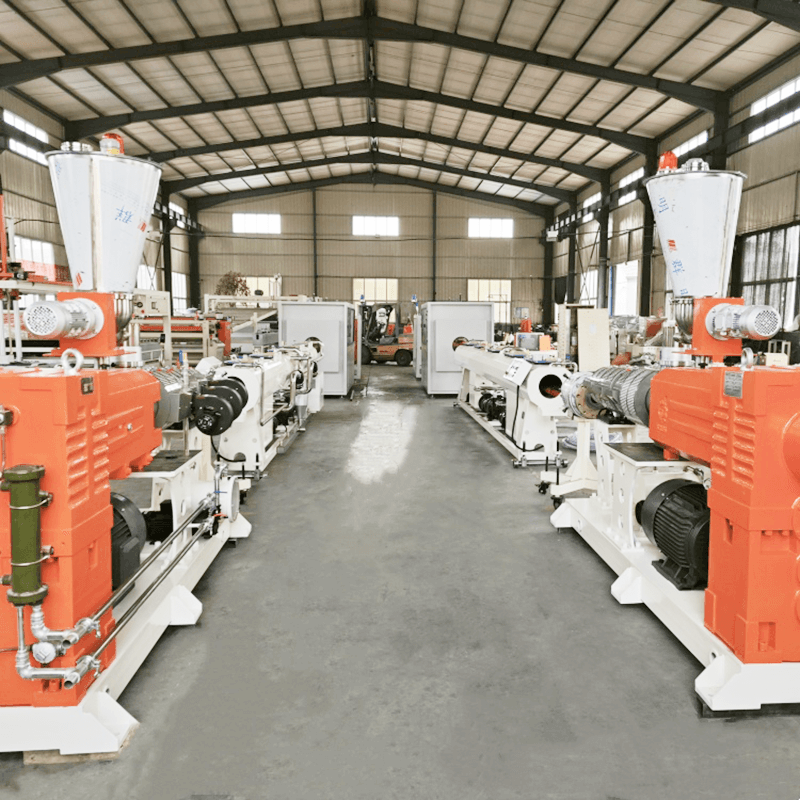
Field installation success begins at the factory. A state-of-the-art PVC Pipe Production Line utilizes advanced calibration sleeves and vacuum cooling tanks to ensure perfect circularity and exact outer diameters. The molten plastic is pulled through a sizing die under a strict vacuum, freezing the polymer into a perfect cylinder before it hits the haul-off unit. Out-of-spec pipes result in loose fits. Solvent cement pools in these gaps rather than fusing the plastic, leading to inevitable hydrostatic blowouts when the system is brought online.
Surface Finish and Material Composition
The extrusion process dictates the surface porosity and resin consistency of the pipe. Modern extrusion lines maintain strict temperature controls across multiple heating zones. This prevents material degradation inside the extruder barrel and ensures the extruded PVC reacts predictably to standard primers and solvent cements. If the pipe surface is overly glazed, burned, or chemically inconsistent due to poor manufacturing, the primer cannot penetrate properly. The resulting weld will be shallow, weak, and prone to cracking under vibration.
Application Specifics: Pressure vs. Non-Pressure Systems
Gluing requirements differ between Schedule 40/80 pressure pipes and gravity-fed systems. Pressure systems demand flawless chemical fusion to contain outward hydrostatic forces. Gravity systems face less internal stress but still require watertight seals to prevent slow leaks. A specialized PVC downpipe production line optimizes wall thickness and material blends for non-pressure applications. These systems may allow for slightly more forgiving set times during installation. However, they still require proper chemical welding techniques to prevent long-term leaks behind walls or under floors.
Evaluating Joint Failures: Common Risks and Mitigation
Premature Pressurization
Turning on water pressure before the 4-to-24-hour full cure mark is highly risky. The solvent has not fully evaporated, and the polymer chains have not re-hardened into a solid state. The joint will slide apart under load, causing a massive blowout. Mitigation strategies include strict tagging of newly glued lines. Use physical lockout tags on main water valves to warn other trades. Staggered installation schedules also prevent accidental early pressurization. Plan your workflow so the final connections cure overnight while the site is empty.
The Danger of "Puddling" and Cement Over-Application
Applying too much cement causes it to pool inside the pipe. This puddle continuously dissolves the PVC from the inside out. It weakens the pipe wall over time, creating a soft spot that will eventually rupture under pressure. It can also cause physical blockages in smaller diameter lines. The excess glue forms a hardened dam that catches debris and restricts flow. Apply an even, controlled coat. You want enough cement to create a small, continuous bead around the fitting edge upon insertion, but no more.
Sourcing Risks: Inconsistent Extrusion Quality
Purchasing cheap, unverified piping introduces massive risk to any project. Poor dimensional accuracy ruins the interference fit. If the pipe is oval-shaped or undersized, the joint will fail regardless of your gluing technique or curing time. Procurement teams must vet suppliers carefully. Ensure they utilize a modern Plastic Pipe Production Line. Facilities must meet ASTM or ISO standards for dimensional accuracy to guarantee field success. Reliable manufacturing is the foundation of reliable plumbing.
Conclusion
- Standardize installation training on the quarter-turn and hold method to eliminate air gaps and prevent pipe push-out.
- Mandate strict 24-hour cure times for all critical high-pressure systems and large-diameter pipes before introducing water.
- Audit pipe suppliers for manufacturing consistency and strict dimensional accuracy to ensure proper interference fits.
- Implement physical tagging protocols on main valves to prevent premature pressurization by other contractors on site.
FAQ
Q: How long before I can run water through glued PVC?
A: Wait at least 2 hours for low-pressure residential water testing, but 4 to 24 hours is required for high-pressure lines to ensure the solvent has fully evaporated.
Q: Can you glue PVC pipe when it is wet?
A: Standard PVC cement will not bond properly if water is present. You must use specialized "wet or dry" PVC cement (often blue) for damp conditions, though completely dry pipes always yield the strongest weld.
Q: Do I really need to use PVC primer?
A: Yes. Primer softens the PVC surface and strips away the glossy finish, allowing the solvent cement to penetrate and chemically fuse the plastic. Skipping primer significantly increases the risk of joint failure.
Q: How long does PVC primer take to dry?
A: PVC primer dries in approximately 10 seconds. However, you should apply the solvent cement while the primer is still wet and active to achieve the best chemical bond.
Q: Does cold weather affect PVC glue drying time?
A: Yes, temperatures below 60°F drastically slow the curing process. In freezing conditions, PVC joints may require up to 48 hours to reach full strength before they can be safely pressurized.
Q: What happens if you use too much PVC glue?
A: Excess cement will be pushed inside the pipe, creating a "puddle." This puddle continues to dissolve the plastic from the inside out, weakening the pipe wall and potentially causing a blowout.



 +86-18561886575 (Mr.Wu)

 +8618561886575
 238 Yangzhou West Road, Jiaozhou City, Qingdao City, Shandong Province