Installing plastic piping systems requires exact precision at the job site. While manual assembly relies on proper primer application and solvent cement, the foundation of a leak-free network begins long before the pipe reaches the plumber. Transitioning from manual fabrication to industrial-scale extrusion demands rigorous technical evaluation. Selecting the right manufacturing infrastructure determines long-term output consistency. It directly dictates material wastage rates and dimensional accuracy. This guide shifts focus from individual plumbing tasks to industrial extrusion systems. We evaluate the mechanics behind producing flawless piping ready for seamless field installation. By understanding the manufacturing process, facility operators can produce pipes that meet strict installation tolerances. This ensures end-users achieve watertight bonds and structural integrity in every project.
- Throughput vs. Precision: Why high-speed output is irrelevant without strict wall-thickness tolerance controls.
- Material Compatibility: The necessity of choosing equipment that handles various PVC formulations (uPVC, CPVC, PVC-O).
- Total Cost of Ownership (TCO): Balancing initial capital expenditure with energy consumption, maintenance downtime, and labor requirements.
- Compliance Standards: Navigating international and local pressure/safety certifications for extruded conduits and pipes.
Understanding the Components of a PVC Pipe Production Line
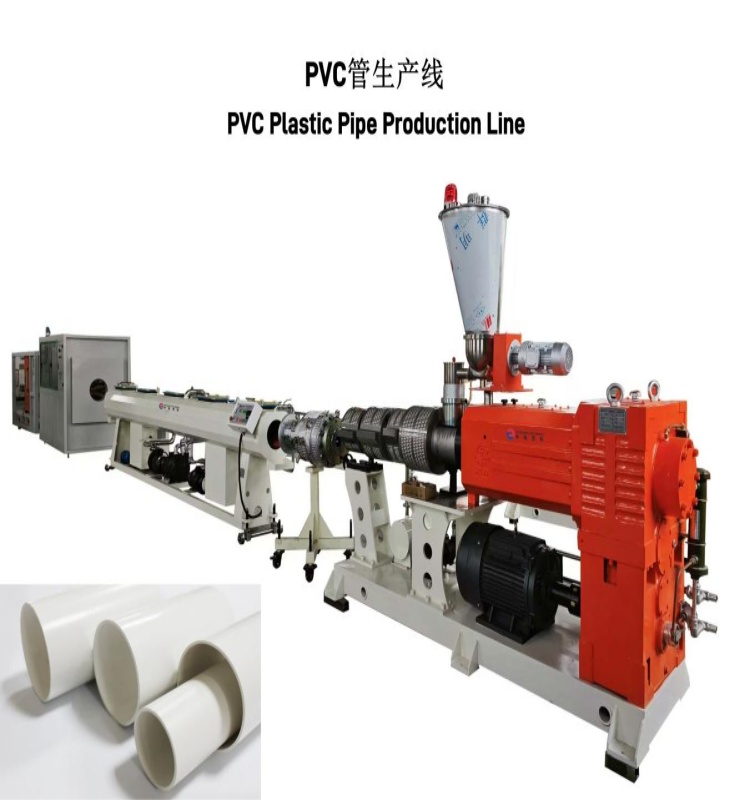
The journey from raw resin to a finished, installable pipe involves a complex mechanical sequence. A high-performance PVC Pipe Production Line synchronizes multiple machines to transform powder into a rigid cylinder. This process requires precise temperature control, consistent pressure, and exact timing. Any deviation in the extrusion sequence results in defective pipes that fail during field installation.
Extrusion Basics
The extrusion process begins at the hopper. Raw PVC powder, mixed with stabilizers and lubricants, feeds into the heated barrel. Inside the barrel, rotating screws generate shear friction. This friction, combined with external barrel heaters, melts the PVC compound. The molten plastic then pushes through a specialized die head. The die shapes the melt into a continuous tubular profile. Maintaining a uniform melt temperature is critical. Cold spots cause weak pipe walls, while excessive heat degrades the PVC material.
The Conical Twin-Screw Extruder
For processing rigid PVC powder, the conical twin-screw extruder remains the industry standard. Unlike single-screw machines, twin-screw extruders provide superior mixing and shearing capabilities. The conical design features screws that are wider at the feed zone and taper down toward the die. This geometry naturally compresses the material. It forces trapped air out back through the hopper. The interlocking screws ensure excellent melt homogeneity. This uniform melting prevents brittle spots in the finished pipe, ensuring it can withstand cutting and clamping during installation.
Downstream Equipment Essentials
Once the molten pipe exits the die, it enters the downstream cooling and sizing equipment. This machinery dictates the final dimensions and surface finish of the product. Industrial configurations typically utilize several core machines:
- Vacuum Calibration Tanks: The hot pipe enters a stainless steel vacuum tank. A sizing sleeve calibrates the exact outer diameter. Vacuum pressure pulls the soft plastic against the sleeve while water sprays cool the pipe. This locks in the dimensions.
- Haul-Off Units: These machines pull the cooled pipe through the line at a constant speed. Caterpillar haul-offs use multiple rubber belts to grip the pipe evenly. This prevents deformation and ensures a consistent wall thickness.
- Planetary Cutting Systems: High-speed planetary saws cut the moving pipe to exact lengths. They move synchronously with the pipe to ensure a perfectly square cut. Advanced cutters also chamfer the pipe ends simultaneously.
- Inline Belling and Socketing Machines: These units heat the end of the cut pipe and form a socket. This automates the creation of female ends. It allows plumbers to join pipes in the field without separate coupling fittings.
Integration Frameworks
Individual components must interface flawlessly to minimize throughput bottlenecks. The extruder speed must match the haul-off speed perfectly. If the haul-off pulls too fast, the pipe wall becomes too thin. If it pulls too slowly, the plastic pools at the die. Modern lines use central control panels to synchronize these speeds automatically. This integration ensures continuous, stable production with minimal operator intervention.
![PVC Pipe Production Line]()
Critical Evaluation Dimensions for Industrial Plastic Pipe Production Lines
Evaluating machinery requires looking past theoretical maximum speeds. True production efficiency relies on sustained output quality. Facility managers must assess equipment based on dimensional stability, power consumption, and operational adaptability.
Output Consistency and Dimensional Accuracy
Field installation relies entirely on dimensional accuracy. Plumbers need pipes that fit perfectly into standard fittings. A high-quality line maintains micron-level tolerances in wall thickness and outer diameter. Gravimetric feeding systems play a major role here. These feeders weigh the raw material as it enters the extruder. They automatically adjust the screw speed to maintain a constant mass output. This eliminates variations caused by changes in bulk density, ensuring every meter of pipe meets exact specifications.
Energy Efficiency Benchmarks
Extruding plastic requires significant electrical power. Evaluating energy efficiency is vital for long-term operational viability. Modern extruders utilize advanced AC drive systems. These drives offer precise speed control while consuming less power than older DC motors. Additionally, thermal insulation on barrel heaters prevents heat loss into the factory environment. Analyzing the power consumption per kilogram of pipe produced provides a clear metric for equipment efficiency.
Scalability and Flexibility
Market demands shift rapidly. Manufacturers need equipment that adapts to different product requirements. Modular die-head designs allow operators to perform rapid diameter changeovers. This reduces downtime when switching from a 2-inch pipe to a 4-inch pipe. Furthermore, a flexible setup can transition between producing heavy-duty water mains and operating as a dedicated PVC conduit production line. This versatility maximizes the utility of the factory floor.
Manufacturing for End-User Installation Realities
The ultimate test of any extruded pipe occurs at the job site. Manufacturing parameters directly influence how easily and securely a plumber can install the product. Factory settings must align with field installation requirements.
Optimizing for Solvent Cementing
Most plastic pipe installations rely on solvent cementing. This process chemically welds the pipe to the fitting. It requires a precise interference fit. If the factory outer diameter (OD) is too small, the joint will have gaps and leak under pressure. If the OD is too large, the pipe will not insert fully into the fitting. Precise vacuum calibration ensures the OD remains strictly within tolerance. Furthermore, automated inline belling creates consistent sockets. This allows end-users to achieve watertight bonds using standard purple primer and gray cement without forcing or modifying the joints.
Structural Integrity for Mounting and Trenching
Pipes face severe mechanical stress after installation. Underground pipes must withstand heavy trench loads and soil settling. Wall-mounted pipes endure the clamping forces of bracket systems, including U-shaped clamps and hanging rings. The extrusion process must impart high impact resistance and hoop strength to the pipe. This requires optimal melt homogeneity in the twin-screw extruder. Poor mixing leaves un-melted particles in the pipe wall, creating weak points that crack under clamping pressure.
Burr-Free Cutting and Chamfering
Field cutting often leaves rough edges and burrs. Plumbers must manually file these edges before applying cement. If a burr remains, it scrapes the softened cement off the inside of the fitting, causing a dry joint and subsequent leaks. Advanced planetary cutters on the production line eliminate this issue. They provide clean, square cuts directly from the factory. Integrated chamfering tools bevel the outer edge of the pipe. This factory-applied bevel ensures the pipe slides smoothly into the fitting, pushing the cement evenly for a perfect weld.
Surface Finish for Adhesion and Transport
The outer layer of the pipe serves multiple functions. It must resist scratching during transport and job site storage. Deep scratches create stress risers that can lead to pipe failure. Simultaneously, the surface texture must be ideal for adhesive application. A perfectly smooth, calibrated surface allows the PVC primer to soften the plastic evenly. The vacuum calibration tank's sizing sleeve dictates this surface finish. Proper water flow and vacuum pressure prevent chatter marks and surface dullness.
Matching Equipment to Product Requirements
Different piping applications demand specific manufacturing capabilities. A single approach does not work for all plastic products. Operators must match their machinery configurations to the intended end-use of the pipe.
PVC Downpipe Production Line Considerations
Rainwater drainage systems require specific manufacturing parameters. A PVC downpipe production line focuses heavily on thin-wall extrusion speed. Since downpipes do not hold internal pressure, the wall thickness is minimal. The challenge lies in maintaining structural rigidity at high line speeds. Aesthetic finish is also paramount, as these pipes remain visible on building exteriors. Co-extrusion capabilities are often necessary to apply a UV-resistant outer layer. This prevents the plastic from degrading or discoloring under direct sunlight.
Pressure-Rated Pipe Systems
Water mains and industrial fluid transport systems operate under constant internal pressure. Manufacturing these pipes requires strict engineering considerations. The equipment must process high-density PVC formulations without degrading the material. The downstream calibration must ensure perfectly concentric walls. Any variation in wall thickness creates a weak point susceptible to bursting. Manufacturers must conduct regular burst pressure testing and verify long-term hydrostatic strength to ensure the pipes meet safety standards.
Material Processing Realities
Processing PVC powder involves complex chemistry. The raw mix contains stabilizers to prevent heat degradation and lubricants to facilitate flow. The extrusion equipment must handle these variations seamlessly.
| Pipe Application | Wall Thickness Tolerance | Key Machinery Focus | Downstream Requirement |
| Electrical Conduit | Standard | High-speed output, flexibility | Automated socketing for quick joining |
| Rainwater Downpipe | Thin-wall | Aesthetic finish, UV co-extrusion | Gentle haul-off to prevent crushing |
| High-Pressure Water Main | Strict (Micron-level) | Melt homogeneity, high torque | Intensive vacuum cooling, thick-wall sizing |
A versatile Plastic Pipe Production Line allows operators to adjust screw temperatures and speeds to accommodate different resin batches. Mitigating degradation risks during the heat-intensive extrusion process requires precise thermocouple monitoring and responsive barrel cooling fans.
Operational Risks and Mitigation Strategies
Running an industrial extrusion facility involves inherent mechanical and operational risks. Proactive management ensures continuous production and protects the machinery investment.
Maintenance Realities
Extruders operate under extreme pressure and heat. Predictive maintenance protocols are essential to prevent catastrophic failures. Operators must regularly inspect gearbox oil levels and monitor vibration signatures. Screw wear is a constant reality when processing abrasive PVC powder. Regularly measuring the clearance between the screw and the barrel prevents sudden drops in output quality. Replacing worn screws promptly maintains melt pressure and ensures consistent pipe dimensions.
Safety and Regulatory Compliance
Finished pipes must meet rigorous safety standards before installation. Depending on the region and application, pipes require CE, ISO, or ASTM certifications. The production line must be capable of producing pipes that pass these independent laboratory tests. Furthermore, the machinery itself must feature robust safety guards, emergency stop integration, and secure electrical enclosures to protect factory personnel.
Labor Requirements
Modern extrusion lines balance automation with human oversight. Programmable Logic Controller (PLC) integration handles the complex synchronization of temperatures, speeds, and pressures. This reduces the need for constant manual adjustments. However, skilled operators remain necessary to monitor the PLC data, perform quality control checks, and handle raw material logistics. Training staff to interpret machine alarms and troubleshoot minor issues prevents prolonged downtime.
Installation Realities
Setting up PVC pipe processing equipment requires significant site preparation. The factory must possess adequate power infrastructure to handle the high electrical draw of the extruder heaters and motors. Additionally, the downstream vacuum tanks require a robust cooling water circulation system. Installing industrial chillers and water filtration units ensures the calibration tanks receive clean, cold water, which is vital for maintaining pipe dimensions at high production speeds.
Conclusion: Developing Your Procurement Shortlist
Selecting the right extrusion machinery dictates your operational success and the quality of the final installed product. A systematic approach to procurement eliminates guesswork and ensures the equipment meets your specific manufacturing demands. Transitioning from manual assembly concepts to industrial production requires careful vendor evaluation.
- Define your required output capacities and target pipe diameters before contacting machinery manufacturers.
- Develop a standardized evaluation matrix to compare quotes based on power-to-output ratios, service response times, and spare parts availability.
- Demand a factory acceptance test (FAT) using your specific PVC formulation to verify melt quality and dimensional accuracy.
- Consult with technical engineers to ensure your facility has the necessary electrical and water cooling infrastructure prior to equipment delivery.
FAQ
Q: What are the primary differences between a basic PVC conduit production line and a heavy-duty pressure pipe line?
A: A conduit line focuses on high-speed extrusion of thin-walled pipes used for electrical wiring. It prioritizes rapid cutting and socketing. A pressure pipe line requires robust extruders with high torque to process thicker walls. It utilizes extended vacuum cooling tanks to ensure strict dimensional tolerances necessary for handling internal water pressure.
Q: How does a conical twin-screw extruder differ from a single-screw extruder in PVC processing?
A: A conical twin-screw extruder uses two interlocking, tapered screws. This design provides superior shearing and mixing at lower speeds, which is essential for heat-sensitive PVC powder. Single-screw extruders lack this intensive mixing capability and are generally better suited for processing pre-compounded plastic pellets like PE or PP.
Q: What should I look for in a plastic pipe production line to ensure minimal waste during startup?
A: Look for lines equipped with gravimetric feeding systems and advanced PLC automation. Gravimetric feeders ensure precise material intake, while PLC systems synchronize the extruder and haul-off speeds instantly. This rapid stabilization reduces the amount of out-of-spec pipe produced during the initial heating and calibration phases.
Q: How does the production line ensure the finished pipes are ready for standard solvent cement installation?
A: The line uses precision vacuum sizing sleeves to maintain exact outer diameters. Planetary cutters provide perfectly square, burr-free cuts, and integrated chamfering tools bevel the edges. Inline belling machines form accurate sockets. These combined processes ensure the pipes fit seamlessly into fittings for secure solvent welding.
Q: What downstream equipment is necessary to produce pipes that can withstand heavy clamping brackets and trenching loads?
A: Producing crush-resistant pipes relies heavily on the primary extruder's ability to achieve perfect melt homogeneity. Downstream, extended caterpillar haul-offs with multiple belts are necessary. They grip the pipe evenly without deforming the warm plastic, ensuring the wall thickness remains perfectly uniform to handle external mechanical stress.
Q: How long should I expect the ROI period to be for an industrial-scale extrusion line?
A: Return on investment depends heavily on your production volume, raw material costs, and market pricing for finished pipe. Typically, a line running at optimal capacity with efficient power usage provides substantial returns through high throughput and low wastage rates. Factors like local energy costs and labor efficiency also play a significant role in determining how quickly the initial capital investment is recovered.



 +86-18561886575 (Mr.Wu)

 +8618561886575
 238 Yangzhou West Road, Jiaozhou City, Qingdao City, Shandong Province