The transition from single-strand to multi-strand extrusion marks a major operational shift for packaging material manufacturers. You want to scale output without expanding your facility footprint. Plant managers and technical buyers face a strict trade-off. You must maximize throughput while holding tight dimensional tolerances, tensile strength, and camber across simultaneously extruded straps. This guide breaks down the technical realities, equipment requirements, and operational risks of integrating multi-strand output into a modern manufacturing environment. We provide a framework to evaluate if this upgrade aligns with your production targets. Moving from one strand to four or eight requires more than just a wider die. It demands precise thermal management, advanced melt filtration, and synchronized stretching. We will examine the mechanics of multi-strand configurations, the impact on dimensional stability, and the automation required to keep the line running continuously without cascading failures.
- Throughput Multipliers: Multi-strand configurations (typically 2, 4, 6, or 8 strands) can increase production capacity by 150% to 400% compared to single-strand setups, though actual yield depends on die design and cooling capacity.
- Dimension-Driven Configurations: The appropriate number of strands is heavily dictated by target strap dimensions; producing heavy-duty, wide straps limits maximum strand count compared to light-duty, narrow profiles.
- Quality Control Complexities: Simultaneous extrusion introduces risks of uneven melt distribution; maintaining consistent tensile strength across all strands requires advanced melt pumps and precise thermal management.
- Automation is Mandatory: Operating a multi-strand line necessitates a computerized control system to synchronize stretching, embossing, and winding speeds, preventing cascading line failures and ensuring continuous, stable performance.
- Sustainability and Material Flexibility: Modern multi-strand lines are increasingly equipped to handle recycled PP (rPP), requiring specialized filtration to maintain stability across multiple die cavities.
- ROI Timeline: While capital expenditure is significantly higher, the reduction in energy consumption and labor cost per kilogram of output typically yields a positive ROI within 18 to 36 months for high-volume producers.
The Mechanics of Multi-Strand Extrusion in a PP Strapping Production Line
Defining success in a multi-strand setup requires looking beyond raw output numbers. A highly functional PP strapping production line must achieve specific operational baselines to remain profitable. You cannot simply push more resin through a wider die and expect usable packaging material.
A successful multi-strand operation relies on four strict criteria:
- Uniform melt flow distribution across all die cavities to ensure identical strap dimensions.
- Synchronized line speed across all webs to maintain consistent draw ratios.
- Zero cross-strand interference in the water bath and stretching ovens.
- Continuous operation stability to prevent cascading web breaks.
Single-Strand vs. Multi-Strand Configurations
Single-strand extrusion is a linear, straightforward process. The polymer melts, exits a simple die, cools, stretches, and winds. Splitting that same polymer melt into multiple identical profiles introduces immense fluid dynamics challenges. The physical footprint of the machinery changes drastically. You must install wider water baths, broader stretching ovens, and extended embossing units to accommodate parallel webs without them touching. A standard single-strand water bath might be 400mm wide, whereas an 8-strand line requires a bath exceeding 1200mm to prevent thermal wakes from overlapping.
Processing PP strapping differs significantly from PET. Polypropylene has specific thermal and rheological requirements. It crystallizes differently and requires a highly controlled cooling gradient to prevent surface brittleness while maintaining core flexibility. Multi-strand setups amplify these thermal requirements because the sheer volume of heat entering the primary cooling bath multiplies with each additional strand. You need massive chilling capacity to pull that heat out of the water before the strands reach the first godet.
How Extrusion Dies Determine Strand Count and Quality
The heart of multi-strand extrusion is the multi-cavity T-die. Engineering these dies requires advanced flow channel design, typically utilizing coat-hanger geometries. This internal shape ensures the polymer melt travels the exact same distance and experiences the exact same pressure drop whether it exits the center cavity or the outermost edge. Without this geometry, outer strands suffer from pressure loss, resulting in undersized straps that fail quality control.
Target dimensions strictly limit your strand count. Producing a 19mm heavy-duty strap requires significant melt volume and cooling capacity, often limiting a line to 2 or 4 strands. Conversely, a 5mm light-duty strap draws far less material per meter, allowing manufacturers to utilize 8-strand configurations efficiently. Pushing a die beyond its volumetric capacity leads to flow instability, melt fracture, and catastrophic strand breakage during the stretching phase. You must match your extruder's output capacity (kg/hr) to the combined cross-sectional area of all active strands.
Evaluating Throughput vs. Dimensional Stability
Upgrading to multi-strand processing directly impacts the physical properties of the final product. Sharing a single extruder's output across multiple strands affects molecular orientation during the stretching phase. If the melt temperature varies even slightly across the die lip, the stretching godets will pull the strands unevenly, causing variations in molecular alignment and ultimate tensile strength.
Impact on Tensile Strength and Elongation
Consistent tensile strength is non-negotiable for packaging materials. You must establish strict baseline acceptable variances in break strength between Strand 1 and Strand 8. A variance exceeding 2% to 3% will cause failures in high-speed automatic strapping machines. Maintaining uniform elongation requires every strand to experience the exact same draw ratio, typically between 1:5 and 1:7, inside the stretching oven. If one strand slips on a godet roller due to uneven tension, its elongation properties will deviate, rendering that specific reel useless for automated packaging applications.
Managing Embossing and Cooling Across Multiple Strands
Multi-roller embossing units face the mechanical challenge of applying uniform pressure across a wide web of separate straps. If the embossing rollers deflect under pressure, the center strands will feature deep embossing while the outer strands remain smooth. This inconsistency compromises the joint strength during friction welding. Manufacturers often use crowned rollers to counteract this deflection, ensuring equal pressure distribution across the entire width of the embossing nip.
The primary cooling bath plays a critical role in preventing strand fusion. As multiple strands enter the water simultaneously, they displace water and create thermal wakes. High-flow circulation pumps must rapidly remove this heat to ensure uniform crystallization before the strands reach the first stretching godet. Failure to cool the strands evenly results in severe camber, causing the strap to curve like a banana when laid flat. You must monitor water temperature zones continuously to prevent this defect.
Comparison of Multi-Strand Configurations | Strand Count | Typical Strap Width (mm) | Throughput Multiplier (vs Single) | Cooling Bath Width Requirement | Operational Complexity |
| 2 Strands | 12mm - 19mm | 1.8x - 1.9x | Standard + 20% | Low to Medium |
| 4 Strands | 9mm - 15mm | 3.5x - 3.8x | Standard + 60% | High |
| 6 Strands | 5mm - 12mm | 5.2x - 5.6x | Standard + 100% | Very High |
| 8 Strands | 5mm - 9mm | 7.0x - 7.5x | Standard + 150% | Extreme (Requires Full Automation) |
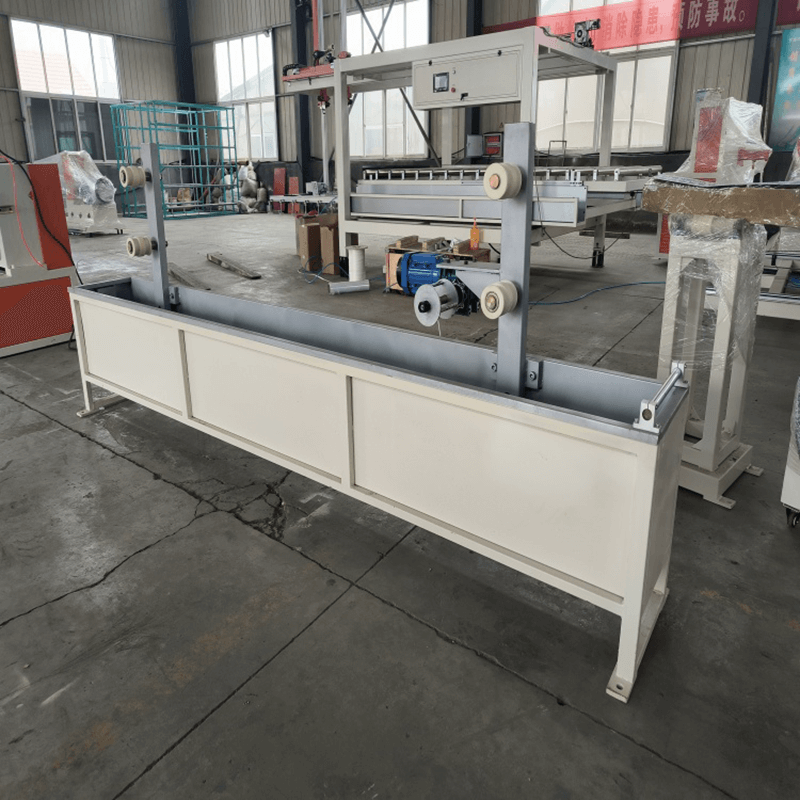
![Multi-strand PP strapping production equipment]()
Core Components of a Multi-Strand PP Packing Strap Extrusion Machine
Transitioning to higher outputs requires specific hardware upgrades. A standard single-strand line cannot simply be retrofitted with a wider die. A true multi-strand PP packing strap extrusion machine incorporates specialized components designed to handle high-volume, parallel processing. Every component from the hopper to the winder must be upsized and synchronized.
Melt Pumps and Continuous Filtration Systems
A gear melt pump is absolutely non-negotiable in multi-strand setups. Extruders naturally pulse, creating minor surges in material flow due to screw rotation. While a single strand might absorb this surge as a slight thickness variation, a multi-strand die will amplify it, causing outer strands to snap under tension. The melt pump isolates the die from the extruder, guaranteeing constant, surge-free volumetric flow. It maintains a steady discharge pressure regardless of minor fluctuations in the extruder's suction pressure.
Continuous filtration is equally critical. Dual-piston screen changers allow operators to swap clogged filters without stopping the machine. In a multi-strand environment, stopping the line to change a screen means re-threading 4 to 8 individual strands through ovens and godets. This process generates massive amounts of scrap and downtime. A continuous screen changer bleeds trapped air and seamlessly transitions melt flow, keeping the line running at full speed.
Stretching Ovens and Annealing Units
Heating a wide web of multiple strands requires precision. Hot air ovens are generally preferred over infrared for multi-strand PP because they provide uniform ambient heat, preventing the outer strands from cooling faster than the inner ones. High-velocity blowers circulate the air to eliminate cold spots. The annealing unit, which relaxes the molecular chains after stretching, must be precisely calibrated. Proper annealing minimizes post-production shrinkage and eliminates camber issues that plague poorly manufactured straps. You must control the annealing temperature to within one degree Celsius across the entire web width.
Winding Systems, Tension Control, and Ergonomics
Winding multiple strands simultaneously requires independent, torque-controlled winding stations. If one strand winds tighter than another, the core will crush or the strap will stretch on the spool. Accumulator systems are vital here. They store excess strap temporarily using a series of dancing rollers, allowing an operator to perform a reel change on one strand without stopping the entire line.
Ergonomics dictate winder design. Managing 4 to 8 simultaneous winding stations causes severe operator fatigue. Modern winders incorporate high-to-low model changeovers and automated reel positioning. This allows operators to slide heavy, finished reels directly onto carts without manual lifting, drastically reducing workplace injuries and turnaround time. You cannot expect a single operator to manage an 8-strand winder manually without these automated assists.
Automation and Control: The Computerized PP Strapping Strap Band Belt Machine
Manual control is impossible when managing six or eight parallel webs moving at 150 meters per minute. A computerized PP strapping strap band belt machine utilizes an advanced sensor infrastructure to manage the inherent complexity of high-volume extrusion. You need digital oversight to maintain stability.
Smart PLC Integration for Multi-Strand Synchronization
Closed-loop, intelligent control systems form the brain of the operation. These PLCs continuously monitor line speed, web tension, and oven temperatures using load cells and encoder feedback. If the primary stretching godet detects a tension drop, the PLC automatically adjusts the drive motors upstream to keep all strands in perfect synchronization. This prevents cascading line failures where one snapped strand tangles and breaks the others.
Recipe management software drastically reduces changeover times. Instead of manually adjusting dozens of dials, operators select a pre-programmed recipe for a specific strap specification. The PLC automatically adjusts extruder RPM, melt pump speed, oven temperatures, and winder torque to match the new profile. This eliminates human error during shift changes and ensures product consistency regardless of who is operating the machine.
Real-Time Quality Monitoring and Defect Rejection
Inline laser micrometers provide continuous thickness and width measurements for every individual strand. These sensors feed data back to the PLC in real-time. If a single strand falls out of tolerance due to a partial die blockage, the system triggers automated alarm protocols. It can flag the specific reel for rejection, ensuring that defective material never reaches your customers and preventing downstream packaging machine jams. You can track the exact meter mark where the defect occurred.
Specialized Applications and Sustainability Considerations
The push for specialized packaging materials and eco-friendly production methods requires multi-strand lines to adapt. Processing composite materials or recycled plastics introduces new variables into the extrusion process. You must modify your equipment to handle these abrasive or inconsistent feedstocks.
PP Fibre Packing Strapping Tape Production Line Considerations
Manufacturing reinforced strapping on a PP fibre packing strapping tape production line involves co-extruding or embedding high-tensile fibers directly into the PP matrix. This requires specialized crosshead dies that guide the fibers into the melt flow without causing turbulence. The abrasive nature of these fibers significantly increases wear on extrusion screws and die lips. Utilizing bimetallic barrels and armored screws is necessary to maintain continuous, stable performance over time. Standard nitrided screws will degrade rapidly under these conditions.
Sustainability: Processing Recycled PP (rPP)
The demand for sustainable production drives the use of recycled PP flakes or pellets. However, rPP introduces severe melt filtration challenges. Recycled material contains impurities that quickly clog standard screens. In a multi-cavity die, even microscopic contamination can alter the flow dynamics, causing outer strands to starve.
Furthermore, rPP batches often exhibit slight variations in Melt Flow Index (MFI). Multi-strand lines must be calibrated with dynamic temperature profiles to maintain stable performance despite these MFI shifts. Advanced gravimetric dosing systems help blend virgin and recycled materials precisely, smoothing out viscosity variations before the polymer reaches the melt pump. You must maintain a consistent blend ratio to prevent the melt from surging.
Tooling Changes for Different Strap Dimensions
Flexibility comes at a cost. Changing a multi-strand line from producing 5mm strapping to 15mm strapping involves realistic downtime. Operators must adjust die lips, change embossing rollers, recalibrate godet speeds, and reposition winders. While recipe management speeds up the electronic adjustments, the mechanical tooling changes still require skilled labor and dedicated maintenance windows. You should group production runs by size to minimize these mechanical changeovers.
Implementation Risks and Mitigation Strategies
Upgrading to multi-strand output is not without operational hurdles. Recognizing these risks early allows plant managers to implement robust mitigation strategies and maintain high overall equipment effectiveness. You must prepare your facility and your team for the increased complexity of a packaging belt production line.
Addressing Uneven Flow Distribution (The "Edge Effect")
The "Edge Effect" is the most common issue in multi-strand extrusion. Outer strands frequently emerge thinner or cooler than inner strands due to heat loss at the edges of the die. To mitigate this, manufacturers must utilize dies equipped with adjustable restrictor bars. Additionally, multi-zone temperature controllers allow operators to apply slightly higher heat to the outer edges of the die, compensating for ambient cooling and ensuring uniform melt viscosity across all cavities.
Managing Increased Scrap Rates During Startup
Multi-strand lines inherently generate more scrap during startup, threading, and stabilization. When threading an 8-strand line, hundreds of meters of off-spec material are produced before the line reaches thermal equilibrium. To mitigate this waste, integrate inline edge-trim and scrap recycling systems. Heavy-duty granulators can capture this startup scrap, grind it, and feed the material directly back into the extruder hopper, minimizing raw material loss. You must size the granulator to handle the full output of the line during a threading event.
Operator Training and Maintenance Demands
The shift from single to multi-strand production fundamentally changes the operator's role. The required skill set moves from basic mechanical troubleshooting to Smart PLC interface management and advanced process control. Operators must understand how adjusting the melt pump RPM affects the tension on winder number six. Comprehensive training programs are essential to prevent costly operator errors. You need technicians who can read sensor data and adjust thermal profiles on the fly.
Conclusion
Successfully integrating multi-strand PP strapping production requires careful planning and precise execution. To ensure your facility is ready for this upgrade, follow these immediate next steps:
- Audit your current extruder capacity and melt pump capabilities to determine the maximum volumetric flow available for multi-strand distribution.
- Evaluate your plant's chilled water infrastructure to ensure it can handle the exponential heat load generated by multiple parallel cooling baths.
- Assess your operators' readiness for PLC-driven systems and schedule advanced training for computerized tension and temperature control.
- Calculate your exact target strap dimensions to select the optimal strand count, avoiding the trap of over-specifying a die for heavy-duty applications.
FAQ
Q: How does multi-strand extrusion affect strap camber?
A: Camber occurs when a strap cools unevenly. In multi-strand extrusion, inner and outer strands experience different thermal environments in the water bath. Without high-flow circulation pumps and precise annealing, multi-strand setups are highly susceptible to severe camber issues. You must maintain uniform water temperature across the entire bath width.
Q: Can I run different strap widths simultaneously on a multi-strand line?
A: No. Multi-strand dies are machined to produce identical profiles across all cavities. Attempting to run different widths simultaneously would require different draw ratios and winding speeds, which is mechanically impossible on a shared stretching godet system.
Q: What is the ideal cooling bath temperature for multi-strand PP strapping?
A: The ideal primary cooling bath temperature for PP strapping typically ranges between 20°C and 30°C. Multi-strand lines require aggressive chilling systems to maintain this temperature, as the high volume of molten plastic introduces massive amounts of heat into the water.
Q: Why is a melt pump critical for multi-strand configurations?
A: Extruders naturally produce slight surges in material flow. A gear melt pump isolates the die from these surges, providing a constant, precise volumetric flow. Without it, pressure fluctuations would cause outer strands to snap during the stretching process.
Q: How do accumulator systems work in multi-strand winding?
A: Accumulators use a series of dancing rollers to temporarily store excess strap. When an operator cuts the strap to change a full reel, the accumulator absorbs the continuous output from the extrusion line, preventing the need to shut down the entire machine for a single reel change.
Q: Does using recycled PP impact multi-strand die performance?
A: Yes. Recycled PP often contains microscopic impurities and exhibits variable melt flow indices. This can cause partial blockages in multi-cavity dies, leading to undersized strands. Robust continuous filtration and dynamic temperature control are required to process recycled materials successfully.



 +86-18561886575 (Mr.Wu)
 +8618561886575
 238 Yangzhou West Road, Jiaozhou City, Qingdao City, Shandong Province