Municipal and commercial buyers expect PVC infrastructure to last 50 to 100 years. This baseline requirement is strictly enforced for underground water and sewer networks. However, the raw material alone does not guarantee this lifespan. Extrusion consistency, resin homogenization, and thermal stability during manufacturing dictate how long the pipe survives in the trench. Subpar manufacturing creates internal stress and brittle walls. These defects lead to premature failures, voided warranties, and ruined reputations in the market.
Achieving maximum underground durability means you must invest in precision-engineered machinery. Modern equipment has to meet strict dimensional, structural, and jointing tolerances. You cannot rely on basic extrusion setups to produce infrastructure meant to last a century. High-quality machinery directly controls the physical properties that keep pipes intact under heavy soil loads, shifting ground, and constant hydrostatic pressure.
- Underground Lifespan: Properly manufactured UPVC (Unplasticized PVC) pipes can exceed 100 years underground, provided they are extruded with uniform wall thickness and zero internal stress.
- Manufacturing Dependency: The longevity of the pipe is directly tied to the temperature control, vacuum calibration, and belling systems within the PVC pipe production line.
- Equipment Evaluation: Upgrading to an advanced PVC pipe extrusion line reduces material degradation during processing, ensuring higher impact resistance and hydrostatic strength in the final product.
- Risk Mitigation: Automated quality control in modern plastic pipe production lines prevents the micro-defects and joint weaknesses that cause long-term system failures.
The Baseline: How Long Does PVC Pipe Actually Last?
Above-Ground vs. Underground Lifespan Expectancy
Standard above-ground PVC typically lasts around 50 years. Ultraviolet radiation from sunlight acts as the primary limiting factor. Unless the pipe features protective co-extruded layers or heavy titanium dioxide surface treatments, UV exposure causes the polymer chains to break down. The plastic becomes brittle and loses its impact resistance. Underground PVC performs entirely differently. Buried pipes routinely exceed 100 years of service life. Water utility associations like AWWA confirm this through extensive exhumation tests of pipes buried in the 1970s, which show almost zero degradation. Success for underground pipes requires high resistance to soil chemicals, constant hydrostatic pressure, and heavy earth loads. When shielded from UV light and extreme temperature swings, the material remains stable for generations.
Environmental and Mechanical Factors Influencing Degradation
External factors constantly stress the pipe over decades. Temperature fluctuations cause expansion and contraction, which pulls at the joints. Water hammer events create sudden, violent pressure spikes inside the system when valves close too quickly. Soil shifting, frost heave, and cyclic fatigue from municipal pump stations test the structural limits of the buried plastic. Point loading from rocks in poor trench backfill can also create localized stress concentrations. Internal material properties determine how well the pipe withstands these stressors. A high degree of gelation is mandatory. Optimal filler content prevents the material from becoming too chalky or weak. The complete absence of plasticizers in rigid pipes ensures they do not lose their structural integrity over time.
| Environment | Primary Stressor | Expected Lifespan | Required Manufacturing Protection |
| Above-Ground | UV Radiation & Weathering | 40 - 50 Years | Co-extruded UV resistant outer layer (Acrylic/TiO2) |
| Underground (Water Main) | Hydrostatic Pressure & Water Hammer | 100+ Years | Precise wall thickness (SDR) & high gelation |
| Underground (Sewer) | Soil Loads & Chemical Exposure | 100+ Years | High ring stiffness & stress-free belling joints |
UPVC vs. CPVC and the Impact of Pipe Schedules (SDR)
UPVC is rigid and serves as the standard for underground installations. It lacks plasticizers, making it exceptionally strong against crushing forces. CPVC offers high temperature resistance, making it ideal for hot water distribution inside buildings. Material rigidity establishes the baseline lifespan for both types. Wall thickness ratios directly impact longevity. Common classifications include Schedule 40, Schedule 80, SDR21, and SDR26. Standard Dimension Ratio (SDR) defines the relationship between the pipe's outside diameter and its minimum wall thickness. Maintaining exact SDR tolerances is non-negotiable for manufacturers making 100-year claims. Even minor deviations in wall thickness create weak points that fail under hoop stress.
How Your PVC Pipe Production Line Dictates Product Longevity
Material Mixing and Resin Consistency
The compounding stage dictates the baseline quality of the final pipe. The production line must handle precise ratios of PVC resin, stabilizers, calcium carbonate fillers, and impact modifiers. High-speed hot and cold mixers blend these ingredients to create a homogeneous dry blend. The hot mixer typically runs up to 120°C to open the PVC pores and absorb the stabilizers, while the cold mixer drops the temperature to 40°C to prevent premature plasticization. Inadequate mixing creates weak points in the pipe matrix. Excessive filler usage drastically reduces underground lifespan and impact resistance. A well-calibrated mixing system ensures every batch of resin feeds into the extruder with perfect consistency.
Wall Thickness and Dimensional Accuracy via the PVC Pipe Extrusion Line
The extrusion die head maintains concentricity and uniform wall thickness. Molten PVC flows through the spider or basket die under immense pressure. Dimensional accuracy serves as a primary evaluation metric for pipe quality. Uneven walls lead to localized stress concentrations. These weak points cause premature burst failures under high hydrostatic pressure. Investing in a reliable PVC pipe extrusion line ensures consistent dimensional control. Advanced die heads feature precise centering adjustments. Operators use these adjustments to fine-tune the melt flow and eliminate thin spots before the pipe enters the vacuum cooling phase.
Thermal Stability and the Degree of Gelation
The twin-screw extruder controls the shear rate and temperature profile. These factors determine the PVC's degree of gelation. Gelation refers to the melting and fusing of PVC particles into a continuous three-dimensional network. An ideal gelation rate of 60-65% provides optimal impact strength and longevity. Pushing speeds too high generates excessive shear heat. This degrades the polymer, burns the material, and compromises the structural integrity required for long-lasting pipes. Proper screw design and precise barrel heating zones are essential for hitting the perfect gelation target. Field technicians often use the methylene chloride immersion test to verify that the gelation is high enough to prevent flaking and cracking.
The Weakest Link: Belling and Socketing Integrity
Underground pipe systems often fail at the joints long before the pipe body degrades. The inline belling machine at the end of the line must apply uniform heat. It requires precise mandrel pressure to create stress-free, leak-proof sockets. This applies to both gasketed (Rieber process) and solvent-weld connections. If the belling oven heats the pipe unevenly, the socket will warp. If the cooling process is too rapid, residual stress remains trapped in the joint. These stressed joints eventually crack under soil loads, leading to massive leaks, root intrusion, and complete system failures.
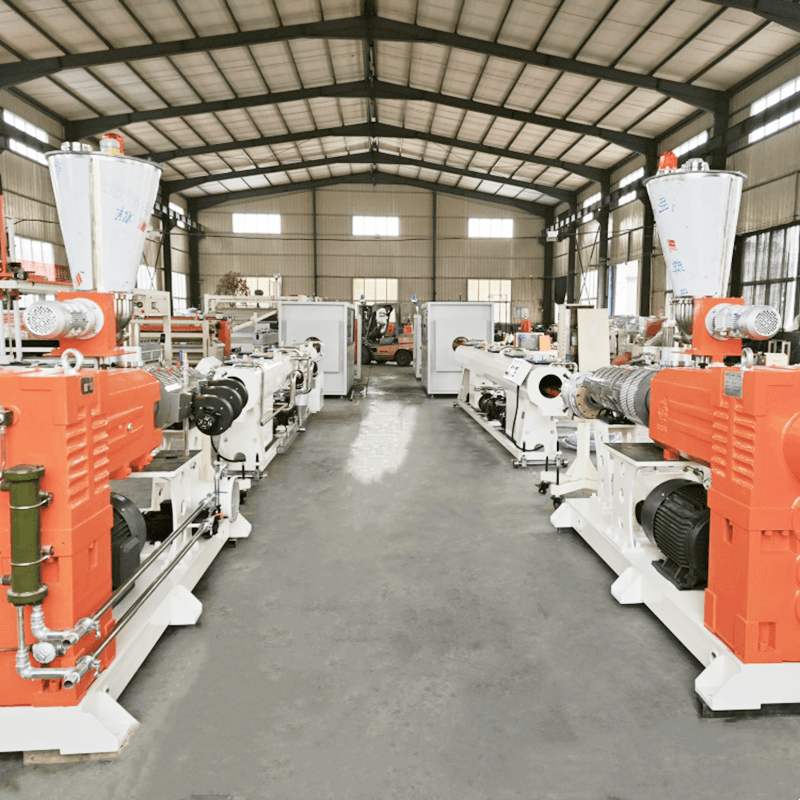
![PVC Pipe Production Line Equipment]()
Evaluating PVC Pipe Manufacturing Equipment for High-Durability Outputs
Extruder Technology: Twin-Screw Configurations
Conical and parallel twin-screw extruders offer different advantages for PVC processing. Conical extruders provide high pressure at lower speeds. They are ideal for large diameter pipes and highly filled formulations because the tapering screws naturally compress the melt. Parallel extruders offer excellent mixing and longer residence times for high-output lines. Specific screw geometries prevent material burning and ensure proper plasticization. The right configuration guarantees the structural integrity required for 100-year pipes. You must match the extruder type to your specific product range. Using the wrong screw geometry leads to poor melt homogenization and weak final products.
| Extruder Type | Screw Geometry | Optimal Application | Key Advantage for Pipe Longevity |
| Conical Twin-Screw | Tapered, decreasing volume | Large diameter pipes, high filler content | High natural compression ensures dense, void-free pipe walls. |
| Parallel Twin-Screw | Uniform diameter, long L/D ratio | High-speed lines, smaller diameters | Extended residence time ensures perfect 60-65% gelation. |
Cooling and Vacuum Calibration Systems
Multi-stage vacuum sizing tanks are essential in a high-end Plastic Pipe Production Line. As the molten pipe exits the die, it enters the vacuum tank. Water sprays cool the plastic while vacuum pressure (typically -0.05 to -0.08 MPa) holds it against a brass or stainless steel sizing sleeve. Rapid, controlled cooling prevents internal residual stress. It also eliminates ovality issues. Residual stress and ovality are leading causes of long-term cracking in buried pipes under heavy soil loads. The length of the cooling tank must match the line speed. High-speed lines require extended cooling zones to ensure the core of the pipe wall solidifies completely before hitting the haul-off tracks.
Co-Extrusion Capabilities for Regrind and Multi-Layer Pipes
There is a strong economic and environmental push for using recycled PVC. Manufacturers want to use regrind without sacrificing the 100-year lifespan. A-B-A co-extrusion technology solves this problem. It allows manufacturers to encapsulate recycled material in the core layer. Virgin PVC forms the inner and outer walls to maintain structural and chemical integrity. This method reduces raw material costs while keeping the pipe surface smooth and strong. The co-extrusion feedblock must precisely control the layer distribution. Poor layer control results in exposed regrind, which severely weakens the pipe and lowers its hydrostatic design basis.
Specialized Applications: PVC Downpipe Production Line Considerations
Non-pressure, above-ground applications like rainwater downpipes have specific requirements. A dedicated PVC downpipe production line must handle specialized co-extrusion. Adding UV-resistant acrylic or specialized outer layers extends the lifespan of exposed pipes. This protects them against severe solar degradation. Downpipes also feature complex profiles (square or rectangular) and thinner walls compared to pressure pipes. The calibration tooling must be highly precise to maintain the profile shape without causing internal stress. High-speed cutting and automated packaging systems are also critical for maintaining profitability in downpipe manufacturing.
Implementation Risks: When Subpar Equipment Compromises Quality
Common Extrusion Defects and Long-Term Consequences
Poor equipment causes specific defects like shark skin, internal voids, die lines, and brittleness. Shark skin refers to a rough, torn surface caused by improper melt temperature or die friction. Internal voids occur when moisture or trapped gas expands inside the pipe wall due to poor vacuum venting on the extruder barrel. These defects map directly to real-world failures. A pipe might fail at 15 years instead of 100 because a micro-void expands under continuous hydrostatic pressure. Die lines create weak seams along the length of the pipe. Brittleness usually stems from poor gelation or excessive filler, causing the pipe to shatter during installation or ground shifting.
Equipment Wear and Tear: The Silent Quality Killer
Gradual barrel and screw wear alters shear rates and clearance tolerances over time. PVC formulations containing high levels of calcium carbonate are highly abrasive. They slowly grind away the metal surfaces inside the extruder. Failing to monitor equipment wear leads to a slow, unnoticeable degradation in pipe gelation. This silent quality killer drastically reduces the final lifespan of the product. Operators might notice a drop in output or an increase in energy consumption. By the time these symptoms appear, the machine has already produced thousands of meters of substandard pipe. Upgrading to bimetallic screws and barrels extends the life of the PVC pipe manufacturing equipment and maintains consistent shear rates.
Mitigation: Quality Control and Automation Integration
Integrating inline ultrasonic thickness gauges is mandatory for modern manufacturing. These devices measure the wall thickness 360 degrees around the pipe in real-time. Automated gravimetric dosing systems ensure the exact ratio of raw materials enters the extruder, eliminating human error in the mixing room. Automated flaw detectors scan the pipe surface for bumps, scratches, or holes. These features act as mandatory risk-mitigation tools. They allow manufacturers to guarantee long-term pipe performance while minimizing scrap rates. When the system detects a flaw, it immediately alerts the operator or automatically adjusts the haul-off speed to correct the wall thickness.
Scaling Production Without Sacrificing Pipe Lifespan
Balancing Output Speed with Structural Integrity
Maximizing kg/hr output often conflicts with maintaining mechanical properties. Pushing a line too fast reduces the residence time in the extruder. This prevents the PVC from melting properly. Selecting a PVC Pipe Production Line with high torque and optimized screw design helps balance this trade-off. Extended cooling lengths allow manufacturers to scale production safely. You must ensure the pipe is completely cool before it reaches the haul-off unit. If the core is still warm, the caterpillar belts will deform the pipe, ruining its dimensional accuracy and structural integrity.
Compliance with International Standards
Key standards dictate pipe durability, pressure ratings, and testing protocols. These include ASTM D2241, AWWA C900, and ISO 1452. AWWA C900 requires strict dimensional tolerances and rigorous hydrostatic testing for municipal water mains. The right production line ensures continuous, verifiable compliance with these standards. Compliance enables manufacturers to confidently bid on lucrative municipal contracts. Failing to meet these standards results in rejected shipments and lost contracts. Your equipment must consistently produce pipes that pass the following tests:
- Hydrostatic Burst Testing: Verifies the pipe can handle extreme pressure spikes without rupturing.
- Flattening Tests: Ensures the pipe can be compressed to a specific degree without cracking at the extrusion seams.
- Drop-Weight Impact Testing: Confirms the pipe will not shatter when struck by rocks during trench backfilling.
- Methylene Chloride Immersion: Checks for proper gelation and the absence of internal residual stress.
Conclusion
A 100-year lifespan is an engineered outcome, not a default material property. While PVC is inherently durable, it relies entirely on the precision of the manufacturing process to survive underground. Buyers must prioritize advanced thermal control, precision vacuum calibration, robust belling units, and automated defect detection over purely cost-driven alternatives. To ensure your production meets these high standards, take the following steps:
- Audit your current extrusion capabilities to identify wear and tear in screws and barrels.
- Review your equipment specifications against international pipe standards like AWWA C900 and ISO 1452.
- Consult with equipment manufacturers to design custom line configurations that balance high output with thermal stability.
- Implement inline ultrasonic thickness gauges to eliminate dimensional inconsistencies and reduce scrap.
- Upgrade your belling ovens with precise infrared heating to eliminate joint failures.
FAQ
Q: How long does PVC pipe last underground?
A: Properly manufactured PVC pipe routinely exceeds a 100-year lifespan underground. This longevity requires strict dimensional tolerances, optimal gelation, and protection from UV light. When buried, the material is shielded from temperature extremes and sunlight, allowing it to resist soil chemicals and hydrostatic pressure for generations.
Q: Does the type of PVC pipe extrusion line affect the pipe's pressure rating?
A: Yes. Extrusion consistency dictates wall thickness, concentricity, and ultimately, burst strength. A high-quality line maintains exact Standard Dimension Ratios (SDR). Uneven walls created by poor extrusion lead to localized stress points, drastically reducing the pipe's pressure rating and causing premature failure.
Q: Why do some PVC pipes become brittle over time?
A: Brittleness usually stems from poor gelation during manufacturing or the use of excessive calcium carbonate fillers. For above-ground pipes, prolonged UV exposure breaks down the polymer chains. Proper compounding and precise temperature control in the extruder prevent internal brittleness.
Q: What is the difference between a standard plastic pipe production line and a dedicated PVC line?
A: PVC is highly heat-sensitive and requires specialized processing. A dedicated PVC line uses twin-screw extruders for lower shear heating, specific anti-corrosion treatments on the screws, and specialized die heads. Standard lines using single-screw extruders are typically meant for PE or PP, not rigid PVC.
Q: Can you use recycled PVC and still achieve a 100-year lifespan?
A: Yes, by utilizing A-B-A co-extrusion technology. This process safely encapsulates recycled regrind in the core layer of the pipe wall. Virgin PVC is used for the inner and outer layers, maintaining the required structural integrity, chemical resistance, and smooth flow characteristics.
Q: How can manufacturers test the expected lifespan of their extruded PVC pipes?
A: Manufacturers rely on rigorous laboratory testing. This includes long-term hydrostatic pressure testing, drop-weight impact testing, and accelerated aging tests. Flattening tests also verify that the pipe can withstand heavy soil loads without cracking or splitting at the extrusion seams.
Q: What features are critical in a PVC downpipe production line?
A: Downpipe lines require specialized co-extrusion capabilities to add UV-resistant outer layers, protecting the pipe from solar degradation. High-speed vacuum calibration is also critical for maintaining the shape of thin-walled, complex profiles without inducing internal stress during cooling.



 +86-18561886575 (Mr.Wu)

 +8618561886575
 238 Yangzhou West Road, Jiaozhou City, Qingdao City, Shandong Province