In automated packaging environments running upwards of 60 straps per minute, the operational bottleneck is rarely the strapping head. It is the dimensional and mechanical consistency of the strap itself. Inconsistent coil quality manifests as camber, splitting, thickness variations, or poor weldability. These defects lead to chronic machine jams, compromised load stability during storage, and excessive downtime on the facility floor. These issues almost always originate from poorly calibrated extrusion, stretching, or winding parameters during manufacturing. Achieving zero-downtime performance requires a rigorous evaluation of the machinery producing the strap. Whether securing products for long-term warehousing or dynamic transportation, this guide details the critical parameters and evaluation frameworks necessary when configuring or investing in a production line to ensure verifiable, repeatable coil quality.
- Dimensional Precision is Non-Negotiable: Stable feeding, precise melt temperature, and uniform die flow are mandatory to maintain strict width and thickness tolerances.
- Application Dictates Production Parameters: Manufacturing machine-grade strap requires different stiffness and camber tolerances compared to hand-grade coils.
- Thermal and Mechanical Control Dictate Strength: Tensile strength and elongation percentages are direct outcomes of optimized stretching ratios and controlled water bath cooling rates.
- Winding Tension Determines Usability: Even the highest-quality strap will fail in application if winding tension parameters cause coil collapse or edge damage during transport.
- Automation Reduces Variance: Transitioning to closed-loop, computerized control systems mitigates operator error and standardizes production across varying raw material batches.
Defining Success Criteria for PP Strapping Coils
Application-Specific Grading: Machine vs. Hand Grade
Machine-grade strapping demands extreme straightness and high stiffness. High-speed arch feeding systems cannot tolerate curvature or limpness. The strap must shoot through the machine arch without buckling or catching on the guide rails. Hand-grade strapping requires flexibility for manual tensioning tools. Standard 15mm widths often fall into this manual category, where operators physically bend the strap around corners and feed it through battery-operated friction welders. The intended end-use dictates baseline parameters for the entire production run. Securing heavy timber demands different mechanical properties than bundling light corrugated boxes. Operators must calibrate the line specifically for the target grade. Producing a universal strap usually results in compromised performance across all applications. You must define the application before adjusting the extrusion parameters, as the die lip gap and stretching ratios will differ significantly.
Dimensional Stability and Tolerances
Width and thickness consistency prevents feed-wheel slippage in automated strapping machines. High-speed applications require strict deviation margins to function continuously. Width typically requires a tolerance of ±0.5mm. Thickness demands an even tighter margin of ±0.05mm. Any deviation beyond these limits causes immediate jamming in the strapping head. Oversized straps create excessive friction in the guides, causing the feed motors to over-torque and fault out. Undersized straps slip through the tensioning gears, resulting in loose packages. Consistent dimensions ensure smooth travel through the machine arch. Maintaining these tolerances requires synchronized haul-off speeds and stable melt pressure. Even minor fluctuations in the extrusion phase will manifest as dimensional drift in the final PP strapping.
Mechanical Properties: Tensile Strength and Elongation
Required breaking strength depends heavily on the base material composition. Virgin polypropylene offers a higher baseline strength than recycled flakes, allowing for thinner straps that achieve the same holding power. Operators must balance tensile strength against the elongation percentage. High tensile strength prevents creep during long-term storage, ensuring pallets do not loosen after months in a warehouse. Adequate elongation provides necessary shock absorption during dynamic transit. A strap lacking elongation will snap under sudden load shifts, such as a forklift dropping a pallet too hard. Conversely, a strap with excessive elongation will stretch and loosen during transport vibrations. The ideal balance ensures the package remains tightly bound from the warehouse to the final destination. Testing these properties requires standardized offline tensile equipment to verify the production run meets the specified ratings.
Surface Embossing and Friction Dynamics
Clear stripe embossing enhances surface friction significantly. This prevents slippage at the seal and ensures the package remains firmly bundled. Embossing depth directly impacts overall strap stiffness and increases the surface area available for friction welding. Proper embossing ensures a stronger, more reliable joint when the strapping head melts the two ends together. Shallow embossing leads to weak seals and potential load failure during transit. The knurling rollers must apply uniform pressure across the entire strap width. Worn embossing rollers produce inconsistent patterns, degrading the friction characteristics required by automated sealing heads. Regular inspection of the embossing unit is mandatory for consistent quality. Operators should measure the embossing depth using a micrometer at the start of every shift.
| Parameter | Machine-Grade Strapping | Hand-Grade Strapping |
| Primary Application | Automated high-speed arch machines | Manual tensioners and battery tools |
| Camber Tolerance | Strict (< 15mm per 2 meters) | Flexible (Moderate curvature acceptable) |
| Stiffness Requirement | High (Must shoot through arches without buckling) | Low to Medium (Must bend easily around corners) |
| Dimensional Variance | ±0.5mm width, ±0.05mm thickness | ±1.0mm width, ±0.1mm thickness |
| Surface Embossing | Deep, aggressive patterns for feed wheels | Moderate patterns for friction welding |
| Elongation at Break | 10% - 15% | 15% - 25% |
Core Extrusion Parameters in a PP Packing Strap Extrusion Machine
Raw Material Feeding and Plasticization
Gravimetric dosing systems are essential for stable feeding. They ensure precise blending when mixing virgin resins with recycled flakes. Colorants and UV-stabilizing additives also require exact dosing to maintain consistent physical properties. Volumetric feeders often fail to account for bulk density changes in recycled materials, leading to uneven melting. Screw design impacts homogeneous plasticization. The Length-to-Diameter (L/D) ratio must match the specific polymer blend, typically sitting around 30:1 or 32:1 for polypropylene. A proper screw melts the polymer without degrading the molecular chains through excessive shear heat. An optimized PP packing strap extrusion machine maintains consistent output regardless of minor material variations. Proper plasticization prevents unmelted particles from creating weak points in the strap, which would otherwise cause snapping during the stretching phase.
Melt Temperature and Die Flow Control
Optimal melt temperature ranges maintain consistent polymer viscosity. Polypropylene requires precise thermal management across the extruder barrel zones to prevent degradation. Temperatures typically range between 210°C and 240°C depending on the specific resin grade and the percentage of recycled content. Die head design parameters control melt pressure consistency. Uniform flow distribution prevents edge-tear vulnerabilities in the final strap. Integrating continuous screen changers maintains die flow stability. This is critical when processing post-consumer recycled materials containing impurities like paper labels or dirt. Pressure sensors before and after the screen pack monitor filtration efficiency. Sudden pressure drops indicate a ruptured screen, which compromises die flow immediately and sends contaminants straight into the die lip.
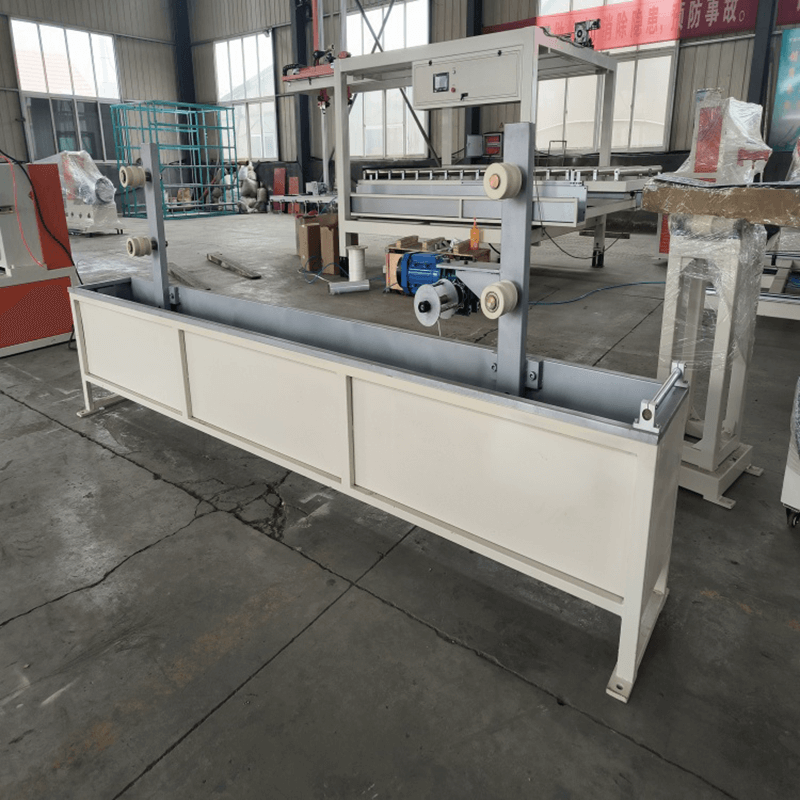
![PP Strapping Production Line Parameters]()
Stretching, Cooling, and Annealing Dynamics
Quenching and Water Bath Cooling Rates
The initial water cooling bath dictates polymer crystallization thermodynamics. Rapid quenching freezes the molecular structure for subsequent stretching. Improper cooling rates lead to brittle straps and surface defects. They also cause inconsistent tensile properties across the coil. Water temperature and circulation speed must remain constant throughout the production run. Typical quenching temperatures range from 20°C to 40°C, maintained by industrial chillers and heat exchangers. Laminar water flow prevents surface turbulence from marking the extruded tape as it exits the die. Air wipes must remove carryover water before the tape enters the first stretching zone. Residual moisture causes uneven heating in the subsequent drawing stages, leading to localized weak spots.
Molecular Orientation and Stretching Ratios
A multi-stage stretching process aligns polymer chains to build tensile strength. This drawing phase transforms the brittle extruded tape into a strong, usable strap. Operators must calculate optimal draw ratios based on the target strap grade. Machine-grade strap requires higher draw ratios for maximum stiffness and lower elongation. Hand-grade strap utilizes lower ratios to retain flexibility for manual handling. A high-performance PP fibre packing strapping tape production line relies on precise stretching to achieve high-strength ratings. The godet rollers must maintain exact speed differentials to execute the draw. Slippage on these rollers destroys the molecular orientation process. Rubber nip rollers require adequate pneumatic pressure to prevent this slippage and ensure uniform tension across the strap width.
Thermal Relaxation (Annealing) for Memory Reduction
Heating oven parameters relieve internal stresses generated during the stretching phase. This thermal relaxation is known as annealing. Proper annealing prevents post-production shrinkage. It ensures dimension stability during coil storage. Without annealing, the strap will warp on the pallet over time, shrinking back toward its original extruded state. Temperature and dwell time in the oven are critical control points. Oven temperatures generally sit between 120°C and 150°C. The strap must relax by a specific percentage to eliminate internal memory. Insufficient annealing leads to lengthwise splitting when the strap is tensioned around a load, as the internal stresses overcome the lateral bonds of the polymer chains.
Winding, Automation, and Quality Control in a Packaging Belt Production Line
Tension Control for Consistent Roll Winding
Traverse winding mechanics require precise tension control. This prevents coil telescoping or crushing during the winding process. Paper core alignment and edge-building parameters ensure stable coils. Coils must survive shipping and handle smoothly on dispensers without snagging. Inconsistent tension creates soft spots or overly tight layers that warp the strap. Accumulator systems manage the tension during reel changes, allowing the line to run continuously. Dancer arms provide mechanical feedback to the winding motors, adjusting speed in real-time. Taper tension control gradually reduces winding force as the coil diameter increases. This prevents the outer layers from crushing the inner layers against the paper core. Configuring these parameters correctly on a packaging belt production line guarantees the end-user receives a perfectly wound coil.
Evaluating a Computerized PP Strapping Strap Band Belt Machine
PLC integration provides real-time monitoring of critical line parameters. Operators track line speed, extrusion pressure, and winding tension continuously from a central console. Closed-loop feedback systems automatically adjust haul-off speeds. This maintains strict dimensional tolerances without manual intervention. A modern computerized PP strapping strap band belt machine includes extensive data logging capabilities. Traceability and quality assurance improve across different production shifts, allowing managers to pinpoint exactly when a defect occurred. Recipe management systems allow quick changeovers between different strap specifications, storing the exact temperatures and speeds for each product. Human-Machine Interfaces (HMIs) display visual alerts for any parameter drifting out of the acceptable range, prompting immediate corrective action.
Inline Quality Control and Continuous Monitoring
Inline laser micrometers continuously monitor thickness and width. They measure the strap without stopping the production line, providing thousands of data points per minute. Operators receive immediate alerts if dimensions drift out of tolerance, allowing them to adjust the die lip or haul-off speed before producing scrap. Offline testing protocols remain equally important for verifying mechanical properties. Tensile testing machines verify breaking strength and elongation percentages on sample strips from every finished master roll. These tests confirm the base material composition performs as expected under load. Statistical Process Control (SPC) charts track dimensional trends over time. Early detection of dimensional drift prevents the production of unusable material. Combining inline sensors with rigorous offline testing guarantees verifiable coil quality.
Implementation Risks and Mitigation Strategies
Managing Recycled vs. Virgin PP Flakes
Using high percentages of recycled PP introduces melt flow index (MFI) variations. Inconsistent MFI causes surging in the extruder and dimensional instability at the die lip. Recycled flakes often contain residual moisture and varying polymer grades from different waste streams. To mitigate this, implement advanced melt pumps and dynamic filtration systems on your PP strapping production line. These components stabilize pressure and maintain consistent plasticization. They buffer the variations inherent in recycled feedstocks, ensuring a steady flow of plastic to the die. Dehumidifying dryers must remove moisture before the flakes enter the extruder hopper. Moisture causes foaming in the melt, which destroys the strap's tensile strength and creates surface blisters. Blending virgin resin with recycled flakes improves overall process stability and provides a predictable baseline for the extrusion parameters.
Mitigating Camber (Curvature) Defects
Strap camber is fatal for machine-grade applications. The strap curves like a banana, jamming the feeding arch instantly and shutting down the packaging line. Root causes include uneven tension, asymmetrical stretching, or misaligned nip rollers. Establish strict calibration protocols for roller alignment to mitigate camber. Ensure uniform water bath temperatures across the entire width of the strap, as uneven cooling causes one side to shrink faster than the other. Regular laser alignment of the stretching unit prevents curvature issues caused by mechanical drag. Uneven cooling on the top versus the bottom of the strap also induces camber. Adjusting the water flow baffles in the quenching tank corrects this thermal imbalance and keeps the strap perfectly straight.
Maintenance and Wear in High-Speed Lines
High-output lines experience accelerated wear on critical components. Extrusion screws, die lips, and embossing rollers degrade over time due to constant friction and heat. Abrasive contaminants in recycled materials accelerate this wear significantly. Develop a predictive maintenance schedule based on operational hours rather than waiting for components to fail. Track throughput volume to anticipate component replacement. Proactive maintenance prevents the gradual degradation of strap quality. Gearbox oil requires regular changes to maintain torque transmission and prevent bearing failure. Screen packs need replacement before pressure limits are reached to avoid blowing out the breaker plate. Inspect the die lips weekly for scoring or carbon buildup. Clean die lips ensure a smooth surface finish on the extruded tape and prevent lengthwise drag lines.
| Defect Type | Common Root Cause | Corrective Action |
| Lengthwise Splitting | Excessive draw ratio or low annealing temp | Reduce godet speed differential; increase oven temp |
| Severe Camber | Misaligned nip rollers or uneven cooling | Laser align rollers; check water bath baffles |
| Thickness Variation | Extruder surging or clogged screen pack | Check melt pump RPM; replace screen pack |
| Poor Weld Strength | Shallow embossing or degraded polymer | Increase knurling pressure; lower barrel temperatures |
| Surface Blisters | Moisture in raw material feedstock | Check dehumidifying dryer operation and dew point |
Conclusion
- Audit your current extrusion parameters against the material data sheets provided by your resin supplier to establish a baseline for melt temperatures.
- Implement inline laser measurement tools on your haul-off unit to catch dimensional drift before it results in scrap coils.
- Establish a predictive maintenance schedule focusing specifically on die lip cleaning and embossing roller replacement based on operating hours.
- Standardize your resin blending recipes using gravimetric feeders to minimize melt flow variations across different production shifts.
- Request empirical test data from potential equipment vendors detailing thickness variance and tension control capabilities before purchasing new machinery.
FAQ
Q: What causes PP strapping to split lengthwise?
A: Lengthwise splitting usually results from an excessive stretching ratio or inadequate melt temperature. When the polymer chains are over-oriented without proper thermal relaxation, the strap loses lateral strength. Adjusting the draw ratio and increasing annealing oven temperatures resolves this issue.
Q: How often should we calibrate the inline laser micrometers?
A: Calibrate inline laser micrometers at least once a month using certified gauge blocks. Dusty environments may require weekly sensor cleaning to maintain measurement accuracy. Regular calibration ensures your dimensional feedback loop functions correctly and prevents false adjustments.
Q: Can we run 100% recycled PP flakes on a standard line?
A: Running 100% recycled flakes requires specialized equipment. Standard lines struggle with the varying melt flow indices of recycled materials. You need continuous screen changers, advanced melt pumps, and robust degassing systems to maintain stable production and prevent surging.
Q: Why does the strap curl after cooling?
A: Strap curling, or camber, stems from asymmetrical cooling or uneven tension across the nip rollers. Ensure the water bath temperature is uniform. Check the alignment of all stretching rollers using a laser alignment tool to eliminate uneven pulling forces.
Q: What is the ideal water bath temperature for quenching PP strap?
A: The ideal quenching temperature typically ranges between 20°C and 40°C. Exact temperatures depend on the line speed and strap thickness. Consistent water temperature prevents uneven crystallization and ensures uniform tensile properties during the subsequent stretching phase.
Q: How does embossing depth affect strap performance?
A: Embossing depth directly influences the strap's stiffness and joint strength. Deeper embossing improves feed-wheel grip in automated machines and increases the surface area for friction welding. However, excessive depth can compromise the overall tensile strength of the strap.



 +86-18561886575 (Mr.Wu)
 +8618561886575
 238 Yangzhou West Road, Jiaozhou City, Qingdao City, Shandong Province