Capital investment in a packaging belt production line requires aligning machinery capabilities with long-term market demand, raw material availability, and operational overhead. Manufacturers must choose between producing Polypropylene (PP) or Polyester (PET) strapping. Selecting the wrong extrusion architecture leads to excessive energy consumption, sub-optimal tensile strength, and reduced margins due to material incompatibility.
Evaluating the technical process differences between a dedicated PP strapping production line and a PET line establishes a rigorous framework for equipment selection. The chemical properties of the base resin dictate the entire mechanical setup, from pre-drying requirements to stretching oven lengths. This guide breaks down the extrusion mechanics, material handling requirements, and application fit to ensure plant managers specify the correct machinery for their production goals.
- Material Handling Variances: PET production requires complex pre-drying and crystallization systems to prevent hydrolytic degradation, whereas PP processing bypasses this, lowering initial equipment footprint and energy draw.
- Extrusion and Stretching Mechanics: A PP packing strap extrusion machine operates at lower melt temperatures and requires specific draw ratios (typically 1:5 to 1:7) compared to the higher heat and tension requirements of PET lines.
- Application-Driven ROI: PP strapping dominates light-to-medium duty and automated high-speed packaging, while PET replaces steel in heavy-duty, rigid load securing due to superior tension retention over long storage periods.
- Sustainability and CapEx vs. OpEx Trade-offs: While PP lines generally require lower initial capital expenditure, PET lines offer operational cost advantages and meet strict ESG goals in regions with abundant recycled PET (rPET) bottle flakes.
Raw Material Dynamics: Polypropylene vs. Polyester Resins
The chemical properties of the base polymer dictate the entire architecture of the production line. Extrusion machinery must be calibrated to the specific thermal and rheological behaviors of the chosen resin. Attempting to process PET on a machine designed strictly for PP results in catastrophic material degradation, plugged dies, and equipment failure.
Polypropylene (PP) Characteristics
Polypropylene is a highly versatile thermoplastic polymer. In strapping applications, it provides excellent elongation and flexibility, allowing it to absorb sudden impacts without snapping. The extrusion process relies heavily on the Melt Flow Index (MFI) of the PP granules. A consistent MFI ensures stable melt pressure inside the extruder barrel, which translates to uniform strap thickness and width. Plant operators typically look for an MFI between 1.5 and 3.0 g/10 min for optimal strapping extrusion.
One of the primary operational advantages of PP is its tolerance to moisture. Unlike hygroscopic polymers, PP does not absorb significant atmospheric moisture into its core. This characteristic eliminates the need for aggressive pre-drying systems before the material enters the extruder feed throat. Operators utilize standard hopper loaders and gravimetric dosing systems, simplifying the front end of the line. High-quality PP strapping is also highly recyclable, though facilities often blend edge trim and scrap back into the virgin feed at ratios up to 30% without degrading the final tensile strength.
Polyester (PET) Characteristics
Polyester behaves entirely differently under heat and stress. PET is inherently hygroscopic, meaning it absorbs moisture directly into its molecular structure. If PET enters the extruder with even trace amounts of moisture, the high heat causes hydrolysis. This chemical reaction breaks the polymer chains, drastically reducing the Intrinsic Viscosity (IV) of the melt. A drop in IV destroys the tensile strength of the final strap, making it brittle and useless for heavy-duty applications.
To prevent hydrolysis, PET lines require mandatory dehumidification and crystallization systems. The raw material—often 100% recycled PET (rPET) bottle flakes—must be dried to moisture levels below 50 parts per million (ppm). Using rPET flakes introduces additional complexities, as the flakes vary in size, bulk density, and contamination levels compared to uniform virgin resin pellets. Maintaining high IV requires precise temperature control throughout the drying and extrusion phases. Plant managers must monitor the IV of incoming flakes, aiming for a minimum of 0.70 dl/g to produce industrial-grade strapping.
![PP and PET Strapping Production Line Process]()
Technical Process Breakdown: PP vs. PET Lines
Mapping the step-by-step manufacturing process reveals exactly why these two polymers require distinct mechanical setups. From the moment the raw material enters the facility to the final winding of the spool, the equipment manages different thermal profiles, filtration needs, and stretching mechanics.
- Pre-Processing and Feeding: The front end of a PET line utilizes massive crystallizers and dehumidifying dryers. Continuous vacuum feeding systems move the dried rPET flakes directly into the extruder to prevent re-absorption of ambient moisture. The crystallization process prevents amorphous PET flakes from clumping together and blocking the feed throat. Conversely, a PP fibre packing strapping tape production line utilizes a simpler feeding mechanism. Gravimetric blenders mix virgin PP granules with color masterbatch and drop the mixture directly into the extruder hopper.
- Extrusion and Melting: Temperature profiles inside the extruder barrel differ significantly. Polypropylene melts at lower temperatures, requiring barrel zones set between 200°C and 240°C. Polyester demands much higher heat, with extrusion temperatures ranging from 260°C to 290°C. These higher temperatures require robust barrel insulation and specialized ceramic heater bands.
- Melt Filtration: Because PET lines heavily utilize post-consumer bottle flakes, the melt contains impurities like paper labels, aluminum caps, and PVC remnants. Extruding rPET requires continuous dual-piston screen changers. These advanced filtration systems allow operators to swap clogged filter screens without halting the extrusion process. A standard PP line running virgin pellets requires only basic manual or hydraulic screen changers.
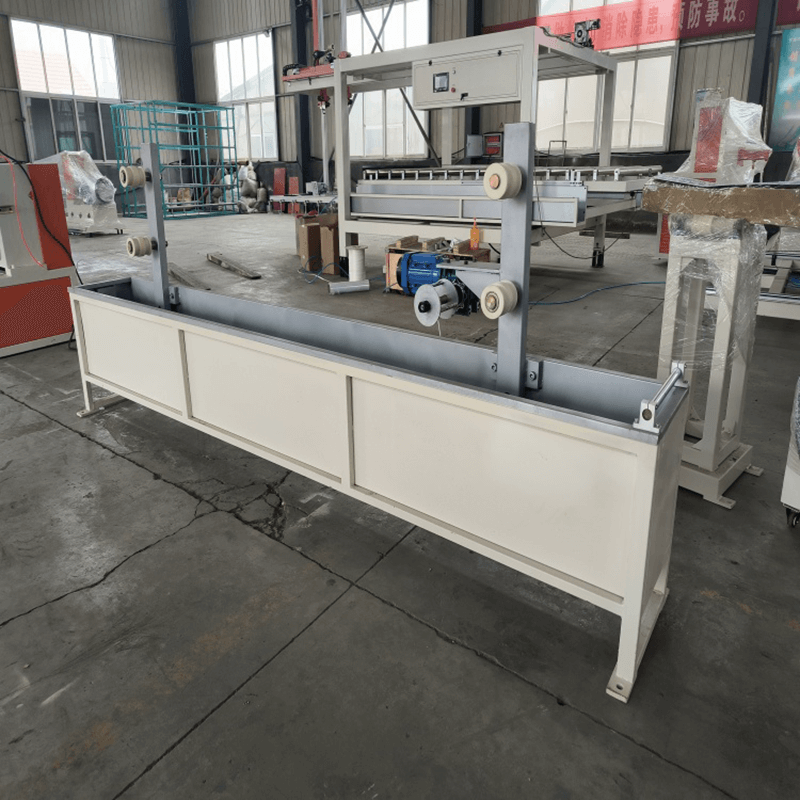
- Quenching (Water Bath Cooling): Once the molten polymer exits the die head, it enters a water bath for quenching. PET requires specific water temperature gradients, often starting warmer and cooling gradually, to maintain the amorphous state necessary for subsequent stretching. Polypropylene quenching requires precise bath length calculations based on line speed. If the water is too cold, the PP strap will not cool uniformly, leading to dimensional instability.
- Machine Direction Orientation (MDO): Tensile strength is created during the stretching phase. The MDO aligns the polymer chains longitudinally. A standard PP line utilizes hot air ovens to bring the strap to its softening point, applying a draw ratio between 1:5 and 1:7. PET requires higher tension and heavy-duty stretching stands capable of withstanding extreme mechanical loads without deflecting.
- Embossing and Annealing: After stretching, the strap passes through embossing rollers to increase surface friction. Setting the correct embossing roller pressure prevents longitudinal splitting. The final thermal step is annealing. The stretched strap passes through a stabilization oven where it is heated slightly to relieve internal stresses, preventing the strap from shrinking on the spool after cooling.
Equipment Specifications: Evaluating Extrusion Machinery
Hardware configurations separate entry-level machines from high-yield industrial lines. Evaluating the specific components of the extrusion machinery ensures the line meets production targets without excessive downtime or material waste.
Single-Screw vs. Twin-Screw Extruders
The choice of extruder screw defines the line's capability. A standard PP packing strap extrusion machine almost exclusively uses a single-screw extruder with a Length-to-Diameter (L/D) ratio of 30:1 or 33:1. Single-screw designs provide excellent distributive mixing for PP granules and masterbatch, maintaining a stable melt pressure with minimal mechanical complexity. The barrier flight designs on modern single screws ensure complete melting of the PP without excessive shear heating.
PET processing increasingly relies on co-rotating twin-screw extruders. Twin-screw systems offer superior dispersive mixing, which is vital when processing inconsistent rPET flakes. More importantly, twin-screw extruders feature multiple vacuum degassing zones along the barrel. These vacuum ports extract residual moisture and volatile gases directly from the melt. In advanced setups, the aggressive degassing of a twin-screw extruder allows operators to bypass the pre-drying phase entirely, feeding undried rPET flakes directly into the machine, saving massive amounts of floor space and energy.
Automation and Control Systems
Modern production demands strict dimensional tolerances. The integration of a computerized PP strapping strap band belt machine ensures the final product maintains consistent width, thickness, and camber. Programmable Logic Controllers (PLCs) monitor the entire line in real-time, pulling data from pressure transducers and thermocouples.
Advanced control systems automatically adjust the speed of the melt pump and the haul-off rollers to compensate for minor fluctuations in melt pressure. If the system detects a drop in pressure before the die head, it incrementally increases the extruder screw speed to maintain a uniform output. This level of automation prevents the production of out-of-spec strapping that would otherwise jam end-user packaging equipment. Operators rely on touchscreen HMIs to store recipes for different strap dimensions, reducing changeover times from hours to minutes.
Winding Technology
The winder is the final piece of equipment on the line, but it is often the source of significant quality control issues. Strapping must be spooled with precise tension. If the winding tension is too high, it crushes the cardboard core and deforms the inner layers of the strap. If the tension is too low, the spool collapses during transit, rendering it unusable in automated strapping machines.
Industrial lines utilize dual-station automatic winders equipped with accumulators. The accumulator stores a buffer of finished strap, allowing the winder to cut the strap and switch to an empty spool automatically without slowing down the extrusion line. Sophisticated tension control algorithms adjust the torque of the winder motor as the diameter of the spool increases, ensuring perfect roll geometry from the core to the outer layer.
| Technical Parameter | Polypropylene (PP) Extrusion | Polyester (PET) Extrusion |
| Base Material | Virgin or recycled PP granules | Virgin resin or 100% rPET flakes |
| Pre-drying Requirement | Minimal to none | Mandatory (Crystallization & Dehumidification) |
| Extrusion Temperature | 200°C – 240°C | 260°C – 290°C |
| Extruder Type (Typical) | Single-screw (L/D 30:1) | Twin-screw with vacuum degassing |
| Melt Filtration | Standard hydraulic screen changer | Continuous dual-piston screen changer |
| Draw Ratio | 1:5 to 1:7 | 1:4 to 1:6 (Higher tension required) |
| Cooling Bath | Standard water quenching | Gradient temperature control |
Performance Outcomes: Matching Production to Market Demand
The manufacturing process directly impacts the final product's market viability. Understanding how the physical properties of the extruded strap dictate its application ensures the production line aligns with target customer requirements.
Tensile Strength and Working Load
PET strapping is engineered for structural rigidity. It absorbs heavy impacts without snapping, making it the direct replacement for steel banding in industries like lumber, brick manufacturing, and metallurgy. The high tensile strength of PET secures rigid loads that do not compress or settle during transit. A standard 16mm PET strap can easily achieve a breaking strength exceeding 400 kg, providing a massive safety factor for heavy industrial goods.
Polypropylene offers superior elongation recovery. When applied to a load that settles or compresses—such as corrugated boxes, newspapers, or food packaging—PP stretches slightly and then recovers its shape, keeping the bundle secure. However, PP lacks the raw breaking strength required for heavy industrial loads. Plant managers targeting the e-commerce and logistics sectors focus entirely on PP production due to its flexibility and high-speed application capabilities.
Tension Retention Over Time and Transit
A critical technical reality separates these two materials: creep resistance. Under continuous stress, temperature fluctuations, or UV exposure, PP polymer chains slowly slide past one another. This causes the strap to elongate and lose its tension over time. A pallet secured with PP strap may become loose after several weeks in a hot warehouse, requiring re-strapping before shipment.
Polyester features a highly rigid molecular structure that resists creep. PET maintains strict tension retention over extended periods. This characteristic makes PET mandatory for products stored in outdoor yards or shipped overseas on long ocean freight routes. The strap remains tight, ensuring the load does not shift and collapse inside the shipping container, regardless of ambient temperature spikes.
Equipment Compatibility for the End-User
The produced strap must meet the strict camber and stiffness tolerances required by the end-user's application equipment. Fully automated, high-speed strapping machines require perfectly straight strap. Even a slight curve (camber) will cause the strap to misfeed and jam the arch tracks, halting the packaging line. Extrusion operators must constantly monitor the annealing ovens to ensure the strap remains dead straight.
Sealing compatibility also differs based on the material. Polypropylene melts at lower temperatures, making it optimized for the heat-sealing mechanisms found in standard arch machines. A heated blade melts the two ends of the strap together instantly. Polyester requires higher energy to bond. End-users securing heavy loads with PET typically use friction-weld battery tools or pneumatic tensioners. The production line must optimize the surface embossing of the PET strap to facilitate strong friction welds without slipping in the tool's gripper plates.
Implementation Risks and Mitigation Strategies
Commissioning a new extrusion line involves significant engineering challenges. Recognizing common failure points allows plant managers to implement mitigation strategies before production begins, preventing costly downtime and material waste.
Facility Requirements
Extrusion machinery demands robust facility infrastructure. Power grid stability is critical. A sudden voltage drop will shut down the extruder drives, causing the molten polymer to freeze inside the barrel. Restarting a frozen barrel requires hours of heating and risks damaging the extruder screw or shearing the drive shaft. Facilities must install uninterruptible power supplies (UPS) for the PLCs and ensure the main transformers can handle the massive amp draw of the heater bands during startup.
Chilled water system capacity must match the line's output. The quenching baths rely on industrial chillers to maintain strict temperature gradients. If the chiller is undersized, the water temperature will rise during continuous operation, leading to improper quenching and brittle strap. Plant engineers must calculate the exact tonnage of cooling required based on the maximum kg/hr output of the extruder. Additionally, plant managers must account for the physical space requirements. High-speed lines require long stretching ovens and massive accumulators, often exceeding 30 meters in total length.
Operator Expertise
The learning curve varies dramatically between the two materials. Polypropylene extrusion is relatively forgiving. Minor fluctuations in melt temperature or line speed rarely result in catastrophic product failure. Operators learn to manage a PP line quickly, making it ideal for facilities with higher turnover rates or less experienced technical staff.
Processing PET requires advanced technical oversight. Operators must constantly monitor the drying systems, track IV drops, and adjust vacuum degassing levels. If the rPET flake quality changes mid-run, the operator must know exactly how to adjust the extruder temperature profile and screen changer intervals to prevent the strap from snapping in the MDO unit. Rigorous training programs are mandatory for PET line operators, focusing heavily on polymer rheology and troubleshooting moisture-related defects.
Quality Control Failures
Inconsistent quality destroys customer trust. Splitting is a common issue caused by incorrect draw ratios, improper water bath temperatures, or excessive embossing pressure. If the strap splits longitudinally when the end-user applies tension, the entire spool is defective. Operators must perform regular tear tests on the factory floor to verify the strap's structural integrity.
Inconsistent camber is another frequent failure. This occurs when the strap cools unevenly in the water bath or stretches asymmetrically in the oven. Mitigating these issues requires rigorous inline testing. Facilities implement strict sensor calibration protocols, utilizing laser micrometers to monitor strap thickness and width continuously. Routine destructive testing—verifying breaking strength and elongation limits on a tensile tester—ensures every batch meets published specifications before leaving the plant.
Conclusion
Selecting the correct extrusion architecture dictates the operational efficiency and market reach of a packaging facility. PP lines offer streamlined processing and direct access to the massive light-to-medium duty packaging sector. PET lines demand rigorous material handling and precise thermal control but capture the heavy-duty industrial market by providing a high-strength alternative to steel banding.
- Audit local raw material supply chains to secure a stable, long-term source of either virgin PP granules or high-quality rPET flakes.
- Calculate facility power grid stability and chilled water capacity to ensure they meet the continuous demands of high-temperature extrusion and rapid quenching.
- Specify mechanical output guarantees from machinery OEMs, targeting strict tolerances for strap camber, tensile strength variance, and winding geometry.
- Implement inline laser measurement systems and routine destructive testing protocols to prevent out-of-spec strapping from reaching end-users.
FAQ
Q: Can a single production line manufacture both PP and PET strapping?
A: Dual-purpose lines exist but require significant technical compromises. Operators must swap extruder screws, adjust cooling bath lengths, and bypass or engage drying equipment. These changeovers cause production downtime and often result in sub-optimal strap quality compared to dedicated machinery.
Q: What is the average energy consumption difference between PP and PET extrusion?
A: PET extrusion demands significantly higher energy input. The mandatory crystallizers, dehumidifying dryers, and higher melt temperatures (up to 290°C) draw more power. Polypropylene processing skips aggressive pre-drying and melts at lower temperatures, reducing the overall kilowatt-hour requirements per kilogram produced.
Q: Why does PP strapping lose tension faster than PET during long-term storage?
A: Polypropylene has a lower resistance to molecular creep. Under sustained load, the polymer chains slowly slide past one another, causing the strap to elongate and lose its grip. Polyester features a rigid molecular structure that resists deformation, maintaining strict tension even during extended storage or transit.
Q: How does the choice of strapping material affect end-user sealing methods?
A: Material melting points dictate the sealing technology. Polypropylene melts at lower temperatures, making it highly optimized for traditional heat-seal arches found in automated packaging lines. Polyester requires higher energy to bond, making friction-weld hand tools or specialized battery-operated sealers the standard choice for heavy-duty applications.
Q: What causes splitting in PP strapping during production?
A: Splitting typically results from improper molecular orientation. If the draw ratio is too high, or the water bath quenches the melt too rapidly, the strap becomes brittle. Excessive embossing roller pressure can also fracture the polymer surface, leading to longitudinal splitting under tension.
Q: Is recycled PP viable for high-quality strapping production?
A: Recycled PP presents challenges due to inconsistent Melt Flow Index (MFI) and potential contamination. While it works for low-grade applications, high-speed automated strapping requires strict tolerances. Virgin PP ensures uniform tensile strength, whereas recycled PET (rPET) flakes are highly successful and standard for heavy-duty PET strapping.



 +86-18561886575 (Mr.Wu)
 +8618561886575
 238 Yangzhou West Road, Jiaozhou City, Qingdao City, Shandong Province