Investing in industrial equipment is never just about the sticker price. Whether you are scaling up production or starting a new facility, purchasing plastic manufacturing machinery represents a massive capital expenditure (CapEx). The cost of "getting it wrong" far exceeds the initial invoice; it bleeds into unplanned downtime, excessive scrap rates, and wasted energy that can cripple profit margins for years. The criteria for success have shifted. It is no longer enough to look at simple tonnage or output speed.
Today, savvy buyers must evaluate energy efficiency (kWh/kg), software integration for Industry 4.0, and total supply chain resilience. You need equipment that not only produces parts but does so with minimal waste and maximum uptime. This guide covers the essential decision framework for injection molding, extrusion, and thermoforming. We will focus specifically on how to vet manufacturers, how to choose the right powertrain, and how to accurately calculate the Total Cost of Ownership (TCO) before you sign the contract.
Key Takeaways
Process > Machine: Selecting the wrong process (e.g., Injection vs. Extrusion) for your volume/geometry is the most expensive mistake.
Energy Reality: All-electric machines save energy, but hydraulic systems remain superior for specific high-pressure, thick-wall applications.
The Ecosystem: A machine is useless without the correct peripheral "constellation" (chillers, granulators, and automation).
Vendor Vetting: For specialized gear like a PVC pipe extruder, the manufacturer's ability to provide screw design support and spare parts availability is as critical as the hardware itself.
Defining the Application: Process Selection Matrix
Before you evaluate brands or compare horsepower, you must validate that you have selected the correct manufacturing process. Many product failures stem from forcing a design into the wrong production method. The relationship between your part's geometry, your target volume, and your tooling budget dictates the machinery you need.
Geometry and Volume Mapping
Each plastic processing method occupies a specific niche. Understanding where your product fits prevents costly pivots later in the development cycle.
Injection Molding: This is the industry standard for high-volume production, typically exceeding 5,000 units. It handles complex 3D geometries, tight tolerances, and variable wall thicknesses. If your part requires intricate internal features or snap fits, injection molding is usually the only viable option.
Extrusion: Extrusion is essential for continuous profiles. If you are manufacturing pipes, medical tubing, window frames, or weather stripping, this is your required process. Unlike molding, which is cyclical, extrusion is continuous. This steady-state nature makes it the primary method for creating linear plastic products, including PVC piping.
Thermoforming/Vacuum Forming: This process is best suited for large, thin-walled parts or lower production volumes. Because the pressure required is lower than injection molding, the molds can be made from softer, cheaper metals like aluminum. This makes it ideal for packaging trays, large equipment covers, or automotive interior panels where mold costs must be minimized.
Blow Molding: This technique is specifically designed for hollow containers. If you are producing water bottles, fuel tanks, or shampoo containers, blow molding is the requisite technology. It combines elements of extrusion and molding to inflate hot plastic against a mold cavity.
The "Cost of Tooling" Factor
The machinery cost is often secondary to the tooling investment. Injection molding molds are notoriously expensive, often costing tens of thousands of dollars due to the hardened steel and precision machining required. This creates a high "front-load" cost. However, once the mold is paid for, the unit cost drops significantly, often to pennies per part.
Conversely, processes like thermoforming have low tooling costs but higher per-unit prices due to slower cycle times and more manual trimming requirements. You must calculate the break-even point. If you are prototyping or running a batch of 500 units, consider pivoting to CNC machining or industrial 3D printing before committing to hard tooling. These methods allow you to test form and fit without the five-figure investment in a steel mold.
Power Train Evaluation: Hydraulic, Electric, or Hybrid?
Once you have defined the process, the next major decision involves the power train. The debate between hydraulic and electric systems is one of the most contentious in the industry. While the market trends heavily toward electrification, hydraulic systems retain distinct advantages for specific applications.
The All-Electric Argument
All-electric machines use servo motors to drive every axis of movement. This design eliminates the need for hydraulic oil, removing the risk of leaks and the cost of oil disposal. The primary advantage is repeatability. Servo motors are precise down to the micron, ensuring that every cycle is identical to the last.
Furthermore, electric machines only consume power when they are moving. There is no idle motor humming in the background. This results in significantly lower energy costs per cycle. However, there is a limit. Above 1,000 tons of clamping force, all-electric machines become engineering-heavy and cost-prohibitive. The massive ball screws required to generate that force are expensive to manufacture and maintain.
The Case for Hydraulic (The "Anti-Trend" View)
Why do hydraulic machines survive in a digital age? The answer lies in raw power and physics. Hydraulic fluid is non-compressible, making it superior for holding high pressure for extended periods. This is critical for thick-walled parts that require long packing times to prevent sink marks.
Additionally, hydraulic systems excel at managing instantaneous power bursts. When you need to inject a large volume of plastic in a fraction of a second, accumulators can release stored energy instantly. From a business perspective, hydraulic machines often have a lower initial asset cost. This makes them attractive for short-term contracts (2-3 years) where the Return on Investment (ROI) must be immediate, and long-term energy savings are less of a priority.
Hybrid Solutions
Hybrid machines offer a pragmatic middle ground. They typically combine electric screw recovery—the most energy-intensive part of the cycle—with hydraulic clamping. This configuration captures the energy efficiency of the electric drive while retaining the robust, high-force capability of hydraulic clamping units. For many mid-sized manufacturers, hybrids offer the best balance of performance and price.
| Feature | All-Electric | Hydraulic | Hybrid |
| Energy Efficiency | High (30-70% savings) | Low (motor runs constantly) | Medium-High |
| Precision | Excellent (Micron level) | Good (Subject to oil temp) | Very Good |
| Maintenance | Low (No oil changes) | High (Leaks, filters, oil) | Medium |
| Initial Cost | High | Low | Medium |
| Best Application | Medical, Technical Parts | Large Auto Parts, Pails | General Purpose |
Buying Specialized Extrusion Lines (Focus: PVC Pipe)
Sourcing extrusion equipment requires a different mindset than molding machinery. In molding, you focus on the cycle; in extrusion, you focus on stability. A momentary fluctuation in an extruder creates a defect that runs down the entire length of the pipe. This is particularly true when selecting a PVC pipe extruder, where material sensitivity to heat adds another layer of complexity.
Critical Specs for Continuous Production
The heart of the extruder is the screw. For PVC pipe production, the Length-to-Diameter (L/D) ratio is a critical specification. A higher L/D ratio allows for better mixing and melting at lower temperatures, which is vital for preventing material degradation. Stability is paramount; the drive motor and gearbox must provide consistent torque to ensure the material flows evenly through the die head.
Twin-Screw vs. Single Screw: While single-screw extruders are common for polyolefins like PE or PP, PVC processing almost always requires a Conical or Parallel Twin-Screw extruder. PVC often starts as a dry powder blend rather than pellets. Twin screws provide the necessary positive displacement and high shear forces to plastify the powder evenly without overheating it. Using a single screw for PVC powder can lead to surging output and inconsistent pipe wall thickness.
Downstream Compatibility
Buyers often make the mistake of focusing 90% of their attention on the extruder and only 10% on the downstream equipment. In reality, the extruder is only about 30% of the production line. You must evaluate the entire system.
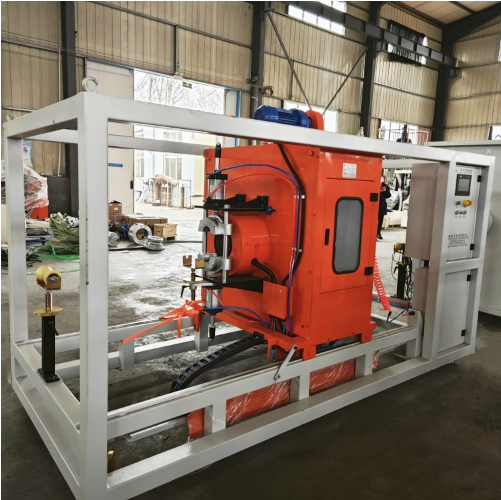
The vacuum calibration tanks determine the final dimensions and surface finish of the pipe. If the vacuum pressure fluctuates, the pipe becomes oval. The haul-off unit (puller) must be perfectly synchronized with the extruder speed. If the puller slips, the wall thickness changes. Finally, the cutting saws must deliver clean, chip-free cuts to avoid immediate scrap at the end of the line. A high-end extruder paired with a low-quality haul-off will never produce specification-compliant pipe.
Vetting a PVC Pipe Extruder Machine Manufacturer
PVC (Polyvinyl Chloride) releases hydrochloric acid when overheated, which is highly corrosive to metal. When interviewing a PVC pipe extruder machine manufacturer, you must ask specific metallurgical questions.
Metallurgy Check: Ask about the barrel and screw protection. Standard steel will not last. You need bimetallic barrels and screws with specialized coatings, such as nitriding or chrome plating, to resist corrosion and abrasion.
Trial Runs: Never accept a machine based on a "Dry Cycle" (running without material). You must insist on "Wet Trials." This involves running the actual PVC formulation you intend to use. It validates the torque capacity, the cooling efficiency, and the screw geometry's ability to handle your specific material blend.

The "Hidden" Ecosystem: Peripherals and Infrastructure
A high-performance machine sitting in an empty room produces nothing. To build a functional production cell, you need to budget for the peripheral ecosystem. Following the Euromap classification logic ensures you do not miss critical components.
Pre-Processing (Material Handling)
Before the plastic even enters the machine, it must be prepared. Moisture is the enemy of engineering plastics. Dehumidifying dryers are not optional for materials like PET, Nylon, or PC; moisture creates structural weaknesses and cosmetic splay. Auto-loaders ensure the machine never runs dry, maintaining a consistent material head pressure. For colored parts, volumetric or gravimetric dosing units ensure the masterbatch is added with precision, maintaining color consistency across batches.
Thermal Management
Thermal management is often the bottleneck of a production line. The mold or calibration tank must be cooled rapidly to solidify the plastic. If your chiller is undersized, you will have to extend the cooling time, slowing down the entire cycle. You must calculate the heat load carefully and size your chillers and Temperature Control Units (TCUs) accordingly. A chiller that is 20% undersized effectively de-rates your million-dollar production line by 20%.
Post-Processing & Automation
Once the part is made, how do you handle it? For injection molding, sprue pickers are simple robots that remove the runner system. However, full 3-axis or 6-axis robots offer greater flexibility, allowing for automated stacking, packaging, or insert loading.
Finally, consider the scrap strategy. Granulators and shredders allow for immediate scrap reintegration. By grinding runners or rejected parts beside the machine (closed-loop recycling), you can feed the regrind directly back into the hopper. This lowers your raw material costs significantly and reduces waste disposal fees.
Sourcing Strategy: New vs. Used vs. Offshore
The market offers a spectrum of sourcing options, from premium European brands to cost-effective Asian machinery and the secondary used market. The guiding metric here should always be Total Cost of Ownership (TCO), not just the Purchase Price.
The TCO Calculation (Total Cost of Ownership)
To understand the real cost of the machine, use this formula:
TCO = Purchase Price + (Energy Cost × 5 Years) + Estimated Maintenance + Scrap Rate Costs
A "cheap" machine that consumes 20% more energy and produces 5% more scrap due to instability will cost more than a premium machine within 18 months of operation. Energy consumption is often the largest single cost factor over the lifespan of the equipment.
New Machines
Buying new equipment provides security. You get full warranty benefits and compliance with modern safety standards (like OSHA or CE). New machines also come with the latest control systems, which feature better diagnostics and connectivity. This data is crucial for tracking OEE (Overall Equipment Effectiveness).
The Used Market Risks
The used market can offer bargains, but it is fraught with risk. Due diligence is mandatory. You must physically inspect the screw and barrel for wear; replacement costs for these components can be high.
A less obvious risk is controller obsolescence. If the machine uses a proprietary computer system from 15 years ago, finding replacement boards or screens might be impossible. Ensure the PLC and computer parts are still available in the market before purchasing a legacy machine.
Evaluating Overseas Suppliers
Many buyers look overseas to balance cost and performance. When assessing a brand from overseas, look beyond the brochure. Key indicators of a reliable partner include the presence of local service technicians and spare parts warehousing in your country. If a $50 sensor fails, you cannot afford to wait two weeks for shipping. ISO quality certifications are also a baseline requirement for ensuring consistent manufacturing standards.
Conclusion
Purchasing plastic manufacturing machinery is a complex exercise in risk management and technical forecasting. The workflow for a successful acquisition is linear: Define the product requirements, select the optimal process, choose the appropriate powertrain, audit the necessary peripherals, and finally, vet the vendor.
Your final purchasing decision should steer clear of the "Nameplate Trap"—buying a machine solely based on tonnage or brand recognition. Instead, focus on the plasticizing capacity, the specific screw geometry for your material, and the support network behind the iron. The best machine is the one that produces compliant parts at the lowest cost per unit, supported by a partner who can keep it running for decades.
FAQ
Q: What is the difference between single-screw and twin-screw extruders?
A: Single-screw extruders are primarily used for general thermoplastics like PE and PP pellets. They rely on friction for melting. Twin-screw extruders (conical or parallel) are essential for processing PVC powder and heat-sensitive materials. They use positive displacement to push material through, providing better shearing and mixing at lower temperatures, which prevents the material from degrading or burning.
Q: How do I calculate the clamping force needed for my mold?
A: The general rule of thumb is 2 to 3 tons of clamping force per square inch of the projected area of the part. For example, if your part has a projected surface area of 50 square inches, you would need a machine with approximately 100 to 150 tons of clamping force. High-flow materials or thin walls may require higher tonnage factors.
Q: Is it better to buy a refurbished hydraulic machine or a new Chinese electric machine?
A: This depends on your energy costs and application. A new electric machine will offer significantly lower operating costs and higher precision, making it better for long-term production of small to medium parts. A refurbished hydraulic machine is better if you need high clamping force (over 500 tons) on a tight budget or are running a short-term project where energy efficiency is less critical.
Q: What is the average lifespan of a PVC pipe extruder?
A: With proper maintenance, a high-quality PVC extruder can last 15 to 20 years. However, the screw and barrel are wear components. In a 24/7 production environment, you may need to replace or refurbish the screws every 2 to 3 years depending on the abrasiveness of the fillers (like Calcium Carbonate) used in your PVC formulation.
Q: How much budget should be allocated for auxiliary equipment vs. the primary machine?
A: A common mistake is underbudgeting for auxiliaries. A safe rule is to allocate 30% to 40% of the primary machine's cost for peripheral equipment. This includes chillers, dryers, loaders, granulators, and robots. If you spend 100% of your budget on the molding machine or extruder, you will not have the infrastructure to run it efficiently.



 +86-18561886575 (Mr.Wu)
 +8618561886575
 238 Yangzhou West Road, Jiaozhou City, Qingdao City, Shandong Province