PVC sealing strips are indispensable components across countless industries, from automotive door seals and construction window gaskets to industrial enclosure linings. Their role in preventing the ingress of dust, water, and air is critical for product longevity and performance. Historically, manufacturing these strips was a matter of high-volume commodity production. Today, the market demands have shifted dramatically towards high-precision extrusion, where tight tolerances, complex geometries, and multi-material properties are paramount. This guide serves as a comprehensive technical walkthrough for procurement heads and plant managers. We will dissect each stage of the manufacturing process, helping you evaluate the efficiency, quality, and overall return on investment of a modern PVC sealing strip production line.
Key Takeaways
Material Integrity: High-quality strips start with the correct S-PVC resin and additive compounding (stabilizers/plasticizers).
Precision Tooling: The die design is the single most important factor in maintaining dimensional tolerances.
Technology Integration: Modern precision PVC sealing strip production lines utilize co-extrusion to combine different material hardnesses (Shore A) in one pass.
ROI Drivers: Energy efficiency in the extrusion motor and scrap reduction through stable temperature control are the primary levers for TCO (Total Cost of Ownership).
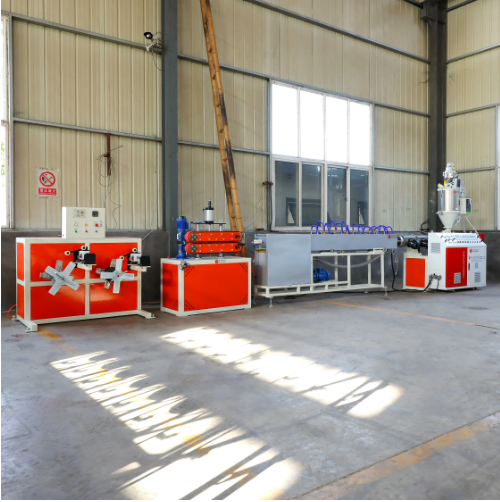
![Step By Step Process Of PVC Strip Manufacturing]()
1. Raw Material Preparation and Compounding Strategy
The final performance of any PVC sealing strip is determined long before the material enters the extruder. It begins with a meticulous raw material strategy, where the selection of the base resin and additives sets the foundation for durability, flexibility, and longevity.
Resin Selection
The choice of PVC resin is the first critical decision. For profile and strip applications, Suspension PVC (S-PVC) is overwhelmingly preferred over Emulsion PVC (E-PVC). S-PVC is produced through suspension polymerization, resulting in larger, more porous particles (typically 50–200 micrometers). This morphology allows the particles to absorb plasticizers and other additives uniformly, leading to a homogenous melt and superior physical properties in the final product. E-PVC, with its much finer particles, is better suited for pastes and coatings rather than rigid or semi-rigid extruded profiles.
The Compounding Phase
Raw PVC resin on its own is brittle and thermally unstable. The compounding phase transforms it into a processable and functional material. This involves blending the resin with a precise recipe of additives in a high-speed mixer:
Stabilizers: These are essential to prevent the thermal degradation of PVC at processing temperatures. Heat stabilizers, typically based on tin or calcium-zinc systems, neutralize the hydrochloric acid released during heating, protecting the polymer chain. UV stabilizers are added for applications exposed to sunlight, preventing discoloration and embrittlement.
Plasticizers: These additives, such as phthalates or bio-based alternatives, are integrated to impart flexibility. The amount of plasticizer directly controls the final hardness (durometer) of the sealing strip.
Impact Modifiers: For applications requiring toughness and resistance to cracking, impact modifiers like acrylic polymers or CPE (chlorinated polyethylene) are incorporated into the compound.
Fillers & Pigments: Fillers like calcium carbonate can reduce cost and improve rigidity, while pigments provide color according to specification.
Moisture Control
Moisture is the enemy of high-quality PVC extrusion. Any residual water in the compound will turn to steam inside the hot extruder barrel, creating voids, bubbles, or porosity in the final strip. This compromises both its appearance and its sealing integrity. To prevent this, the compounding process utilizes a two-stage mixer system. First, a high-speed heating mixer generates frictional heat to thoroughly blend all components and drive off surface moisture. Immediately after, the hot compound is discharged into a low-speed cooling mixer, which brings the temperature down to prevent premature gelling and clumping before it reaches the extruder.
Decision Lens: "Ready-to-Use" Compounds vs. In-House Mixing
A key strategic decision for manufacturers is whether to purchase pre-formulated, "ready-to-use" PVC compounds or to invest in in-house mixing capabilities. Ready-to-use compounds offer consistency and reduce complexity, but they come at a premium price and offer less flexibility for custom formulations. In-house mixing provides greater cost control, customization potential, and protection of proprietary formulations. However, it requires significant capital investment in mixing equipment and deep material science expertise to manage quality control effectively.
2. The Extrusion Core: Anatomy of a PVC Sealing Strip Production Line
The extruder is the heart of the production line, responsible for melting, mixing, and pressurizing the PVC compound before it reaches the die. The design and condition of this core machinery directly influence output consistency, energy consumption, and the final quality of the sealing strip.
Feeding Systems
Consistent material delivery to the extruder screw is non-negotiable for a stable process. There are two primary methods:
Gravity Feeding: A simple hopper uses gravity to feed the dry-blend compound into the extruder's throat. While cost-effective, it can be prone to "bridging" or inconsistent flow, especially with less free-flowing powders.
Force-Feeding (Metering): A metering screw or auger actively pushes a controlled volume of material into the extruder. This system provides a much more consistent feed rate, which is critical for maintaining stable pressure and achieving tight dimensional tolerances in the final product. For high-precision applications, force-feeding is the standard.
The Extruder (Single vs. Twin Screw)
While single-screw extruders are used for many thermoplastics, twin-screw extruders offer distinct advantages for processing unplasticized or semi-rigid PVC powder compounds.
Co-rotating, intermeshing twin screws provide superior conveyance and mixing action. They actively pull the material forward, creating less reliance on friction against the barrel wall. This positive conveying action ensures a more uniform melt and better temperature control, which is vital for heat-sensitive PVC. Maintaining the melt temperature within the optimal window of 160°C to 200°C is crucial. Below this range, the material won't fuse properly; above it, thermal degradation begins, releasing corrosive gases and compromising the material's integrity.
Precision PVC Sealing Strip Production Line Components
A high-performance production line is defined by the quality of its components, which are designed for durability and process stability.
Barrel and Screw Hardening: PVC compounds can be abrasive and, when degraded, corrosive. The screw and the inner surface of the barrel are typically made from high-strength steel that has undergone a nitriding process. This surface-hardening treatment creates exceptional wear resistance, extending the operational life of these critical components.
Vacuum Degassing Units: As the PVC melts, it can release trapped air, moisture, and other volatile substances. A vacuum degassing port on the extruder barrel actively removes these gases from the melt stream. This is essential for preventing bubbles and porosity, ensuring a dense, solid, and high-integrity sealing strip.
3. Precision Die Design and Forming Techniques
Once the PVC compound is perfectly melted and pressurized by the extruder, it enters the shaping and cooling stages. The design of the die and the precision of the downstream calibration equipment are what transform the molten polymer into a functional sealing strip with exact dimensions.
Die Head Engineering
The extrusion die is far more than a simple shaped hole. It is a complex piece of engineered tooling. The internal "flow channel" is meticulously designed to guide the molten PVC smoothly from the circular extruder outlet to the final complex profile shape. A well-designed die ensures uniform velocity across the entire profile cross-section. This prevents internal stress buildup and eliminates common surface defects like "shark skin" (a fine-scale roughness) or "melt fracture." The die also incorporates heating elements to maintain the precise melt temperature right up to the point of exit.
The Calibration Process
As the hot, soft profile exits the die, it must be cooled and solidified into its final shape without distortion. This is achieved in the calibration section. For complex geometries like D-type, P-type, or U-type seals, vacuum sizing tanks are employed. The extruded profile is pulled through a series of calibrator blocks that match its desired shape. A vacuum is applied to these blocks, which gently pulls the soft profile against the cool metal surfaces. This technique actively holds the shape and dimensions while it cools, ensuring high precision that simple water bath cooling cannot achieve.
Plastic Profile Production Line Versatility
Modern manufacturing demands flexibility. A highly versatile plastic profile production line often utilizes modular die systems. This allows for rapid changeovers between different strip architectures. By swapping out a relatively small and inexpensive set of die and calibrator tooling, a single extrusion line can be reconfigured to produce a wide variety of sealing strip profiles, maximizing the equipment's uptime and return on investment.
Cooling Dynamics
After the initial shape is locked in by the vacuum calibrators, the strip passes through a series of water cooling tanks to remove the remaining heat. The cooling process must be carefully controlled. Abrupt or uneven cooling can introduce internal stresses, leading to warping, twisting, or undesirable shrinkage in the final product. Advanced systems use multiple cooling zones with precisely controlled water temperatures, ensuring a gradual and uniform temperature reduction across the profile's entire mass.
4. Advanced Co-Extrusion and Surface Finishing
To meet advanced performance requirements, manufacturers often need to combine different materials or add surface functionalities. Modern production lines integrate these processes directly into the continuous extrusion flow, boosting efficiency and creating high-value products.
Multi-Material Integration
Co-extrusion is a sophisticated process that allows two or more different materials to be extruded and bonded together in a single die. This technology is fundamental for creating dual-durometer sealing strips. A common example is a strip with a rigid PVC base for secure mounting in a channel, combined with a soft, flexible PVC lip for effective sealing. Two separate extruders, each processing a different PVC compound (one rigid, one flexible), feed a specialized co-extrusion die head that merges the melt streams just before they exit, creating a permanent, molecular-level bond.
Surface Treatment
For some applications, the surface properties of the PVC strip need to be modified. This can be done in-line, immediately after the cooling stage.
Low-Friction Coatings: In dynamic sealing applications, such as automotive window channels, a low-friction coating can be applied to the strip's surface to reduce wear and ensure smooth operation.
Flocking: A fine layer of textile fibers can be electrostatically applied to the surface to improve aesthetics and provide a soft touch.
Anti-Static Properties: For electronics or cleanroom applications, a conductive coating can be applied to dissipate static electricity.
In-Line Texturing
Beyond coatings, physical surface textures can also be added in-line. This might involve passing the still-pliable strip through embossing rollers to create a specific pattern or grain for aesthetic purposes. In other cases, a thin, protective film can be laminated onto the surface during the extrusion process to shield it during transport and installation.
Implementation Risk
The primary challenge in co-extrusion is ensuring perfect compatibility and adhesion between the different materials. The PVC grades must have similar melt temperatures and processing characteristics to bond effectively within the die. If the materials are incompatible, delamination can occur, leading to product failure. Managing this risk within a single plastic profile production line requires deep expertise in both material science and die engineering to ensure a robust and permanent bond between the distinct layers.
5. Quality Control, Testing, and Compliance Standards
Manufacturing a high-precision PVC sealing strip is pointless without a robust quality control framework to verify its performance. This involves a combination of real-time monitoring, offline physical testing, and adherence to international regulatory standards.
Dimensional Accuracy
Maintaining tight dimensional tolerances is paramount. Modern production lines have moved beyond manual checks with calipers. In-line laser measurement systems continuously scan the profile as it exits the cooling tanks. These non-contact systems measure critical dimensions in real-time and can automatically adjust the line speed or puller tension to correct for any deviations, ensuring every meter of the strip meets the specified tolerances.
Physical Property Testing
Offline testing is conducted on samples taken from the production run to validate the material's physical properties against specifications. Key tests include:
| Property Test | Test Standard (Example) | Typical Range/Goal |
| Shore A Hardness | ASTM D2240 | 50–90 Shore A (depending on application) |
| Tensile Strength & Elongation at Break | ASTM D412 | Ensures strip doesn't tear during installation or use. |
| Compression Set | ASTM D395 | Measures ability to rebound after being compressed. |
| Accelerated Aging (UV/Ozone) | ASTM G154 / ASTM D1171 | Simulates long-term exposure to environmental factors. |
Regulatory Alignment
For products sold in global markets, compliance with regulations is mandatory. The production process and material formulations must adhere to standards such as:
REACH (Registration, Evaluation, Authorisation and Restriction of Chemicals): An EU regulation governing the use of chemical substances.
RoHS (Restriction of Hazardous Substances): Restricts the use of specific hazardous materials found in electrical and electronic products.
UL Flame Retardancy: For applications requiring fire resistance, materials must pass specific tests like UL 94.
Waste Management
An efficient production line minimizes waste. "Start-up scrap," the material produced while the line is being dialed in, can often be mechanically recycled. This scrap is ground into granules and can be blended back into the virgin material feed at a controlled percentage. This practice supports a circular economy, reducing waste and raw material costs without significantly impacting the performance of the final product, provided the regrind quality is high.
6. Evaluating ROI: Selecting the Right Production Infrastructure
Investing in a precision PVC sealing strip production line requires a thorough evaluation of its Total Cost of Ownership (TCO), not just the initial purchase price. Factors like operational efficiency, maintenance needs, and future scalability are critical drivers of long-term profitability.
Operational Efficiency
Energy consumption is a major operational cost in extrusion. The main drive motor of the extruder is the largest consumer. Modern production lines are increasingly equipped with high-efficiency servo motors instead of traditional AC induction motors. While servo motors have a higher upfront cost, they offer significant energy savings (often 20-50%) because their power consumption is directly proportional to the actual load, unlike induction motors that run at a near-constant high power draw. This difference translates into substantial long-term savings on electricity bills.
Maintenance Cycles
Downtime is lost revenue. When evaluating a production line, it's crucial to identify high-wear components and understand their expected lifespan and replacement cost. Key components to scrutinize include:
Screws and Barrels: As mentioned, these are subject to abrasive and corrosive wear. The quality of the base metal and the nitriding process will determine their longevity.
Heaters and Thermocouples: These are essential for temperature control and can fail over time. Easy access for replacement is a key design consideration.
Die and Calibrator Tooling: These components must be regularly cleaned and maintained to prevent buildup that can affect the strip's surface finish and dimensions.
A well-designed line minimizes maintenance downtime and makes component replacement straightforward, directly impacting its TCO.
Scalability
The materials market is not static. Your production infrastructure should be able to adapt to future innovations. Consider the line's ability to process emerging materials like bio-based PVC compounds or thermoplastic elastomers (TPEs), which are sometimes used as PVC alternatives. A line with a robust motor, versatile screw design, and flexible temperature control system will be better positioned to handle new material requirements without needing a complete overhaul.
Vendor Shortlisting
When selecting an equipment manufacturer, your technical due diligence should go beyond the machine's specifications. Ask targeted questions to assess their suitability as a long-term partner:
Commissioning & Training: What level of on-site support do you provide for installation, commissioning, and operator training?
Spare Parts Availability: What is your policy on spare parts? Do you maintain a stock of critical components, and what are the typical lead times?
Software & Integration: Is the control system proprietary or based on an open platform (e.g., Siemens, Allen-Bradley)? How easily can it be integrated with our existing factory monitoring (MES) systems?
Technical Support: What does your post-sale technical support structure look like? Is remote diagnostics available to troubleshoot issues quickly?
Conclusion
The journey from a simple PVC resin powder to a high-performance sealing solution is a complex interplay of material science, mechanical engineering, and process control. Success is not merely about extruding plastic; it's about precisely managing every variable—from compound moisture levels and melt temperatures to cooling rates and dimensional stability. The modern manufacturing landscape demands a holistic approach, where the precision of the machinery is perfectly balanced with a deep understanding of the materials it processes.
By scrutinizing each step of this process, from raw material intake to final quality assurance, you can better identify opportunities for improvement and make more informed investment decisions. To unlock the full potential of your operations, consider consulting with a technical specialist to audit your current PVC sealing strip production line for hidden bottlenecks and efficiency gains.
FAQ
Q: What is the difference between a standard plastic profile production line and a precision strip line?
A: The primary differences are in tolerance control and cooling. A precision line uses advanced systems like vacuum calibrators and multi-zone cooling to hold extremely tight dimensional tolerances (often within fractions of a millimeter). It also employs force-feeding and stable temperature control systems to ensure a perfectly consistent melt flow, which is essential for high-precision outputs. A standard line may use simpler water bath cooling and gravity feeding, suitable for applications with less stringent dimensional requirements.
Q: How does co-extrusion improve sealing strip performance?
A: Co-extrusion allows for the combination of different material properties in a single profile. For a sealing strip, this typically means a rigid, durable material is used for the mounting base to ensure it clips securely into place, while a soft, flexible material is used for the sealing lip. This dual-durometer design provides both structural integrity and excellent sealing capability, a combination that is impossible to achieve with a single material.
Q: Can recycled PVC be used in high-precision sealing strips?
A: Yes, but with caution. High-quality, post-industrial recycled PVC (regrind) can be used, typically blended with virgin material at a controlled percentage (e.g., 10-25%). However, PVC has a recycling limit, often cited as 6-10 cycles, before its properties begin to degrade significantly. For high-precision applications, using recycled material requires rigorous quality control of the regrind to ensure there are no contaminants and that its processing characteristics remain consistent.
Q: What are the most common defects in PVC strip manufacturing?
A: Common defects include bubbles or voids (often caused by moisture or volatiles), uneven thickness or warping (due to poor temperature control or improper cooling), and surface roughness or "shark skin" (typically a result of incorrect die design or melt temperature). Other issues can be inconsistent color from poor pigment dispersion or lines/streaks caused by degraded material buildup in the die.



 +86-18561886575 (Mr.Wu)
 +8618561886575
 238 Yangzhou West Road, Jiaozhou City, Qingdao City, Shandong Province