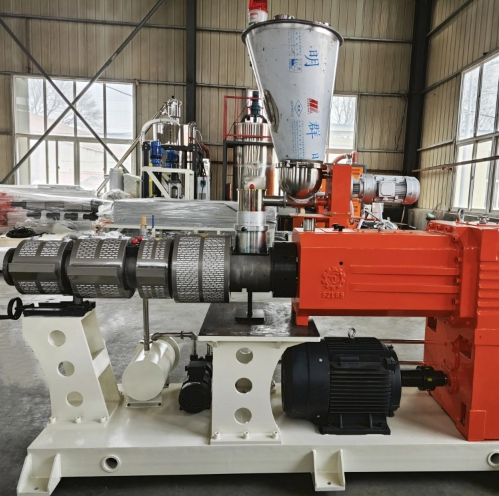
Choosing between PVC vs CPVC Pipes is one of the most important decisions in modern plumbing, construction, and industrial fluid handling. The right choice affects safety, durability, maintenance costs, and regulatory compliance. With continuous improvements in every Plastic Pipe Production Line, understanding where each material performs best has become even more critical for engineers, contractors, and buyers.
Understanding PVC and CPVC Pipe Materials
PVC (polyvinyl chloride) and CPVC (chlorinated polyvinyl chloride) are both thermoplastic piping materials derived from the same base polymer but modified to deliver different performance levels. While they look similar at a glance, their chemistry and behavior under temperature and pressure are not the same.
PVC is produced by polymerizing vinyl chloride monomers into a rigid, strong plastic. It is naturally corrosion-resistant, lightweight, and easy to fabricate on a PVC Pipe Production Line. Typical PVC pipes are used at moderate temperatures, mainly for cold water and drainage applications. Their smooth bore reduces friction losses, which helps maintain flow efficiency over long runs.
CPVC is created by chlorinating PVC resin. This additional chlorination step changes the material’s structure, increasing its glass transition temperature and improving chemical resistance. As a result, CPVC can safely handle significantly higher temperatures than standard PVC while maintaining good pressure ratings. CPVC pipes are also produced on specialized Plastic Pipe Production Lines, which operate at higher processing temperatures and require tight process control.
PVC vs CPVC Pipes: Key Performance Differences
Although PVC and CPVC share some attributes, there are clear distinctions that guide their usage in real-world systems.
Temperature Resistance
Temperature capability is the most recognized difference in the PVC vs CPVC Pipes comparison. PVC is generally limited to lower operating temperatures and is commonly used for cold water, drain, and vent lines. When exposed to temperatures above its rating, PVC can soften, lose strength, and deform.
CPVC, on the other hand, is designed to perform reliably at much higher temperatures, making it suitable for domestic hot water, industrial hot process lines, and fire protection systems. Its pressure rating does decrease with temperature, but more slowly than PVC, allowing for safe use in demanding thermal conditions.
Chemical Resistance
Both materials are resistant to many corrosive substances, but CPVC often offers superior resistance to aggressive chemicals and elevated temperatures at the same time. In industrial plants, chemical compatibility charts are used to determine whether PVC or CPVC is appropriate for a specific acid, alkali, or solvent. For ambient, less aggressive fluids, PVC provides a cost-effective solution; for hotter, more corrosive media, CPVC is frequently preferred.
Pressure Ratings and Mechanical Strength
At room temperature, pressure ratings for PVC and CPVC can be similar. As temperatures rise, however, PVC’s pressure capacity declines faster than that of CPVC. This behavior is a crucial factor when selecting materials for hot water or steam-assisted cleaning systems.
Mechanically, both materials are strong but relatively lightweight. They are less prone to corrosion-related thinning than metal pipes. At very low temperatures, impact resistance becomes important; formulations and installation practices should be selected with local climate in mind to minimize brittleness and damage during handling.
Installation and Jointing
Installation methods for PVC vs CPVC Pipes are similar but not identical. Both are commonly joined using solvent cements that chemically soften and fuse the pipe and fitting surfaces. However, the cement formulations and application procedures are tailored to each material.
Installers must use the correct cement and primer specified for PVC or CPVC, follow recommended cure times, and ensure surfaces are clean and properly prepared. Using the wrong cement or rushing the cure period is a frequent cause of leaks and failures, regardless of the material’s inherent quality.
Safety, Standards, and Compliance
Both PVC and CPVC are subject to plumbing, building, and fire codes, as well as various product standards. Depending on the region and application, codes may restrict PVC in hot water or certain fire protection applications, while recognizing CPVC for those same services.
Specifiers must confirm that selected pipes and fittings are appropriately rated and certified for potable water, fire sprinkler systems, or industrial chemical transport, and that the products come from reputable manufacturers operating advanced PVC Pipe Production Lines with robust quality control.
Cost, Lifecycle, and Value
PVC is typically less expensive to purchase and install than CPVC, making it the first choice in many cold water, drainage, and irrigation systems. However, when higher temperatures or aggressive chemicals are involved, CPVC often offers better lifecycle value by reducing failures, downtime, and maintenance costs.
Advances in Plastic Pipe Production Line technology have further improved both materials’ consistency, dimensional accuracy, and long-term performance, helping users capture more value from properly designed systems.
Top Applications for PVC Pipes
Because of its cost-effectiveness and versatility, PVC remains a staple in many construction and infrastructure projects worldwide.
Cold Water Supply in Residential and Commercial Buildings
In many regions, PVC is widely used for cold potable water distribution. Its corrosion resistance makes it a strong alternative to metal pipes in areas with aggressive water chemistry. For these systems, designers must respect temperature limits and avoid using PVC for hot water branches to ensure long-term reliability.
Drainage, Waste, and Vent (DWV) Systems
One of the most common uses of PVC pipes is in DWV systems. The lightweight nature of PVC simplifies installation in residential, commercial, and institutional buildings. Its smooth interior helps prevent sediment buildup, and its resistance to many household chemicals makes it durable under everyday use.
Irrigation and Agricultural Water Distribution
In fields, greenhouses, and landscaping projects, PVC is the dominant material for irrigation lines. It handles moderate pressures, is easy to cut and join on site, and offers long service life when protected from prolonged unshielded UV exposure or combined with UV-stabilized formulations.
Electrical Conduit and Cable Protection
Rigid PVC conduits safely house electrical and communication cables. The material is non-conductive, corrosion-resistant, and easy to route through slabs, walls, and ceilings. This application leverages PVC’s mechanical strength and resistance to moisture and many chemicals.
Industrial Process Water and Utility Lines
For low-temperature process water, cooling water, or general utility lines in industrial plants, PVC pipes often provide a reliable and economical option. When designed correctly, these systems deliver reduced pumping losses and minimal maintenance compared to corrodible metal systems.
Municipal Sewers and Stormwater Systems
Large-diameter PVC pipes are increasingly used in underground sewer and stormwater networks. Their low roughness reduces the risk of blockages, and their corrosion resistance extends service life even in challenging soil or wastewater conditions.
Top Applications for CPVC Pipes
CPVC comes into its own where elevated temperatures, aggressive media, or specific safety requirements rule out standard PVC.
Hot and Cold Potable Water Systems
A primary application for CPVC is domestic and commercial hot and cold water distribution. Its higher temperature rating allows it to safely carry hot water from heaters to fixtures in homes, hotels, hospitals, and high-rise buildings without the softening and deformation risks associated with PVC under similar conditions.
Fire Sprinkler and Fire Protection Systems
In light-hazard and residential fire sprinkler installations, CPVC is widely recognized as a suitable material. It combines corrosion resistance with low weight and ease of assembly, often outperforming metal alternatives where internal corrosion and deposits are a concern.
Industrial and Chemical Process Piping
Many industrial plants rely on CPVC piping to handle hot corrosive fluids, chemical wash lines, and aggressive wastewater streams. Its ability to maintain structural integrity and pressure at higher temperatures makes it a safe choice in processes that would quickly degrade PVC or unprotected metals.
High-Temperature HVAC and Hydronic Systems
CPVC is also used in select HVAC and hydronic heating applications where supply water temperatures exceed PVC limits. When properly supported and insulated, CPVC can be part of energy-efficient heating or cooling loops, particularly in commercial or institutional settings.
Pools, Spas, and Recreational Water Systems
Pool and spa systems frequently involve hot, chemically treated water. CPVC’s resistance to chlorinated and chemically adjusted water at elevated temperatures helps reduce leaks, corrosion, and scaling, improving overall system reliability and user safety.
How Production Technology Shapes Pipe Quality
Behind every reliable PVC or CPVC system is a well-designed PVC Pipe Production Line and a controlled manufacturing process. Production quality directly influences pipe performance, consistency, and lifespan.
Key Stages of a PVC Pipe Production Line
A typical PVC pipe manufacturing process includes resin compounding, extrusion, sizing, cooling, haul-off, and cutting. During compounding, PVC resin is blended with stabilizers, impact modifiers, lubricants, and pigments to achieve the desired properties. The mixture is then melted and pushed through an extruder and die to form the pipe.
In the sizing and cooling stages, the hot pipe is shaped to precise dimensions and cooled to stabilize its structure. Quality checks at multiple points verify wall thickness, ovality, impact resistance, and surface finish. Advanced Plastic Pipe Production Lines use automated controls to keep temperatures, pressures, and line speeds within narrow tolerances.
CPVC Production Considerations
CPVC processing operates at higher temperatures and requires careful handling to prevent resin degradation. Specialized screw designs, dies, and temperature control systems help maintain resin stability throughout the extrusion process. The result is a pipe that retains its higher-temperature capabilities and mechanical properties over its service life.
Impact on System Performance
Consistent production leads to predictable pressure ratings and long-term reliability. Pipes produced on modern, well-maintained lines are less prone to defects such as voids, thin spots, or excessive ovality. For critical applications like fire sprinklers or industrial chemical transport, these quality factors can be just as important as the base material selection.
Expert and Industry Perspectives on PVC vs CPVC Pipes
Different stakeholders in the construction and industrial sectors highlight distinct aspects of PVC vs CPVC Pipes based on their experience and priorities.
Manufacturer A Perspective
One major manufacturer emphasizes CPVC’s superior high-temperature performance and promotes it for hot water, fire protection, and aggressive industrial chemicals. At the same time, the company recommends PVC for cost-sensitive applications such as cold water distribution, DWV systems, and irrigation, often combining both materials in the same project to balance performance and budget.
Manufacturer B Perspective
Another pipe producer stresses the importance of chemical compatibility and temperature derating curves when choosing between PVC and CPVC. They highlight that CPVC typically retains higher pressure ratings at elevated temperatures and urge installers to follow material-specific solvent cementing procedures to avoid premature joint failure.
Building Products Platform Perspective
A large building products platform positions PVC as the default choice for residential drainage and cold water lines due to its low cost and ease of use. The same platform points to CPVC as an ideal alternative where corrosion risk or hot water demand rules out metals and PVC, noting that local codes and inspector familiarity often influence what is finally installed.
Plumbing Trade Association Perspective
A plumbing trade association cautions against using PVC in hot water lines, citing reduced strength and service life when temperature limits are exceeded. They endorse CPVC for domestic hot water, certain fire sprinkler systems, and chemical applications, while recommending that specifiers always confirm local code requirements and product certifications.
Construction Forum Perspective
On professional construction forums, installers frequently report that PVC is faster and cheaper to install on large cold-water and irrigation projects. Many contributors prefer CPVC in systems that see frequent temperature cycling or continuous hot water use. Forum discussions often note that improper solvent welding and installation practices, rather than the material itself, cause most leak problems.
Industrial Engineering Magazine Perspective
An industrial engineering magazine compares lifecycle costs across materials and finds that CPVC can be more economical than certain metals in high-temperature, corrosive chemical services. The publication still recognizes PVC as a prime choice for low-temperature process water and drainage. It also highlights how advancements in Plastic Pipe Production Line technology are improving dimensional stability and reliability of both PVC and CPVC systems.
Green Building Platform Perspective
A sustainability-focused platform points out that lightweight plastic pipes can reduce transport energy compared to traditional materials. It encourages buyers to choose certified PVC and CPVC products with documented environmental performance and emphasizes that long service life and minimized leakage translate into water and energy savings throughout the building’s lifecycle.
Buyer’s Guide: How to Choose Between PVC and CPVC
Making a sound decision between PVC vs CPVC Pipes requires aligning system conditions with material capabilities, while also considering codes, budget, and long-term operation.
Key Questions to Ask
What is the maximum operating temperature and pressure for the system?
What fluid will the pipe carry (potable water, wastewater, chemicals, fire water, etc.)?
Is the piping installed indoors, outdoors, underground, or exposed to UV?
Are there local regulations that restrict PVC or CPVC in certain applications?
Matching Material to Application
PVC is usually preferred for cold potable water (where allowed), DWV systems, irrigation, and conduit. CPVC is typically selected for hot and cold potable water, fire sprinklers, and industrial lines carrying hot or aggressive fluids. In many buildings and plants, a hybrid approach—using PVC where temperatures are moderate and CPVC where they are higher—delivers optimal performance and value.
Working With Manufacturers and Suppliers
When sourcing materials, it is wise to work with manufacturers operating modern PVC Pipe Production Lines and offering complete technical documentation. Look for evidence of compliance with relevant standards, pressure and temperature ratings, installation manuals, and training resources. Reliable suppliers can help you interpret chemical compatibility data, code requirements, and proper installation techniques.
Avoiding Common Mistakes
Common pitfalls include using PVC beyond its temperature rating, mixing incompatible fittings or solvent cements, and neglecting proper support and expansion allowances. Failure to respect these details can lead to leaks, callbacks, and even safety hazards. Careful design, material selection, and adherence to manufacturer instructions greatly reduce these risks.
FAQs About PVC vs CPVC Pipes
Can PVC Be Used for Hot Water?
In most cases, PVC is not recommended for continuous hot water service because it loses strength as temperature rises. CPVC or other high-temperature-rated materials should be used for domestic hot water lines and similar applications.
Is CPVC Safe for Drinking Water?
CPVC pipes that are certified to appropriate potable water standards are widely used for drinking water systems. As with any product, buyers should verify relevant certifications and local approvals.
Which Is More Durable, PVC or CPVC?
Durability depends on the environment. PVC is highly durable in cold water, drainage, and non-aggressive services, while CPVC provides greater durability in hot or corrosive conditions. Both materials can deliver long service life when properly installed and operated within their ratings.
How Do I Transition Between PVC and CPVC?
Transitions should be made using fittings specifically designed for PVC-to-CPVC connections, following the manufacturer’s guidelines. This often involves compatible solvent cements and, where necessary, approved mechanical or threaded adaptors.
Does Production Line Quality Really Matter?
Yes. The technology and control behind each Plastic Pipe Production Line directly influence pipe uniformity, wall thickness, and structural integrity. High-quality production reduces defects, improves pressure performance, and contributes to a longer, more reliable service life for both PVC and CPVC piping systems.
By understanding how PVC and CPVC differ in temperature resistance, chemical compatibility, and production quality, specifiers and buyers can confidently choose the right material for each application, building systems that are safe, efficient, and built to last.


 +86-18561886575 (Mr.Wu)
 +8618561886575
 238 Yangzhou West Road, Jiaozhou City, Qingdao City, Shandong Province