Global demand for polyvinyl chloride (PVC) piping remains strong across construction, agriculture, and infrastructure. We see it constantly replacing traditional metal piping because it is lightweight, resists rust, and installs easily. However, capitalizing on this market requires precise alignment between end-product specifications and manufacturing capabilities. Entering the PVC pipe market or expanding existing operations often fails when manufacturers purchase generic equipment without defining their target end-use applications. Producing pipes that fail to meet specific environmental, pressure, or compliance standards leads to high defect rates, rejected batches, and wasted capital. Understanding the exact applications, the advantages over legacy materials, and the inherent material limitations of PVC is the first step in technical evaluation. This guide breaks down common PVC use cases, structural requirements, and how these factors dictate the configuration of your manufacturing equipment.
- Application Dictates Equipment: Target markets (e.g., high-pressure water supply vs. low-pressure drainage) directly determine the required extruder torque, screw design, and cooling calibration of your manufacturing setup.
- The Metal-to-Plastic Shift Drives Demand: The transition away from copper, steel, and cast iron toward PVC relies on its cracking resistance and easy installation, requiring manufacturers to maintain strict dimensional tolerances to ensure seamless joint fitting.
- Material Limitations Require Production Workarounds: Inherent PVC weaknesses, such as UV degradation and temperature limits, must be mitigated through specific resin formulations and co-extrusion capabilities.
- Specialized Lines Yield Higher Margins: Dedicated setups, such as a PVC conduit production line or a PVC downpipe production line, offer better ROI through optimized output rates and reduced material waste compared to generalized machines.
- Compliance is Non-Negotiable: Evaluating plastic pipe production line specifications must include a review of downstream testing and quality assurance integrations to meet ASTM, ISO, or DIN standards.
Core Success Criteria: Aligning PVC Applications with Manufacturing Capabilities
Defining the success criteria for a profitable pipe manufacturing operation requires looking past basic output metrics. A successful extrusion facility must achieve consistent wall thickness, maintain high output speeds, prevent thermal resin degradation, and hold strict dimensional tolerances. Variations in wall thickness directly compromise the hydrostatic pressure rating of the final product. Resin degradation, caused by excessive shear heat in the extruder barrel, leads to brittle pipes that fail drop-impact tests on construction sites. Establishing tight dimensional tolerances ensures that downstream contractors can easily solvent-weld or gasket-fit the pipes without leaks.
The fundamental baseline rule in plastics manufacturing is that the end-use application dictates the formulation. Whether the pipe will handle pressurized municipal water, non-pressurized gravity drainage, indoor electrical wiring, or outdoor agricultural irrigation determines whether you run standard unplasticized PVC (UPVC), chlorinated PVC (CPVC), or molecularly oriented PVC (PVC-O). This formulation requirement then dictates the mechanical specifications of your PVC Pipe Production Line. You cannot run highly viscous CPVC through a standard UPVC screw profile without risking severe equipment wear and material burning.
Assessing local market demand involves identifying which sectors are actively replacing legacy metal pipes. Municipalities replacing aging cast-iron water mains present a massive opportunity for large-diameter infrastructure lines. Conversely, residential construction booms drive demand for high-speed, small-diameter plumbing and drainage lines. Deciding between a heavy-duty, large-diameter extrusion setup and a high-speed, multi-strand small-diameter setup depends entirely on where the metal-to-plastic shift is happening fastest in your target region. Operators must also factor in the availability of raw materials, as high-filler formulations require different material handling systems than virgin resin blends.
Common PVC Pipe Applications and Required Production Configurations
Plumbing and Potable Water Supply (Pressure Pipes)
Potable water supply and residential plumbing rely heavily on PVC as the primary replacement for copper and galvanized steel. Metal pipes suffer from scale buildup, pitting, and eventual pinhole leaks. PVC offers absolute corrosion resistance. It maintains a smooth internal bore that prevents friction loss and bacterial adhesion over decades of use. Because these lines operate under constant municipal water pressure, structural integrity is non-negotiable.
Manufacturing pressure pipes requires high-torque twin-screw extruders capable of processing UPVC with exact pressure-rating tolerances. The melt pressure must remain completely stable to prevent surging at the die head. Surging causes microscopic variations in wall thickness, which act as stress risers under hydrostatic load. When evaluating equipment for this application, prioritize automated gravimetric dosing systems. Volumetric feeders cannot account for changes in bulk density within the dry blend. Gravimetric systems weigh the resin and additives continuously, ensuring exact ratios. This prevents weak spots in the polymer matrix that could lead to catastrophic burst failures in pressurized plumbing networks.
Drainage, Waste, and Vent (DWV) Systems
DWV systems manage non-pressurized sewage and rainwater. Contractors prefer PVC over cast iron here due to its lightweight handling, which drastically reduces heavy lifting equipment requirements and labor hours during installation. Because DWV pipes do not hold pressure, this market is highly cost-sensitive. Profitability relies on high-volume, continuous production with minimal material waste.
To dominate this sector, manufacturers integrate a dedicated PVC downpipe production line optimized for high-speed output. The critical evaluation dimension for DWV production is the efficiency of the inline belling machine. DWV pipes require precise bell sockets for gasketed or solvent-welded joints. The belling process involves an infrared heating oven that softens the pipe end before a mechanical mandrel forms the socket. Furthermore, the line must support co-extrusion technology. By utilizing a foamed core or incorporating recycled PVC in the middle layer, manufacturers significantly reduce raw material costs while maintaining the smooth, solid outer and inner skins required for flow efficiency.
Industrial Liquid Handling and Chemical Transport
Factories, chemical processing plants, and wastewater treatment facilities require heavy-duty piping to transport corrosive fluids, aggressive acids, and industrial effluents. Metal pipes degrade rapidly in these environments. Industrial PVC applications demand thick-walled Schedule 80 pipes that exhibit exceptional cracking resistance and chemical inertness.
Producing industrial-grade pipes requires robust PVC pipe manufacturing equipment capable of handling high melt pressures. The extruder torque capacity must be substantial to push highly viscous, impact-modified PVC formulations through large die heads. Specialized spider die designs are necessary to maintain uniform wall thickness across thick profiles and minimize weld line weakness. Any deviation in wall thickness creates a localized stress riser, which can lead to pipe rupture during the transport of hazardous liquids. Operators must closely monitor the cooling bath temperatures to ensure the thick walls cool evenly without inducing internal stresses.
Electrical and Telecommunications Infrastructure
PVC serves as a protective conduit for electrical wiring and telecommunications cables, shielding them from moisture, physical impact, and chemical exposure underground or within walls. Unlike metal conduit, PVC does not conduct electricity, eliminating grounding hazards. This application requires specific formulations containing fire-retardant and impact-resistant additives to meet strict electrical codes.
Entering this market requires investment in a specialized PVC conduit production line. Because conduits are typically small in diameter, single-strand extrusion is often too slow to be profitable. Manufacturers utilize dual-strand or even quad-strand extrusion heads to double or quadruple output rates from a single extruder. The primary evaluation metric here is haul-off and cutting synchronization. Balancing the melt flow in a multi-strand die is challenging; if one strand runs faster, the haul-off must compensate perfectly. Conduit production runs at significantly higher line speeds than large-diameter plumbing pipes, meaning the downstream planetary saws must actuate in milliseconds to ensure clean cuts.
Agricultural and Landscape Irrigation
Agricultural irrigation systems face harsh conditions, including soil shifting, exposure to concentrated chemical fertilizers, and fluctuating water pressures from heavy-duty pumps. The piping must be durable yet slightly flexible to accommodate ground movement without snapping during seasonal temperature changes.
A versatile Plastic Pipe Production Line configured for agriculture must handle varying wall thicknesses efficiently. Irrigation networks utilize a mix of main feeder lines and thinner-walled distribution lines. Advanced setups integrate inline drip-hole punching and coiling machines. This allows manufacturers to produce continuous lengths of specialized irrigation tubing ready for immediate field deployment. The haul-off tension must be precisely calibrated to prevent stretching the warm pipe before it enters the coiler.
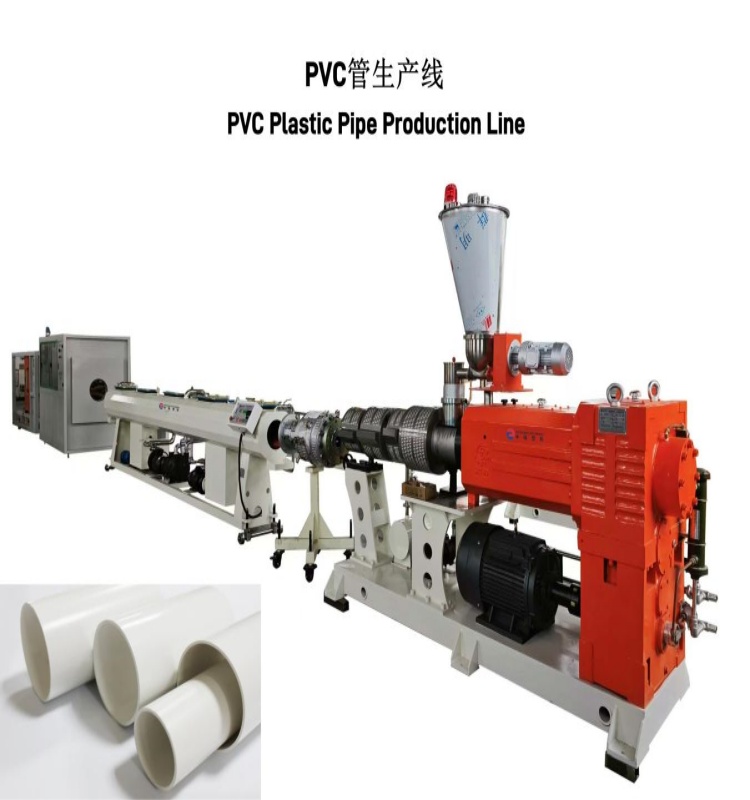
![PVC Pipe Production Line Equipment]()
Inherent Limitations of PVC Pipes (and Production Mitigations)
Temperature Constraints and the CPVC Alternative
Standard UPVC possesses a relatively low glass transition temperature. It begins to deform, soften, and lose structural integrity at temperatures exceeding 140°F (60°C). This thermal limitation makes standard PVC entirely unsuitable for residential hot water distribution or high-heat industrial fluid transport. When exposed to high temperatures under pressure, UPVC pipes will balloon and eventually burst.
The industry mitigation is transitioning to Chlorinated Polyvinyl Chloride (CPVC). By increasing the chlorine content on the polymer chain, CPVC extends the maximum operating temperature up to 200°F (93°C). However, this material shift heavily impacts equipment requirements. CPVC has a much higher melt viscosity and releases highly corrosive hydrochloric acid gases during extrusion. Processing CPVC requires specialized equipment featuring bimetallic alloy treatments, such as tungsten carbide coatings, on the screw and barrel to prevent rapid corrosion. Additionally, the cooling tanks require modification, as CPVC retains heat longer than standard PVC and demands extended vacuum calibration zones to prevent post-extrusion warping.
UV Degradation and Environmental Stress Cracking
When deployed in above-ground applications, standard PVC faces severe UV degradation. Prolonged exposure to sunlight causes the UV radiation to break down the polymer chains, a process known as photo-oxidation. This results in the pipe discoloring, losing impact strength, and becoming highly brittle. A minor physical impact that a new pipe would easily absorb will shatter a UV-degraded pipe.
To mitigate this, formulators add titanium dioxide and specialized UV stabilizers to the resin mix. Because these additives are expensive, running them through the entire pipe wall destroys profit margins. The equipment solution is co-extrusion technology. By utilizing an A-B-A layer setup, a small co-extruder feeds into the main die head to apply a thin, highly concentrated UV-resistant outer layer over a cost-effective inner core. This protects the pipe from environmental stress cracking while keeping overall material costs manageable.
Pressure Ratings and Wall Thickness Tolerances
In pressurized applications, the hoop stress exerted on the pipe wall is immense. Fluctuations in wall thickness during the extrusion process create weak points. If a pipe rated for 200 PSI has a localized thin spot due to poor die calibration or extruder surging, it will fail catastrophically under normal operating conditions, rendering the entire batch useless for water supply or industrial liquid handling.
Implementing ultrasonic thickness measurement systems directly into the extrusion line mitigates this risk. These sensors scan the pipe 360 degrees as it exits the vacuum tank water bath. When evaluating production lines, look closely at their automated feedback loops. High-end systems take the data from the ultrasonic scanner and automatically adjust the haul-off speed or the extruder RPM via the programmable logic controller to correct thickness deviations in real-time. This eliminates human error and drastically reduces scrap rates during startup.
Evaluating the Right PVC Pipe Production Line for Your Target Market
Extruder Specifications: Conical vs. Parallel Twin-Screw
Choosing the correct extruder geometry is the most critical decision in setting up a manufacturing facility. The industry relies on two primary twin-screw designs: conical and parallel. Each offers distinct mechanical advantages based on the specific resin formulation and the intended end-product.
Conical twin-screw extruders feature screws that taper down toward the die head. This design naturally creates high compression and intense shear, resulting in excellent mixing capabilities. Conical extruders are ideal for processing high-calcium formulations where large amounts of calcium carbonate filler are used to lower material costs. The short residence time prevents the material from burning, making conical machines the standard choice for conduit and downpipe production. However, conical screws wear faster at the tip due to the high pressure concentration.
Parallel twin-screw extruders utilize screws with a consistent diameter from the feed throat to the die. They offer a much longer Length-to-Diameter ratio, providing gentler plasticization and lower shear heat. Parallel extruders excel at high-output capacities and offer significantly longer barrel life. When manufacturing large-diameter municipal pressure pipes that require virgin resin and massive throughput, parallel extruders are the superior choice.
| Extruder Type | Mechanical Characteristics | Best Suited Formulations | Ideal Pipe Applications |
| Conical Twin-Screw | High shear, high compression, short residence time. | High-filler (Calcium Carbonate), regrind-heavy mixes. | Electrical conduit, DWV pipes, small-diameter plumbing. |
| Parallel Twin-Screw | Gentle plasticization, long L/D ratio, high throughput. | Virgin UPVC, CPVC, low-filler pressure formulations. | Large-diameter municipal water mains, industrial pressure pipes. |
Downstream Equipment: Cooling, Haul-off, and Cutting
The extruder only melts and shapes the plastic; the downstream equipment dictates the final dimensional accuracy and physical quality of the pipe. A mismatch in downstream capabilities will bottleneck even the most advanced extruder.
- Vacuum Calibration Tanks: As the molten plastic exits the die, it enters the vacuum sizing sleeve. The vacuum pulls the soft plastic against the sleeve while chilled water cools it, freezing the outer diameter into place. Precise vacuum control ensures perfect roundness and dimensional stability. Operators must maintain water temperatures between 15°C and 20°C for optimal cooling efficiency.
- Caterpillar Haul-offs: The haul-off unit pulls the pipe through the cooling tanks. The number of tracks must match the pipe diameter. Small conduits require two tracks, while massive municipal pipes require six or eight tracks to prevent slippage and ovality. Uneven pulling tension directly causes wall thickness variations.
- Planetary Saws: Rigid PVC requires clean, square cuts. Planetary saws rotate around the pipe, cutting through the wall without deforming the shape. Advanced saws include chamfering tools that automatically bevel the pipe end during the cut, preparing the pipe for immediate socket insertion. Dust collection systems are mandatory here to prevent PVC shavings from contaminating the factory floor.
Implementation Risks and ROI Factors in PVC Manufacturing
The greatest risk in PVC manufacturing is material formulation cost. Over-engineering a pipe for a low-margin application destroys profitability. Using 100% virgin resin for gravity drainage pipes is an unnecessary expense. Mitigation involves investing in multi-layer co-extrusion technology, allowing the core to utilize cheaper, highly filled materials while maintaining a premium outer finish.
Energy consumption represents a massive ongoing operational expense. PVC extrusion relies on heavy-duty motors and extensive barrel heating zones. Evaluate the specific energy consumption of the machinery. Modern lines utilizing permanent magnet synchronous motors offer substantial energy savings over traditional AC motors. Upgrading to infrared barrel heaters also reduces heat loss and lowers electricity bills.
Failing local certification standards will lock you out of lucrative municipal and commercial contracts. Mitigate this risk by ensuring the production line includes inline quality assurance sensors. Budget for offline hydrostatic testing equipment, drop-impact testers, and heat reversion ovens to prove compliance before shipping batches to clients.
Conclusion
To ensure a profitable extrusion operation, take the following immediate steps:
- Define your target pipe diameters and required output capacity in kilograms per hour before contacting machinery vendors.
- Request detailed technical proposals that include customized screw designs tailored specifically to your intended resin formulation.
- Require specific energy consumption guarantees from shortlisted manufacturers to accurately project your long-term operational costs.
- Integrate inline ultrasonic thickness measurement and gravimetric dosing into your final equipment specification to minimize raw material waste.
FAQ
Q: Why is PVC preferred over traditional metal piping?
A: PVC does not rust, corrode, or degrade over time like steel or cast iron. It is lightweight, highly cost-effective, and features easy installation. This makes it the dominant choice for modern plumbing and industrial liquid handling. It also prevents scale buildup, maintaining high flow rates over its lifespan.
Q: Can a single PVC pipe production line manufacture both pressure pipes and electrical conduits?
A: While technically possible with die changes, it is highly inefficient. Pressure pipes and conduits require different formulations, screw designs, and line speeds. Dedicated lines yield better returns on investment by minimizing changeover downtime and optimizing output rates for specific pipe diameters.
Q: What is the difference between PVC and CPVC manufacturing equipment?
A: CPVC is highly corrosive and has a higher melt temperature, making it suitable for hot water applications. Processing CPVC requires bimetallic screws and barrels to prevent rapid wear. It also demands specialized die head designs and modified cooling calibration tanks to handle the higher heat retention of the polymer.
Q: How does a PVC downpipe production line differ from standard pipe lines?
A: Downpipe lines are optimized for thin-walled, non-pressurized applications. They typically run at higher speeds and often feature integrated inline belling machines. These socketing machines are designed to form specific drainage joint types automatically, reducing manual labor and speeding up the packaging process.
Q: Why is co-extrusion important in a plastic pipe production line?
A: Co-extrusion allows manufacturers to apply a high-quality, UV-resistant, or colored material on the outside layer while using cost-effective recycled PVC or high-calcium formulations in the core. This A-B-A layer structure significantly reduces raw material costs without sacrificing the structural integrity or appearance of the final pipe.
Q: How do I prevent wall thickness variations during PVC pipe extrusion?
A: Ensure your production line is equipped with an inline ultrasonic thickness scanner. Integrate this scanner with a gravimetric dosing system and automated haul-off speed control. This setup allows the programmable logic controller to make real-time micro-adjustments to the line speed, correcting thickness deviations instantly.
Q: What are the main limitations of PVC pipes in industrial applications?
A: Standard PVC is limited by its maximum operating temperature of 140°F (60°C). It is also susceptible to UV degradation if exposed to direct sunlight without protective additives. Additionally, standard PVC exhibits lower impact resistance at freezing temperatures compared to alternative materials like high-density polyethylene.



 +86-18561886575 (Mr.Wu)

 +8618561886575
 238 Yangzhou West Road, Jiaozhou City, Qingdao City, Shandong Province