Sourcing commercial volumes of PVC pipe exposes businesses to volatile pricing, unpredictable lead times, and eroding profit margins when relying solely on third-party distributors. Purchasing materials project-by-project leaves your operational timeline at the mercy of external supply chains. For large-scale contractors, regional distributors, and agricultural developers, the decision is no longer just where to buy PVC pipe. The real challenge is learning how to control the supply chain entirely. You must identify the exact volume threshold where transitioning from wholesale purchasing to in-house manufacturing becomes financially viable. This guide evaluates traditional retail and wholesale supply routes against the capital expenditure of vertical integration. We provide a technical framework for evaluating and implementing commercial-grade extrusion machinery. By understanding the mechanics of production, you can determine if manufacturing your own supply is the right strategic move for your operation.
- Sourcing Limitations: Relying on retail outlets or standard wholesale suppliers limits customization and exposes operations to external supply chain shocks, despite the convenience of immediate local availability.
- The Break-Even Threshold: Transitioning to in-house manufacturing is typically justified when annual procurement costs exceed the 5-year capital and operational expenses of extrusion equipment.
- Technical Evaluation: Selecting the right PVC pipe extrusion line requires analyzing extruder torque, screw design, vacuum calibration efficiency, and energy consumption metrics.
- Risk Mitigation: Successful implementation demands rigorous facility planning, operator training, and adherence to ASTM/ISO standards for final pipe output.
The Current Landscape of PVC Pipe Procurement
Retail and Omnichannel Supply Options
Big-box stores and regional hardware centers offer immediate, low-volume procurement solutions. National chains provide omnichannel services like Buy Online Pick Up in Store. This allows contractors to secure inventory digitally before dispatching crews. Regional hardware outlets often supply localized, affordable materials for immediate needs. A major advantage of retail environments is the ability to source pipes and compatible fittings simultaneously. This factor is critical for immediate, small-scale project execution where time is the primary constraint. However, retail inventory is inherently limited. Store shelves cannot support the volume required for municipal infrastructure or large agricultural irrigation systems.
Wholesale and Industrial Sourcing
Bulk ordering requires specialized manufacturers found on industrial directories. Vetting supplier reliability and lead times through verified review platforms is essential before committing to large contracts. You must analyze their historical delivery performance and material consistency. Coordinating different suppliers adds significant logistical complexity. You must manage various pipe schedules, such as Schedule 40 and 80, alongside specialized pneumatic or custom-manufactured fittings. Managing multiple vendor relationships requires dedicated procurement personnel. This overhead cuts directly into project profitability. Furthermore, wholesale suppliers often require massive minimum order quantities to unlock favorable rates.
Limitations of Third-Party Sourcing at Scale
Distributor markups and fluctuating retail pricing severely impact overall project profitability. Relying on third parties introduces the constant risk of stockouts and delayed shipments. Restricted store hours can halt emergency projects entirely. Furthermore, buyers face the inability to secure custom lengths. Standard retail lengths often result in significant material waste on custom job sites. You also lose the ability to specify specific polymer blends for specialized applications. When you rely on external suppliers, you surrender control over material quality, delivery timelines, and ultimate project costs.
The Tipping Point: When to Transition from Buyer to Manufacturer
Volume Thresholds and Break-Even Analysis
Calculating your current annual spend on procurement is the first critical step. You must compare this figure against the capital expenditure of a Plastic Pipe Production Line. Hidden procurement costs heavily influence this calculation. Freight charges, storage fees, delivery delays, and retail markups must factor into your ROI analysis. Every delayed shipment carries an opportunity cost. Every scrapped off-cut represents lost revenue. When you aggregate these hidden expenses over a five-year period, the financial argument for in-house manufacturing often becomes compelling for high-volume users.
Strategic Vertical Integration
Controlling production offers massive competitive advantages. You gain 24/7 on-demand manufacturing capabilities. This eliminates reliance on external shipping schedules. Exact length customization significantly reduces material scrap on job sites. You also gain the ability to pivot to commercial distribution as a regional supplier. In-house manufacturing provides long-term supply chain resilience that immediate retail inventory simply cannot match. Vertical integration transforms your business from a passive consumer of materials into an active producer. This shift insulates your operations from global resin shortages and regional logistical bottlenecks.
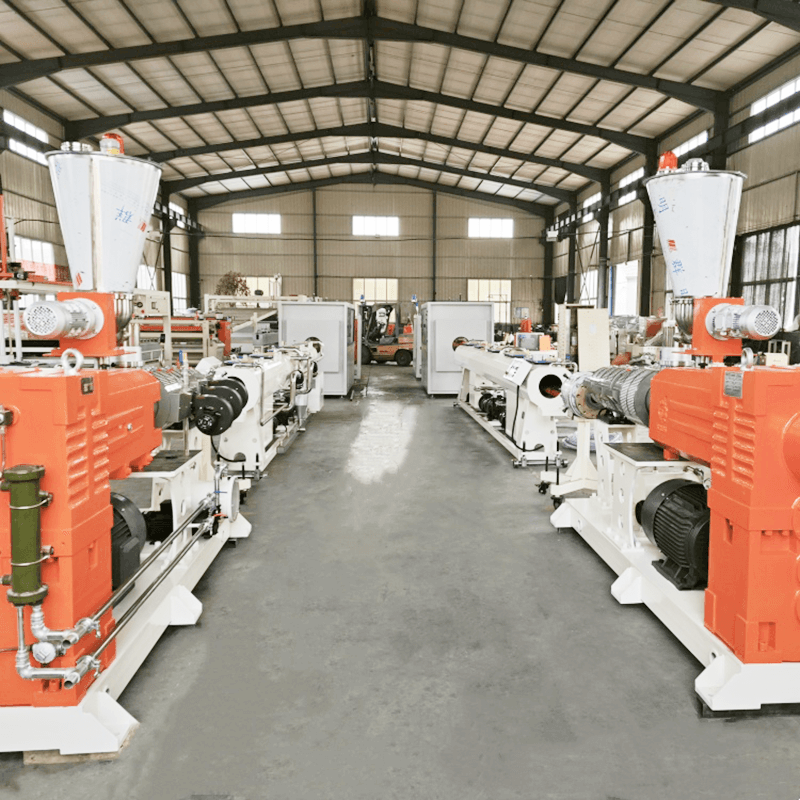
![Commercial PVC pipe manufacturing facility layout]()
Technical Evaluation of a PVC Pipe Production Line
Core Components of a PVC Pipe Extrusion Line
A commercial-grade PVC Pipe Production Line relies on several highly specialized components working in unison. Conical twin-screw extruders are mandatory for processing dry PVC powder. This specific screw design ensures proper plasticization and prevents material degradation caused by excessive shear heat. Single-screw extruders cannot handle rigid PVC powder effectively. Die heads and molds utilize spiral or spider designs to maintain uniform wall thickness. This uniformity is critical for pressure rating compliance. Multi-chamber vacuum sizing tanks ensure dimensional stability. They pull the molten plastic against a sizing sleeve while cooling it, preventing ovality. Finally, planetary cutters and caterpillar haul-offs provide precise, burr-free finishing. The haul-off unit must maintain perfectly consistent tension to prevent stretching or compressing the hot pipe.
Specialized Capabilities and Configurations
Standard pressure pipe lines differ significantly from specialized setups. A PVC downpipe production line often requires co-extrusion capabilities. Co-extrusion allows manufacturers to apply a thin, UV-resistant outer layer over a standard PVC core. This extends the lifespan of exterior drainage pipes exposed to direct sunlight. Integrating belling machines allows for inline socketing. These automated machines heat the end of the cut pipe and form U-type, R-type, or rectangular sockets directly on the extrusion line. Inline belling eliminates the need for secondary processing, drastically increasing overall production efficiency.
Decision Framework: Evaluating PVC Pipe Manufacturing Equipment
Output Capacity vs. Energy Efficiency
Measuring Overall Equipment Effectiveness is vital for operational success. You must evaluate the trade-offs between high-speed output and energy consumption. Heating zones on the extruder barrel and high-capacity vacuum pumps draw significant electrical power. Balancing output rates in kilograms per hour against electrical draw ensures profitable operation. High-speed lines require highly efficient water cooling systems to solidify the pipe quickly. If the cooling capacity cannot match the extrusion speed, the pipe will deform. Evaluating the thermal efficiency of the barrel heaters and the mechanical efficiency of the main drive motor is vital when selecting equipment for long-term reliability.
Material Compatibility and Flexibility
Your PVC pipe manufacturing equipment must handle various resin formulations. It should process standard UPVC for rigid drainage and CPVC for high-temperature applications. The equipment must also integrate regrind and recycled resins seamlessly. Using regrind lowers material costs but requires robust screw designs to ensure thorough mixing. The extrusion line must maintain structural integrity and pressure ratings even when processing a percentage of recycled material. Advanced dosing systems help maintain the exact ratio of virgin resin to regrind, ensuring consistent product output regardless of feedstock variety.
Compliance and Quality Control
Inline testing mechanisms are required to meet stringent ASTM and ISO standards. Ultrasonic thickness gauges monitor wall dimensions in real-time. These sensors provide immediate feedback to the operator if the wall thickness deviates from the specified tolerance. Flaw detectors identify internal voids or surface defects before the pipe reaches the cutting unit. Maintaining compliance requires continuous monitoring of melt pressure and melt temperature. Any fluctuation in these parameters will directly impact the mechanical strength of the finished pipe. Implementing strict quality control protocols protects your brand and ensures field reliability across all distributed batches.
| Sourcing Strategy | Primary Advantage | Major Limitation | Best Suited For |
| Retail & Big-Box | Immediate local availability | High markups, low volume | Emergency repairs, small residential projects |
| Wholesale Distribution | Lower cost per foot | Long lead times, rigid lengths | Medium commercial projects, planned infrastructure |
| In-House Manufacturing | Total supply chain control | High initial capital expenditure | Large contractors, regional suppliers, agriculture |
Implementation Realities and Risk Mitigation
Facility Requirements and Footprint
A standard PVC pipe extrusion line requires substantial physical space. The machinery itself often exceeds 20 to 30 meters in length. You must also allocate space for upstream raw material silos, high-speed mixers, and downstream finished goods staging. Industrial power drops are required to handle the massive electrical load of the main motor and heating zones. Chilled water loop systems are absolute necessities for the vacuum calibration tanks. High-capacity compressed air lines are required to operate the pneumatic components of the haul-off and cutting units. Proper facility layout ensures safe operation and efficient material flow, preventing logjams during peak production hours.
Operator Expertise and Maintenance Overhead
Addressing the skills gap is critical for new manufacturers. You must hire or train technicians capable of managing complex thermal profiles and screw RPMs. Operators need to troubleshoot common extrusion defects like melt fracture, scorch marks, or uneven wall thickness. Establishing a baseline preventative maintenance schedule is non-negotiable. Extruder screws and barrels experience significant wear from the abrasive PVC compounds. Calibration sleeves must be cleaned and inspected regularly. Neglecting maintenance leads to catastrophic equipment failure and extended production downtime. Investing in comprehensive operator training yields immediate returns in product quality and machine longevity, justifying the initial training investment.
Advanced Manufacturing Considerations
When selecting your machinery, evaluate the automation level. Modern lines utilize PLC-based controllers that manage the entire extrusion process. These systems store "recipes" for different pipe diameters and schedules. This feature significantly reduces the time required for product changeovers. You should also consider the integration of ancillary equipment like automatic gravimetric dosing. This system precisely controls the addition of calcium carbonate fillers and other stabilizers. Accurate dosing ensures that every meter of pipe meets the required mechanical properties while minimizing waste. Furthermore, consider the layout of the finished product handling. Automated stackers and packaging units reduce the manual labor required at the end of the line, allowing your team to focus on quality monitoring rather than physical labor.
Long-term investment success also depends on the manufacturer's ability to provide technical support. Ensure your chosen vendor has a documented history of installations in your operating region. Verify the availability of local spare parts. You do not want to wait for international shipping if a critical sensor or motor fails. Build a partnership with your equipment supplier that includes periodic technical audits. These audits can identify wear in critical components like the gear box or the screw elements before they cause an unplanned shutdown. Proactive care is the standard for successful pipe manufacturing operations.
Conclusion
Transitioning from viewing PVC pipe as a consumable expense to viewing its production as a capital asset is a major strategic shift. Retail and wholesale sourcing remains sufficient for low-volume users and emergency repairs. However, high-volume operations must evaluate vertical integration to protect margins and secure reliable supply. Controlling your own manufacturing output eliminates distributor markups and insulates your projects from global supply chain disruptions. Procurement and operations teams should conduct a joint 12-month historical spend analysis immediately. Request technical specifications and operational cost models from top-tier extrusion line vendors. Compare these figures against your current procurement baseline to determine project viability. If the numbers align, begin planning your facility layout and initiating the transition toward independent manufacturing.
- Audit your last 12 months of procurement invoices to calculate total volume and spend.
- Consult with technical engineers to define the specific pipe diameters and schedules required for your primary contracts.
- Request detailed operational manuals and energy consumption specifications from at least three established extrusion machine manufacturers.
- Finalize a facility floor plan that accounts for raw material handling, the extrusion line footprint, and finished goods storage.
FAQ
Q: What is the average cost of a commercial PVC pipe production line?
A: Costs vary significantly based on output capacity, machinery origin, and automation levels. Entry-level systems require lower capital, while fully automated, high-capacity lines demand larger investments. Advanced features like inline belling and co-extrusion add to the initial expenditure but increase overall production efficiency.
Q: How much space is required to install a PVC pipe extrusion line?
A: A complete line typically requires a linear footprint of 20 to 30 meters. You must also account for upstream mixing stations, raw material storage, and downstream handling areas. A minimum facility length of 40 meters is generally recommended for safe and efficient operation.
Q: Can a plastic pipe production line also manufacture PVC fittings?
A: No. Extrusion lines are designed specifically for continuous pipe profiles. Manufacturing fittings requires separate injection molding machinery. Businesses usually adopt a hybrid strategy, extruding pipe in-house while sourcing complex fittings externally.
Q: Can one plastic pipe production line manufacture different sizes of pipe?
A: Yes. Operators can manufacture various pipe diameters by swapping interchangeable die heads and calibration sleeves. However, these changeovers require planned downtime. Efficient production scheduling is necessary to minimize the impact of size changes on daily output.
Q: What is the difference between standard extrusion and a PVC downpipe production line?
A: Downpipe lines utilize different die designs optimized for thinner walls and specific drainage profiles. They often incorporate co-extrusion technology to add a weatherable, UV-resistant outer layer. Standard pressure lines focus heavily on strict wall thickness tolerances to handle internal fluid pressure.
Q: What raw materials are required for PVC pipe manufacturing equipment?
A: The primary material is PVC resin powder. This resin is blended with specific additives, including heat stabilizers, internal and external lubricants, impact modifiers, and calcium carbonate fillers. These additives are essential to achieve the desired mechanical properties and processability.



 +86-18561886575 (Mr.Wu)

 +8618561886575
 238 Yangzhou West Road, Jiaozhou City, Qingdao City, Shandong Province