The surface texture of PP strapping is an engineered feature, not an aesthetic choice. It directly impacts joint efficiency, machine compatibility, load security, and material yield. Incorrect embossing introduces severe operational risks. You might experience strap slippage in friction-weld and battery-powered tools. Longitudinal splitting under tension becomes a frequent hazard on the warehouse floor. Cargo securing fails during transit, and resin consumption skyrockets during manufacturing. We will evaluate how specific embossing patterns solve these mechanical challenges. This technical guide helps procurement managers select precise strap specifications based on load requirements. It also assists manufacturers in configuring their extrusion lines to optimize embossing depth, pattern geometry, and production scalability. You will learn how to balance tensile strength with surface friction to achieve maximum packaging reliability.
- Pattern Geometry Dictates Tool Compatibility: Diamond-shaped embossing remains the industry standard for maximizing surface area and friction in battery-powered tools, automated friction-weld heads, and manual tensioners.
- Embossing Optimizes Material Yield: A properly calibrated embossed profile increases strap stiffness and thickness (caliper) while reducing the actual resin weight per meter, lowering overall production costs.
- Production Line Precision is Critical: Achieving consistent embossing depth without compromising tensile strength requires precise temperature and pressure control within the extrusion and cooling phases.
- Application-Specific Selection: Smooth strapping is reserved for niche, high-tensile requirements, whereas embossed strapping is fully competent for conventional to medium-heavy packaging scenarios.
The Engineering Purpose of Embossing in PP Strapping
Problem Framing (Success Criteria)
Defining a successful packaging strap requires looking beyond simple break strength. A high-performing strap must deliver exceptional joint efficiency. It must resist longitudinal splitting when tensioned around sharp pallet corners. Safe cargo securing demands consistent elongation recovery. The strap must also feed reliably through automated arch machines without jamming. Embossing directly influences every single one of these success criteria. The surface geometry interacts mechanically with the tensioning wheels and welding plates of your packaging equipment. We measure success by how well the strap maintains tension during transit and how consistently it feeds through high-speed arches.
Friction and Joint Efficiency
Friction welding relies entirely on surface interaction to create a secure seal. When the welding mechanism descends, it oscillates the top strap against the bottom strap at high frequencies, typically between 200 and 400 Hertz. Textured surfaces interlock during this process. The raised peaks of the embossing pattern melt first under the kinetic friction. This localized melting generates heat rapidly. The molten polymer flows into the recessed valleys of the pattern, creating a deeply integrated melt pool. A proper friction weld on an embossed strap creates a melt pool approximately 0.15mm deep. This depth ensures the polymer chains entangle across the joint interface. Once the oscillation stops, the joint cools under pressure. This mechanical interlocking creates a stronger, more reliable joint than welding two perfectly smooth surfaces together. Smooth surfaces often slide against each other, requiring longer weld times and risking a brittle seal that snaps under sudden impact loads.
Stiffness-to-Weight Ratio
Embossing provides a distinct mechanical advantage regarding material efficiency. The process displaces the polymer material rather than removing it. This displacement increases the strap's overall thickness and rigidity. We refer to this as the caliper of the strap. You achieve a thicker, stiffer profile without adding extra polymer mass. When you measure the caliper of a 12mm x 0.6mm strap, the embossing might account for 0.1mm of that total thickness. The solid polymer core is only 0.5mm thick. This geometry increases the moment of inertia by up to 15% compared to a flat 0.5mm strap. You get the feeding performance of a 0.6mm strap while only paying for the resin of a 0.5mm strap. A stiffer strap feeds much better through the chutes of automated strapping machines. It resists buckling and folding. This optimized stiffness-to-weight ratio allows manufacturers to produce a robust strap while keeping resin costs strictly controlled.
Consider the following physical properties altered by the embossing process:
- Cross-sectional moment of inertia increases, directly improving column crush resistance during machine feeding.
- Surface area expands, providing more contact points for the tensioner wheel.
- Polymer density redistributes, creating a rigid outer shell with a flexible inner core.
Smooth vs. Embossed Trade-offs
You must weigh specific trade-offs between smooth and embossed profiles. Smooth strap offers slightly higher raw tensile strength. The polymer chains remain uncompressed and perfectly aligned during the final stretching phase. However, smooth strap struggles with friction generation in standard tools. Embossed strap sacrifices a minor percentage of raw break strength. In return, it offers superior tracking, flexibility, and cost-efficiency. The textured surface grips tensioner wheels perfectly. For 90% of standard packaging applications, embossed strap provides the optimal balance of performance and economy.
| Feature | Smooth Strapping | Embossed Strapping |
| Raw Tensile Strength | Maximum potential for the resin grade | Slightly reduced due to polymer compression |
| Friction Weld Efficiency | Lower, requires longer weld times | High, rapid melting and interlocking |
| Machine Feedability | Prone to buckling in long chutes | Excellent stiffness prevents arch jams |
| Material Yield | Heavier weight per meter for same thickness | Lighter weight per meter for same thickness |
Material Comparison (PP vs. PET Context)
Polypropylene behaves differently than polyester (PET) during the extrusion and embossing process. PP is a significantly softer polymer. It possesses a lower melting point and different crystallization behaviors. Because of this softness, the embossing process requires highly specific cooling and pressure calibrations. If the water bath is too hot, the PP remains too soft. The embossing pattern will flatten out post-extrusion as the strap winds onto the core. If the polymer is too cold, the rollers will fracture the surface. Precision temperature control ensures the pattern remains permanently set. PET, being harder, takes a shallower emboss and retains it easily, but PP requires exact thermal management to hold its texture.
Standard Embossing Patterns and Their Performance Outcomes
Diamond Pattern (The Industry Standard)
The diamond pattern dominates the strapping industry for structural reasons. This geometry provides a distinct multi-directional grip. The intersecting diagonal lines create isolated peaks. These peaks dig effectively into the serrated feed wheels of automated strapping heads. The serrated teeth on a battery-powered tool's tension wheel are cut at specific pitches. The diamond embossing pattern is engineered to match this pitch. When the wheel drops onto the strap, the teeth mesh with the embossed valleys. This mechanical lock allows the tool to pull up to 4000 Newtons of tension without milling the surface of the strap. Manual tensioners also require this aggressive grip to secure heavy loads safely. The diamond geometry distributes the clamping force evenly across the width of the strap. This prevents localized crushing and maintains the structural integrity of the polymer matrix. Most diamond patterns utilize a 30-degree to 45-degree intersecting angle to maximize the number of peaks per square centimeter.
Cross-Hatch / Square Pattern
Some manufacturers utilize a cross-hatch or square grid pattern for specific applications. We evaluate this pattern based on its impact on lateral tear resistance. Polypropylene naturally wants to split down its length when nicked. We call this fibrillation. A square grid pattern aligns parallel and perpendicular to the polymer chains. This alignment can sometimes create continuous stress lines. Compared to the diamond pattern, a cross-hatch design offers slightly lower resistance to longitudinal splitting. However, it provides excellent surface area for heat sealing in semi-automatic table strappers where tension requirements remain relatively low.
Custom and Logo Embossing
Integrating corporate branding directly into the embossing roller offers unique marketing benefits. Companies can imprint their logos or safety warnings continuously along the strap. We must evaluate the structural compromises. Custom patterns often create uneven stress concentrations. A logo might require large flat areas adjacent to deeply embossed letters. This inconsistency alters the stiffness of the strap. It can cause tracking issues in high-speed arch machines. Manufacturers must carefully weigh the brand visibility against potential feedability problems and reduced joint efficiency. If you choose custom embossing, keep the logo shallow and surround it with a standard diamond pattern to maintain structural integrity.
![PP strapping embossing pattern evaluation and production line setup]()
Equipment Configuration: Integrating Embossing into Your Production Line
The Role of the Embossing Roller
The embossing unit sits at a critical juncture in the production sequence. Mechanical integration places the embossing rollers immediately following the initial extrusion and stretching phases. The strap exits the stretching oven in a highly oriented state. It then passes through a heated annealing process before entering the embossing station. Two heavy steel rollers compress the strap. One roller features the engraved male pattern. The opposing roller provides a smooth or matching female surface. The hydraulic or pneumatic pressure applied here dictates the final caliper and texture depth.
Machinery Selection
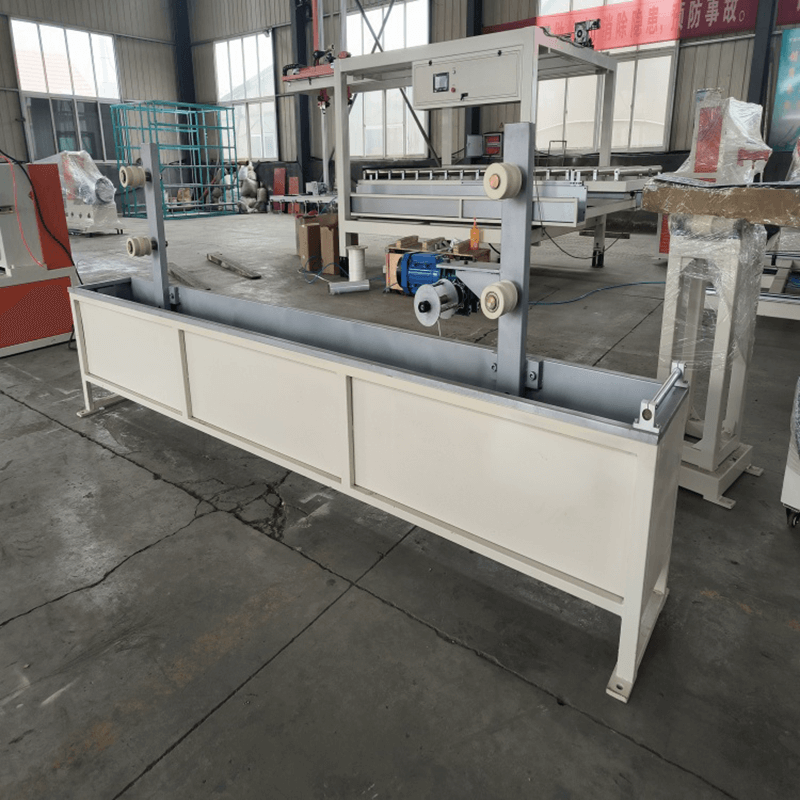
Modern production demands versatile equipment. A high-quality PP packing strap extrusion machine must handle varying embossing depths effortlessly. Industry standards typically range from 0.1mm to 0.2mm in depth. The embossing station utilizes heavy-duty pneumatic cylinders. These cylinders apply between 4 and 6 bar of pressure to the steel rollers. The rollers themselves are chilled with internal water circulation, maintaining a surface temperature of around 25°C. This rapid cooling freezes the polymer in its embossed shape before it can relax. The machinery must adapt to different polymer grades, from virgin resins to recycled flakes. Upgrading to a computerized PP strapping strap band belt machine provides significant operational advantages. These advanced systems feature automated pressure regulation. The computer monitors the strap thickness inline and adjusts the roller pressure dynamically. This ensures consistent texture and maintains tight dimensional tolerances across high-speed production runs.
Scalability and Line Upgrades
Plant managers constantly evaluate the return on equipment upgrades. Retrofitting an existing packaging belt production line with advanced, interchangeable embossing rollers offers a cost-effective improvement. Quick-change roller cassettes allow operators to switch patterns in minutes rather than hours. Older lines might lack the necessary tension control to support deep embossing at high speeds. When configuring a multi-strap PP fibre packing strapping tape production line, throughput becomes the primary consideration. Investing in a completely new PP strapping production line ensures the extruder capacity, cooling baths, and embossing stations remain perfectly synchronized for high-volume output.
Evaluation Dimensions: Features-to-Outcomes in Packaging Applications
Machine-Grade vs. Hand-Grade Tolerances
The end-use application dictates the required embossing tolerances. Machine-grade strapping demands shallow, highly consistent embossing. The dimensional tolerances must remain incredibly tight. Deep or inconsistent patterns cause polymer dust accumulation inside the strapping head. This dust leads to arch jams in high-speed automated machinery. Conversely, hand-grade strapping often utilizes lower-grade resins. These resins exhibit looser tolerances. Hand-grade applications require deeper embossing. Manual hand-grade tools and tensioners need this aggressive texture to grip the strap effectively without slipping during the tensioning phase.
Load Type and Tension Retention
Embossing directly affects how a strap behaves under continuous load. We monitor creep, which is the loss of tension over time. In medium-heavy packaging scenarios, preventing load shifts is paramount. A deeply embossed strap has less solid cross-sectional area than a smooth strap of the same thickness. Under severe, prolonged tension, the embossed peaks can slowly flatten out. This flattening contributes to tension relaxation. Engineers must match the embossing depth to the load type. Rigid loads require stiff, lightly embossed straps. Expanding loads benefit from the slight elasticity provided by a standard diamond pattern.
Resin Grade and Embossing Quality
The raw material heavily influences the final embossed texture. Virgin polypropylene has a consistent Melt Flow Index (MFI), usually around 2.0 to 3.0 g/10min. This consistent flow allows for sharp, well-defined embossing peaks. Recycled PP flakes often have a mixed MFI. Lower-grade resins require specific roller calibrations. If the pressure is too high, recycled straps become brittle and exhibit surface cracking. Operators must increase the annealing oven temperature by 5 to 10 degrees Celsius to soften the recycled material sufficiently before it hits the embossing rollers. Proper calibration ensures the recycled strap maintains adequate joint strength and flexibility.
Implementation Risks and Quality Control Mitigation
Risk 1: Over-Embossing (Structural Weakening)
Applying excessive roller pressure creates severe structural defects. Over-embossing cuts too deeply into the oriented polymer matrix. This action severs the long-chain molecules responsible for the strap's strength. The result is a drastic reduction in raw tensile strength. The strap will snap prematurely under load, often right at the tensioner tool.
Follow these mitigation steps to prevent over-embossing:
- Implement inline caliper profiling to monitor thickness continuously.
- Conduct hourly inline tensile testing to verify break strength.
- Calibrate pneumatic cylinders weekly to ensure even pressure distribution across the roller width.
Risk 2: Under-Embossing (Tool Slippage)
Insufficient roller pressure yields shallow textures. Under-embossing creates immediate problems on the packaging line. The primary consequence is feed wheel slippage. When the tool attempts to pull tension, the smooth surface slips through the gears. This damages the strap and fails to secure the load. Shallow textures produce weak friction welds due to inadequate material mixing. Mitigation involves regular maintenance of the embossing station. Recalibrate the pneumatic cylinders frequently. Inspect the steel rollers for wear and tear, replacing them when the engraved pattern becomes dull.
Risk 3: Polymer Dust Generation
Aggressive or sharp embossing patterns create operational hazards in automated environments. As the strap rushes through the machine arch, the sharp peaks shear off against the metal guides. This generates fine polymer dust. The dust accumulates rapidly, leading to mechanical machine jams and optical sensor failures. Mitigation starts at the extrusion line. Optimize the cooling bath temperature prior to the embossing station. The polymer must remain malleable enough to take a smooth impression, but not so brittle that it fractures. A properly formed peak should be slightly rounded, not razor-sharp.
| Defect Type | Root Cause | Operational Consequence | Corrective Action |
| Deep Cuts / Fractures | Excessive roller pressure | Premature strap snapping | Reduce pneumatic pressure, check annealing temp |
| Faint Pattern | Insufficient pressure or worn rollers | Tool slippage, weak welds | Increase pressure, inspect roller engraving |
| Excessive Dusting | Sharp peaks, cold polymer | Machine jams, sensor faults | Increase water bath temperature slightly |
Conclusion
- Conduct a physical audit of your existing extrusion equipment to measure embossing roller wear and verify pneumatic pressure consistency.
- Calculate your current resin yield against your strap caliper to identify material waste caused by improper embossing depth.
- Request physical sample runs from machinery vendors to test texture depth and joint efficiency before committing to a full line upgrade.
- Implement an hourly inline testing protocol for tensile strength and caliper measurements to prevent structural weakening from over-embossing.
FAQ
Q: What is the difference between smooth and embossed PP strapping?
A: Smooth strapping has a flat surface, offering slightly higher raw tensile strength but poor friction generation. Embossed strapping features a textured pattern. This texture increases surface area, vastly improves friction-weld compatibility, and optimizes the stiffness-to-weight ratio. Embossed remains the industry standard for most packaging applications.
Q: Why does embossed strapping save on material costs?
A: The embossing process displaces the polymer material rather than removing it. This mechanical displacement increases the strap's overall thickness and rigidity. You achieve a stiffer, more robust strap while using less actual resin weight per meter. This directly lowers your daily production costs.
Q: Can a single extrusion machine produce both smooth and embossed straps?
A: Yes. Modern extrusion lines feature adjustable embossing stations. Operators can mechanically disengage the pressure cylinders to bypass the embossing process, yielding smooth strap. Alternatively, they can swap the textured rollers for smooth rollers to accommodate different specifications on the same line.
Q: What is the ideal embossing depth for machine-grade PP strapping?
A: Standard industry tolerances for machine-grade strapping typically range from 0.1mm to 0.2mm in depth. This shallow, consistent depth ensures automated feed wheels grip the strap effectively without shearing off polymer peaks. Maintaining this tolerance prevents dust accumulation and optical sensor failures.
Q: How does embossing affect the tensile strength of the strap?
A: Embossing slightly reduces the raw break strength compared to a smooth strap of the exact same weight because it compresses the polymer chains. However, it significantly improves joint strength during friction welding. Since the joint is the actual point of failure, overall load reliability increases.
Q: Does the embossing pattern matter for manual hand-grade strapping?
A: Yes. Manual hand-grade strapping requires deeper embossing. Manual tensioners rely entirely on mechanical grip to pull the strap tight. Deeper textures ensure the tool's serrated wheels can grip the strap effectively without slipping. This is especially critical when running lower-grade resins.



 +86-18561886575 (Mr.Wu)
 +8618561886575
 238 Yangzhou West Road, Jiaozhou City, Qingdao City, Shandong Province