Acquiring a new production line is a massive capital expenditure. Your vendor selection directly dictates your long-term profitability. Right now, the industrial market is flooded with equipment suppliers. They offer wildly varying degrees of machine quality and reliability. This noise makes it incredibly difficult to separate slick marketing claims from actual engineering reality. We designed this guide to cut through the confusion. Our goal is to provide a realistic, engineering-focused framework for evaluating equipment manufacturers. You will learn how to objectively assess technical capabilities, verify manufacturing expertise, and ensure robust post-sale support. Buying heavy machinery is never a simple transaction. It requires strategic alignment between your production goals and the vendor's engineering standards. By following this assessment framework, you can confidently shortlist partners. Ultimately, this approach secures your investment and maximizes your factory floor efficiency.
Key Takeaways
Prioritize manufacturers capable of processing 100% recycled PET (rPET) flakes without compromising strap tensile strength.
Evaluate technical specifications based on actual output yields and automation maturity (e.g., automated winding systems), not just theoretical capacities.
Demand transparency in Factory Acceptance Testing (FAT) and post-installation support before signing any contracts.
Calculate Total Cost of Ownership (TCO) by factoring in energy consumption, expected downtime, and spare parts availability, rather than relying solely on the initial CapEx.
Aligning Production Goals with Machine Capabilities
Before contacting any manufacturer, you must define your internal production goals. A vague request for proposals yields vague quotes. You need clear, measurable parameters.
Define Success Criteria
Establish what "high-yield" actually means for your specific operation. Do not rely on generic industry definitions. Ask yourself precise questions about your daily requirements. How many tons per day must the machine produce? What specific strap dimensions will you manufacture? What is the target tensile strength for your heaviest application? Defining these numbers upfront gives you an objective baseline. You can use this baseline to measure every vendor's technical proposal. If a manufacturer cannot guarantee these specific yields in writing, disqualify them early.
Modern manufacturing demands flexibility. You cannot always guarantee pristine raw materials. Investing in a robust packaging straps production line ensures you can handle variations in material quality. This is especially true when working with recycled flakes. Recycled materials naturally feature fluctuating Intrinsic Viscosity (IV) levels. Inconsistent IV leads to brittle straps and frequent line breaks. Your chosen machine must accommodate these fluctuations seamlessly. Look for advanced dosing systems and responsive extrusion controls. They compensate for material inconsistencies in real time.
Future-Proofing
Market demands change rapidly. Your equipment must adapt to these shifts. Evaluate if the line can scale operations over the next five years. You might start by producing standard industrial straps today. However, customer demand could shift toward heavy-duty alternatives tomorrow. Ask vendors about modularity. Can you upgrade the extrusion motor later? Can the winding unit accept different core sizes? Future-proofing your initial purchase saves significant capital down the road. It prevents you from needing an entirely new machine when market trends pivot.
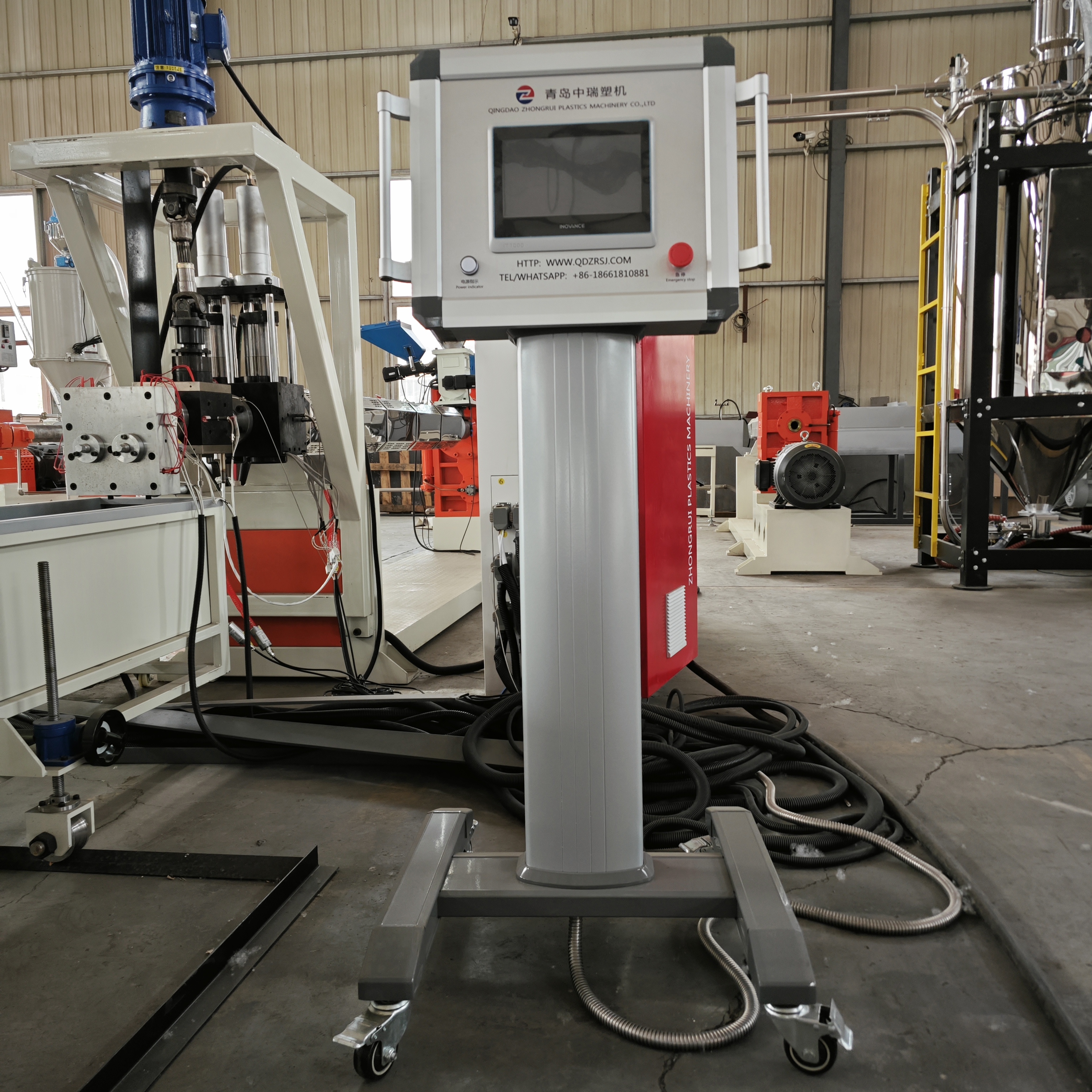
![High-yield strapping production equipment]()
Core Technical Specifications to Demand
Marketing brochures often highlight theoretical maximums. You need consistent, real-world performance. Focus your evaluation on three core technical pillars. These systems dictate the ultimate quality of your final product.
Extrusion and Dehumidification Systems
PET processing relies heavily on moisture control. You need advanced crystallization and drying systems to prevent hydrolysis. Hydrolysis breaks down polymer chains during extrusion. This destroys the mechanical integrity of the strap. Proper moisture extraction is absolutely critical when running an Eco-friendly PET Packaging Belt Line. Recycled flakes absorb high levels of ambient moisture. They require aggressive, multi-stage dehumidification before entering the extruder.
Beyond drying, evaluate the melt pump technology. Precision melt pumps stabilize the internal pressure of the extruder. Stable pressure ensures consistent material flow through the die head. Consistent flow guarantees uniform strap width and thickness. Without a high-quality melt pump, your strap dimensions will constantly fluctuate.
| | Minimum Technical Specification Baselines |
System Component | Standard Requirement | Premium/High-Yield Requirement |
Dehumidification | Single-stage desiccant rotor | Multi-stage infrared crystallization & drying |
Extruder L/D Ratio | 28:1 or 30:1 | 32:1 or higher for optimal rPET mixing |
Melt Filtration | Manual screen changer | Continuous double-piston screen changer |
Pressure Control | Basic sensor feedback | Precision volumetric melt pump |
Stretching and Annealing Precision
The strength of a PET strap comes from its molecular orientation. You achieve this orientation through a precise stretching ratio. The extrusion process creates a raw, amorphous band. The stretching unit heats and pulls this band extensively. This pulling aligns the polymer molecules into a strong, linear structure. A higher, perfectly controlled stretching ratio directly increases break strength.
After stretching, the strap retains internal stress. You must remove this stress through annealing. Evaluate the manufacturer’s cooling and annealing framework carefully. Proper annealing stabilizes the molecular chains. It prevents the strap from shrinking in hot warehouses. It also minimizes camber, which is the unwanted curving of the strap. Curvilinear straps jam automated packaging machines constantly.
Automation and Winding Efficiency
High-speed extrusion means nothing if you cannot collect the product efficiently. Manual winding processes create massive bottlenecks. You must assess the integration of automatic dual-strap winders. These automated units switch bobbins instantly when one becomes full. They cut the strap, secure it, and begin the next roll without slowing the main line. This automation sharply reduces manual labor requirements. It also prevents dangerous line backups. Consistent winding tension is equally important. It prevents the spools from collapsing during transport.
Vendor Evaluation: Verifying Manufacturing Expertise
Never take a sales representative's word as absolute truth. You must verify their manufacturing expertise independently. The heavy machinery industry requires rigorous due diligence.
Evidence Over Claims
Auditing a manufacturer’s track record requires asking for hard evidence. Do not accept generic customer testimonials. Request detailed case studies of lines running continuously for over five years. Ask for reference contacts. Call these existing customers directly. Ask them about unexpected downtime. Ask them how the machine handles low-quality recycled flakes. Real users provide the most accurate assessment of a machine's true reliability. If a vendor hesitates to provide references, consider it a major red flag.
Engineering Depth
Many vendors sell multiple types of plastic extrusion machines. Some try to adapt polypropylene (PP) technology for PET applications. This rarely works well. Ask probing questions to test their engineering depth. Do they understand the distinct thermodynamic differences between PP and PET processing? PET requires significantly higher processing temperatures. It has different melt flow behaviors. It requires entirely different cooling water temperatures. A vendor retrofitting incompatible PP technology will deliver a highly unstable production line.
Compliance and Safety
Industrial safety is non-negotiable. Verify all necessary compliance certificates before moving forward. Look for valid CE certifications or equivalent regional approvals. Check their adherence to local industrial safety standards.
Pay close attention to the standard electrical components they use. A strong mechanical frame means nothing if the electrical brains fail. Quality manufacturers partner with top-tier electrical suppliers. Look for components from recognized brands like Siemens, ABB, or Schneider Electric. Cheap, proprietary electrical panels are notoriously difficult to repair. Finding replacement parts for obscure brands will stall your production for weeks.
Implementation Realities: Commissioning and Support
The purchase order is just the beginning. The real test of a manufacturer is how they handle implementation. Commissioning heavy machinery is a complex, multi-week process.
The FAT Process
The Factory Acceptance Test (FAT) is your final safeguard before shipping. Outline strict criteria for a rigorous FAT in your initial contract. The machine must run at the promised capacity continuously. It must run for at least 8 to 12 hours without interruption. Most importantly, it must use your specific raw materials. Ship a pallet of your local recycled flakes to the vendor's facility. Local impurities and moisture levels vary globally. A machine tuned for pure virgin resin might fail completely on your local rPET mix.
FAT Best Practices:
Require a continuous, uninterrupted production run of at least 8 hours.
Use your own locally sourced rPET flakes for the test.
Measure strap dimensions every 30 minutes to verify consistency.
Test the emergency stop and automatic splicing functions multiple times.
Installation and Training
Assess the manufacturer’s standard operating procedures (SOPs) for site installation. Do they send their own mechanical engineers, or do they outsource to local contractors? Direct factory technicians usually perform faster, more accurate installations. Ask about their on-site operator training programs. Do they provide comprehensive training to ensure a smooth handover? Your local operators need to understand routine maintenance, screen changes, and basic troubleshooting. Proper training drastically reduces operator errors during the critical first month of production.
After-Sales Risk Mitigation
Investigate the reality of their spare parts supply chain deeply. A cheaper machine quickly becomes an operational liability if parts are unavailable. Imagine a critical extrusion screw or a winding servo motor failing. If replacement parts take three months to arrive from overseas, you lose three months of revenue. Ask the vendor for a list of locally stocked parts. Ensure they guarantee a specific response time for technical support. Strong after-sales support mitigates your long-term operational risks.
Operational Evaluation and Shortlisting Logic
Choosing the lowest initial price tag is a common, costly mistake. You must build a comprehensive framework for evaluating the true cost of operating the machine.
CapEx vs. OpEx
Compare the upfront machine pricing (CapEx) against long-term operational expenses (OpEx). A premium machine might cost 20% more initially. However, it might feature energy-efficient infrared heaters and low-friction motors. Over five years, the energy savings alone could cover the price difference. Evaluate expected scrap rates as well. A cheap machine that produces 5% scrap daily wastes massive amounts of raw material. High-quality lines keep scrap rates below 1%. Factor in standard maintenance requirements and consumable part lifespans.
| | Evaluation Chart: Short-Term vs. Long-Term Investment Focus |
Evaluation Metric | CapEx-Focused Approach (High Risk) | OpEx-Focused Approach (Sustainable) |
Energy Use | Accepts high-wattage standard heaters to lower initial cost. | Demands infrared systems to reduce daily kilowatt consumption. |
Component Life | Accepts generic screws with 12-month lifespans. | Invests in bimetallic screws lasting 3+ years. |
Labor Needs | Relies on manual winders, requiring 3 operators per shift. | Uses automated dual-winders, needing only 1 operator. |
Scrap Rate | Tolerates 3-5% material waste during startup and operation. | Targets sub-1% waste via precision pressure control. |
The Shortlisting Process
Follow a strict, step-by-step logic to filter your potential vendors. This removes emotion and sales pressure from the decision.
Step 1: Filter by technical compatibility. Discard vendors who cannot meet your specific material handling needs or daily output requirements.
Step 2: Filter by verifiable track record. Eliminate manufacturers who cannot provide multi-year case studies or use subpar electrical components.
Step 3: Make the final decision based on SLAs. Compare the remaining vendors based on their Service-Level Agreements, guaranteed response times, and energy consumption guarantees.
Conclusion
Buying a PET Strapping Production Line is not a simple transactional purchase. It represents a strategic partnership that will define your factory's output for the next decade. Choosing a vendor based solely on an attractive brochure or a low initial price invites operational disaster. You must verify their engineering depth. You must demand rigorous physical testing using your own materials.
Your next step is to formalize your needs. Prepare a detailed Technical Requirement Document (TRD) based on this framework. List your exact material inputs, desired outputs, and component preferences. Distribute this TRD before requesting your next round of vendor quotes. Forcing vendors to quote against your strict standards separates true engineering partners from simple machinery brokers. Protect your investment through rigorous, objective evaluation.
FAQ
Q: What is the typical lead time for manufacturing a custom PET strapping line?
A: A realistic lead time typically ranges from 3 to 6 months. This timeline depends heavily on the level of customization required. Highly automated lines with multi-stage dehumidification take longer to assemble and calibrate. Global supply chain factors regarding specialized electrical components also influence delivery dates.
Q: Can a PET strapping machine also produce PP straps?
A: Technically, some machines claim dual-use capabilities, but it is highly discouraged. PET and PP have vastly different thermodynamic profiles, melting points, and cooling requirements. Dedicated production lines always yield superior mechanical properties, tighter dimensional tolerances, and vastly improved operational stability.
A: A standard high-yield line requires significant linear floor space. You should prepare an area approximately 35 to 45 meters long and 4 to 6 meters wide. This accommodates the extrusion unit, large cooling water tanks, stretching ovens, annealing units, and the final automated winding stations safely.
Q: How does using 100% recycled PET flakes affect the machine's maintenance schedule?
A: Using 100% rPET introduces more impurities into the extrusion process. This reality requires much more frequent screen changer maintenance to filter out debris. You must invest in robust, continuous double-piston filtration systems to prevent these impurities from causing costly line shutdowns.



 +86-18561886575 (Mr.Wu)
 +8618561886575
 238 Yangzhou West Road, Jiaozhou City, Qingdao City, Shandong Province