If you want to pick the right plastic pipe material in 2025, start by thinking about what you need for your home. Every project is different. You might need pipes that handle hot or cold water, fit your budget, or last for years with little upkeep. Today, you can choose from PVC, CPVC, PEX, ABS, and newer options like HDPE and LLDPE.
Here’s what matters most when you decide:
The quality of your water, since hard water can wear out some pipes faster.
How much you want to spend, because some pipes cost less but still last a long time.
If you want an easy installation, flexible pipes like PEX make the job easier.
How long you plan to stay in your home, since some pipes need less maintenance.
This guide keeps things simple, so you can make confident choices for your next DIY project.
Key Takeaways
Think about what your project needs before picking a plastic pipe. Look at the water type, the temperature, and where it will go.
PVC pipes do not cost much and are easy to take care of. They work well for most water jobs.
For hot water, use CPVC or PEX pipes. These pipes help stop leaks and keep things safe.
HDPE and LLDPE pipes work great outside. They can handle sunlight and chemicals.
Always make sure the pipe is safe for drinking water. This helps keep water clean and safe.
Types of Plastic Pipe Material
![Types of Plastic Pipe Material]()
When you look for plastic pipes at home, you will see many options. Each type has its own good points and best uses. Let’s talk about the common types you will find in 2025.
PVC Pipes
You may hear about polyvinyl chloride pipes a lot. These pipes last up to 70 years and do not rust. Polyvinyl chloride is light, so it is easy to carry and install. It costs less than metal pipes. The inside is smooth, so water moves easily and clogs are rare. Polyvinyl chloride works well for drains, waste, vents, and water systems.
Tip: If you want a pipe that needs little care and works for most water jobs, polyvinyl chloride is a good choice.
Main features of PVC pipes:
Corrosion resistance
Cost-effectiveness
Lightweight
Low maintenance
Smooth interior for better water flow
CPVC Pipes
Chlorinated polyvinyl chloride pipes are even better for heat. They work for both hot and cold water. If you need pipes for your shower or kitchen sink, CPVC is smart. It is as strong as regular polyvinyl chloride but can handle higher heat.
PEX Pipes
PEX pipes bend easily around corners. You can put them in fast, even in small spaces. They last at least 50 years and do not rust. If you want to save time and money, PEX is great for water and heating systems.
ABS Pipes
ABS pipes are strong and work well in tough weather. You will see them underground and in drainage systems. They do not crack in cold weather and resist corrosion. If you need pipes for sewer or stormwater, ABS is a good pick.
| Scenario | Advantage |
| Underground installations | High impact resistance, stability in low temps |
| Drainage systems | Preferred for high impact resistance |
| Sewer and stormwater drainage | Corrosion resistance, structural integrity |
HDPE Pipes
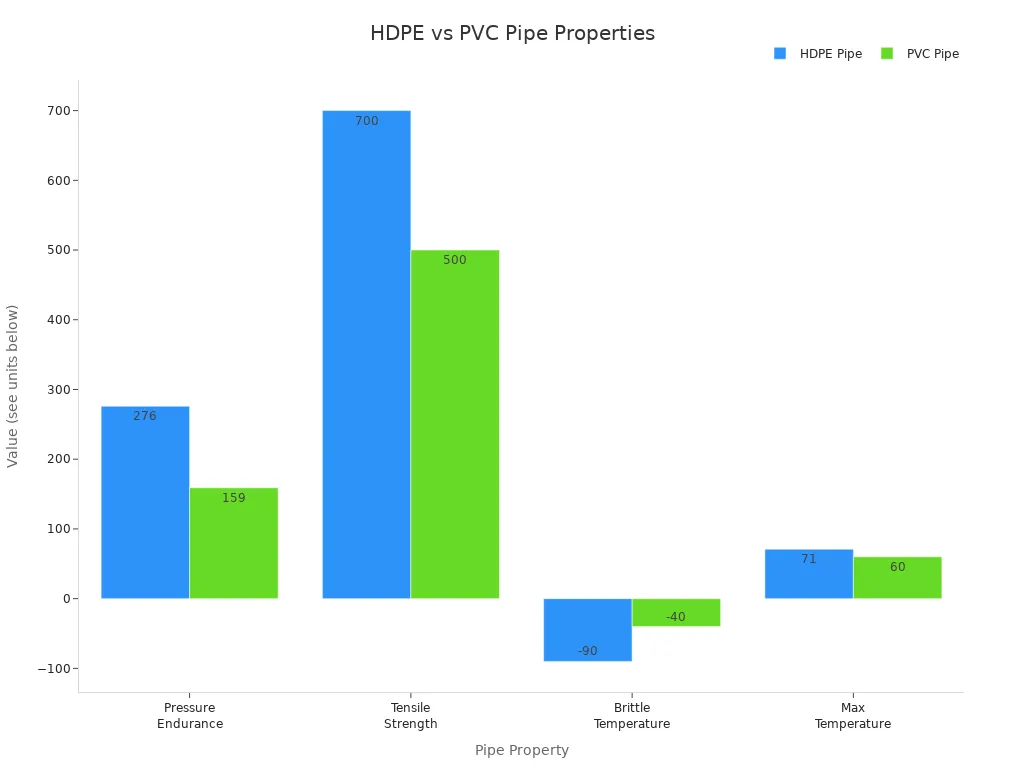
High-density polyethylene pipes are lighter than polyvinyl chloride and have a stronger structure. They resist acids and alkalis very well. They can handle more pressure and heat. HDPE pipes are good for outdoor and underground jobs where you need strong pipes.
![Bar chart comparing pressure, tensile strength, brittle temperature, and max temperature of HDPE and PVC pipes]()
LLDPE Pipes
Linear low-density polyethylene pipes are flexible and simple to install. You can use them outside because they resist sunlight. LLDPE pipes do not crack when stressed and can handle many chemicals. If you want light pipes that last, LLDPE is a smart choice for new plumbing.
Flexible and easy to route
Durable under stress
Chemical and UV resistant
Lightweight for easy transport
Now you know the main types of plastic pipes and what makes each one special. The best material depends on your project and where you want to use the pipes.
Pros and Cons of Plastic Plumbing Pipes
Advantages
When you look at plastic plumbing pipes for your home, you’ll notice some big benefits. These pipes don’t rust, so you won’t have to worry about leaks from corrosion. You can save money because plastic pipes usually cost less than metal ones. They are light, which makes them easy to carry and install. If you want to do a DIY project, you’ll find plastic plumbing pipes much easier to cut and fit than heavy metal pipes.
You can use plastic plumbing pipes for almost any water job in your house. They work well for both hot and cold water. Many people choose them for residential plumbing because they last a long time and need little maintenance.
Here are some reasons why you might pick plastic plumbing pipes:
They resist chemicals and don’t react with most cleaning products.
You can bend some types, like PEX, around corners without extra fittings.
They help prevent noisy water flow because the inside is smooth.
You’ll find them in many sizes, so you can match them to your project.
Disadvantages
Plastic plumbing pipes have some drawbacks you should know about. Some types can’t handle very hot water for long periods. If you put them outside, sunlight can damage certain pipes unless they are UV-resistant. You might see them crack if they freeze with water inside.
The way plastic pipes are made and thrown away can also hurt the environment. The production of PVC, for example, releases pollutants that can cause global warming and health risks. If people don’t manage waste properly, harmful chemicals from PVC can get into the air and soil. Dioxins may form during production, which can be toxic. Plasticizers added to PVC can move into water or soil, causing more problems.
Tip: Always check if the plastic pipes you choose are safe for your area and water type. Think about how long you want your plumbing to last and what impact it might have on the environment.
Choosing Plastic Pipe for Water Lines
![Choosing Plastic Pipe for Water Lines]()
Picking the right plastic pipe for water lines can feel tricky, but you can break it down step by step. Think about where you want to use the pipe, what kind of water will flow through it, and how much you want to spend. Let’s look at the best choices for each situation.
Hot Water Applications
Hot water needs special care. Not every plastic pipe material can handle high temperatures. If you use the wrong type, you might see leaks or even pipe bursts. For hot water, you want a pipe that stays strong and safe.
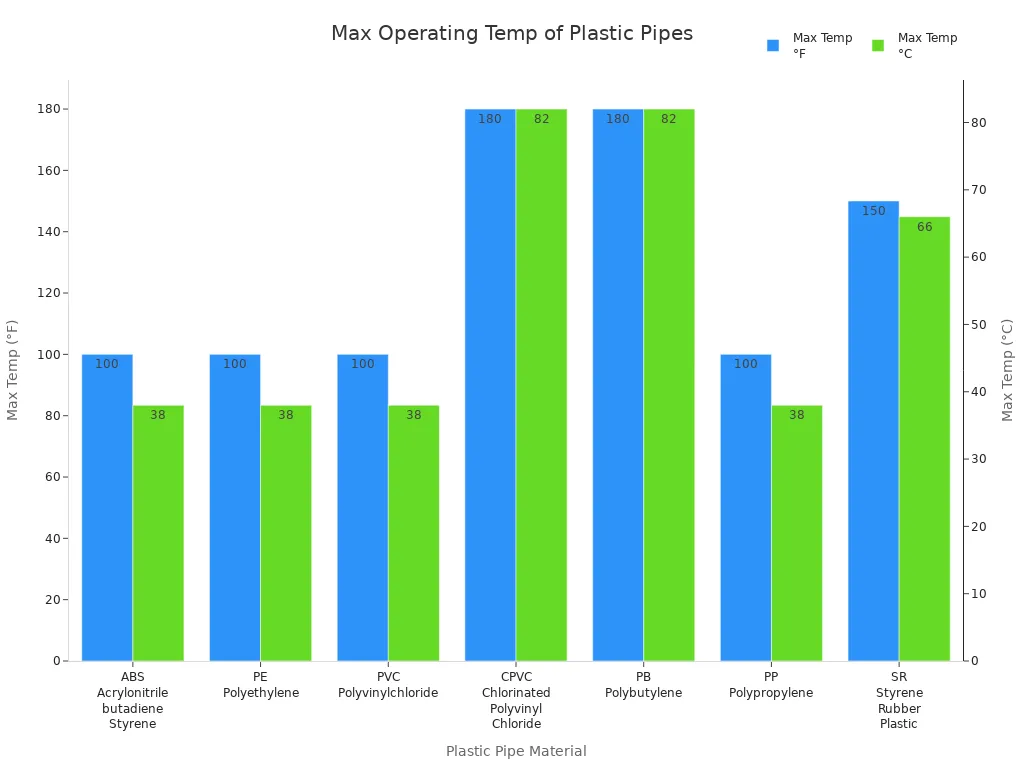
Here’s a quick look at how much heat different pipes can handle:
| Plastic Pipe Material | Maximum Operating Temperature (°F) | Maximum Operating Temperature (°C) |
| ABS | 100 | 38 |
| PE | 100 | 38 |
| PVC | 100 | 38 |
| CPVC | 180 | 82 |
| PB | 180 | 82 |
| PP | 100 | 38 |
| SR | 150 | 66 |
![Bar chart comparing max operating temperatures of plastic pipe materials in Fahrenheit and Celsius]()
You can see that CPVC and PB stand out for hot water. CPVC works well for showers, dishwashers, and any place with high heat. PEX also handles hot water, but always check the label for the exact temperature limit. For drinking water lines, CPVC and PEX are both safe and reliable.
Tip: Never use regular PVC or ABS for hot water. They can soften or warp, which leads to leaks.
Cold Water Applications
Cold water lines give you more options. Most plastic pipe material types work well here. PVC, PEX, and HDPE all handle cold water without trouble. You can use these pipes for sinks, toilets, and outdoor spigots.
If you want a pipe that lasts and costs less, PVC is a solid pick. PEX is great if you need to bend the pipe around corners or fit it into tight spaces. HDPE works well for long runs or underground cold water lines.
Note: Always check if the pipe is rated for potable water. This keeps your water safe to drink.
Outdoor and Underground Use
Outdoor and underground jobs need tough pipes. Sunlight, soil, and temperature changes can damage some materials. You want a pipe that resists UV rays, pressure, and chemicals.
HDPE and LLDPE shine in these spots. HDPE is strong, flexible, and handles pressure well. LLDPE bends easily and stands up to sunlight. Both work for irrigation, underground water lines, and even some potable water systems.
ABS also works for underground drains, but not for water supply. If you need a pipe for outdoor drinking water, look for HDPE or LLDPE with a rating for potable water.
Tip: Bury pipes below the frost line to prevent freezing and cracking.
Budget and Installation Tips
You want to save money and avoid headaches. Some pipes cost less but still last a long time. Here’s a quick cost comparison:
| Pipe Material | Average Cost per Linear Foot |
| PEX | $0.40 to $2.00 |
| Copper | $3.00 to $8.00 |
PEX gives you a good balance of price and performance. PVC is also budget-friendly for cold water lines. HDPE and LLDPE may cost a bit more, but they last longer outdoors.
When you install plastic pipe for water lines, watch out for these common mistakes:
Improper Sealing of Joints: Always use the right solvent cement and let it dry fully. Rushing this step can cause leaks.
Using Incorrectly Sized Fittings: Double-check that your fittings match your pipe size. Wrong sizes can slow water flow or cause leaks.
Over-Tightening or Under-Tightening Fittings: Tighten by hand first, then follow the manufacturer’s guide. Too tight or too loose can both cause problems.
Ignoring Proper Alignment: Line up your pipes before sealing. Use supports to keep everything straight and stress-free.
Pro Tip: Take your time with each step. Careful work now saves you from big repairs later.
Choosing the right plastic pipe for water lines means thinking about water temperature, location, and your budget. Match the pipe to your needs, and you’ll have a system that lasts for years.
Plastic Pipes Comparison Table
Choosing the right pipe can feel overwhelming, but a side-by-side look makes things easier. Here’s a handy table that compares the most common plastic pipes you’ll see in stores. You can quickly spot which one fits your needs best.
| Pipe Type | Key Features | Common Uses |
| PEX | Strong, flexible, handles high heat, lasts long | Water supply, radiant floor heating, compressed air |
| ABS | Rigid, non-toxic, resists abrasion, good in cold | Drain-waste-vent, sewer, ventilation |
| PVC | Strong, resists corrosion, very versatile | Water supply, drainage, irrigation, pools |
| CPVC | Handles higher heat than PVC, tough | Hot/cold water, HVAC, home plumbing |
| HDPE | Durable, eco-friendly, resists corrosion | Water lines, wastewater, chemicals |
| LLDPE | Flexible, UV and chemical resistant, lightweight | Outdoor plumbing, irrigation, potable water |
Tip: Always check if the pipe is rated for drinking water before you buy.
Quick-Reference Checklist
You want to make a smart choice fast. Use this checklist to match the right plastic pipes to your project:
What type of liquid will flow through the pipe? (Is it water, chemicals, or something else?)
Will the pipe face hot or cold temperatures?
Does your system need to handle high pressure?
How long do you want the pipes to last?
Will the pipes be outside or underground?
Are the pipes easy to maintain or repair?
Do the pipe sizes match your valves and fittings?
What is your budget for the project?
If you answer these questions, you’ll find the best fit for your home. Plastic pipes give you lots of options, so you can always find one that works for your needs.
When you pick a plastic pipe material, start by thinking about your project’s needs and the type of water running through your system. Ask yourself questions about durability, cost, and what works best for your home.
Learn the features of each plastic pipe material.
Check if it fits your water use and budget.
Look at the comparison table for quick answers.
Remember, your choice can last for decades. If you feel unsure, talk to a plumbing pro for help.
FAQ
What plastic pipe works best for drinking water?
You want a pipe that keeps your water safe and clean. PEX, CPVC, and HDPE pipes all work well for drinking water. Always check the label to make sure the pipe is rated for potable water.
Can I use plastic pipes for hot water lines?
Yes, you can use CPVC and PEX pipes for hot water. These pipes handle high temperatures without warping. Never use regular PVC for hot water because it can soften and leak.
Are plastic pipes safe for outdoor water lines?
You can use HDPE and LLDPE pipes outside. These pipes resist sunlight and last a long time. If you need to run water underground or in your yard, these are smart choices.
How do I know if my water pipes need replacing?
Look for leaks, low water pressure, or water that looks rusty. If you see any of these signs, your pipes might need replacing. Old pipes can break and waste water.



 +86-18561886575 (Mr.Wu)
 +8618561886575
 238 Yangzhou West Road, Jiaozhou City, Qingdao City, Shandong Province